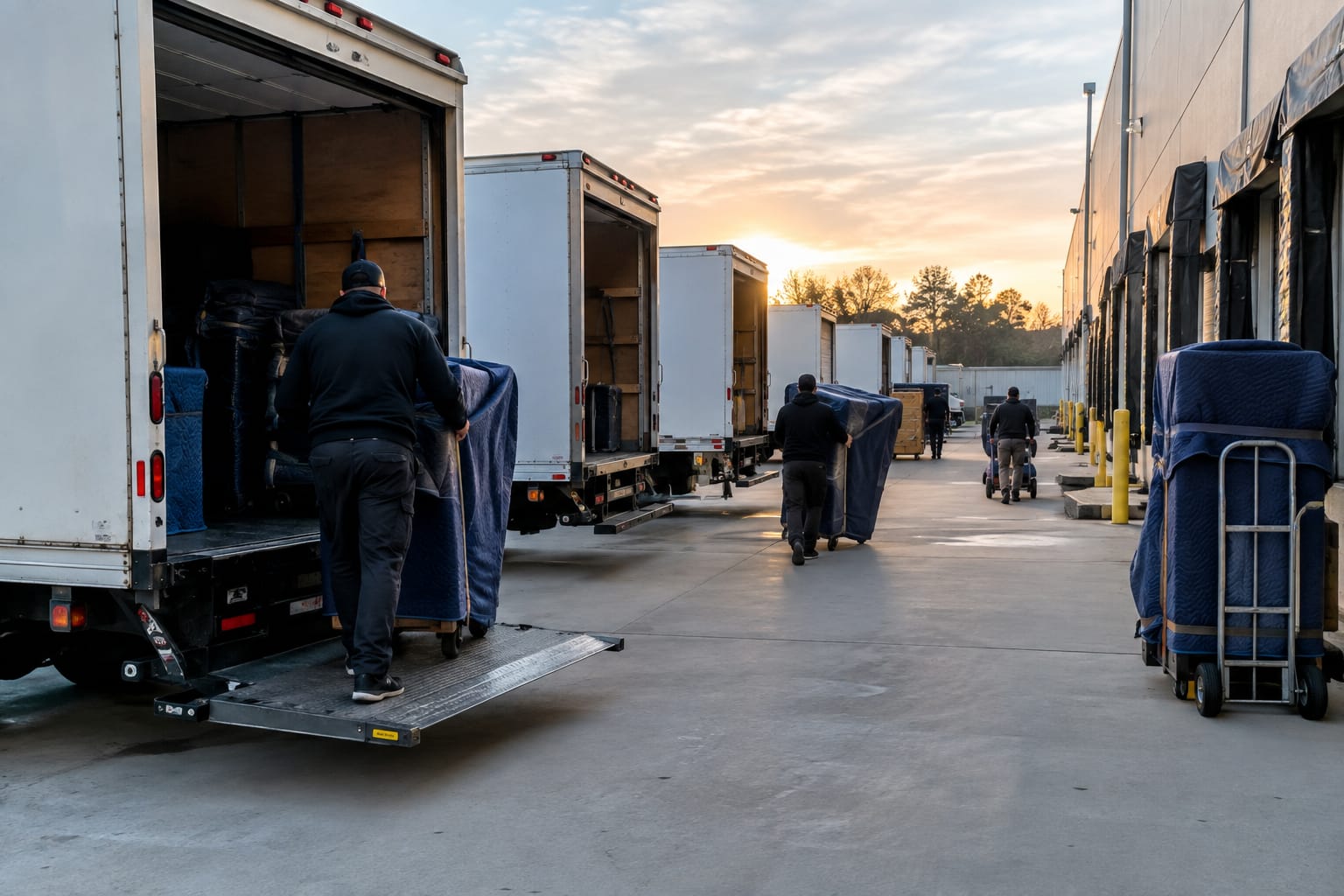

Moving company bill of lading software automatically converts a finished estimate into the DOT-required bill of lading, eliminating manual re-entry and the transcription errors that trigger claims disputes. One inventory dataset prices the job, populates the contract, generates the BOL, and feeds the invoice.
Most movers still rebuild the same information three or four times: once in the quote, again in the contract, again on the bill of lading, and again in the invoice. That is wasted labor and a compliance risk. This guide breaks down how the automation works, what to look for, and how the connected job lifecycle runs from a signed BOL all the way to payroll.
Why Re-Keying Your Estimate Into a BOL Costs Movers Jobs
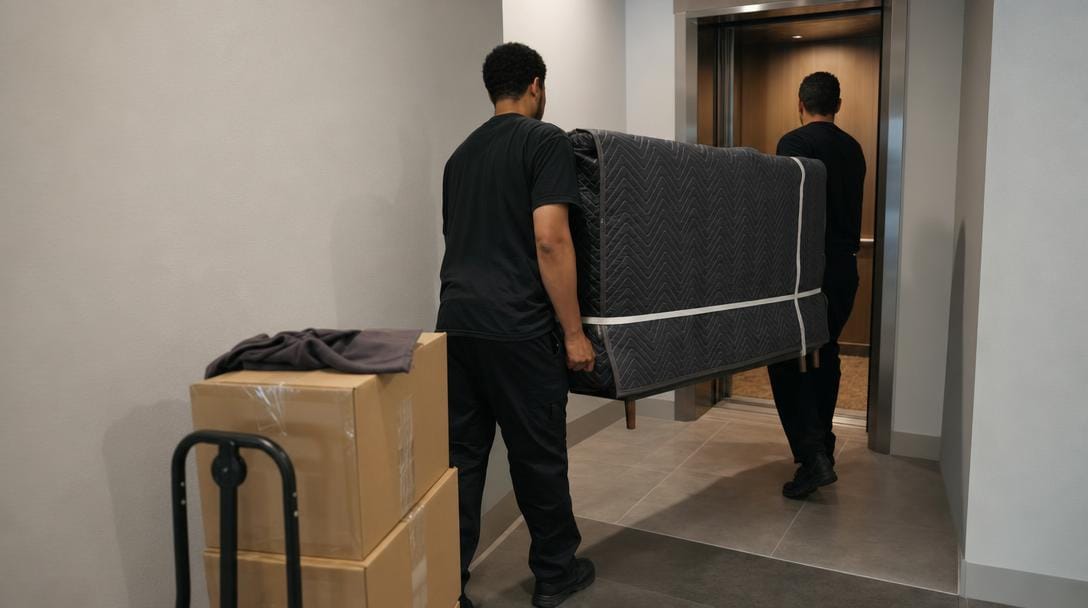
Every time an office manager retypes inventory into a new form, two things happen: hours disappear and errors creep in. A cubic-feet total that shifts between the estimate and the bill of lading is exactly the kind of discrepancy that fuels a customer dispute. Automated moving paperwork removes that gap by drawing every document from one source.
The federal requirement is not optional. The FMCSA requires every household goods mover to issue a bill of lading before the shipment moves. When that document is assembled by hand at the curb, mistakes are inevitable.
Q: Is a bill of lading legally required for a move?
A: Yes—per FMCSA regulations under 49 CFR 375, a mover must prepare and furnish a bill of lading for every interstate household goods shipment.

Manual paperwork also slows response time, and speed wins bookings. One operator cut average lead response from 6 hours to 22 minutes using connected CRM workflows—described as the single highest-leverage change in the case study. Paperwork that assembles itself frees staff to answer leads faster.
Pro Tip: Audit one week of completed jobs and count how many times the same inventory was typed. Most mid-size operators find the identical dataset entered at least three times per job—each entry a chance to introduce a billable error.
| Task | Manual paperwork | Automated BOL software |
|---|---|---|
| Inventory entry | Re-typed for each document | Captured once |
| Estimate to contract | Rebuilt by hand | One click |
| DOT BOL fields | Filled manually on-site | Prefilled from estimate |
| Error risk | High transcription risk | Single source of truth |
| Office time per job | Substantial | Minimal |
How One Dataset Becomes Price, Contract, and DOT Bill of Lading

Here is the core idea: the inventory that generates the price is the same inventory that fills the contract and the bill of lading. A moving estimate to contract software flow means the customer's room-by-room list is captured once and reused everywhere, with no re-keying.
With AI-powered moving estimates, a video walkthrough produces a room-by-room digital inventory—object volumes, visual references, and an accurate cost estimate within minutes. That structured dataset is what makes downstream automation possible.

Once the customer accepts, the estimate becomes a contract, and the contract feeds a DOT bill of lading generator that maps each field to its regulated place on the form. Job-mix visibility from the same data also drives revenue: one operator raised revenue per crew day 18% by shifting toward higher-margin job types surfaced in the CRM. For a market view of pricing by move type, our Top Moving Companies NYC guide shows how quotes translate into signed work.
What to Look For in Bill of Lading Software
Not every tool built for NYC movers handles the full document chain. The best moving company bill of lading software prefills federal fields, carries a defensible cubic-feet inventory, and connects straight to invoicing. Evaluate on the capability chain, not on a feature checklist alone.
Use the table below as a buyer's rubric when comparing a purpose-built Moving CRM against a generic SaaS tool.
| Capability | What it does | Why it matters |
|---|---|---|
| Prefilled DOT bill of lading | Auto-populates required federal fields | Reduces compliance errors |
| Defensible cubic-feet inventory | Room-by-room volumes with visual references | Fewer disputes over charges |
| Estimate-to-contract conversion | Turns the quote into a signed agreement | Eliminates re-keying |
| Connected invoicing | Pushes line items to the invoice | Faster payment |
| E-signature capture | Customer signs on-site or remote | Legally binding record |
| Crew job sheet export | Sends BOL data to the field crew | Accurate loading |
Ask vendors three direct questions: Does the estimate become the BOL without retyping? Are the DOT fields mapped to current regulations? Does the inventory carry into the invoice? A purpose-built moving platform answers yes to all three because it was designed for room-by-room estimates and truck logistics, not adapted from a generic sales CRM.
Pro Tip: Test the software on a real past job, not a demo file. Feed it a completed move and confirm the numbers on the generated bill of lading match your original invoice to the cubic foot. A mismatch on your own data is a red flag before you buy.

From Signed BOL to Crew Job Sheet to Automatic Payroll
The payoff of moving BOL software is the connected job lifecycle. A signed bill of lading exports directly to the crew job sheet, so drivers load exactly what was quoted. Hours logged against that job flow back to payroll—one dataset, start to finish.
This is where automated moving paperwork returns real hours. Automation eliminates 10-15 hours of weekly manual dispatch and scheduling work and improves booking rates by 8-12 percentage points for mid-size operators. Those hours move from data entry to selling jobs.
Virtual Estimate can help: Our platform turns one AI-generated inventory into the estimate, the signed contract, the DOT bill of lading, and the crew job sheet—no double entry. Learn more →
The same connected flow also protects margin, because managers see how much movers cost to run per job and can price accordingly. For deeper workflow detail, the moving company operational efficiency playbook maps each handoff from lead to payout.
DOT Compliance: What Federal Rules Require on a Bill of Lading
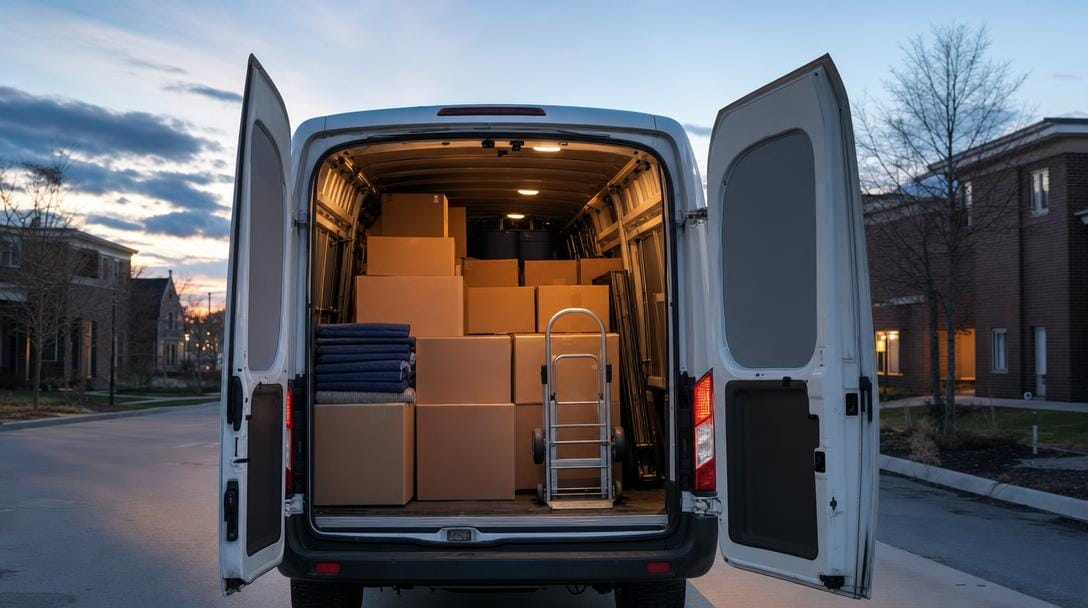
A bill of lading is both a receipt and a contract of carriage, and its contents are regulated. Under 49 CFR 375, the bill of lading must be prepared and furnished to the customer before the shipment loads, with required disclosures on charges and liability.

Software that maps these fields automatically reduces the chance of an incomplete or inconsistent document. The FMCSA "Ready to Move" guidance outlines what customers should expect to see, and a well-built generator mirrors those requirements on every job.
Q: What is the difference between an estimate and a bill of lading?
A: An estimate quotes expected cost before the move; the bill of lading is the binding contract and receipt issued at pickup, which FMCSA requires for every interstate household goods shipment.
Pro Tip: Keep your BOL template synced to the current FMCSA field requirements inside the software, not in a static PDF on a shared drive. Regulations and disclosure language change, and a prefilled generator that updates centrally keeps every crew compliant without re-training.
Trying It on Your Own Paperwork: Free Trial, No Credit Card
The honest way to evaluate any best moving company software is to run your own jobs through it. Virtual Estimate offers a 14-day free trial with no credit card required, and when the trial ends you simply choose the plan that fits.
Mid-size operators processing 40 or more jobs per month typically reach full software payback within 60-120 days of complete adoption. Purpose-built for the moving industry and used by 500+ moving companies across North America, the platform handles estimates, contracts, DOT paperwork, and invoicing in one flow.
Start by loading a recent move and comparing the generated bill of lading against your existing invoice. If the numbers match and the DOT fields fill themselves, you have removed the double entry that costs jobs and creates errors.
Related Articles
- How Video-Based Moving Estimates Work: Quoting Jobs Without an In-Home Visit — Learn how remote video quoting replaces the in-home walkthrough.
- Video Survey Moving Estimates: How AI Scanning Replaces In-Home Walkthroughs — See how AI scanning builds a room-by-room inventory from a phone video.
- From AI Estimate to Auto-Calculated Payroll: How One Connected Data Flow Runs a Moving Job — Follow one dataset from estimate through crew sheet to payroll.
- CRM for Moving Companies: Streamline Operations — Understand how a moving CRM ties leads, jobs, and paperwork together.
- Pricing Strategies for Moving Companies — Discover how job-mix data drives higher revenue per crew day.
Recommended Reading
- Best CRM for Moving Companies — Compare CRM options built for movers.
- Estimating Software for Movers — Explore how AI estimating tools quote jobs.
- Types of Moving Estimates: Choosing the Best Option — Break down binding, non-binding, and not-to-exceed estimates.
- Moving Company Technology Stack Guide — Map the tools a modern moving operation needs.
- Virtual Pre-Move Survey: Complete Guide — See how remote surveys feed the paperwork chain.
Disclaimer: This article is for general informational purposes only and does not constitute legal advice. For guidance on your specific situation, consult a qualified attorney.
Ready to see it in action?
Book a free 20-minute demo and explore how Virtual Estimate can help your business.