

Moving company marketing is more competitive today than at any point in the industry's history. In most mid-size metro markets, customers encounter ten or more movers competing for every quote request. The companies that consistently win aren't just better operators — they run more disciplined marketing systems that generate leads, convert them efficiently, and turn satisfied customers into referral engines. This guide presents a full-funnel framework covering every channel and tactic that drives bookings: from building a conversion-ready website to tracking every marketing dollar through a purpose-built CRM.
Key Takeaways
| Point | Details |
|---|---|
| Booking rate improvement | Structured CRM tracking and automated follow-ups raised booking rates from 28% to 41% — a 13-point gain from the same lead volume, with no additional acquisition spend |
| Lead response speed | Cutting average response time from 6 hours to 22 minutes was the single highest-leverage operational change documented for improving booking conversion |
| Revenue optimization | CRM-driven job mix shifts increased revenue per crew day by 18% within 12 months — without crews working harder or additional headcount |
| Referral quality advantage | Referrals convert at nearly twice the rate of paid search leads; supplement your pipeline with the right moving lead provider when referrals alone can't fill capacity |
| Full-funnel structure | Effective marketing for moving companies covers three layers: acquisition (SEO, PPC), conversion (website, reviews), and retention (email, SMS, referrals) |
Why Marketing Is the Growth Engine Every Moving Company Needs

The FMCSA advises consumers to obtain multiple estimates before committing to a mover — which means your company competes with two or more alternatives at every decision point. The movers who get chosen most often aren't always the best operators. They're the most visible, most responsive, and most trustworthy-looking at the moment a prospect is ready to decide.
Marketing for moving companies serves three compounding functions. Acquisition channels fill the pipeline with inbound inquiries. Conversion tools turn those inquiries into booked jobs. Retention programs recycle satisfied customers into referrals and repeat business without additional acquisition cost.
Most operators over-invest in one layer and neglect the others. They run Google Ads into a slow website. They deliver excellent service and forget to ask for a review. They generate leads they never follow up on. This guide addresses each layer in sequence, in the order that produces the fastest return.
The three-layer moving company marketing funnel:
- Acquisition: local SEO, Google Ads, social media, lead providers
- Conversion: website quality, response speed, follow-up automation, pricing clarity
- Retention: post-job reviews, referral incentives, email and SMS sequences
Digital marketing for moving companies that integrates all three layers consistently outperforms any single-channel approach — in both lead quality and cost per booked job. For a deeper look at channel-by-channel digital strategy, the digital marketing strategies guide for moving companies covers each channel in standalone depth.
Step 1: Build a High-Converting Moving Company Website
Your website is the conversion endpoint for every marketing channel you operate. Google Ads, local SEO, social posts, and referrals all eventually route traffic to your website — and if that site doesn't convert visitors into quote requests, no amount of upstream investment pays off.
Moving company branding starts at the website level. A professional-looking site signals operational legitimacy before a customer ever picks up the phone. The homepage headline should clearly state what you do, where you operate, and what distinguishes your service. A visible phone number and an online quote form above the fold minimizes friction for high-intent visitors.
Three elements that reliably improve website conversion rates for movers:
- Real photos of your crew and trucks — not stock photography
- Embedded Google reviews placed prominently on each service page
- Online quoting or an explicit response time promise to set expectations immediately
Dedicated service pages for each job type — local, long-distance, commercial, specialty — let you rank for specific search queries and address different customer priorities directly. A homeowner planning a local move has entirely different concerns than a business coordinating an office relocation. One generic services page serves neither audience well.
Moving company online presence extends beyond the website to how your brand appears across review platforms, directory listings, and social profiles. Consistent NAP (name, address, phone number) data across all these properties is not just good housekeeping — it directly affects local search rankings.

Step 2: Invest in Local SEO to Dominate Search Results
Local SEO produces the highest long-term return of any marketing channel available to most moving companies. Ranking in Google's Local Pack — the three business listings that appear at the top of local search results — generates a consistent stream of inbound calls and quote requests without per-click cost.
The foundation is a fully optimized Google Business Profile. Complete every available field: service area, operating hours, service descriptions, and photo library. Respond to every review, positive and negative. Post regular updates. Google's ranking algorithm rewards completeness and sustained activity over time.
Pro Tip: Add location-specific service pages to your website for each city or neighborhood you serve. A dedicated page targeting 'movers in [City Name]' with genuine local content — specific streets, building regulations, parking constraints — ranks significantly faster than a single generic coverage page. This is the fastest way to expand your local search footprint without increasing ad spend.
Citations — consistent listings across directories like Yelp, Angi, the BBB, and moving-specific platforms — reinforce Google's confidence in your business data. Inconsistent or duplicate listings actively suppress rankings. For a deeper dive into technical SEO, keyword targeting, and backlink acquisition, the complete SEO guide for moving companies covers each tactic in full.
| Local SEO Factor | Impact Level | Action Required |
|---|---|---|
| Google Business Profile completeness | High | Complete all fields, add 15+ photos |
| Review quantity and recency | High | Systematic post-job review request sequence |
| NAP consistency across directories | Medium | Quarterly citation audit and correction |
| Location-specific service pages | High | One dedicated page per served city or area |
| On-page keyword optimization | Medium | Target '[City] movers' in title tags and H1s |
| Local link building | Medium | Partner with realtors, storage facilities, apartment complexes |
Step 3: Run Targeted Paid Ads on Google and Facebook
Moving company Google Ads deliver the fastest path to top-of-results visibility. A well-structured search campaign targeting queries like 'movers in [city]' and 'long-distance moving company' can generate quote requests within 48 hours of launch — a speed advantage that organic SEO cannot match early in a company's growth.
Campaign structure determines performance more than budget. Separate campaigns for local moves, long-distance jobs, and commercial relocations — each with distinct keyword groups, bidding strategies, and dedicated landing pages — consistently outperform consolidated campaigns. Mixing job types into one campaign dilutes relevance and drives up cost-per-click.
Moving company advertising on Facebook and Instagram serves a different function than search ads. These platforms reach users who aren't actively searching but may be planning a move within the next 60 days. Awareness campaigns and retargeting sequences (serving ads to website visitors who didn't convert) build the brand familiarity that increases conversion rates when those same prospects later search on Google.
Moving company lead generation from paid channels requires conversion tracking from day one. Without it, campaigns optimize for clicks and form fills — not booked jobs. Connecting your CRM to your ad accounts allows you to track revenue per campaign and optimize for the metric that actually matters.
Key paid advertising metrics to monitor:
- Cost per qualified lead by campaign type
- Lead-to-booking conversion rate by source
- Return on ad spend (ROAS) per service category
- Revenue attributed to each campaign over 30 and 90 days
Step 4: Leverage Social Media to Build Trust and Visibility
Moving company social media marketing is not about reaching millions of followers. It's about maintaining consistent visibility among the local audience most likely to need moving services — and building the kind of trust that converts a search into a phone call.
Facebook reaches the broadest homeowner and family demographic, making it the primary social channel for most moving companies. According to Pew Research, Facebook remains the most widely used social platform among U.S. adults across all major age groups. Instagram complements it well for visual content: move-day documentation, crew photos, and fleet shots that demonstrate operational scale and professionalism.
The most effective content formats for moving company social accounts:
- Social proof: shared customer reviews, tagged move-day photos, verified testimonials
- Educational content: packing guides, moving checklists, seasonal preparation tips
- Behind the scenes: crew introductions, warehouse footage, safety procedures, team recognition
How to promote a moving business on social media starts with consistency over production value. Two to three posts per week, every week, builds recognizable local presence more reliably than sporadic high-production campaigns. A genuine move-day crew photo with a brief caption regularly outperforms a polished promotional graphic in reach and engagement.
Step 5: Systematically Generate Reviews and Referrals
Online reviews are the primary trust signal for local service businesses. The BrightLocal Local Consumer Review Survey consistently finds that review quantity and recency significantly influence how likely consumers are to choose one local business over another. A competitor with 200 recent reviews typically outperforms one with 50 older reviews on local search — even at a slightly lower average star rating.
The key is systematic process, not relying on customers to volunteer reviews spontaneously. A structured post-job text message — sent within two hours of job completion — generates a consistent, compounding stream of fresh reviews. The message should include the customer's first name, a direct link to your Google review page, and an honest acknowledgment that reviews matter.
A moving company referral program converts satisfied customers into active lead sources. The mechanics are straightforward: a per-referral reward (gift card, service credit, or modest cash payment) incentivizes past customers to recommend your company. Source attribution tracking at one documented operator revealed that referrals converted at nearly twice the rate of Google Ads leads — making them the highest-quality source in the entire pipeline. That finding prompted a referral incentive program launched within 90 days, which grew referral share of leads by 19 percentage points and produced a strong positive return within 60 days of launch.

Pro Tip: Send the review request text within two hours of job completion — not the next morning. Response rates drop sharply after 24 hours. A message reading 'Hi [Name], hope the move went smoothly! Tap here to leave us a Google review — it takes 30 seconds' with a direct link consistently outperforms generic feedback forms or email requests by a significant margin.
To supplement organic referrals during seasonal slowdowns or when entering a new service area, supplement your pipeline with the right moving lead provider to fill capacity gaps without building entirely new acquisition channels from scratch.
Step 6: Use Email and SMS to Nurture and Retain Clients
Moving company email marketing is the most underused retention channel in the industry. Most operators focus marketing spend entirely on acquisition — paid ads, SEO, lead providers — while leaving the customer base they've already earned unmined for repeat and referral revenue.
A structured retention program operates in three phases.
Phase 1 — Pre-move nurture: After booking confirmation, send logistics details, packing checklists, and a day-of reminder. These touchpoints reduce no-shows and set positive expectations before the truck arrives.
Phase 2 — Post-move activation: Send the review request within two hours of job completion, followed by a referral ask at the 90-day mark. The referral message should include clear instructions for how the customer claims their reward.
Phase 3 — Annual re-engagement: A seasonal email to the full customer database — timed for late winter before the summer peak — captures customers planning moves and generates early referrals. Most moving companies skip this phase entirely, leaving significant revenue uncaptured.
Digital marketing for moving companies that automates these sequences runs without manual intervention once configured. Moving software implementation data documents estimate turnaround dropping from 18-24 hours to under 2 hours after automated follow-up sequences were deployed — a conversion gain driven entirely by system speed, not additional headcount.
| Sequence Stage | Trigger | Channel | Primary Goal |
|---|---|---|---|
| Quote follow-up | 1 hour after inquiry | SMS + Email | Convert inquiry to booking |
| Move confirmation | 24 hours before job | Reduce no-shows | |
| Day-of arrival reminder | Morning of move | SMS | Crew and customer coordination |
| Post-job review request | Within 2 hours of completion | SMS | Generate Google reviews |
| 90-day referral ask | 90 days post-move | Activate referral network | |
| Annual re-engagement | 11 months post-move | Capture repeat bookings |
Step 7: Track Every Marketing Channel With a Moving CRM

All seven steps above fail without attribution. If you don't know which channels produce booked jobs — not just leads — every budget decision defaults to guesswork.
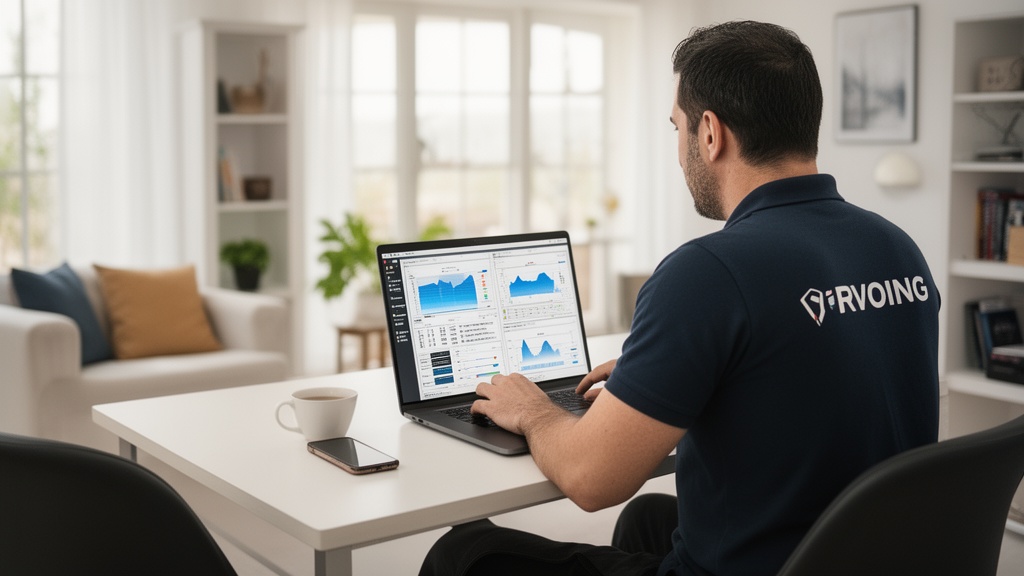
A moving company CRM solves this by tagging every lead at entry with its acquisition source: Google Ads, organic search, referral, social media, or lead provider. A purpose-built SaaS CRM designed for moving operations captures these source tags automatically and reports conversion rates by channel over time. One documented case found Google Ads producing high lead volume but lower conversion rates, while referrals converted at nearly twice the rate. That single finding prompted a budget reallocation that grew referral share by 19 percentage points within 12 months.
The five CRM metrics that drive moving company marketing decisions:
| Metric | What It Measures | Decision It Informs |
|---|---|---|
| Booking rate by lead source | Conversion efficiency per channel | Budget allocation between channels |
| Average lead response time | Speed of first contact | Follow-up automation configuration |
| Revenue per crew day by job type | Margin efficiency per service category | Job mix and scheduling decisions |
| Crew utilization rate | Capacity deployment efficiency | Same-week outreach to fill windows |
| Cost per booked job | True marketing ROI per channel | Channel expansion or reduction |
One case study documented a booking rate climb from 28% to 41% after implementing a structured five-stage pipeline with automated follow-ups. The gain came entirely from the same lead volume — no additional acquisition spend was required.
To track every marketing source in one dashboard, the CRM pipeline must be configured before leads begin flowing in. Retroactively tagging sources produces unreliable attribution data. For a full review of available tools, the best moving company software guide and the moving company technology stack overview cover the landscape for mid-size operators.
Pro Tip: Structure your CRM pipeline around exactly five stages: Inquiry, Quoted, Follow-up, Booked, and Completed. Review stage-to-stage conversion rates weekly. If leads consistently stall between Quoted and Follow-up, the bottleneck is follow-up speed or frequency — not lead quality. That diagnostic alone justifies the cost of the software.
Moving Company Marketing Budget: How to Allocate Spend

How to get customers for a moving company depends heavily on how intelligently marketing spend is distributed across channels. The right allocation evolves as the company scales from early-stage to established.
| Company Stage | Monthly Jobs | Recommended Allocation |
|---|---|---|
| Early-stage (under 20 jobs/month) | 20-50 leads | Roughly 60 percent toward paid search; about 30 percent for website and SEO foundation; 10 percent for tools |
| Growth-stage (20-60 jobs/month) | 50-150 leads | About 40 percent paid search; 35 percent SEO and content; 15 percent CRM and automation; 10 percent referral program |
| Established (60+ jobs/month) | 150+ leads | Roughly equal thirds across paid search, SEO, and retention; smaller shares for referral program and tools |
Moving company local advertising — including Google Local Services Ads (LSAs), Yelp sponsored listings, and neighborhood platforms like Nextdoor — performs best for companies that have established a review baseline of at least 20 Google reviews. Google's Local Services Ads program places verified movers above standard Search Ads in results, offering a cost-per-lead model that frequently outperforms traditional search campaigns for local operators.
The American Moving and Storage Association notes that demand is strongly seasonal across North American markets, peaking from May through August in most regions. Budget allocation should account for this cycle: invest in SEO infrastructure and content during Q4 and Q1 so rankings compound before the spring surge. Paid campaigns can then be scaled aggressively during peak months when conversion rates are naturally elevated.
Moving Company Marketing Mistakes That Kill Growth
Most marketing failures in the moving industry stem not from bad tactics but from executing the right tactics in the wrong sequence — or from skipping foundational elements that make everything downstream work.
Mistake 1: Running ads to a slow or unclear website. Ad spend sent to a website that doesn't convert produces expensive clicks with few bookings. Fix conversion infrastructure before scaling acquisition spend.
Mistake 2: No follow-up automation. Customers who don't hear back within hours regularly proceed to the next mover on their shortlist. Cutting response time from 6 hours to 22 minutes via CRM task automation was identified as the single highest-leverage operational change in one operator's documented results.
Mistake 3: Ignoring review velocity. A competitor with 200 recent reviews outperforms one with 50 older reviews on local search, even at a slightly lower average star rating. Volume and recency both drive rankings — not average rating alone.
Mistake 4: Treating all leads equally. Marketing for moving company operations that maximize revenue routes high-quality referral leads to experienced closers, not a generic first-available queue. Lead quality varies dramatically by source.
Mistake 5: No CRM attribution. Without tracking which channels produce booked jobs, every budget decision is a guess. Systematic source tracking, as documented in the moving company operational efficiency playbook, produces compounding gains that operators managing by intuition cannot replicate.
| Mistake | Revenue Impact | Fix |
|---|---|---|
| Slow lead response | High inquiry falloff before booking | CRM task automation and mobile notifications |
| No follow-up sequence | Booking rate stagnates below potential | Automated 3-touch sequence within 48 hours |
| Generic website | Low ad-to-booking conversion rate | Real photos, service-specific pages, instant quoting |
| No review strategy | Weak Local Pack rankings | Post-job SMS request within 2 hours |
| No CRM attribution | Budget misallocated to low-converting channels | Source tagging configured from day one |
For a broader look at how marketing connects to operational scaling, the CRM for moving companies guide covers pipeline structure, automation sequencing, and reporting in full detail.
Related Articles
- How to Digital Marketing For Moving Companies — A channel-by-channel breakdown of digital marketing tactics proven to generate consistent moving leads.
- Moving Company SEO: A Step-by-Step Strategy Guide — Learn how to rank in local search and drive inbound quote requests without paying per click.
- Moving Lead Providers: Evaluate, Buy, and Convert More Jobs — A ranked review of the top lead provider platforms and how to maximize conversion from purchased leads.
- Digital Marketing Strategies for Moving Companies: A Complete Guide — A comprehensive strategy guide covering SEO, PPC, social media, and email marketing for moving operators.
You May Also Like
Ready to see it in action?
Book a free 20-minute demo and explore how Virtual Estimate can help your business.