

This guide covers moving estimate apps for moving companies — not consumer apps for people estimating personal move costs. The US Census Bureau tracks millions of household relocations each year, and the companies serving that demand compete on one measurable metric: how fast they move from inquiry to signed estimate. Whether you call it a moving quote app, a professional moving estimate app, or moving estimate software, the underlying question is the same: which platform converts inquiries fastest with the fewest manual steps? This guide ranks each option on B2B criteria — CRM integration, virtual survey capability, mobile functionality, and billing workflow — so moving company operators can choose with confidence.

Key Takeaways
| Point | Details |
|---|---|
| Estimate turnaround drops sharply | Per the Virtual Estimate ROI case study, estimate turnaround cut from 24 hours to under 2 hours after full software adoption |
| Admin time reclaimed weekly | Office teams reclaimed 13 hours per week after transitioning to automated dispatch, per documented case data |
| Booking rate impact is measurable | Structured CRM lead tracking lifted booking rate from 28% to 41% — a 13-point gain from the same lead volume |
| ROI exceeds subscription cost | Monthly savings of approximately $1,181 from software adoption typically exceed a standard subscription fee |
| Federal compliance is required | The FMCSA requires written estimates for all interstate moves — a professional moving estimate app documents that compliance automatically |
What to Look for in a Moving Estimate App

A strong moving estimate app does more than generate a number. It captures lead data, sends professional quotes, triggers automated follow-ups, and feeds directly into your dispatch workflow. These are the B2B criteria that separate professional platforms from basic calculators:
- Room-by-room inventory capture: Line-item entry by room, item type, and volume
- CRM integration: Lead records attach directly to estimates, preventing data loss
- Virtual survey capability: Conduct video or AI-assisted walkthroughs remotely
- Mobile-native design: Field estimators need full functionality on small screens
- Automated follow-up: Estimates that sit unanswered lose deals — automation closes that gap
- Multi-user access: Operations scale when office staff, estimators, and crews share one system
When evaluating any moving company estimate software, test it against these six criteria before committing. A platform that excels on four but fails on CRM integration creates data silos that cost time and revenue every single week.
Pro Tip: Before demoing any moving company estimate software, map your current estimate workflow on paper first. Identify the three slowest handoffs. Any platform you evaluate should address at least two of them — otherwise the adoption cost won't justify the switch.
To understand the different types of moving estimates movers can offer — binding, non-binding, and not-to-exceed — see the different types of moving estimates movers can offer before choosing a platform that locks you into one format.
Quick-Pick: Best Moving Estimate App by Use Case
| Use Case | Best App | Platform | Standout Feature |
|---|---|---|---|
| Small and growing movers | Virtual Estimate | Web, iOS, Android | CRM and estimating in one workflow |
| AI virtual surveys | Yembo | Web, iOS | Computer-vision room scanning |
| International and commercial | Voxme | Web | Compliance-ready, multi-currency billing |
| Full operations suite | Supermove | Web, iOS | End-to-end job management |
| Budget-conscious operators | MoverBase | Web | Core features with a free entry tier |
Best Moving Estimate App for Small Movers
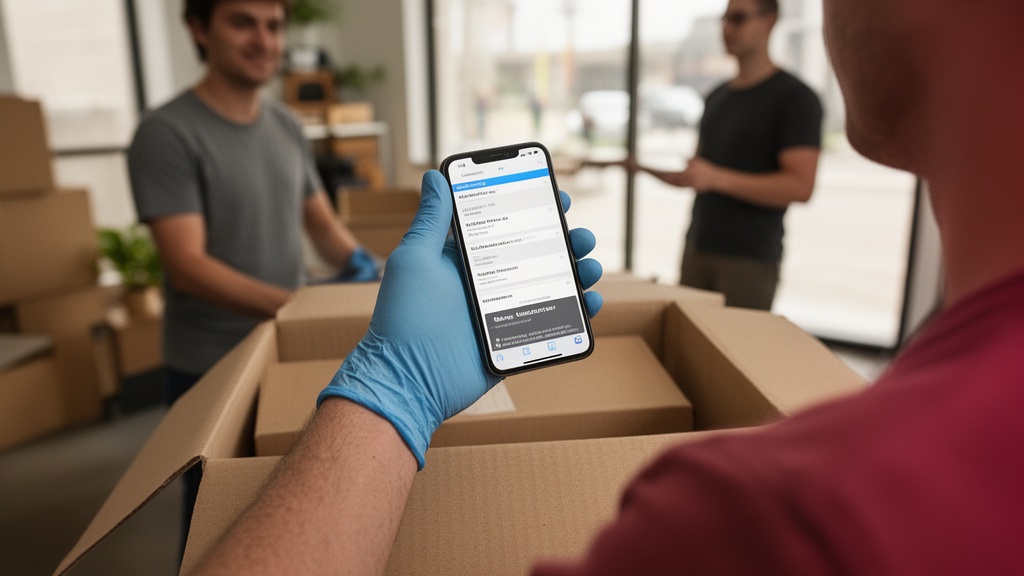
The best moving estimate app for small movers combines a clean mobile interface with CRM lead tracking — because small operations cannot afford to have quotes fall through the cracks. The operational goal is to move from inquiry to signed estimate in under two hours.
Virtual Estimate is the standout choice in this category. Built by founders with direct moving industry experience, it is a purpose-built virtual estimate app for movers that addresses room-by-room estimates, crew scheduling, truck logistics, and customer communication in one workflow — not a generic CRM adapted for the industry. Per the platform's ROI case study, estimate turnaround cut from 24 hours to under 2 hours after full adoption.
Implementation does not require a dedicated IT team. In documented cases, deployment completed in three weeks: two weeks of pipeline configuration and data migration, one week of team training.
AI-powered moving estimates are becoming the baseline for competitive movers — and Virtual Estimate's AI layer handles follow-up automation and lead scoring so small teams can compete at enterprise speed without expanding headcount.
Best Moving Estimate App for Multi-Truck Operations
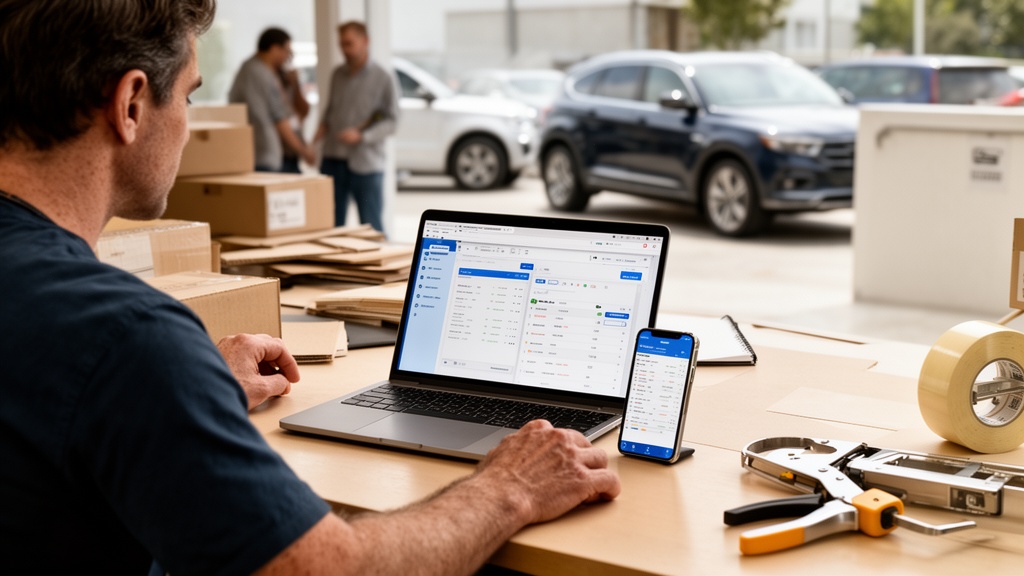
Multi-truck operations have different demands. They need a moving company quoting app that handles concurrent jobs, multi-crew dispatch, and a pipeline with dozens of active estimates simultaneously. Moving estimate software at this tier must also integrate billing so invoices follow quotes without manual re-entry.
Supermove is the dominant platform for scaling movers and large regional operators. It covers CRM, estimating, dispatch, and storage management in one system. For operators already running Supermove, the platform's strength is operational breadth — every part of the job lifecycle sits in one place.
Voxme serves a different multi-truck niche: commercial and international movers. It includes compliance tools and multi-currency billing that domestic-only platforms skip. If a significant portion of your volume is commercial or cross-border, Voxme's regulatory scaffolding deserves serious evaluation.
For operators assessing a moving cost estimate app alongside full operations software, the central question is single-vendor versus best-of-breed. A purpose-built moving estimate mobile app can integrate with existing dispatch tools via API — avoiding the lock-in risk of an all-in-one suite. See estimating software for movers for side-by-side platform comparisons.
Virtual Estimate can help: Virtual Estimate is purpose-built for moving companies — covering room-by-room estimates, CRM lead tracking, automated follow-up, and crew communication in one workflow, with no generic CRM workarounds required. Learn more →
Mobile App vs. Desktop Software: What Movers Actually Need
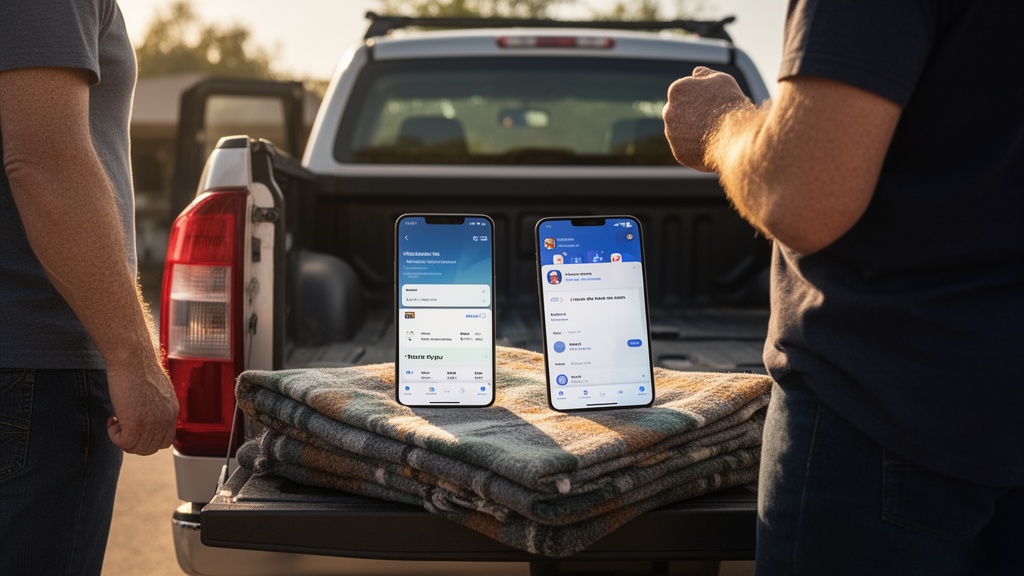
The debate between a moving estimate mobile app and desktop software matters most during the estimate itself. In-home or virtual walkthroughs happen on the go. If the app cannot capture inventory accurately on a phone, the estimate will contain errors.
Here's the reality: most professional moving estimate app platforms now offer both. The question is parity. Some tools have strong desktop interfaces and limited mobile versions. Others are mobile-first and sacrifice desktop reporting. The best moving estimate app iOS Android options deliver genuine feature parity across devices — the same full quote workflow whether you're in a client's living room or back at the office.
Virtual Estimate is available on web, iOS, and Android, with field estimators accessing the full quote-building workflow regardless of device. For operators exploring how AI changes this workflow, AI-powered moving estimates covers how the AI layer functions across both mobile and desktop environments.
Pro Tip: Test any moving estimate app iOS Android build by running a complete estimate end-to-end on a phone with a poor cellular connection. Offline functionality — or the lack of it — surfaces immediately. That matters when you're in a basement, elevator, or rural property with no reliable signal.
Moving Estimate App Pricing Compared
Pricing for moving company estimate software varies significantly by feature depth and team size. The table below reflects publicly available information as of 2026 — verify current rates directly with each vendor before committing.
| Platform | Pricing Model | Best Fit | Trial or Demo |
|---|---|---|---|
| Virtual Estimate | Subscription — see pricing page | Small to mid-size movers | Demo available |
| Supermove | Contact for pricing | Mid to large operators | Demo available |
| MoverBase | Contact for pricing | Budget-conscious operators | Limited free tier available |
| Yembo | Contact for pricing | Virtual survey-first workflows | Demo available |
| Voxme | Contact for pricing | International and commercial moves | Demo available |
Per the Virtual Estimate ROI case study, a mid-size moving company achieved approximately $1,181 in monthly cost savings after software adoption — spanning admin labor reallocation, reduced no-show events, fewer estimate errors, and lower paper and printing costs. At a subscription of $200–$400/month, the platform reaches positive ROI from cost reduction alone once adoption is complete.
A free moving estimate app typically covers basic quote generation, but most lack CRM integration, automated follow-up, and mobile crew coordination. For operators generating more than a handful of estimates per week, the real cost of a free tool is measured in lost leads, not saved subscription fees.
Try Virtual Estimate's automated follow-up workflow: Quotes that go unanswered don't have to stay cold — Virtual Estimate triggers automated follow-up sequences after every estimate, without manual intervention, recovering booked jobs that competitors are losing. Get started →
How to Use a Moving Estimate App in the Field

A field estimating app for movers changes the estimate workflow from an office task to an on-site or virtual process. The operational steps are consistent across platforms:
- Create the lead record before arriving — customer name, move date, origin, and destination
- Open the room-by-room inventory screen and work through each space systematically
- Photograph and annotate specialty items — pianos, artwork, oversized furniture — directly in the app
- Generate the estimate — the platform calculates weight, volume, and labor from the inventory data
- Send for e-signature — most professional moving estimate app platforms include built-in signing workflows
- Trigger automated follow-up — configure the follow-up sequence before leaving the property
For virtual estimates, a video or AI scanning step precedes the inventory phase. See the virtual pre-move survey guide for a complete walkthrough of the remote survey process.
A movers estimate app that integrates with your CRM means every field estimate automatically updates the lead record — no manual data entry when you return to the office. Per platform data, post-job paperwork fell from an average of 25 minutes per job to under 8 minutes after crews adopted mobile apps for real-time job status updates.
Pro Tip: When conducting a virtual survey with a professional moving estimate app, ask the customer to open every closet and storage area on camera before starting the room-by-room catalog. Items in storage spaces account for a significant share of estimate discrepancies and post-move complaints.
Verdict: Which Moving Estimate App Should You Choose?

The right choice depends on where your operation's current bottleneck sits:
- Estimate speed: Choose a platform with automated follow-up and e-signature. Virtual Estimate's documented performance — quotes sent within 2 hours of inquiry per the ROI case study — sets the benchmark for small to mid-size operators.
- Lead conversion: A moving company quoting app with built-in CRM analytics is non-negotiable. Per the Virtual Estimate CRM analytics case study, booking rate climbed from 28% to 41% after implementing structured CRM lead tracking.
- Field accuracy: Look for a move estimator app with AI-assisted scanning (Yembo) or a robust room-by-room inventory catalog (Virtual Estimate, MoverBase).
- International or commercial volume: Voxme's compliance and multi-currency tools are purpose-built for that complexity.
The Virtual Estimate AI moving estimate platform is the strongest all-around choice for operators who want estimate speed, CRM integration, and automated follow-up in a single system — without stitching together multiple tools. It was built by industry insiders who ran moving companies and built the software they wished existed. For a broader platform comparison, see estimating software for movers.
Related Articles
- Moving Lead Providers: Evaluate, Buy, and Convert More Jobs — Learn how to evaluate lead providers and use estimate automation to maximize conversion rates on every inquiry.
- CRM for Moving Companies: Streamline Operations — A deep dive into CRM selection, configuration, and how it connects directly to your estimate workflow.
- Pricing Strategies for Moving Companies — How to structure your estimates and pricing model to maximize profitability on every booked job.
Ready to see it in action?
Book a free 20-minute demo and explore how Virtual Estimate can help your business.