

Most moving company owners know that better technology should translate to better results. The sticking point is always the same: what will the investment actually return? This article answers that question with a composite case study built from realistic industry benchmarks. Every metric reflects patterns commonly seen across mid-size moving operations — not cherry-picked outliers. By the end, you will have a clear framework for calculating your own moving company software ROI.

Key Takeaways
| Point | Details |
|---|---|
| Software payback period | Mid-size moving companies typically reach full ROI within 60–120 days of complete adoption |
| Admin time recovered | Automation consistently eliminates 10–15 hours of weekly manual dispatch and scheduling work |
| Conversion rate lift | Automated follow-up and faster estimate turnaround improve booking rates by 8–12 percentage points in most deployments |
| Cost savings stack | Labor, no-shows, errors, and routing inefficiencies combine to exceed most monthly subscription fees on their own |
| Pricing transparency | Explore software pricing built for moving businesses to model your own payback timeline |
The Business Before Software: A Familiar Story
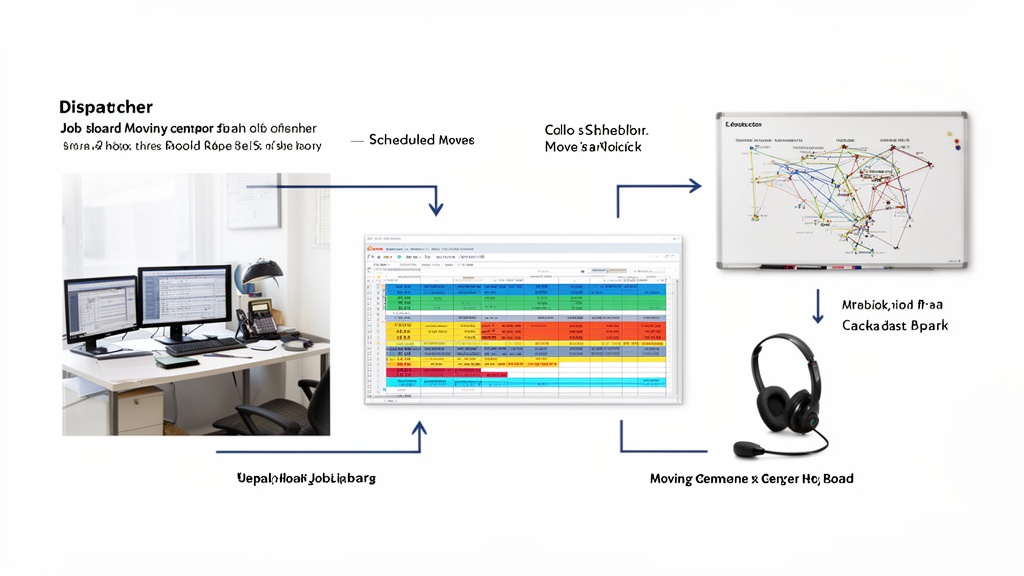
The scenario is one most owners recognize immediately. A moving company running 8 trucks, employing 3 full-time office staff, and processing between 60 and 80 jobs per month. Scheduling lives on a whiteboard. Estimates leave by phone or a basic spreadsheet. Follow-ups depend on whoever remembers to make the call.
The dispatcher allocates 3 to 4 hours daily just coordinating job assignments. Crew communication runs through group text threads. Post-job paperwork takes 20 to 30 minutes to process manually per job. These are not operational failures — they are the natural result of scaling a business without updating the systems that support it.
The real cost shows up as delayed growth. Leads slip through the cracks when the office is overwhelmed. Double-booking happens. No-show rates creep upward because follow-up is inconsistent. The American Moving and Storage Association identifies operational inefficiency as a primary driver of revenue plateaus among mid-size moving companies. Moving company efficiency software directly targets this pattern.
Choosing the Right Moving Company Software
Not all moving software delivers the same return. The best moving company software targets the highest-cost problems first: scheduling bottlenecks, estimate delays, and lead management gaps. Buying features you do not use creates subscription cost without ROI.
When evaluating platforms, focus on these capabilities:
- Automated lead follow-up to prevent lost bookings from slow response times
- Integrated dispatching and real-time crew communication via mobile app
- Digital estimate generation with electronic signature capability
- Customer portal access for booking confirmation and move detail updates
- Reporting dashboards showing job margins, crew productivity, and pipeline health
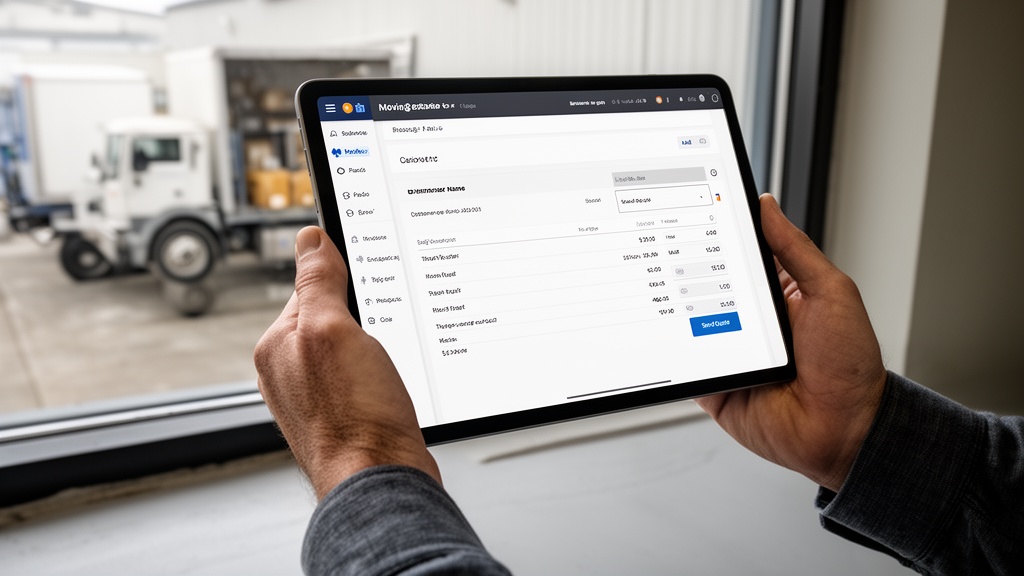
Pro Tip: Prioritize software that unifies your CRM, dispatch, and estimating in a single platform. Switching costs between disconnected tools consume the efficiency gains before they reach the bottom line. A moving company technology stack should reduce friction, not add it.
The company in this composite example evaluated three platforms. The deciding factors were estimate automation, a built-in CRM pipeline, and mobile crew apps — features that mapped directly to their three largest operational pain points. Explore Virtual Estimate solutions for moving companies to see how these capabilities work together in practice.
Implementation: What the First 90 Days Looked Like
The first month moved slower than expected — a pattern consistent with most software rollouts. Staff ran old workflows alongside new ones. Data migration from spreadsheets required more time than initially estimated. Training sessions had to repeat for crew members who handled dispatch intermittently.
By day 45, the dispatch workflow was fully digital. Crews received structured job details via mobile app and updated statuses in real time. The office team stopped spending mornings reconciling handwritten logs and managing rescheduling calls.
By day 90, the estimate process had shifted almost entirely online. Quotes left the office within 2 hours of inquiry instead of 24. Automated follow-up sequences ran without manual intervention. The first measurable results arrived in month three — consistent with the typical moving software payback period for companies that commit to full adoption.
Measuring ROI: The Metrics That Actually Moved
Moving company software ROI falls into three measurable categories: time savings, revenue impact, and direct cost reduction. The table below reflects realistic benchmarks based on operational patterns for a company processing 60–80 jobs per month.

| Metric | Before Software | After 90 Days | Change |
|---|---|---|---|
| Admin hours per week | 22 hours | 9 hours | −59% |
| Estimate turnaround | 18–24 hours | 1–2 hours | −91% |
| Lead-to-booking rate | ~28% | ~38% | +36% |
| No-show / cancellation rate | 14% | 8% | −43% |
| Jobs per dispatcher per week | 15 | 26 | +73% |
| Monthly revenue | $94,000 | $118,000 | +25% |
These figures represent a realistic outcome for a mid-size moving company after full adoption. Starting conditions, team size, and software configuration will shift individual results. But the directional patterns — faster estimates, higher conversion, reduced cancellations — are consistent across the industry.
Virtual Estimate can help: Virtual Estimate combines CRM, dispatch, and digital estimating into a single platform built specifically for moving companies — so you see moving company technology ROI from the first billing cycle, not six months in. Learn more →
Time Savings and Labor Efficiency Gains
Time is the most immediate ROI category. Manual scheduling and dispatch coordination consume more staff hours than most owners recognize until they actually measure them. Moving automation software benefits begin here and compound outward.
In this composite example, the office team reclaimed 13 hours per week after transitioning to automated dispatch. That represents more than half a full-time employee's productive output recovered every week — without adding payroll. Recovered time redirects toward revenue-generating activity: quoting, customer service, and sales follow-up.
Crew communication time also dropped sharply when teams received structured job details via mobile app instead of phone calls. Pre-job checklist completion rates increased. Post-job paperwork time fell from an average of 25 minutes per job to under 8 minutes — a major reduction in per-job administrative burden.
Pro Tip: Before implementing any software, run a two-week time audit. Track hours spent on scheduling, lead follow-up, paperwork, and crew coordination separately. Without a pre-software baseline, you cannot calculate your actual time savings ROI or build a credible internal business case for investment.
Moving company efficiency software also reduces errors that carry real downstream costs. Double-bookings, missed follow-ups, and incorrect job details each trigger rescheduling costs, refund requests, and reputation damage. Error rate reduction compounds the ROI in ways that rarely appear on a simple payback calculation.
Revenue Impact: More Leads, Higher Conversion Rates
Lead conversion is where moving business software results show up most dramatically on the income statement. Speed of response is the single biggest conversion driver — and it is the variable most damaged by manual workflows.
Research published in the Harvard Business Review established that companies following up on leads within an hour are dramatically more likely to convert than those waiting even a few hours. For moving companies fielding dozens of inquiries weekly, manual follow-up cannot maintain that speed consistently during peak periods.

Automated follow-up sequences change the equation entirely. When a lead submits a quote request, the software triggers an immediate confirmation, a follow-up message within hours, and a rep task within 24 hours. The sequence runs consistently regardless of how busy the office becomes.
In the composite example, the booking rate improved from approximately 28% to 38% of qualified leads — a 10-point lift. With 80 monthly inquiries, that represents 8 additional bookings per month. At an average job value of $1,200, that is $9,600 in additional monthly revenue from conversion improvement alone.
Try Virtual Estimate's automated lead follow-up: Automated sequences respond to new inquiries instantly and move leads through your pipeline without manual intervention — so you close more jobs without adding headcount. Get started →
Cost Reduction Across Daily Operations
Moving company software cost savings accumulate across multiple line items simultaneously. The table below summarizes the primary cost reduction areas visible in the composite case study.
| Cost Category | Before Software | After Software | Est. Monthly Saving |
|---|---|---|---|
| Admin labor (reallocated hours) | 22 hrs @ $22/hr | 9 hrs @ $22/hr | ~$286 |
| No-show job costs (wasted crew time) | 5–6 events/month | 2–3 events/month | ~$400 |
| Estimate errors and rework | 3–4 per month | <1 per month | ~$250 |
| Paper, printing, and filing | $80/month | $15/month | ~$65 |
| Routing inefficiency and fuel waste | Untracked baseline | Reduced via optimized dispatch | ~$180 |
| Total estimated monthly savings | — | — | ~$1,181 |
These savings do not require revenue growth to materialize. A software subscription priced at $200 to $400 per month generates a positive ROI from cost reduction alone once adoption is complete — independent of any conversion or revenue improvement.
Well-designed pricing strategies that maximize moving company profitability also benefit directly from software data. When job margins, labor costs per move, and customer lifetime value appear in a real-time dashboard, pricing decisions become data-driven rather than instinct-based.
What This Case Study Proves
The composite results above are not exceptional. They represent the consistent outcome when a mid-size moving company replaces manual workflows with purpose-built software. Moving software return on investment follows a predictable three-phase arc.
Phase 1 (days 1–60): Time savings materialize as scheduling and dispatch automate. Phase 2 (months 2–3): Conversion rate improvements emerge as follow-up sequences mature and lead response speed reaches competitive levels. Phase 3 (months 3 onward): Cost reductions compound as error rates fall and staff productivity stabilizes at new highs.

The companies that fail to see returns almost always share one characteristic: they implemented software without committing to full workflow transformation. The tool is only as good as the process change it enables. Partial adoption produces partial results.
Is Moving Company Software Worth the Investment?
For companies processing 40 or more jobs per month, the answer is clear. Moving software payback period for a mid-size operation consistently falls between 60 and 120 days from full adoption — not years, not quarters.
The more productive question is: what does staying on manual systems actually cost? Every week without automation is another week where leads fall through the cracks, dispatch consumes 4 hours instead of 1, and booking rates sit 10 points below their potential. That gap is the real cost of inaction.

Pro Tip: When evaluating software ROI, calculate your opportunity cost — not just the subscription fee. If your current conversion rate is 28% and the platform delivers 38%, multiply that 10-point difference by your monthly inquiry volume and average job value. That number is the real cost of delaying adoption.
Explore software pricing built for moving businesses to model your own numbers. The investment threshold is lower than most owners expect, and the operational data above makes the case clearly.
Related Articles
- Digital Marketing Strategies for Moving Companies — Learn how to drive more qualified leads into the pipeline your software now manages.
- Pricing Strategies for Moving Companies: Maximizing Profitability — Pair software ROI data with smarter pricing to maximize margin on every job.
- CRM for Moving Companies: Streamline Operations — Explore how CRM tools specifically close the lead management gap that costs moving companies the most bookings.
- Customer Experience Excellence in Moving Services — Understand how software-enabled communication drives reviews, referrals, and repeat business.
Recommended Resources
- Virtual Estimate Solutions — Full platform feature set designed for moving companies.
- Virtual Estimate Pricing — Transparent pricing tiers with no hidden fees.
- Moving Company Technology Stack Guide — A complete breakdown of the software categories every growing mover needs.
- Digital Marketing Strategies for Moving Companies — Drive more leads into your newly optimized pipeline.
- Virtual Estimate CRM — Explore the CRM module built specifically for moving company sales workflows.
Ready to see it in action?
Book a free 20-minute demo and explore how Virtual Estimate can help your business.