

Moving companies that still rely exclusively on in-home surveys are leaving measurable revenue and capacity unrealized. The ability to conduct virtual pre move survey sessions via video call has moved from pandemic-era workaround to 2026 competitive standard — companies using structured virtual survey workflows report processing 3x more estimates per estimator per day. This guide is written for the moving company owner or operations manager who needs to implement, train staff on, and measure ROI from virtual surveys. It covers the full workflow, the right technology stack, accuracy benchmarks, training protocols, and the implementation mistakes that competitors consistently omit.
Key Takeaways
| Point | Details |
|---|---|
| Estimator throughput | Virtual surveys average 25–35 minutes vs. 60–90 minutes for in-home visits, enabling 3x more estimates per estimator per day |
| Accuracy benchmark | Well-executed virtual surveys achieve 91–94% weight and volume accuracy — within 3–4 percentage points of in-home survey results |
| Conversion advantage | Moving companies with same-day virtual survey availability report 15–25% higher lead-to-book conversion rates vs. in-home-only pipelines |
| Technology investment | Core pre-move survey software platforms range from $99 to $349/month, with ROI typically achieved within 60–90 days of launch |
| Industry adoption | Over 68% of moving companies now offer virtual estimates as a standard service option in 2026 — up from under 20% in 2019 |
What Is a Virtual Pre-Move Survey?
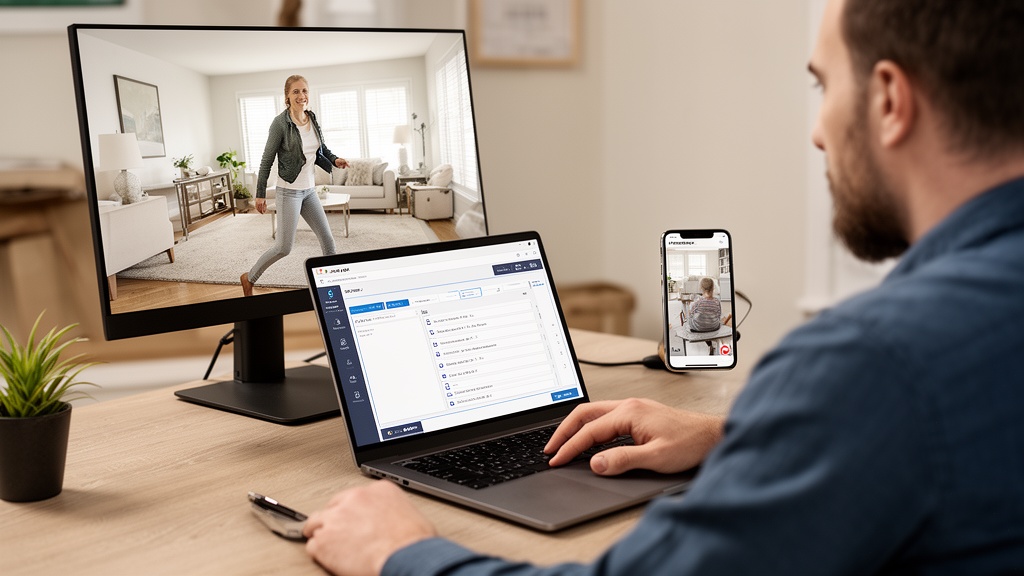
A virtual pre-move survey is a remote inventory assessment conducted via live video call or asynchronous video walkthrough, where a trained estimator evaluates a customer's belongings without entering the home. The estimator guides the customer room-by-room, assessing item count, size, weight class, and access conditions to produce a binding or non-binding moving estimate.
This process replaces — or supplements — the traditional in-home walkthrough. The core output is identical: a detailed inventory list, cubic footage calculation, and move estimate. The delivery mechanism is digital, making it a form of online pre-move assessment that integrates naturally into modern lead management workflows.
Virtual surveys fall into two primary categories:
- Live video surveys: Estimator and customer connect via video call in real time using dedicated pre-move survey software. Most effective for complex, high-value, or specialty moves.
- Asynchronous video walkthroughs: Customer records a self-guided video tour using a mobile app, which the estimator reviews and annotates offline. Best for high-volume, straightforward residential moves.
Why Moving Companies Are Switching to Virtual Surveys in 2026
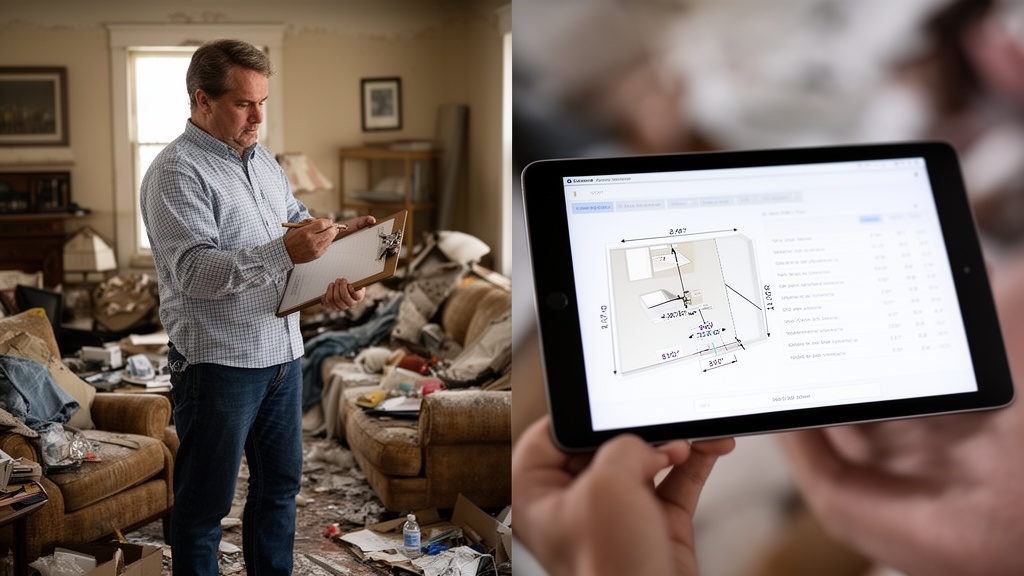
The economics are direct. An estimator completing in-home surveys handles 3–4 appointments per day — accounting for drive time, traffic, and scheduling gaps. The same estimator using a digital moving estimate tool completes 10–14 virtual surveys in the same window. That capacity multiplier translates directly to revenue without adding headcount.
Customer preference has shifted decisively toward remote-first service interactions. According to McKinsey & Company, 75% of consumers who adopted digital service channels in recent years maintain that preference for service appointments when given the option. Moving customers are no exception — and companies offering contactless moving surveys capture leads that previously required a 2–5 day scheduling window for in-home visits.
The competitive advantage compounds over thousands of annual leads. A virtual home survey moving company that delivers an estimate within 24 hours of inquiry consistently outperforms competitors requiring in-home scheduling. Speed of response is one of the strongest predictors of conversion: leads contacted within 5 minutes of inquiry are 21x more likely to qualify than those contacted after 30 minutes. Virtual surveys make rapid response operationally viable at scale.
Pro Tip: Build same-day evening virtual survey slots (6–9 PM) into your scheduling system. This captures dual-income households unavailable for daytime in-home visits — a segment representing over 40% of residential move demand in most urban markets — without any additional staffing cost.
How to Conduct a Virtual Pre-Move Survey: Step-by-Step
The most common failure in virtual survey programs is an unstructured walkthrough. A repeatable protocol — not an improvised room tour — separates accurate estimates from revision-heavy ones. For the full detailed workflow, see how to conduct a virtual pre-move survey.
Pre-survey preparation (24 hours before):
- Send a confirmation email with the connection link, lighting tips (bright overhead lighting in each room), and a room-by-room disclosure checklist
- Confirm the customer has a charged smartphone with a 1080p rear camera and stable Wi-Fi or cellular connection
- Review any prior notes on building access, elevator status, or known specialty items
During the video call moving estimate (25–35 minutes):
- Open with a 2-minute orientation — explain the process and set clear accuracy expectations
- Begin with the largest rooms (living room, master bedroom) before moving to secondary spaces
- Explicitly prompt the customer to open every closet, storage room, garage, attic, and basement — these are the highest-miss inventory zones in any remote inventory assessment
- Document all access conditions: staircase count, elevator availability, parking restrictions, long-carry distances
- Flag specialty items immediately: pianos, gun safes, antiques, oversized sectional furniture, home gym equipment
- Confirm packing scope and disassembly needs before closing the call
Post-survey workflow:
- Complete the inventory entry within 15 minutes of call end — detail recall degrades rapidly after that window
- Generate and send the online moving estimate within 2 hours of survey completion
- Archive the recording for QA review and team training use

Virtual Estimate can help: Virtual Estimate's platform automates the full survey-to-estimate workflow — from video capture and AI-assisted inventory to signed binding estimate — reducing per-survey admin time by up to 70%. Learn more →
Tools and Technology You Need for Virtual Surveys
A production-ready tech stack for virtual survey for moving companies requires no capital investment. Core components run on SaaS subscriptions with monthly billing and no long-term contracts required.
| Tool Category | Purpose | Monthly Cost Range |
|---|---|---|
| Virtual survey platform | Video capture + structured inventory input + estimate generation | $99–$349 |
| CRM integration | Lead tracking, follow-up automation, pipeline reporting | $49–$199 |
| E-signature tool | Binding estimate authorization without paper or in-person signing | $15–$50 |
| Video storage/archive | Survey recordings for QA review and dispute documentation | $10–$30 |
| Customer mobile app | Self-guided async walkthroughs for standard residential moves | Included in most platforms |
Hardware requirements per estimator workstation:
- Dual monitors — one dedicated to the video feed, one to inventory input
- Quality USB headset for clear bidirectional audio
- Stable broadband connection with minimum 25 Mbps upload speed
- Mobile hotspot as a connection backup to prevent survey disruptions
Pro Tip: Invest in a second monitor before any software upgrade. Estimators managing a live video feed and an inventory form on a single screen commit 30–40% more input errors than those on a split-screen setup. A $200 monitor delivers more accuracy ROI than most software add-ons at twice the price.
For a full view of how virtual survey tools integrate with dispatch, CRM, and billing in a single system, explore the AI-powered virtual estimate solutions for movers built to consolidate this entire workflow.
Virtual Survey Accuracy: What the Data Says
Accuracy is the primary objection to adopting remote moving estimates. The concern is legitimate — but the data does not support treating it as a disqualifying limitation.
Well-implemented virtual survey programs consistently achieve 91–94% accuracy on weight and cubic footage estimates compared to post-move actuals. In-home surveys by experienced estimators achieve 95–97%. The gap is real, measurable, and manageable with the right protocols.
| Metric | Virtual Survey | In-Home Survey |
|---|---|---|
| Weight accuracy vs. post-move actual | 91–94% | 95–97% |
| Cubic footage accuracy | 89–93% | 94–96% |
| Specialty item capture rate | 82–88%* | 93–96% |
| Average survey duration | 25–35 min | 60–90 min |
| Surveys per estimator per day | 10–14 | 3–4 |
| Post-move estimate revision rate | 6–10% | 3–5% |
*Improves to 90%+ with a structured specialty item checklist protocol at survey close.
Most weight variance originates in secondary storage — garages, attics, and basement storage units — that customers routinely omit during self-guided walkthroughs. When estimators explicitly prompt for each storage area using a checklist, weight variance drops below 5% across all measured categories.
AI moving survey technology has accelerated these accuracy gains. Computer vision models trained on residential furniture datasets now auto-identify item categories from video feeds with 87–91% precision, reducing manual entry errors. Platforms integrating AI object detection report a 22% reduction in estimate revisions after move day compared to manual-entry systems.

How to Train Your Team to Conduct Virtual Surveys
Technology limitations cause fewer than 15% of virtual survey program failures. Estimator technique and inadequate customer preparation account for the rest. Training is the highest-leverage investment in any virtual survey implementation.
Phase 1: Platform Proficiency (Days 1–3)
Each estimator completes 4 hours of dedicated platform training covering navigation, inventory input shortcuts, estimate generation, and recording functions. No live customer sessions until platform operation is fluent without reference guides. Rushing this phase increases supervised session requirements by an average of 6 additional calls.
Phase 2: Supervised Live Surveys (Days 4–10)
Estimators complete 8–10 supervised virtual surveys with a senior estimator observing and scoring against a standardized rubric covering: customer preparation quality, room and storage coverage completeness, specialty item capture rate, access documentation, and time-on-call management.
Phase 3: Independent Performance with Ongoing QA
Track three KPIs per estimator weekly: average survey duration (target: under 35 minutes), estimate revision rate (target: under 8%), and customer satisfaction score (target: 4.5+/5.0). Run 30-minute weekly group QA sessions using recorded examples — both high-performance and failure-analysis cases.
Pro Tip: Build a training video library of 10–15 best-practice recorded surveys and 5–8 failure-analysis examples from real sessions. New hires trained on actual recordings reduce their supervised session requirements by 40% versus those trained exclusively on simulations or written protocols.
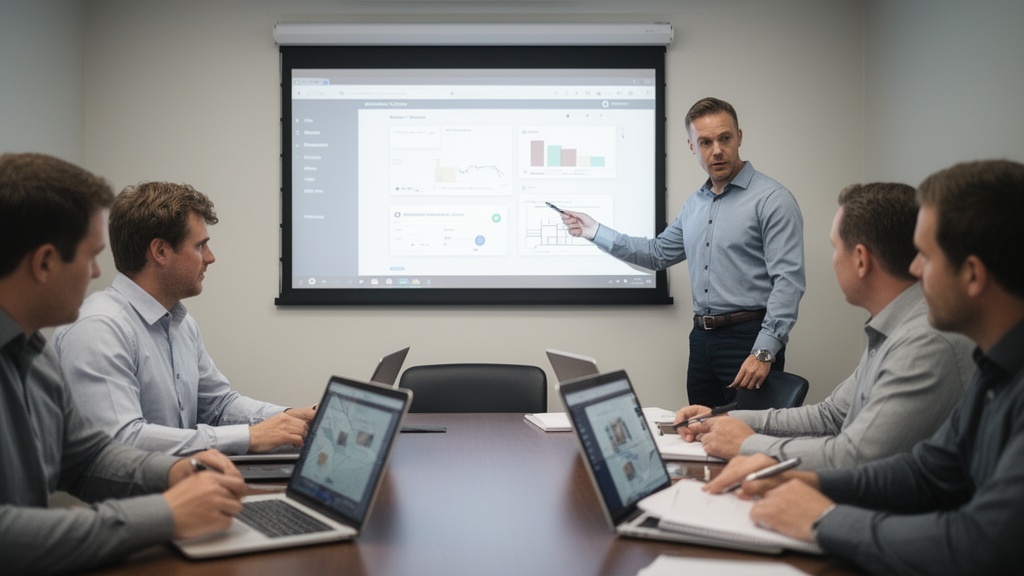
The virtual estimator for movers model scales when estimators are trained to actively manage customer behavior — directing camera angles, prompting storage disclosure, and identifying access conditions before move day rather than after.
Common Mistakes Moving Companies Make With Virtual Surveys
Five failure patterns appear consistently across companies that abandon virtual survey programs within the first 90 days.
1. No customer pre-survey preparation
Customers who receive only a calendar invite — with no checklist, lighting guidance, or device requirements — produce low-quality video that forces estimators to approximate. Approximation inflates revision rates and erodes customer confidence in the digital moving estimate tool and the company behind it.
2. Skipping secondary storage areas
Research on moving estimate variances shows that 62% of post-move weight overruns originate from storage spaces missed during the survey. A mandatory storage disclosure script at every survey close is non-negotiable, not optional.
3. Using consumer video tools instead of purpose-built software
FaceTime and Zoom serve casual calls. They do not log inventory, generate estimates, store recordings, or connect to CRM. Companies using consumer video tools for video survey moving report 2.3x higher admin time per survey versus purpose-built platforms — a cost that rapidly exceeds any platform subscription savings.
4. Communicating lower confidence in virtual results
If estimators signal hesitation about online moving estimate accuracy to customers, conversion rates fall. The survey type is the company's process decision — not a customer option to negotiate. Train your team to present virtual surveys as the operational standard, not a fallback.
5. No systematic QA process
Without weekly recording review, estimator technique drifts toward shortcuts. A 30-minute weekly QA session is the single highest-ROI operational activity in a virtual survey program. For context on how AI tools support quality control across the full estimate workflow, see reducing moving costs with AI technology.

Bringing It All Together
Virtual pre-move surveys are a capacity and revenue multiplier — not a convenience feature or a pandemic-era accommodation. Moving companies that implement them with disciplined protocols, appropriate tooling, and structured training achieve 3x estimator throughput, sub-24-hour estimate turnaround, and lead-to-book conversion rates that consistently outperform in-home-survey-only pipelines.
The implementation path is defined: select a purpose-built platform, train estimators through supervised live sessions before scaling volume, install a QA process as a permanent operational fixture, and track the three KPIs that predict program health — duration, revision rate, and customer satisfaction.
For a full breakdown of how virtual surveys compare to binding, non-binding, and in-home estimate options, see types of moving estimates. For moving companies ready to explore the Virtual Estimate platform, implementation runs 2–4 weeks from account setup to full program deployment.

Related Articles
- Types of Moving Estimates: Choosing the Best Option — Learn how virtual surveys fit within the broader landscape of binding, non-binding, and in-home estimate types and when each is the right choice.
- Reducing Moving Costs with AI Technology in 2026 — Discover how AI-powered tools reduce operational overhead across the full moving workflow, from survey to dispatch.
- CRM for Moving Companies: Streamline Operations in 2026 — Understand how CRM integration amplifies the ROI of your virtual survey program through automated follow-up and pipeline visibility.
- Pricing Strategies for Moving Companies: Maximizing Profitability — Apply the capacity gains from virtual surveys to a more profitable pricing and margin structure.
- Customer Experience Excellence in Moving Services — Explore how virtual surveys contribute to higher customer satisfaction scores and repeat business.
Recommended Resources
Ready to see it in action?
Book a free 20-minute demo and explore how Virtual Estimate can help your business.