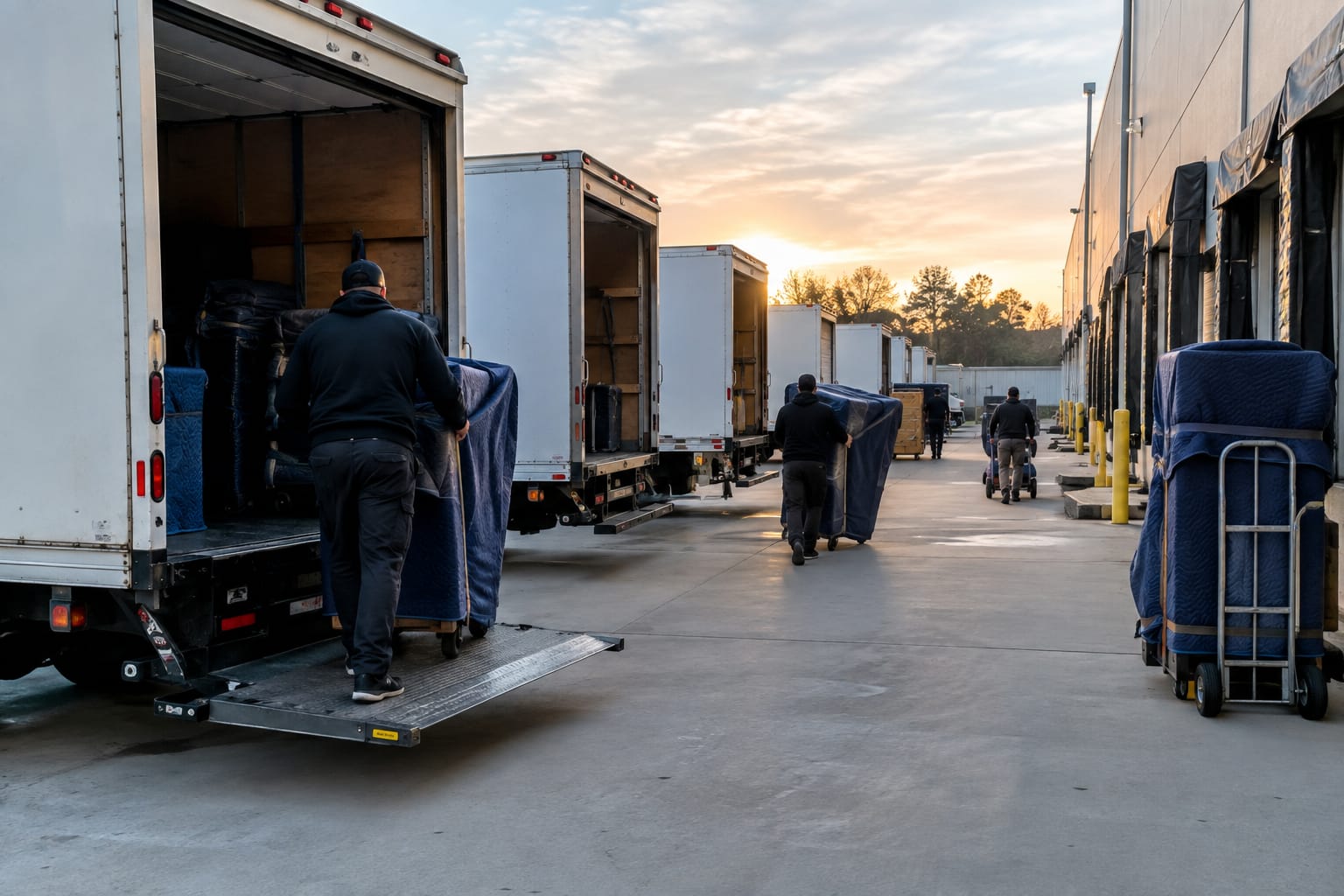

The moving industry runs on estimates, yet the way movers produce them has barely changed in decades. That is ending. The landscape around future moving estimates is being rebuilt on AI, video, and automation—technology that compresses a half-day process into minutes. This article breaks down seven concrete trends reshaping how companies quote jobs, and exactly what each one means for movers competing for the same leads.
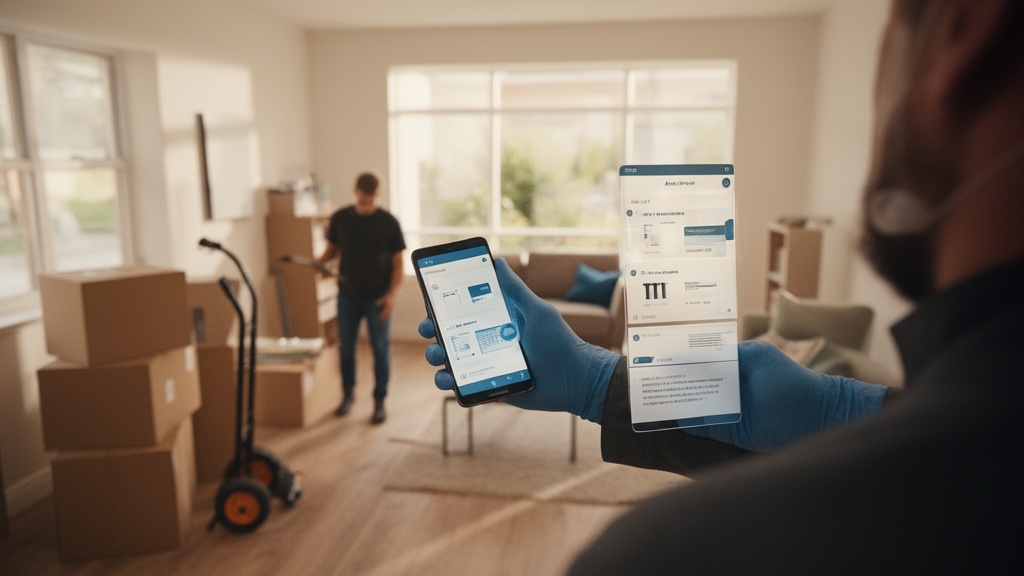
| Point | Details |
|---|---|
| Speed is the new battleground | AI video scanning can produce a full inventory and quote in roughly 10 minutes versus the 2-plus hours a traditional in-home survey takes. |
| Customers are mobile-first | With roughly 91% of U.S. adults owning a smartphone, buyers expect to request and receive estimates from their phones. |
| Automation removes the ceiling | A surveyor's calendar caps weekly estimates; automated workflows let a company quote unlimited jobs in parallel. |
| Accuracy is improving, not declining | Computer vision measures item volume consistently, reducing the human guesswork that inflates or undercuts quotes. |
| Adoption is a competitive moat | See the full AI-powered moving estimates guide for how early adopters capture share from slower rivals. |
Why the Traditional Estimate Model Is Breaking Down
For decades, generating a moving estimate meant scheduling an in-home visit, sending a surveyor across town, and waiting days for a number. That model is collapsing under its own cost. Customers now want answers in minutes, not days.
The pressure is structural. With roughly 91% of U.S. adults owning a smartphone, buyers research, compare, and book from a screen—and they abandon companies that respond too slowly.
Speed has become the differentiator. A surveyor's calendar caps how many estimates a firm can produce each week. The moving estimate technology trends below remove that ceiling entirely.
Here's the thing: the in-home survey was never really about accuracy. It was the only tool available. Newer methods match or beat its precision at a fraction of the time and cost.
Q: What is replacing the traditional in-home moving survey?
A: AI-driven video and photo surveys now generate room-by-room inventories and cost estimates in minutes, eliminating the need for a surveyor to visit in person.
Movers weighing their options should first understand the types of moving estimates and how to choose the right one, because the method you pick now shapes how fast you can scale later.
AI Video Surveys Replace In-Home Walkthroughs
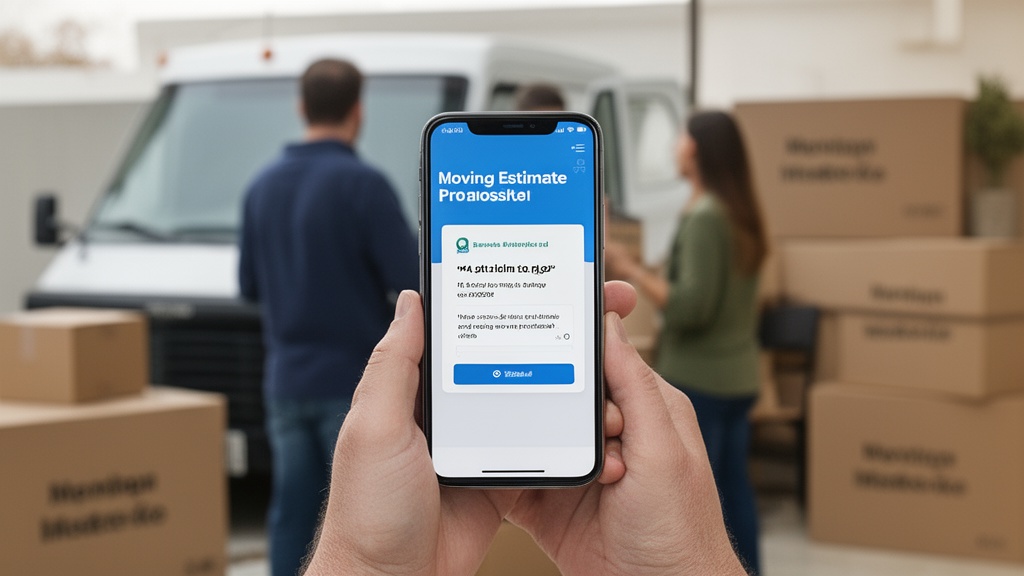
AI video surveys let a customer record a short smartphone walkthrough of their home. Computer vision identifies each item, calculates its volume, and builds a room-by-room inventory automatically. What once took a surveyor two-plus hours now takes about ten minutes—no appointment required.
This is the engine behind AI-powered moving estimates, and studying how AI estimation technology works behind the scenes explains why accuracy keeps climbing. These AI powered moving estimates draw on trained recognition models that improve with every scan.
The competitive impact is direct. A company offering remote scanning books a customer the same hour a rival is still trying to schedule a visit. McKinsey reports that organizations adopting AI see measurable gains in cost and revenue, and estimation is one of the clearest applications in field services.
| Criteria | In-Home Survey | Phone / Email Quote | AI Video Estimate |
|---|---|---|---|
| Time to estimate | 2+ hours plus travel | 15–30 minutes | ~10 minutes |
| Inventory accuracy | High but inconsistent | Low (memory-based) | High and repeatable |
| Customer effort | Schedule + host visit | Recall every item | Record a walkthrough |
| Daily capacity | A handful per surveyor | Limited by call staff | Effectively unlimited |
| Cost to produce | Highest | Moderate | Lowest |
Pro Tip: Ask customers to narrate their walkthrough video—pointing out fragile items, disassembly needs, and access constraints. The audio gives your estimator context that pure visuals miss, cutting on-site surprises.
Real-Time Dynamic Pricing Based on Demand and Capacity
The next shift is pricing that moves with the market. Airlines and hotels priced this way for years; McKinsey notes that disciplined dynamic pricing can lift revenue meaningfully. Movers are now applying the same logic.
Modern systems read live demand signals—calendar density, crew availability, fuel costs, and seasonality—then adjust quotes accordingly. A peak Saturday in summer prices differently from a slow Tuesday in February.

The payoff is twofold: higher margins during peak windows and better fill rates during slow ones. Automated moving quotes that factor in real-time capacity stop the two costly errors of manual pricing—underbidding busy days and overbidding empty ones.
This is where remote moving estimates technology meets revenue strategy. Pricing stops being a static rate card and becomes a living signal tuned to the business.
Customer Self-Service Estimation Portals
Buyers increasingly want to start the process themselves, at 11 p.m., without talking to anyone. Self-service portals let them submit a video or photos, answer a few questions, and receive a preliminary number on their own schedule.
This mirrors broader consumer behavior. Census data shows that tens of millions of Americans relocate each year, and a growing share of them begin every major purchase online.
Self-service does not replace the salesperson—it qualifies leads before the salesperson spends a minute. By the time a rep follows up, the inventory exists and the conversation is about closing, not collecting. For teams building this flow, our walkthrough on conducting a virtual pre-move survey covers the customer-facing steps in detail.
Augmented Reality for Remote Inventory Assessment
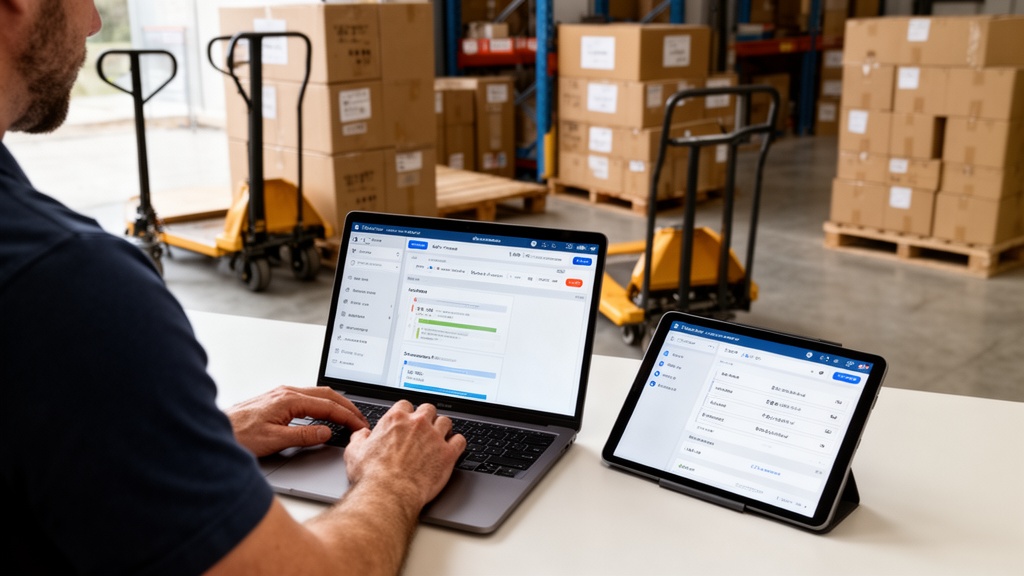
Augmented reality pushes remote surveys one step further. Instead of recording video for later analysis, AR overlays measurements and labels onto items in real time as the customer points their camera.
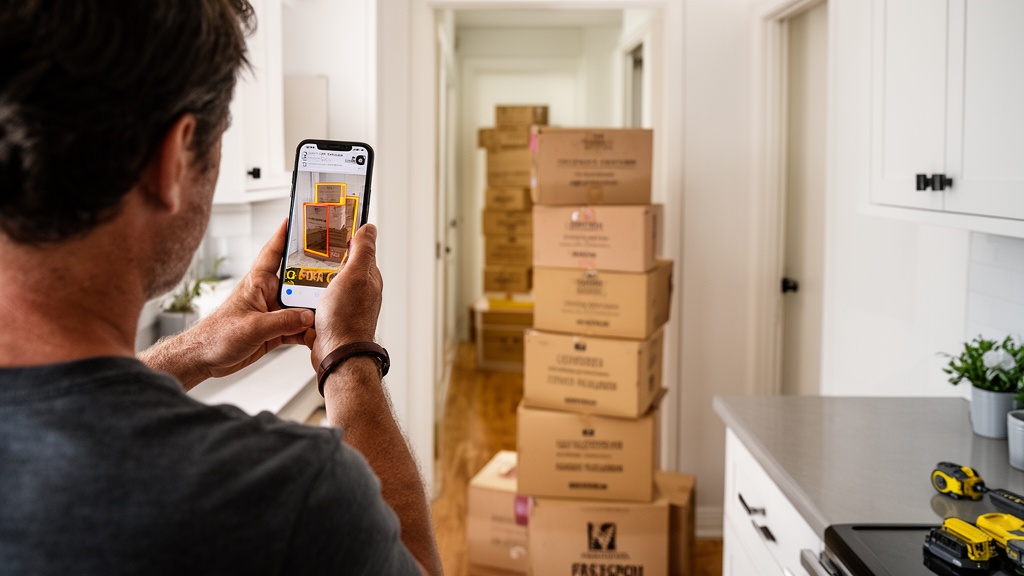
The customer sees a sofa tagged with estimated cubic footage and a stack of boxes counted on screen. This visual confirmation reduces disputes later, because the inventory was built collaboratively and transparently.
AR also tightens accuracy in tight spaces—staircases, narrow doorways, and storage units—where photos alone can mislead. It is a meaningful piece of the remote moving estimates technology stack, and adoption is accelerating as phone hardware improves.
Pro Tip: When deploying AR scanning, train customers to scan doorways and hallways first, not just rooms. Access constraints drive labor time and special-handling fees far more than the furniture itself.
Predictive Analytics That Flag At-Risk Quotes Before They Go Cold
A quote that sits untouched for 48 hours rarely closes. Predictive analytics now scores every estimate by the probability it converts, then flags the ones slipping away so staff can intervene while it still matters.
These models weigh response time, quote value, move date proximity, and engagement signals like whether the proposal was opened. The result is a prioritized list instead of a guessing game.
This is a defining feature of next generation moving estimates: the system does not just price the job, it manages the pipeline. Sales effort flows to the leads most likely to book, raising close rates without adding headcount.
The competitive consequence is stark. A company acting on predictive flags recovers deals a manual process loses by default—and those recovered jobs compound across a season.
Instant Estimate Delivery via SMS and Branded Digital Proposals
Delivery format matters as much as the number itself. A quote buried in a plain-text email attachment loses to a polished, interactive proposal sent by text within minutes.
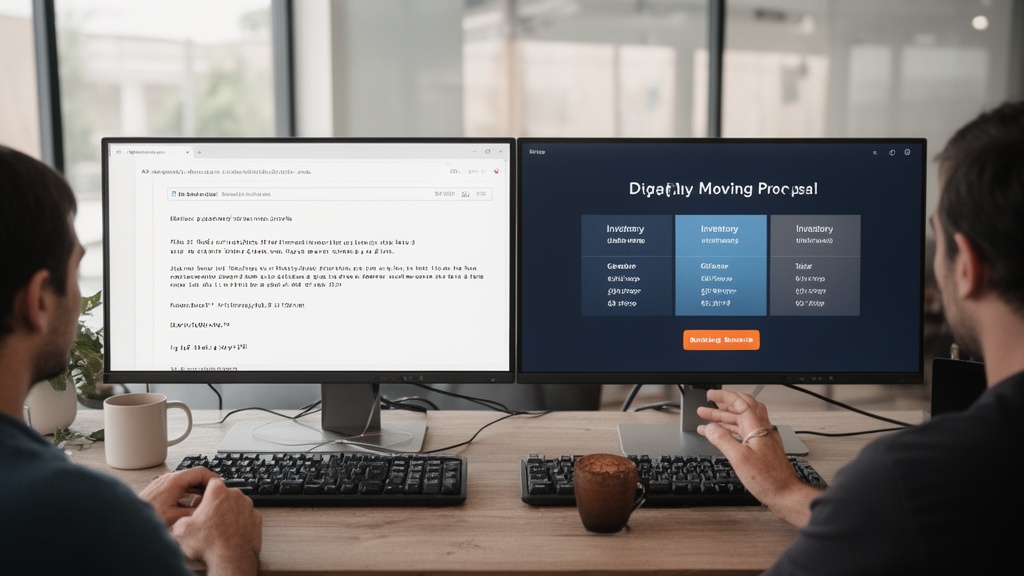
Q: How do customers prefer to receive moving estimates today?
A: Most modern buyers want estimates delivered instantly by SMS or as a branded digital proposal they can review and accept on a phone, not as a callback or a printed PDF.
Branded digital proposals show itemized inventory, transparent pricing tiers, and a one-tap booking option. They build trust through clarity—exactly what informed buyers reward. This wave of moving estimate software innovation turns the estimate into a closing tool rather than a static document.
Pro Tip: Send the estimate by SMS within 15 minutes of receiving the survey, then follow with the full digital proposal. The speed signals professionalism and beats competitors still scheduling callbacks.
CRM-Integrated Estimates That Trigger Automated Follow-Up
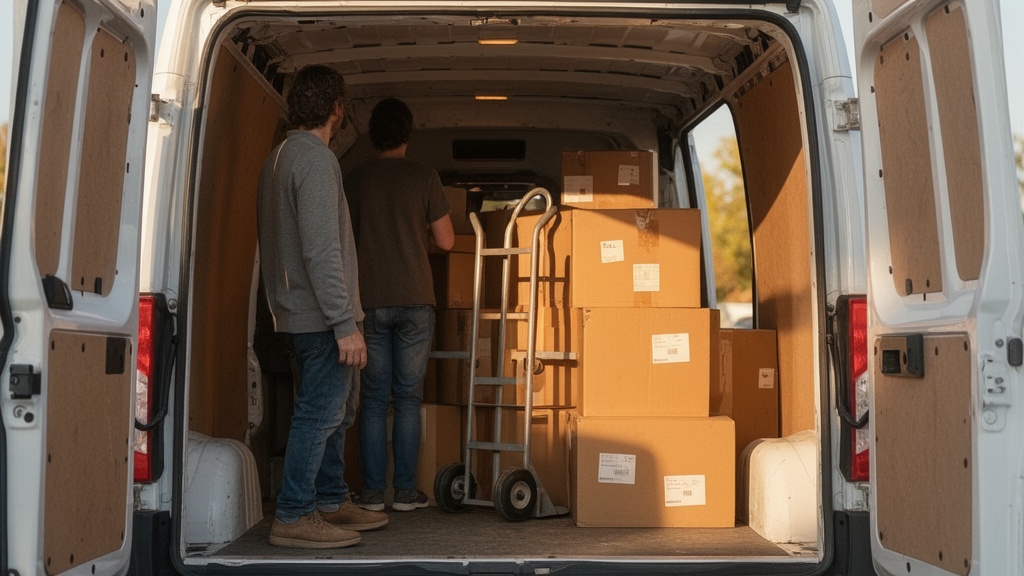
The final trend ties everything together. When the estimate lives inside a CRM, every quote automatically triggers the right follow-up sequence—reminders, check-ins, and re-engagement—without anyone remembering to send them.
Integration eliminates the leaks between tools. The inventory, the price, the customer record, and the follow-up cadence share one source of truth. To see how this flows end to end, review how Virtual Estimate AI handles the entire quoting workflow from scan to signed proposal.
For operators evaluating where to invest, purpose-built AI-powered estimation solutions for moving companies increasingly bundle estimation, pricing, and CRM follow-up into a single connected system rather than separate point tools.
The takeaway: estimation is no longer a standalone step. It is the front door to an automated revenue engine.
What These Trends Mean for Moving Companies Right Now
These seven shifts are not speculative. Across the moving industry technology 2025 marked the year automation moved from optional to expected, and the gap between adopters and holdouts is widening fast.
| Trend | Core Benefit | Competitive Risk of Ignoring It |
|---|---|---|
| AI video surveys | Estimates in ~10 minutes | Losing fast-response leads |
| Dynamic pricing | Margin + fill optimization | Underbidding peak demand |
| Self-service portals | 24/7 lead capture | Friction-driven drop-off |
| AR inventory | Fewer disputes | Inaccurate on-site quotes |
| Predictive analytics | Higher close rates | Cold, lost quotes |
| Instant delivery | Faster commitments | Slower-than-rivals image |
| CRM integration | Automated follow-up | Pipeline leaks |
The virtual moving estimates future favors companies that connect these capabilities into one workflow rather than bolting on isolated tools. Demand for moving labor remains steady according to the Bureau of Labor Statistics, which means the bottleneck is no longer demand—it is how quickly and accurately a company can quote.
Transparency also shields companies legally. The FMCSA requires clear, written household-goods estimates, and digital, itemized quotes satisfy that standard while building consumer trust.
The verdict is simple. Movers adopting these capabilities now will capture share from those still booking surveyor visits and faxing rate cards.
Related Articles
- AI-Powered Moving Estimates: The Complete Guide for Movers — Learn how AI scanning builds accurate inventories and quotes end to end.
- How AI Estimation Technology Works for Moving Companies — A behind-the-scenes look at the computer vision powering modern estimates.
- AI vs. Manual: Improved Estimation Accuracy for Movers — Compare the precision of automated and traditional survey methods.
- Virtual Estimate AI: Features, How It Works, and Who It's For — Understand the full quoting workflow from scan to signed proposal.
- Transforming the Moving Industry With AI: What's Changing Now — See the broader AI shifts reshaping moving operations.
Recommended Reading
- Solutions for Movers — Connected estimation, pricing, and CRM tools for moving companies.
- Types of Moving Estimates: Choosing the Best Option — Compare binding, non-binding, and not-to-exceed estimates.
- Virtual Pre-Move Survey: Complete Guide — A full playbook for remote survey workflows.
- Reduce Moving Costs With AI Technology — Tactics for cutting operational costs with automation.
- Moving Company Technology Stack Guide — How to assemble the right tools for a modern moving business.
Ready to see it in action?
Book a free 20-minute demo and explore how Virtual Estimate can help your business.