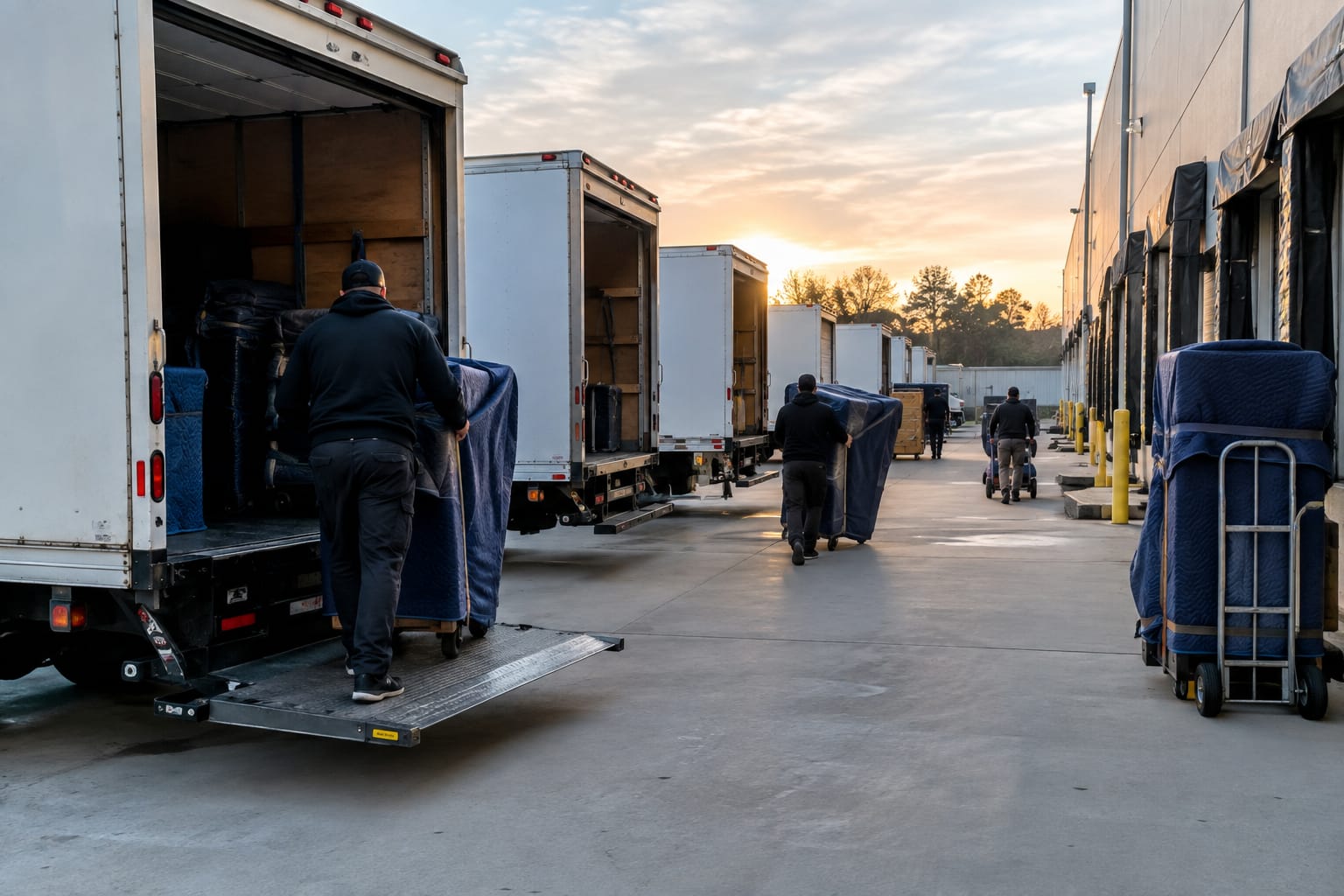

Moving companies that rely on in-home surveys to generate estimates lose hours of labor before a single quote reaches a prospect. Virtual estimate AI changes this equation — automating the inventory, pricing, and booking workflow so companies deliver accurate quotes from a remote video walkthrough in under 15 minutes. This article breaks down every core feature of the platform, explains how the AI estimation engine processes a survey step by step, and identifies the operation types that benefit most from the tool.

Key Takeaways
| Point | Details |
|---|---|
| Core function | AI-native moving estimate software that replaces in-home surveys with automated video walkthroughs and instant quote generation |
| Speed advantage | Estimates delivered in under 15 minutes vs. 24-72 hours for traditional in-home surveys |
| Ideal users | Independent movers and regional carriers processing 20+ leads monthly who want to scale without adding headcount |
| CRM included | Built-in lead management, pipeline tracking, and automated follow-up — no third-party CRM required |
| Pricing | Review Virtual Estimate pricing plans to find the right tier for your lead volume |
What Is Virtual Estimate AI?
Virtual estimate AI is purpose-built software that replaces manual pre-move surveys with an AI-driven video walkthrough and automated quoting engine. It is not a general moving management platform with an estimate tab appended — the entire product architecture centers on the estimation workflow.
The platform works through a guided video walkthrough. A customer opens a unique survey link on any device, walks through their home room by room, and the AI engine analyzes the feed in real time. It identifies items, calculates cubic footage and weight, applies pre-configured pricing rules, and generates a fully itemized estimate PDF — without requiring an estimator to leave the office.
This makes the Virtual Estimate AI platform fundamentally different from competitors like SmartMoving or Supermove, where estimation is one feature among many inside a broader dispatch and job management system. Estimation-first architecture means every element — from the video survey engine to the digital signature flow — is designed specifically around quote generation and booking conversion.
Core Features: What the Platform Does for Moving Companies
The platform delivers a focused feature set built around the estimate-to-booking conversion workflow. Unlike general moving software with estimation bolted on, the virtualestimate.ai features are each purpose-built to eliminate a specific manual step in the quoting process.
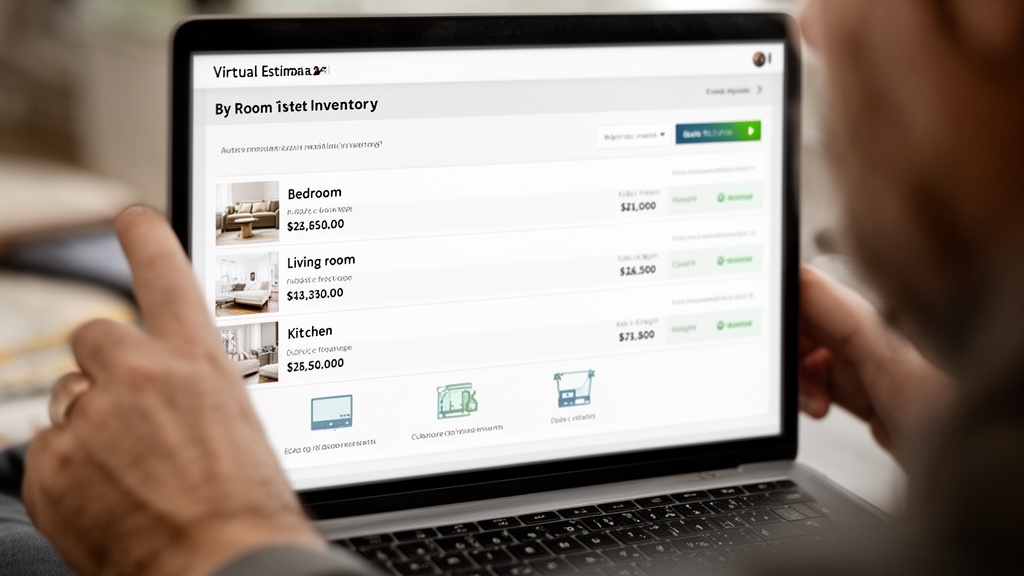
AI-powered room-by-room inventory is the core engine. As the customer moves through each room during the video survey, the AI identifies furniture, appliances, boxes, and specialty items in real time — no manual input required from the sales rep.
Additional platform capabilities include:
- Instant quote generation: Pre-configured pricing rules are applied to the AI inventory immediately after the survey, producing a branded estimate PDF without delay.
- Digital signature and booking: Customers review, sign, and confirm their booking directly from the estimate document on any device.
- Self-service survey scheduling: Customers book their video walkthrough through a shareable link — no phone scheduling required.
- Estimate management dashboard: View all active estimates, track pipeline value, and monitor survey completion rates in a single interface.
- Custom pricing rules engine: Set labor rates, truck capacity tiers, distance pricing, and add-on service fees that feed directly into automated calculations.
| Feature | Function | Manual Step Eliminated |
|---|---|---|
| AI inventory recognition | Identifies and logs items room by room | Manual item entry by estimator |
| Automated pricing calculation | Applies rate tables to AI inventory | Manual quote calculation |
| Digital signature flow | In-document booking confirmation | Phone follow-up to confirm booking |
| Self-service scheduling | Customer books own survey time | Rep-initiated scheduling calls |
| Automated follow-up | Timed SMS/email to unsigned estimates | Manual chase by sales rep |
This is what separates automated moving estimate software from traditional quoting tools. The AI replaces manual steps — it does not merely assist a human estimator. The result is a process that scales without proportional headcount growth.
Pro Tip: Configure all custom pricing rules — including add-ons, stair fees, and long-carry charges — before running your first survey batch. Pre-built rate tables mean the system produces customer-ready quotes instantly, with no manual review step required for standard residential jobs.
How the AI Estimation Engine Works Step by Step
The ai-powered moving survey platform follows a structured five-step process from first contact to signed booking.
Step 1 — Send the survey link. The sales rep sends a unique video survey link via SMS or email. No app download required — the link opens in any mobile browser.
Step 2 — Customer walks through the home. Following on-screen prompts, the customer moves room by room, holding their device steady on furniture, appliances, and boxes. A standard two-bedroom apartment walkthrough takes 8-12 minutes.
Step 3 — AI analyzes the video feed in real time. The moving company AI estimation engine identifies individual items, classifies them by category, and calculates cubic footage and weight for each room as the walkthrough progresses.
Step 4 — Pricing is calculated automatically. The system cross-references the AI inventory against pre-configured rate tables — distance, floor access, labor requirements, and any selected add-on services are factored in without manual intervention.
Step 5 — Estimate delivered and signed. A branded estimate PDF is generated and sent within minutes of survey completion. The built-in digital signature field allows immediate booking confirmation without a follow-up call.
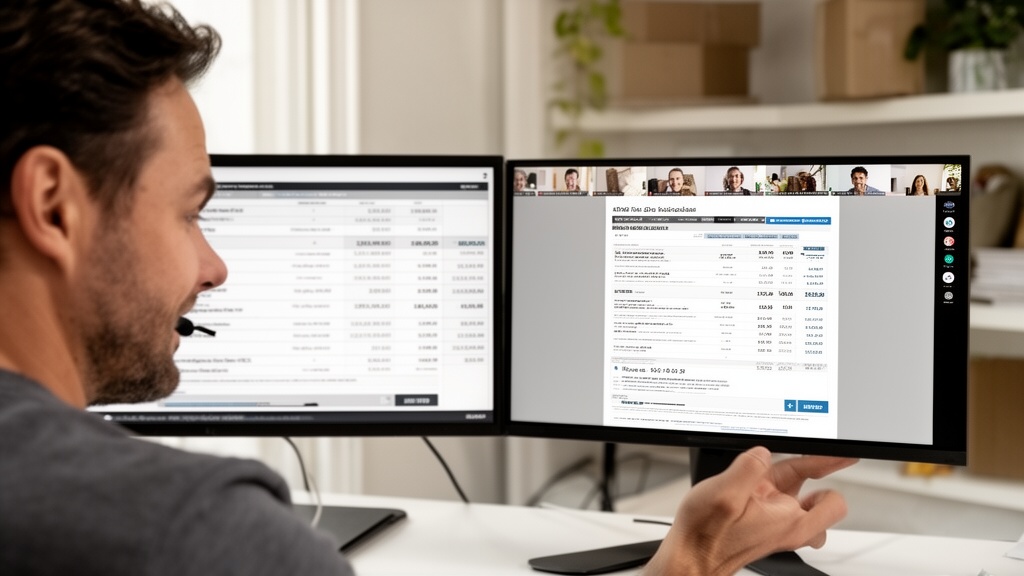
The full cycle — survey link to signed estimate — completes in under 15 minutes for a standard residential move. Traditional in-home surveys require scheduling, travel, manual data entry, and a separate follow-up call to deliver the quote. The gap is measured in hours or days versus minutes.
Pro Tip: Send the survey link within 5 minutes of a new inquiry arriving. Speed-to-contact is consistently among the strongest predictors of close rate in service businesses — and in a competitive moving market, arriving first with a professional, branded quote is a decisive advantage before any competitor makes contact.
Virtual Estimate can help: Virtual Estimate's AI-powered platform turns remote video walkthroughs into accurate, signed estimates in under 15 minutes — no estimator dispatch required. Learn more →
Virtual Estimate AI vs. Traditional Estimation Methods
The operational differences between ai moving estimate software and legacy methods are significant at every stage of the workflow.
| Criteria | Virtual Estimate AI | In-Home Survey | Phone/Email Quote |
|---|---|---|---|
| Estimate delivery time | Under 15 minutes | 24-72 hours | 1-3 days |
| Estimator travel required | No | Yes | No |
| Inventory verification | AI-verified, item-level | Human observation | Customer self-reported |
| Digital booking capability | Built-in e-signature | Manual follow-up | Manual follow-up |
| Concurrent estimate capacity | Unlimited | Limited by staff | Limited by staff |
| Dispute risk | Low (documented AI inventory) | Moderate | High (no documentation) |
Traditional in-home surveys carry real overhead — estimator time, vehicle cost, and scheduling friction on both sides. Phone and email quotes rely entirely on customer-reported inventory, which the American Moving and Storage Association identifies as a leading driver of post-move disputes and customer complaints.
The virtual moving estimate tool addresses both problems simultaneously. AI-verified inventory removes the accuracy gap inherent in phone quotes. Remote surveys eliminate the travel overhead of in-home visits. The documented AI inventory also provides a dispute-prevention record — timestamped, retrievable, and tied directly to the original estimate.
The Federal Motor Carrier Safety Administration requires interstate movers to provide written estimates before a move. Virtual Estimate AI's PDF output and digital signature workflow satisfies this requirement automatically, reducing compliance overhead for carriers operating across state lines.
Who Is Virtual Estimate AI Designed For?
The virtual moving estimate tool fits a specific operational profile. Identifying whether your company matches that profile determines how much value the platform delivers.
Best fit:
- Independent movers processing 20-100+ leads monthly who want to scale quote volume without adding estimator headcount.
- Regional carriers covering multiple service areas where dispatching estimators across a wide territory is cost-prohibitive.
- Sales-focused operations where speed to quote is a competitive differentiator. Prospects who receive a professional estimate within minutes of inquiry convert at higher rates than those waiting 24-48 hours for an in-home appointment.
- Companies building digital-first customer journeys — self-service scheduling, instant quote delivery, and digital signature align with modern customer expectations for service engagements.
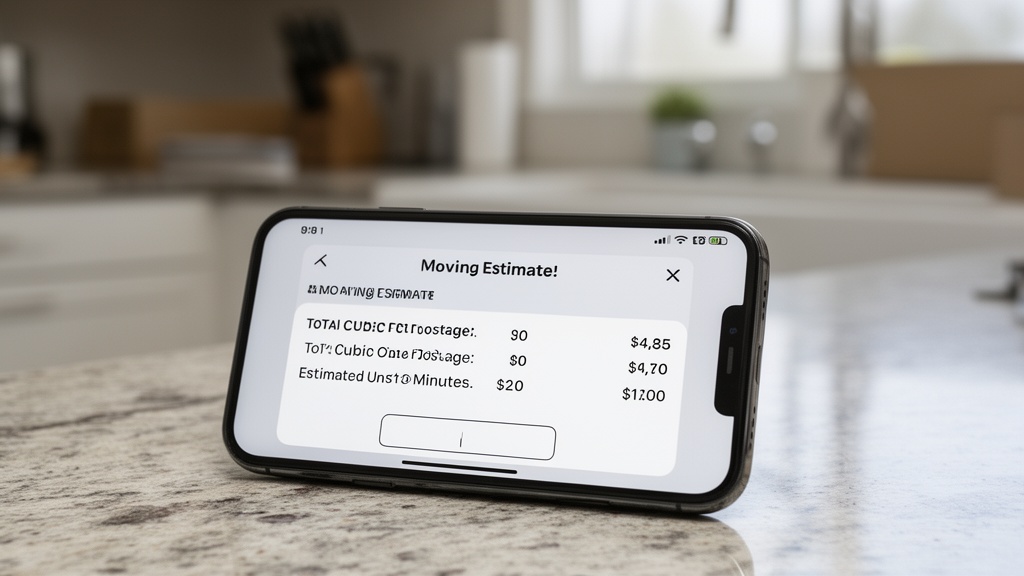
Not the right fit for:
- Large-scale commercial relocations requiring physical assessment of access routes, elevator specifications, or specialty equipment logistics.
- Industrial or high-value equipment moves where on-site inspection is genuinely necessary for accurate scoping.
For the vast majority of residential, apartment, and small commercial moves, virtual pre-move survey software delivers full capability without compromise.
Try Virtual Estimate's virtual survey tool: Send a survey link, get AI-verified inventory, and deliver a signed quote — all in under 15 minutes. Get started →
CRM Integration and Workflow Automation Capabilities
Estimation software that operates in isolation creates data gaps between sales and operations. The built-in CRM for moving companies inside Virtual Estimate AI unifies the entire lead-to-booking workflow so every customer touchpoint is visible in one place.
Every lead, survey recording, estimate document, and booking confirmation is stored in a unified contact timeline. Sales reps see the full customer history — from first inquiry through signed booking — without toggling between systems.

Workflow automation capabilities:
| Automation | Trigger Event | Business Benefit |
|---|---|---|
| Follow-up sequence | Estimate delivered but unsigned | Reduces manual rep chase work |
| Pipeline advancement | Survey complete or estimate signed | Real-time operations visibility |
| Team notification | Booking confirmation | Immediate scheduling handoff to ops |
| Survey invitation | New lead captured | Removes manual link-send step |
| Revenue reporting | Continuous | Forecasting and lead source ROI tracking |
For companies already using third-party CRM platforms, API integrations push estimate data and booking confirmations into external systems. This allows Virtual Estimate AI to function as the estimation and survey layer on top of an existing operations stack — no full migration required. To see all platform solutions, the solutions page provides a complete breakdown of survey, CRM, and automation capabilities.
Pro Tip: Activate automated follow-up for unsigned estimates at the 4-hour and 24-hour marks. Moving market data consistently shows that the first company to respond with a professional quote wins the majority of competitive bids — timed follow-up keeps your estimate top-of-mind without requiring a rep to manually track every open quote.
How to Get Started with Virtual Estimate AI
Getting operational on the platform follows a structured onboarding sequence built for fast deployment.
Step 1 — Configure pricing rules. Enter base rates, truck tiers, labor costs, and add-on fees. Accurate rate tables are the foundation — the system generates customer-ready quotes automatically from this configuration.
Step 2 — Customize your estimate template. Add company branding, logo, deposit terms, and service notes. Every customer-facing document the platform produces carries your company identity.
Step 3 — Run a test survey. Walk through your own space using the customer survey link. Verify that AI inventory output and pricing calculations match expectations before going live with real prospects.
Step 4 — Connect your lead sources. Link your website contact form, Google Business Profile, or lead provider feeds. New inquiries can automatically trigger a survey invitation — removing the manual dispatch step entirely.
Step 5 — Train your team. Most sales teams are running live surveys independently after a single training session. The interface is designed for non-technical users, and full onboarding typically completes within one business day.
Review Virtual Estimate pricing plans to select the right tier for your monthly lead volume. For a full overview of what the platform delivers across different operation types, the solutions page covers use-case-specific detail.
Related Articles
- Types of Moving Estimates: Choosing the Best Option — Understand the differences between binding, non-binding, and flat-rate estimates and when each type applies to your operation.
- How to Conduct a Virtual Pre-Move Survey: Step-by-Step Guide — A practical walkthrough of the virtual survey process, including customer preparation tips and common pitfalls.
- CRM for Moving Companies: Streamline Operations — How CRM tools built for movers reduce admin overhead and improve lead conversion rates.
- Moving Company CRM: Complete Operations Guide — A comprehensive guide to CRM implementation for moving companies, from lead capture to post-move follow-up.
Ready to see it in action?
Book a free 20-minute demo and explore how Virtual Estimate can help your business.