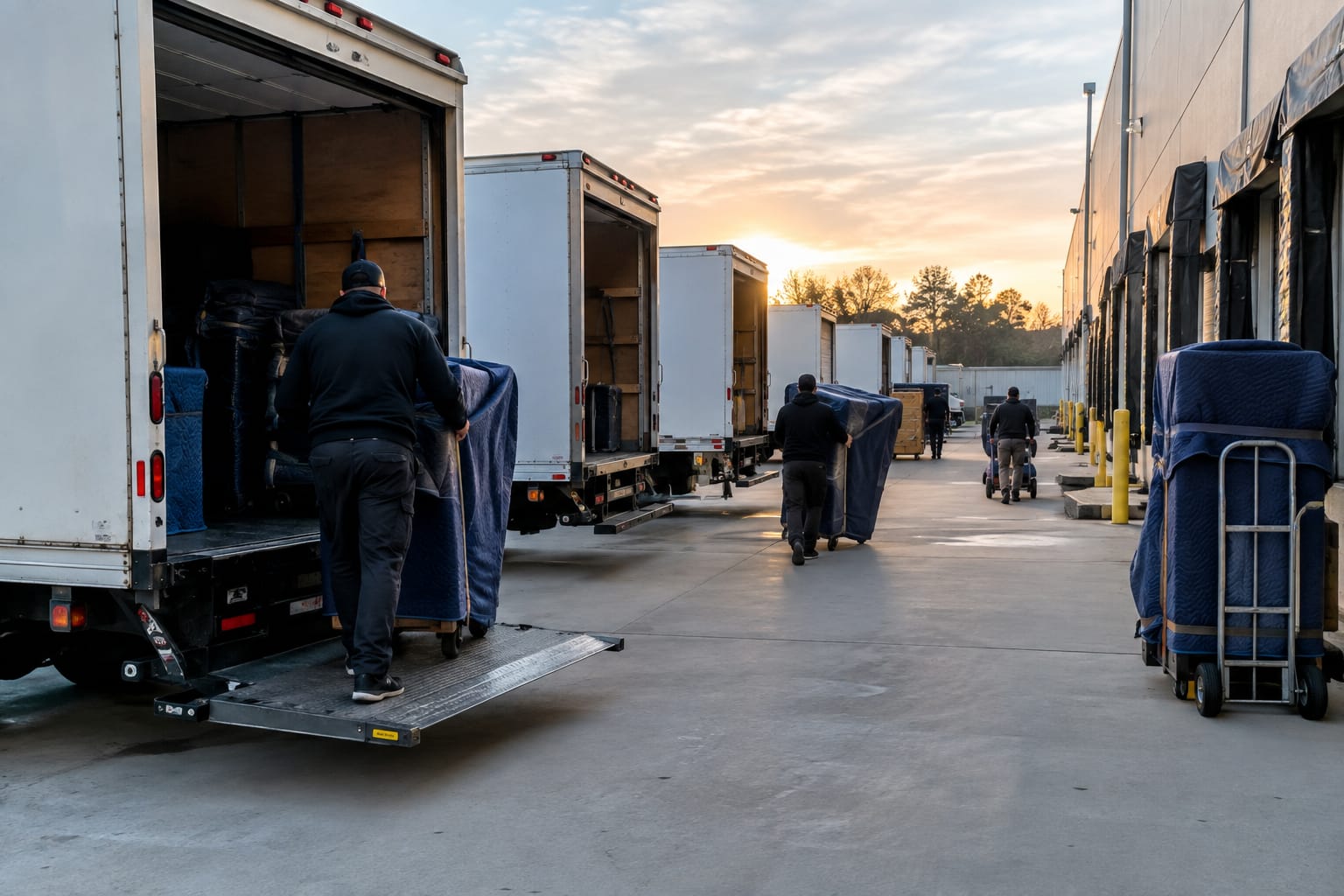

The moving industry has operated on manual processes for decades — paper estimates, phone-based bookings, and handwritten inventory sheets passed between estimators and crews. That operational model is ending. AI in the moving industry is now a competitive reality, not a vendor pitch. Companies that have automated estimating, lead management, and dispatch are out-converting and out-retaining traditional operators at measurable rates. This article breaks down exactly what's changing, which technologies are driving it, and what moving company leaders must do to stay ahead.

Key Takeaways
| Point | Details |
|---|---|
| AI estimation eliminates the waiting game | Virtual survey tools generate itemized quotes within minutes, replacing the 24–72-hour turnaround of traditional in-home surveys |
| Customer transparency is now scalable at zero marginal cost | AI-generated photo inventories and automated communication sequences reduce disputes and build lasting trust without adding headcount |
| The modern moving tech stack spans six core categories | From virtual estimation to business intelligence, integrated SaaS platforms cover the full operations cycle |
| Change management — not technology — determines transformation outcomes | Harvard Business Review's analysis of digital transformation failures identifies change management as the primary determinant of success |
| AI adoption creates compounding competitive advantage | Companies that automate now build structural cost and experience advantages that widen as late adopters delay |
The State of AI in the Moving Industry Today
The U.S. moving and storage sector is one of the most fragmented service industries in the country. The Bureau of Labor Statistics classifies moving companies under specialized freight trucking — a segment employing hundreds of thousands of workers across tens of thousands of businesses — yet the vast majority still run on manual workflows, disconnected software, and phone-heavy intake processes.
That fragmentation is now creating opportunity. McKinsey's research on AI adoption across service sectors documents that industries combining high transaction volume, labor-intensive operations, and fragmented competitive landscapes tend to see the most dramatic efficiency gains from AI deployment. Moving fits all three criteria.
Early adopters are already gaining ground. AI-powered estimating tools, CRM automation platforms, and route optimization systems are live in moving operations across the country. The companies running them respond to leads faster, close at higher rates, and retain customers more effectively than those running legacy workflows.
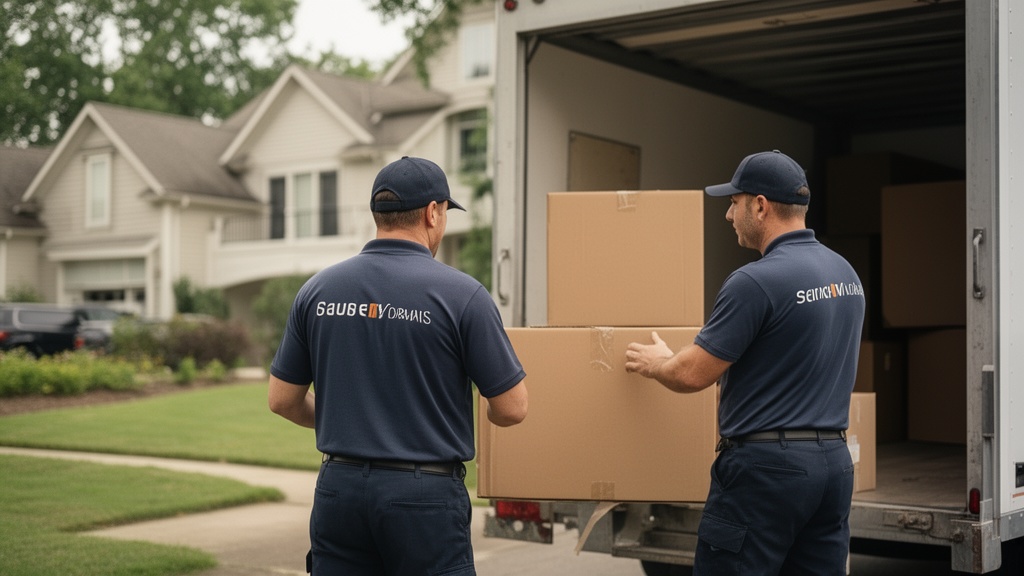
Why the Moving Industry Is Primed for AI Disruption
Three structural characteristics make the moving industry uniquely suited for AI-driven transformation.
High-volume structured data. Every residential or commercial move generates repeatable, structured data: item inventories, cubic footage measurements, origin and destination addresses, crew hours, and truck capacity loads. AI systems perform best on exactly this kind of input. The raw material for powerful automation already exists in every job.
Customer experience as the defining differentiator. The American Moving and Storage Association identifies communication quality and pricing transparency as the top factors driving customer satisfaction and referrals. AI enables both at scale — through instant quote delivery, automated status updates, and post-move follow-up sequences — without adding headcount.
Persistent labor market pressure. Recruiting and retaining moving crews is an ongoing operational challenge across the industry. AI reduces administrative overhead for office staff, allowing leaner teams to manage larger job volumes. Dispatchers and estimators using AI tools handle significantly more jobs per day than counterparts working manual processes — a structural cost advantage that compounds over time.
The combination of data richness, customer-centricity, and workforce economics makes moving one of the most AI-ready verticals in the trades and services category. Understanding what AI technology is and how it works in practice is the essential first step for operators considering this transition.
AI-Driven Estimation: From Manual Processes to Instant Quotes
Estimation is the highest-leverage entry point for AI in moving operations. Traditional in-home surveys require scheduling, estimator travel, and manual inventory compilation — a process that commonly takes 24–72 hours from first contact to quote delivery. AI-driven virtual surveys complete the equivalent process in under 30 minutes.
The workflow transformation looks like this:
- Customer films a walkthrough of their home using a mobile device
- Computer vision AI processes the footage to identify and catalog furniture and household items
- The system generates an itemized estimate with cubic footage, weight approximations, and pricing
- The customer receives the completed quote within minutes of submission
This speed advantage is decisive. Lead conversion data consistently shows that response time is the strongest predictor of close rate — customers who receive quotes within two hours are far more likely to book than those waiting 24–48 hours. Speed signals organizational competence before the job even begins.
Pro Tip: Track time-to-quote alongside close rate as paired KPIs from day one. When you cut quote delivery from 48 hours to under 2 hours, close rate improvements follow directly. That data makes the ROI case for AI estimation without requiring any vendor-supplied assumptions.
AI estimation also improves accuracy. Manual estimates are vulnerable to human error, inconsistent item categorization, and intentional underbidding to win jobs that later exceed budget. Computer vision applies consistent measurement logic to every job, reducing dispute rates and protecting per-move profitability. A full breakdown is available in this guide to types of moving estimates and how to choose the best option for your service model.

Building Customer Transparency Through AI Technology
Customer trust is the moving industry's most valuable and most fragile asset. The Federal Motor Carrier Safety Administration's consumer protection resources document persistent patterns of pricing disputes and damage claims — nearly all of which trace back to documentation failures at pickup or delivery. AI-generated, timestamped job records close that gap systematically.
Transparency at scale requires systems, not effort. When every virtual survey produces item-level photos stored with the job file, when customers receive automated pre-move reminders and day-of status updates, and when delivery confirmation is captured digitally, the company builds a verifiable record at zero marginal labor cost.
The transparency capabilities AI enables include:
- Visual inventory documentation: Photos of all items captured during the virtual survey, stored in the job file and accessible to customers and crews
- Automated communication sequences: Pre-move day-before confirmations, morning-of updates, and post-move follow-ups triggered automatically by job status changes
- Digital delivery confirmation: Timestamped customer signature at delivery with item condition documentation
- Dispute resolution data: Complete photo and status history for any job, accessible immediately during a claim
This documentation transforms disputes from adversarial negotiation into evidence review — a situation where the well-documented company almost always prevails. The virtual pre-move survey complete guide covers how to build this documentation process into every job from the start.
Pro Tip: Set up automated photo checkpoints at three stages: pre-pickup inventory, truck loading confirmation, and delivery. Companies that implement all three stages create unambiguous baseline documentation at every transfer point — the single most effective operational change for reducing successful damage claims.
Top SaaS Tools Leading the AI Transformation in Moving
The modern AI-enabled moving operation runs on a stack of integrated platforms. No single tool covers the full workflow — the competitive advantage comes from how tightly those platforms connect.
| Tool Category | Core Function | AI Capability | Business Impact |
|---|---|---|---|
| Virtual Survey / AI Estimation | Remote inventory and quote generation | Computer vision, item recognition | Cuts time-to-quote from days to minutes |
| CRM Platform | Lead management, follow-up automation | Lead scoring, sequence automation | Reduces lead drop-off, improves close rate |
| Dispatch & Route Optimization | Crew scheduling, truck assignment | Dynamic route AI, real-time rescheduling | Reduces fuel cost, improves on-time performance |
| Customer Communication | SMS/email automation, review requests | NLP-driven message personalization | Increases review volume and repeat booking rate |
| Job Management | Digital job sheets, billing, crew tracking | Workflow automation, anomaly detection | Eliminates manual billing errors, speeds invoicing |
| Business Intelligence | Reporting, forecasting, pipeline analytics | Predictive analytics, trend identification | Enables proactive staffing and fleet planning |
AI solutions purpose-built for moving companies integrate several of these layers into a unified interface, reducing the number of disconnected platforms an operator must manage simultaneously.
The critical integration point is estimation-to-CRM. When a virtual survey produces an estimate, that data should flow immediately into the CRM for automated follow-up sequencing. Manual re-entry between systems is where leads fall through the cracks. The moving company technology stack guide maps the full architecture and integration sequence for operators building or rebuilding their platform stack.
Companies looking to reduce moving costs with AI technology will find route optimization and dispatch automation particularly high-leverage — fuel and crew scheduling are two of the largest controllable cost line items in any moving operation.
How to Lead a Digital Transformation at Your Moving Company
Technology selection is the easy part of moving company digital transformation. Adoption is where most implementations stall. Harvard Business Review's analysis of why digital transformations fail identifies change management — not technology fit — as the primary determinant of success. Moving company owners can avoid this pattern by following a phased implementation approach.
Phase 1: Audit Before You Buy
Map every customer touchpoint and internal workflow before purchasing anything. Identify where time is lost (slow quote delivery, manual data entry), where errors occur (billing discrepancies, missed follow-ups), and where customer complaints originate. These are the highest-ROI automation targets — and they vary significantly by company size and service mix.
Phase 2: Start With Estimation
Estimation is the right starting point for three reasons: it directly affects revenue through conversion rate improvement, reduces cost through lower estimator time per job, and immediately improves customer experience through speed and accuracy. Automate this workflow before tackling dispatch or back-office operations.
Phase 3: Layer In CRM Automation
Once estimation is running, integrate a CRM that captures every inbound lead and automates follow-up sequences. Review your options in this CRM for moving companies guide to streamline operations before committing to a platform. The CRM becomes the operational backbone that all other tools integrate into.
Phase 4: Train for Adoption
Train staff on why the tools exist — how AI estimation eliminates wasted no-show site visits, how CRM follow-up increases commission-eligible close rates. Staff who understand the operational benefit to their own role adopt new systems at significantly higher rates than those trained purely on feature walkthroughs.

For a ground-level view of how one specific workflow transition operates in practice, the step-by-step guide to conducting virtual pre-move surveys demonstrates the full process from first customer contact through completed documentation.
Overcoming Resistance to AI Adoption in Moving Operations
Resistance to moving company innovation emerges from two distinct sources: field crew concerns about job displacement, and owner skepticism about ROI. Each requires a different response.
Field crew concerns: Physical relocation, on-site problem-solving, and direct customer interaction are not functions AI replaces in the near term. The moving industry AI transformation targets office workflows — estimating, lead management, and dispatch communication. Communicating this distinction clearly and early reduces anxiety that could create active resistance from the field crews who are essential to every job.
Owner skepticism: ROI skepticism is rational — most software implementations have historically underdelivered on vendor promises. The correct response is a structured pilot: establish a 90-day operational baseline (time-to-quote, close rate, administrative hours per job), implement one AI tool, and measure against that baseline at 30, 60, and 90 days. Data converts skeptics faster than any vendor presentation.
| Objection | Root Cause | Effective Counter |
|---|---|---|
| "Too expensive for our size" | Unclear ROI model | Calculate cost-per-lead against close rate improvement |
| "The team won't adopt it" | Change management gap | Involve staff in tool selection; tie adoption to incentives |
| "Customers prefer in-person estimates" | Untested assumption | A/B test virtual vs. in-home; let conversion data decide |
| "We're too small to need this" | Scale misconception | Most AI tools price per seat or per job and scale with volume |
| "Tried software before and it failed" | Prior bad experience | Diagnose root cause of failure before ruling out the category |
Pro Tip: Run a 30-day parallel process where estimators complete jobs both the old way and the new way simultaneously. This eliminates transition risk while generating direct comparison data — time per estimate, accuracy rate, customer response rate — that builds internal consensus for full adoption without requiring anyone to take the change on faith.
Moving company operators who successfully navigate AI adoption often discover downstream benefits in lead generation as well. The moving service marketing complete guide explores how AI-generated operational data feeds better audience targeting and higher-quality inbound lead flow.
What the AI-Powered Moving Company Looks Like Today and Beyond
The operational gap between AI-enabled and traditional moving companies is widening. Gartner's research on AI adoption in service industries projects compounding competitive disadvantage for late adopters — as AI-native companies use efficiency gains to lower prices, improve service quality, or both simultaneously.
The fully AI-enabled moving operation runs with:
- Sub-2-hour quote turnaround on residential moves via virtual survey — no estimator travel required
- Automated lead nurturing that follows up with unbooked prospects at 7, 14, and 30 days without manual intervention
- Dynamic dispatch that adjusts crew and truck assignments in real time based on actual job completion data
- Predictive revenue modeling from CRM pipeline data, enabling proactive staffing and fleet planning decisions
- Automated review solicitation with AI-managed response templates for reputation management at scale
These capabilities are operational today for companies running integrated AI-powered moving platforms. The gap between operators using these tools and those still running manual workflows grows measurably each quarter.
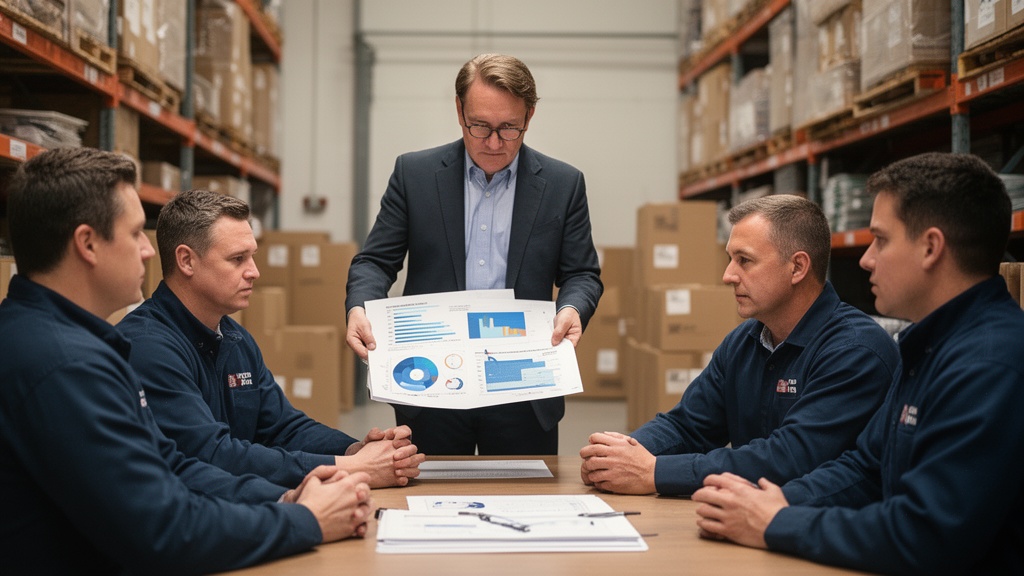
Looking ahead, moving company innovation will incorporate predictive demand modeling by geography and season, computer vision for truck load optimization, and AI-assisted commercial contract pricing. The question for moving company operators is no longer whether to adopt AI-driven technology — it's how fast to move. Exploring how to use AI agents for your business provides the strategic framework for operators planning their next phase of digital investment. The Virtual Estimate AI platform represents what this integrated, AI-native operational model looks like in practice.
Related Articles
- CRM for Moving Companies: Streamline Operations — Learn how CRM platforms automate lead management, follow-up sequencing, and reporting for moving operations at scale.
- Virtual Pre-Move Survey Complete Guide — Everything needed to implement virtual surveys, from technology selection to customer onboarding and documentation workflows.
- How to Conduct a Virtual Pre-Move Survey: Step-by-Step — A practical walkthrough of the virtual survey process from first customer contact through completed estimate delivery.
- Digital Marketing Strategies for Moving Companies — How to use digital channels to generate higher-quality leads and convert them more efficiently using data-driven methods.
- Pricing Strategies for Moving Companies: Maximizing Profitability — Data-driven approaches to moving company pricing that protect margins while remaining competitive in local markets.
Recommended Resources
Ready to see it in action?
Book a free 20-minute demo and explore how Virtual Estimate can help your business.