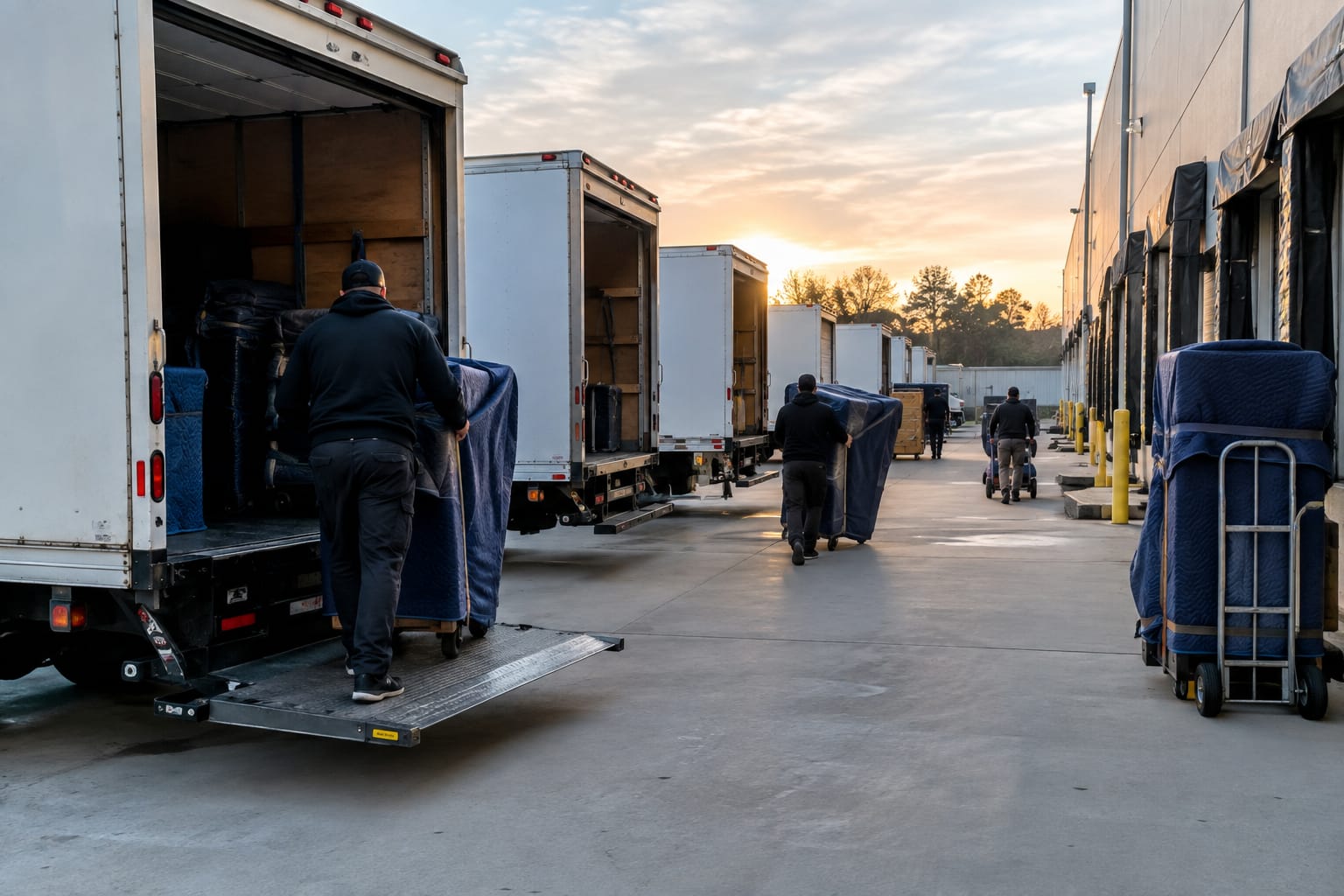

You reduce estimating costs with AI by taking the drive out of the survey, cutting the hours your estimator spends building inventories by hand, and catching under-estimates before they reach move day. AI video estimation covers the first two: the customer films the home, software drafts a measured inventory, and your estimator reviews and prices it from the office. Rate templates and estimated-vs-actual tracking cover the third.
The cost of estimating rarely shows up as one line on your P&L. It sits in estimator payroll, fuel, re-quotes and the job that loses money on move day because nobody surveyed the garage. Add those up first, then decide where AI helps.
Key takeaways
- Estimating costs come from five places: drive time, desk time, re-quotes, move-day under-estimates and disputes.
- AI video estimation removes the drive and most of the typing. Your estimator still reviews the inventory and signs off on the price.
- Rate templates stop estimators from rebuilding the same price by hand and keep quotes consistent between people.
- A cheap estimate that misses the garage costs more than a slow one. Compare estimated vs. actual on each job.
- Measure your own baseline before you change anything, so you can tell whether the new process works.
Where estimating money goes at a moving company
Walk through a normal week at your company and you will find estimating costs in five places:
- Drive time to in-home surveys. Your estimator's hours in the car, the fuel and the vehicle, and the scheduling gaps between appointments. You pay for the surveys that never book as well as the ones that do.
- Desk time. Typing the inventory from notes, looking up rates, building the estimate document and chasing the customer for details the survey missed, such as the elevator reservation or the floor at the new place.
- Re-quotes. The customer adds a storage unit, changes the date or asks for a packing option. Each revision repeats part of the desk work.
- Under-estimates that bite on move day. The crew finds a garage full of boxes nobody priced. On a binding or flat-rate job you eat the extra hours. On an interstate non-binding estimate you cannot demand more than 110% of the estimate at delivery, and the rest is billed later, 30 days after delivery, so a big miss also slows your cash.
- Disputes. Office time spent arguing about what was on the estimate, and the discounts you give to settle it.
You can see the first three on a timesheet. The last two rarely get tracked, so owners write them off as bad luck instead of fixing the estimate that caused them.
Put a number on your own estimating cost
You do not need industry benchmarks. Your own numbers are the ones that matter, and a simple worksheet gets you there. For one month, count:
- In-home surveys completed, and the average hours per visit including the drive.
- Desk hours per estimate, from first contact to estimate sent.
- Re-quotes per booked job.
- Jobs where actual hours or volume ran over the estimate by more than your tolerance.
- Credits and discounts given over estimate disputes.
Here is an illustrative example with round numbers, not industry data. Say your estimator spends 3 hours on each in-home visit once you count the drive and runs 10 visits a week, which is 30 paid hours. If 4 of those 10 surveys book, each booked job carries 7.5 hours of survey time before anyone lifts a box. Move 5 of those visits to video reviews that take your estimator 30 minutes each, and the same week needs 17.5 hours. Plug in your own figures and your estimator's loaded hourly cost to see what it means for you.
Cut drive time with video and AI inventory
AI video estimation replaces the walkthrough. The customer records a video of the home on their phone, the software identifies the items and drafts a measured inventory, and your estimator reviews it and prices the job from the office. Your estimator can clear several of these in the time one cross-town appointment used to take, and the lead gets a written estimate while they are still comparing movers.
Picture a Tuesday in peak season. Your estimator has four in-home appointments spread across the metro area, and one customer cancels after the drive. With video, the same estimator reviews four walkthroughs from the office between phone calls, and the cancellation costs you an unopened link instead of a morning.
Keep in-home visits for the jobs that justify them: large homes with a lot of storage, specialty items like a grand piano or a gun safe, hard access, and commercial moves. For the full trade-off, see in-home moving estimates vs. AI video surveys, and for the formats themselves, what a virtual estimate is.
AI does not remove your estimator's judgment. The software cannot know that the dresser is still full, that the new building needs a certificate of insurance for the elevator, or that the customer is selling the sectional next week. Your estimator asks those questions and owns the final price.
Cut desk time with rate templates and auto-pricing
A lot of desk time goes into rebuilding the same price by hand. Standardize what goes into the number once, and let the software apply it:
- Hourly rates by crew size, travel fees and minimums for local moves.
- Rates per cubic foot or per pound for long distance, with your density assumption written down.
- Packing and materials pricing.
- Surcharges for stairs, long carries, elevators, shuttles and heavy items.
- Estimate templates by move type, so a studio, a three-bedroom house and an office move each start from the right layout.
With the rates in the system, the software prices the estimate from the inventory, and a re-quote takes a few edits instead of a rebuild. Message templates for sending and following up on estimates save the rest of the typing. Our step-by-step guide on how to automate quoting at a moving company covers the setup in order.
Re-quotes shrink when the customer can fix the inventory without a phone call. Send the itemized inventory with each estimate, ask the customer to mark what is wrong, and put the date the final list is due on the estimate. A customer who adds a storage unit two weeks out then costs you one revision instead of a string of calls and a second survey.
Stop paying for under-estimates on move day
A cheap estimate that misses the garage is the most expensive estimate you send. Take a long-distance quote: the customer films two bedrooms and the living room and forgets the storage unit across town. Your crew finds out at loading, the truck plan changes, and someone has a hard conversation in the driveway. Build these checks into the process instead:
- Require footage or answers for the garage, attic, basement, shed and any storage unit.
- Confirm access at both addresses: stairs, elevators, long carries and truck parking.
- Ask which items are staying and how many boxes are already packed.
- Have your estimator review the AI draft before it is priced, and flag specialty items.
- Ask the customer to confirm the inventory. A customer portal with a “this doesn't match” button makes it easy to report a missing item before the crew arrives.
Measure it with estimated vs. actual
Faster estimates only save money if they hold up on move day. After each job, compare what you estimated with what happened, and review the numbers monthly.
| Metric | How to measure it | What it tells you |
|---|---|---|
| Estimator hours per booked job | Survey and desk hours divided by jobs booked | Whether video and templates cut labor |
| Lead to estimate sent | Time from first contact to estimate delivered | Whether you quote while the lead is still shopping |
| Re-quotes per booked job | Estimate revisions divided by jobs booked | Whether surveys capture the full picture the first time |
| Estimated vs. actual | Estimated hours or volume against the job record | Which estimators, move types and survey methods miss |
| Dispute credits | Discounts given over estimate disagreements | What inaccurate estimates cost you after the move |
Split the numbers by survey method. If video estimates run over more often than in-home ones for large homes, tighten your rules for when a visit is required. For turning these numbers into a business case, read how to calculate moving software ROI.
On interstate jobs, confirm the current FMCSA survey and written-estimate requirements in 49 CFR Part 375 before you move surveys to video. For in-state moves, rules vary by state.
How Virtual Estimate cuts estimating costs
Virtual Estimate is a moving company CRM that covers the whole estimating workflow in one system:
- AI video estimation. The customer records a phone video, and Virtual Estimate turns it into a measured, priced inventory with no in-home visit. Your estimator reviews and adjusts it before sending, and the inventory flows into the estimate and the Bill of Lading.
- Virtual surveys. A self-guided phone survey the customer opens from a link, with a live quality coach during capture and a full moving brief at the end.
- Estimate software. Your rates and surcharges built in, one calculator for local, long-distance, flat-rate and commercial moves, auto-priced from the inventory and sent as a branded PDF.
- Automation and follow-ups. Automated SMS and email follow-ups with message templates and merge variables, so a sent estimate does not go cold while you are out on a job.
- Reporting. Reporting and analytics show estimated vs. actual on every job, tied to payroll, company-wide or per branch.
To see how a customer video turns into a priced estimate, explore Virtual Estimate's AI video estimation or check plans and start a free trial.
Ready to see it in action?
Book a free 20-minute demo and explore how Virtual Estimate can help your business.