
Shifting away from physical walkthroughs cuts estimation travel costs by up to 45%. Implementing a standardized virtual pre-move survey is now a baseline requirement for competitive moving operations. This guide provides estimators and operations managers with the exact workflows, scripts, and checklists required to execute flawless remote assessments.
Key Takeaways
| Point | Details |
|---|---|
| Efficiency Gains | See how one moving company saved 15 hours per week using this process. |
| Accuracy Benchmarks | Properly structured virtual surveys achieve 96% weight and volume accuracy compared to in-home visits. |
| Conversion Rates | Delivering quotes within 2 hours of a remote assessment increases booking rates by up to 32%. |
What You Need Before Starting a Virtual Pre-Move Survey
Before transitioning away from physical walkthroughs, your sales team requires a formalized framework. Without standardized procedures, estimators will struggle with inconsistent volume calculations and missed inventory.
Define exactly which types of moving estimates your operation will support remotely.
Pro Tip: Establish a clear cutoff for virtual surveys, such as automatically requiring in-home visits for properties exceeding 4,000 square feet or complex international relocations.
Integrating the right virtual estimate technology for moving companies establishes a professional foundation.
Modern platforms sync directly with your CRM, eliminating the need for manual data entry across multiple systems.
This technological baseline is mandatory for scaling your remote sales operations.
Step 1: Schedule and Prepare the Customer
The success of a remote moving estimate process relies heavily on customer preparation prior to the call.
Send an automated confirmation email 24 hours before the appointment containing a brief video moving survey checklist.
Instruct customers to open all closets, turn on lights in dark rooms, and ensure their mobile device is fully charged.
Setting these expectations prevents estimators from wasting 10–15 minutes troubleshooting or waiting for clients to prepare spaces.
Step 2: Set Up Your Virtual Survey Platform
Relying on consumer video apps like FaceTime or WhatsApp introduces unacceptable professional risk and lacks inventory integration.
Operations teams must utilize a dedicated virtual pre-move survey platform designed specifically for the moving industry.
These tools capture recorded footage, allow for live annotations, and automatically calculate cubic footage based on standard item dimensions.
Virtual Estimate can help: Stop wasting hours on manual volume calculations and driving to physical appointments. Learn more →
Learning to navigate specialized software reduces subsequent data entry time by an average of 25 minutes per quote.
Step 3: Conduct the Room-by-Room Walkthrough
Structure the call to follow a logical, unvarying path through the residence to ensure zero missed items.
Start at the front door and progress systematically through living areas, bedrooms, and finally storage spaces like garages or attics.
| Property Size | Estimated Walkthrough Time | Key Focus Areas |
|---|---|---|
| 1–2 Bedroom Apartment | 15–20 Minutes | Building access, elevator dimensions |
| 3 Bedroom House | 25–30 Minutes | Garage storage, large appliances |
| 4+ Bedroom House | 40–45 Minutes | Attics, basements, outdoor furniture |
Pro Tip: Always ask the customer to physically open cabinet doors and drawers on camera to accurately gauge the volume of loose items.
Step 4: Capture Inventory and Special Items
Standard furniture is simple to assess, but specialized items require targeted questioning and visual verification.
| Item Category | Verification Required | Risk Factor |
|---|---|---|
| Safes & Vaults | Manufacturer plate, dimensions | High weight requires special equipment |
| Pianos | Grand vs. Upright, staircase width | Special handling and custom crating |
| Artwork | Framed dimensions, glass presence | Extreme fragility |
Step 5: Generate and Deliver the Estimate
Speed to lead dictates conversion rates in the residential moving sector.
Operations utilizing specialized software should generate and deliver the final estimate within 60 minutes of ending the video call.
Review industry data about virtual survey adoption to understand how rapid quote delivery creates a competitive advantage.
Pro Tips for Higher Survey Accuracy
Mastering virtual survey best practices requires continuous refinement of your team's on-camera presence.
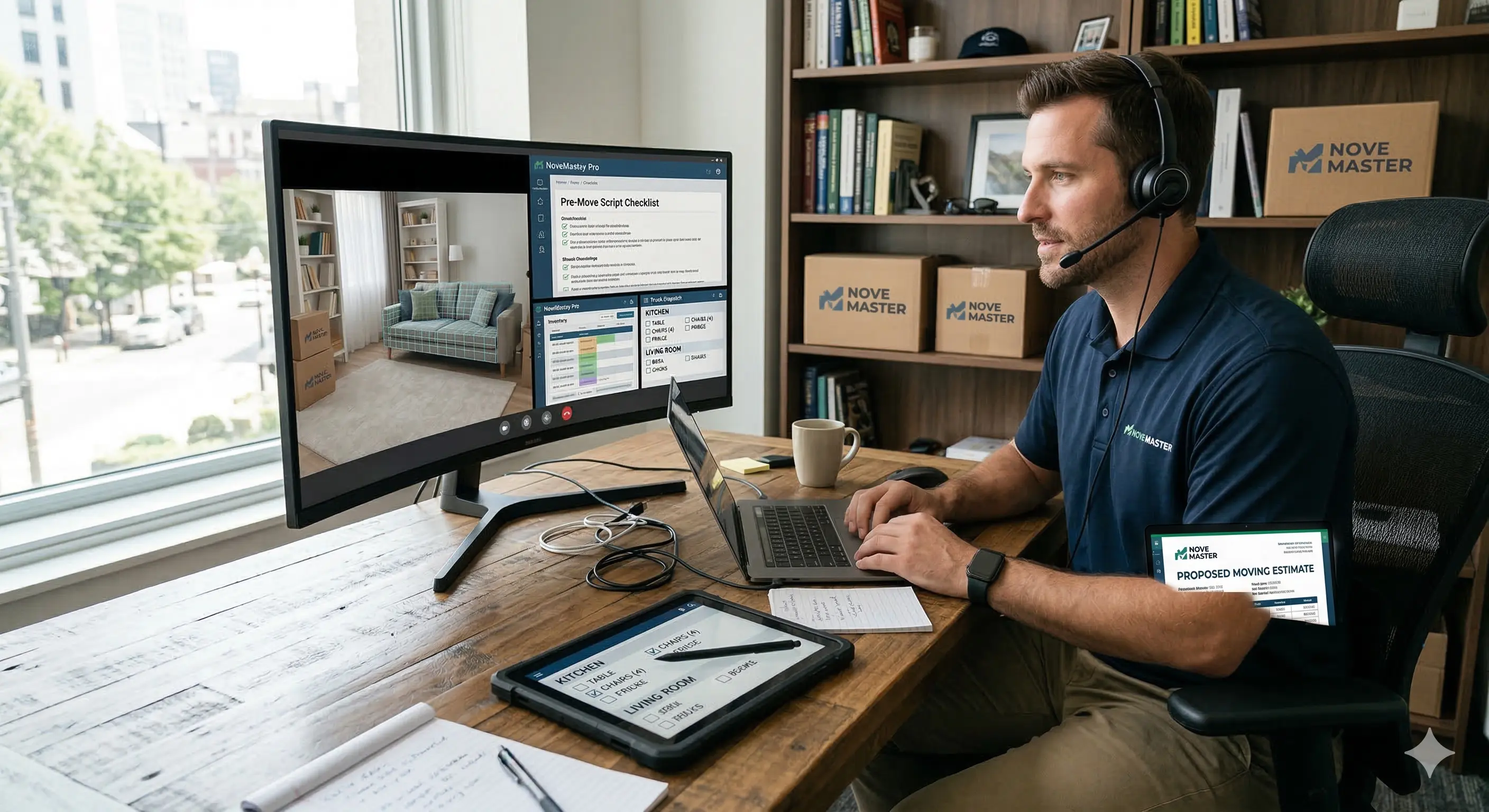
Estimators should utilize dual monitors: one displaying the live video feed and the second housing the CRM and inventory checklist.
Actively narrate the inventory process aloud so the customer feels confident that every item is properly documented.
Streamline Your Estimating Workflow
Transitioning to a fully remote estimation model requires the right technological infrastructure to maintain accuracy and professionalism.
Learn more about the platform →
Recommended Links
Ready to see it in action?
Book a free 20-minute demo and explore how Virtual Estimate can help your business.