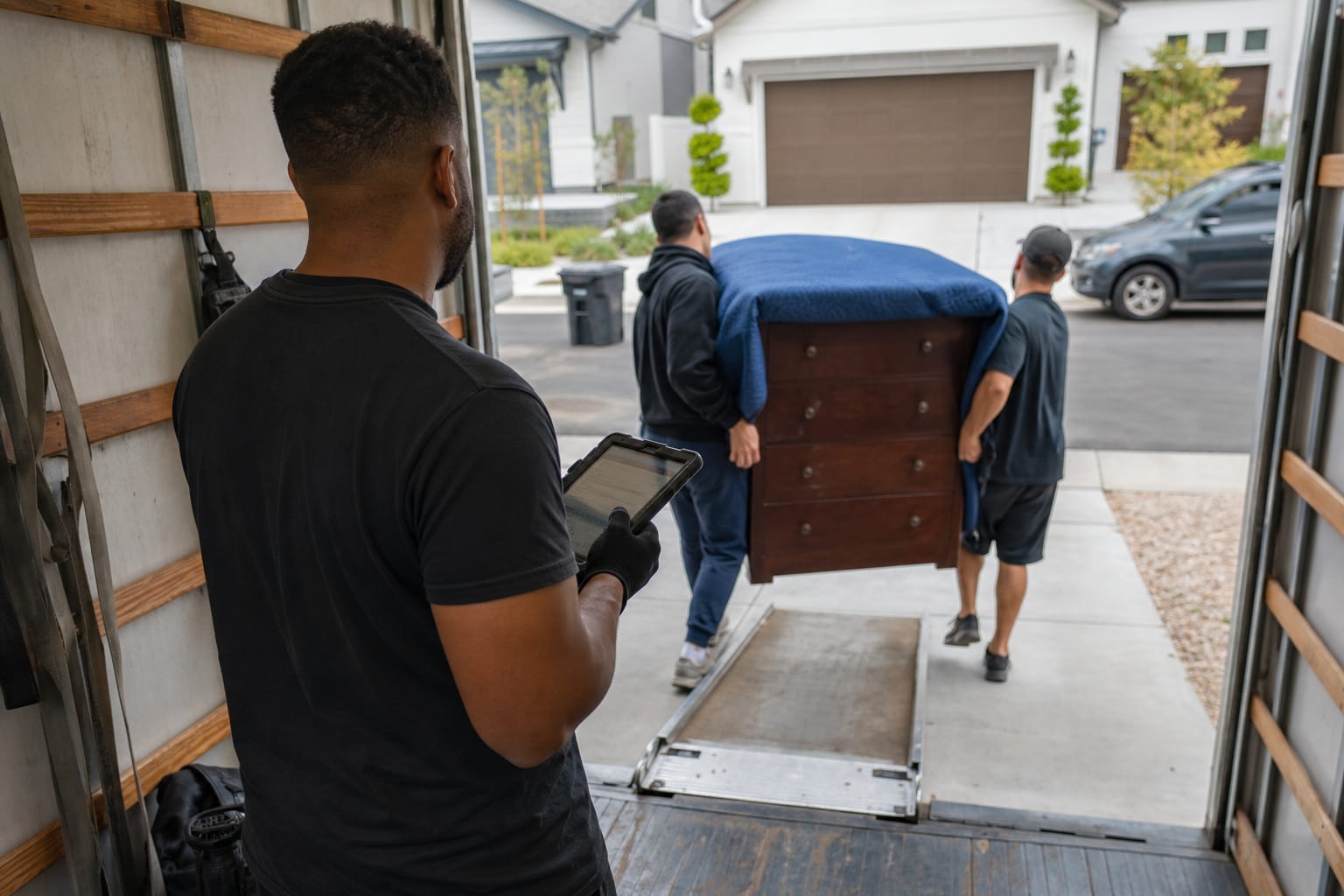

Yes — AI software that analyzes client videos for estimates exists today, and moving companies use it daily to turn a phone walkthrough into a structured inventory and price range. The question is no longer whether the technology works, but which tools are mature, how accurate they are, and where they still fall short. This guide breaks down what's real in 2026: named platforms, the computer vision behind them, hard accuracy limits, and how to roll video estimates out to customers without losing trust.

Key Takeaways
| Point | Details |
|---|---|
| The technology is real and shipping | Multiple platforms now generate a moving inventory and quote from a customer-recorded video walkthrough, not just a speculative demo. |
| Computer vision does the heavy lifting | Object detection and depth estimation identify furniture, classify items, and estimate cubic footage frame by frame. |
| Accuracy depends on inputs | Good lighting, steady framing, and a slow walkthrough matter more than the phone model. Occlusion and bad angles cause most errors. |
| It speeds the funnel | One operator using a structured CRM pipeline lifted booking rates from 28% to 41% by responding to leads faster. |
| Video assists, rarely replaces | For complex or high-value moves, video AI supports the estimator rather than eliminating human review entirely. |
The Problem With Traditional Moving Estimates (and Why Video Changes It)
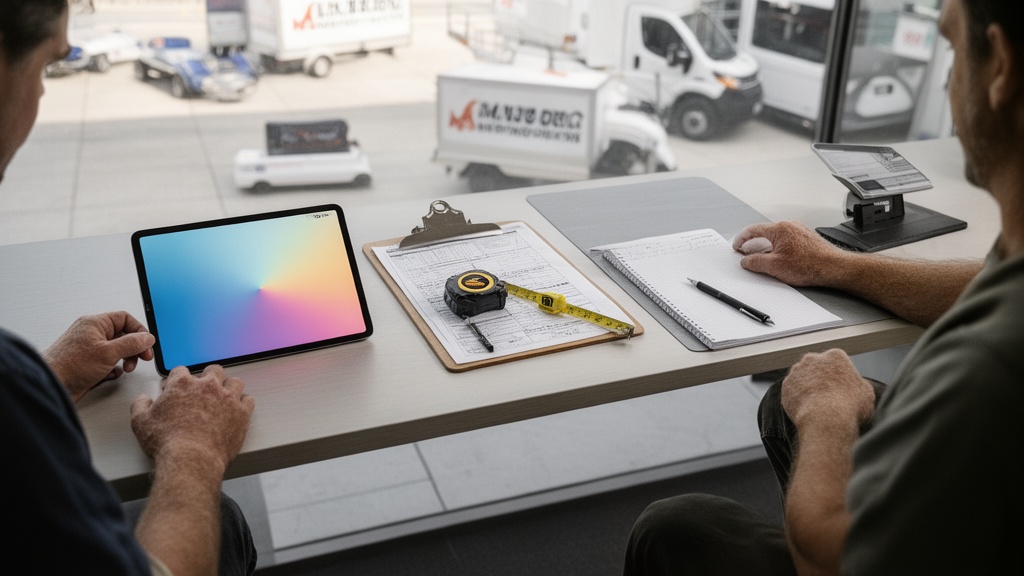
Traditional moving estimates force a bad trade-off. The in-home survey is accurate but slow and expensive to schedule. The phone or web form is fast but relies on customers to remember and describe every item they own.
That gap costs money. Underestimate the load and crews run out of truck space, blowing the schedule. Overestimate it and the quote loses to a competitor. The federal binding-versus-nonbinding estimate rules outlined by the FMCSA's Protect Your Move guidance exist precisely because inaccurate estimates have long been a consumer pain point.
Video analysis moving estimates close that gap. The customer records a walkthrough on their phone, and the software extracts the inventory automatically. You get survey-grade detail without sending a person to the home.
Q: Is there an app that can estimate moving costs from a video walkthrough?
A: Yes. Platforms like Yembo and Virtual Estimate produce a room-by-room inventory and a cubic-footage-based price range from a customer-recorded video walkthrough, typically within minutes of upload.
This is why ai video moving estimate software has moved from novelty to standard tooling. It compresses a multi-day scheduling problem into a self-service step the customer completes on their own time.
How AI Video Analysis for Moving Estimates Actually Works
A moving estimate from video walkthrough is built in stages, and understanding the stack helps you judge which tools are credible. The pipeline runs from raw frames to a priced inventory.
Here is the typical sequence:
- Frame extraction — the video is split into individual frames for analysis.
- Object detection — a computer vision model locates and labels furniture, appliances, and boxes in each frame.
- Item classification — detected objects are matched to a catalog (sofa, dresser, treadmill) with standard volume profiles.
- Depth and scale estimation — depth sensing or multi-frame geometry estimates real-world dimensions.
- Volume aggregation — duplicate detections are merged so the same couch isn't counted three times, producing total cubic footage estimation.
- Quote generation — the moving calculator converts volume and item flags into weight, crew size, and a price range.
The underlying models are the same family powering self-driving perception and warehouse robotics: convolutional and transformer-based object detection frameworks trained on large labeled image sets. For a deeper look at the engine, see how AI estimation technology works for moving companies.

Machine learning improves moving estimate accuracy over time. Every reconciled job — estimated volume versus actual truck load — becomes training signal that tightens future predictions. This feedback loop is what separates a mature computer vision moving survey from a one-off demo.
Pro Tip: When evaluating a vendor, ask how they handle item de-duplication across frames. Naive systems double-count anything the camera passes twice, inflating volume and pricing you out of competitive bids.
What AI Can and Cannot Detect in a Client Home Walkthrough Video
Honest vendors are specific about limits, and you should be too. AI moving inventory video detection is strong at the common case and weak at the edges.
What it detects reliably:
- Standard furniture with clear silhouettes — beds, sofas, tables, dressers, appliances.
- Approximate counts of boxes and bins when they're visible and separated.
- Specialty items worth flagging — pianos, safes, large TVs, exercise equipment.
- Room context that informs crew planning, like stairs or tight hallways.
Where it struggles:
- Occlusion — items hidden behind other items or inside closed closets go uncounted.
- Poor lighting — dim rooms degrade detection confidence sharply.
- Bad camera angles — fast pans and extreme close-ups break scale estimation.
- Packed boxes — the AI sees a box, not the dense or fragile contents inside.
Q: What equipment do clients need to submit a video for a moving estimate?
A: Any modern smartphone shooting at least 1080p and 30 frames per second works. Good, even lighting and a slow, steady walkthrough matter far more than the phone model or a LiDAR sensor.
LiDAR and depth-sensing hardware on newer phones improve scale accuracy, but they are a bonus, not a requirement. Most video-based moving quote technology runs fine on standard cameras when the customer follows simple recording instructions.
Current AI Video Estimate Tools: What's Available on the Market in 2026
The market has consolidated around a handful of credible players. Here is an honest map of what's shipping, not what's promised on a roadmap.
| Platform | Core capability | Input method | Best fit |
|---|---|---|---|
| Yembo | AI virtual survey with object detection and volume estimation | Live video or recorded walkthrough | Larger van lines and franchises |
| Virtual Estimate | AI scanning, predictive pricing, full CRM and client portal | Customer video upload + question flows | Independent and mid-market movers |
| Supermove | Operations suite with virtual survey integrations | Video-assisted survey | Tech-forward operators wanting an all-in-one |
| SmartMoving | Sales and CRM platform with virtual survey options | Photo/video-assisted | Sales-driven moving companies |
The meaningful split is between standalone virtual-survey engines and platforms that fold video analysis into the whole sales workflow. A standalone tool gives you an inventory; a connected platform turns that inventory into a booked job with follow-up, invoicing, and reporting attached.
Q: What is the difference between video-assisted AI and fully autonomous video analysis?
A: Video-assisted AI generates a draft inventory that a human estimator reviews and adjusts. Fully autonomous analysis prices the move with no human in the loop — practical for small standard moves, but most operators keep review on complex jobs.
For a broader view of the category and how these fit a tech stack, the AI-powered moving estimates complete guide maps the full landscape.
Virtual Estimate can help: Our platform turns a customer's video walkthrough into a structured inventory, predictive price range, and booked job inside one CRM. Learn more →
How Virtual Estimate AI Uses Video Input to Generate Accurate Quotes
Virtual Estimate, founded in 2022 and now serving over 500 moving companies across North America, treats video as one input in a connected pipeline rather than a standalone gimmick. The customer records a walkthrough, the AI scans it, and the result flows straight into the estimate.
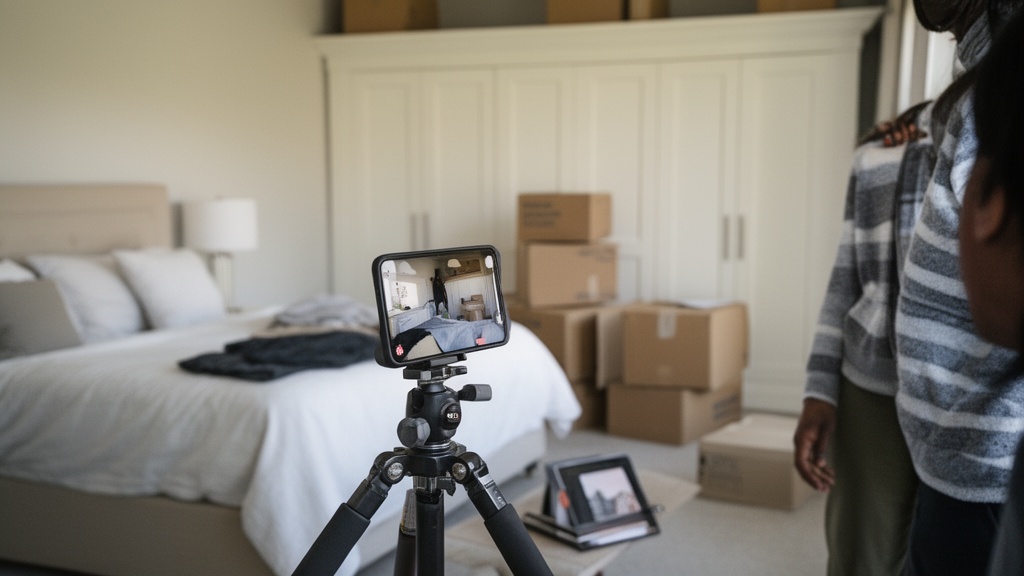
The ai-powered video survey moving workflow pairs computer vision with structured questioning. Where the video is ambiguous — a closed closet, a packed garage — the system asks targeted follow-ups. That hybrid design is covered in detail in how AI question flows work in moving calculators.
The payoff shows up in funnel metrics. One operator using a structured five-stage pipeline with automated follow-ups raised its estimate-to-booking rate from 28% to 41%, a 13-point gain from the same monthly lead volume. Another grew revenue per crew day by 18% within 12 months by using CRM data to shift toward higher-margin job types.
Pro Tip: Speed compounds accuracy. Because the demo team responds within 24 hours and AI quotes generate in minutes, prospects get a number before a competitor's in-home survey is even scheduled — and the first credible quote usually wins.
Virtual Estimate's broader AI-powered moving estimate solutions tie the video inventory to invoicing, a branded client portal, and source attribution, so the estimate is the start of the job, not an isolated artifact.
Accuracy Comparison: AI Video vs. In-Home Survey vs. Self-Reported Inventory
No estimate method is perfect, and pretending otherwise erodes trust. The honest framing compares three methods on the dimensions that actually matter to a moving operator.
| Criteria | AI Video Analysis | In-Home Survey | Self-Reported Form |
|---|---|---|---|
| Accuracy potential | High with good input | Highest | Lowest |
| Speed to quote | Minutes | Days | Minutes |
| Cost per estimate | Very low | High (labor + travel) | Very low |
| Scales to volume | Excellent | Poor | Excellent |
| Catches hidden items | Limited (occlusion) | Strong | Weak |
| Customer effort | Low (record video) | Low (host visit) | High (list items) |
The pattern is clear. A computer vision moving survey delivers near-in-home detail at form-level speed and cost, while self-reported lists trail badly because customers forget and underestimate. The machine learning moving estimate accuracy advantage grows as the model trains on more reconciled jobs.
Q: How accurate are AI video-based moving estimates compared to in-home surveys?
A: With a steady, well-lit walkthrough, AI video estimates approach in-home survey accuracy for standard households, and reconciled job data steadily narrows the gap. In-home surveys remain the benchmark for cluttered or high-value homes.
The practical takeaway: use video AI to handle the high volume of standard moves at low cost, and reserve human surveys for the minority of complex jobs where occlusion risk and liability are highest.
How Moving Companies Are Rolling Out Video AI Estimates to Customers
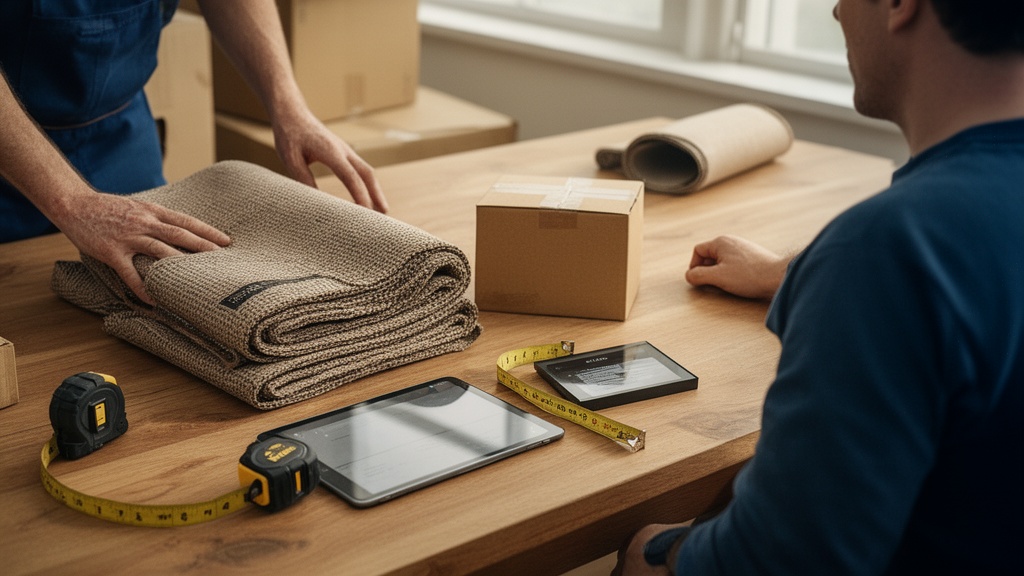
Adoption succeeds or fails on customer instructions, not on the model. A great engine fed a shaky, dark, 15-second clip produces a bad estimate.

Operators getting clean results follow a consistent rollout playbook:
- Send a short how-to — one screen of recording tips beats a wall of text.
- Specify pace — walk slowly, hold each item three to five seconds, open closets and cabinets.
- Require decent light — turn on every light; avoid backlit windows.
- Confirm coverage — every room, plus garage, attic, and storage.
- Review the draft — an estimator validates flagged specialty items before the quote goes out.
Pro Tip: Add a single line to your booking confirmation: "Record at eye level and walk one full lap of each room before zooming in on big pieces." That instruction alone removes most scale and occlusion errors.
Implementation is faster than most operators expect. One company stood up a full virtual estimate CRM — pipeline configuration, data migration, and team training — in three weeks total. The constraint is rarely the software; it's training your sales team to trust and lightly supervise the AI output.
For operators still comparing automated and manual quoting, AI quoting for moving companies lays out the decision framework in depth.
The Future of AI Video Analysis in the Moving Industry
Virtual moving estimate ai 2026 is a transition point, not an endpoint. Three shifts are already underway and worth planning around.
First, real-time guidance. Instead of analyzing a finished video, apps increasingly coach the customer mid-recording — "slow down," "this closet is too dark" — which raises input quality at the source.
Second, tighter depth sensing. As LiDAR and multi-camera depth estimation spread to mid-range phones, scale accuracy improves without any change to operator workflow. The U.S. moving and storage sector tracked by the Bureau of Labor Statistics is labor-intensive, so any tool that reduces survey labor compounds in value.
Third, deeper workflow integration. The estimate stops being a document and becomes a live record that updates through booking, the move, and invoicing.
The operators who win won't be the ones chasing the flashiest demo. They'll be the ones who pair reliable video-based moving quote technology with disciplined follow-up and clean data — the same combination that turns more quotes into booked, profitable jobs.
Related Articles
- AI Quoting for Moving Companies: A Practical Guide — How automated quoting compares to manual estimating and when to use each.
- How AI-Driven Question Flows Work in Moving Calculators — The logic behind smart follow-up questions that fill gaps video can't.
- AI Trends Reshaping Moving Estimates: What Operators Need to Know — The shifts in AI estimation worth planning your roadmap around.
- Moving Company Software Market: A Buyer's Research Guide — How to evaluate and compare platforms before you buy.
- Virtual Pre-Move Surveys: Complete Guide for Moving Companies — A step-by-step look at running remote surveys that customers complete themselves.
Recommended Reading
Ready to see it in action?
Book a free 20-minute demo and explore how Virtual Estimate can help your business.