
A virtual move survey is a remote home assessment in which the customer records a video walkthrough of their space, letting a moving company build an accurate inventory and price quote without an in-person visit. Software, a trained estimator, or both review the footage and translate visible belongings into a room-by-room list and a total volume figure. For standard residential jobs, this method has largely replaced the clipboard-and-tape-measure walkthrough.
The shift matters because the in-home survey has always been the slowest, most expensive step in quoting a move. Here's the thing: tens of millions of Americans relocate every year, and each one needs a number before booking. This article explains how a virtual move survey works, how it compares to an in-home visit, the AI behind video scanning, and how the survey feeds a finished estimate.

Key Takeaways
| Point | Details |
|---|---|
| What it is | A virtual move survey uses a customer-recorded video walkthrough to build a moving inventory remotely — no in-home visit required. |
| Speed | Recording usually takes 5-15 minutes, and estimates can return the same day. |
| Accuracy driver | AI video scanning converts visible items into cubic-feet volume, cutting the guesswork that inflates or shrinks quotes. |
| Adoption enabler | Roughly 90% of U.S. adults own a smartphone, making self-guided video surveys broadly feasible. |
| Go deeper | Read the complete guide to virtual pre-move surveys for a fuller walkthrough. |
What Is a Virtual Move Survey?

A virtual move survey is a video-based inventory assessment. The customer walks through their home with a phone camera, and the moving company uses that footage to catalog belongings and calculate move volume. The result is a documented estimate produced entirely off-site.
Because the customer captures the footage themselves, the industry calls this a self survey moving approach or a self-guided walkthrough. It is also known as a virtual pre-move survey, since it happens before crews, trucks, or pricing are locked in. The output is a remote inventory survey — a structured list of everything to be moved.
This distinction matters for compliance too. Federal rules require interstate movers to provide written estimates grounded in a real inventory, and a video walkthrough creates exactly that paper trail. The footage becomes evidence that supports the quoted volume.
Q: What is a virtual move survey in one sentence?
A: It is a remote assessment where a customer's recorded video walkthrough replaces the in-home visit, producing an itemized inventory and a price estimate.
Most providers deliver the experience through a moving inventory app or a simple browser link, so a download is not always required. For the full framing, the complete guide to virtual pre-move surveys covers definitions, workflows, and edge cases in one place.
Inside a Virtual Move Survey, Step by Step
The workflow is short and predictable. Most companies structure it as five stages that move a lead from request to priced estimate without a single site visit.
- Invitation — The company sends a link or app prompt after the customer requests a quote.
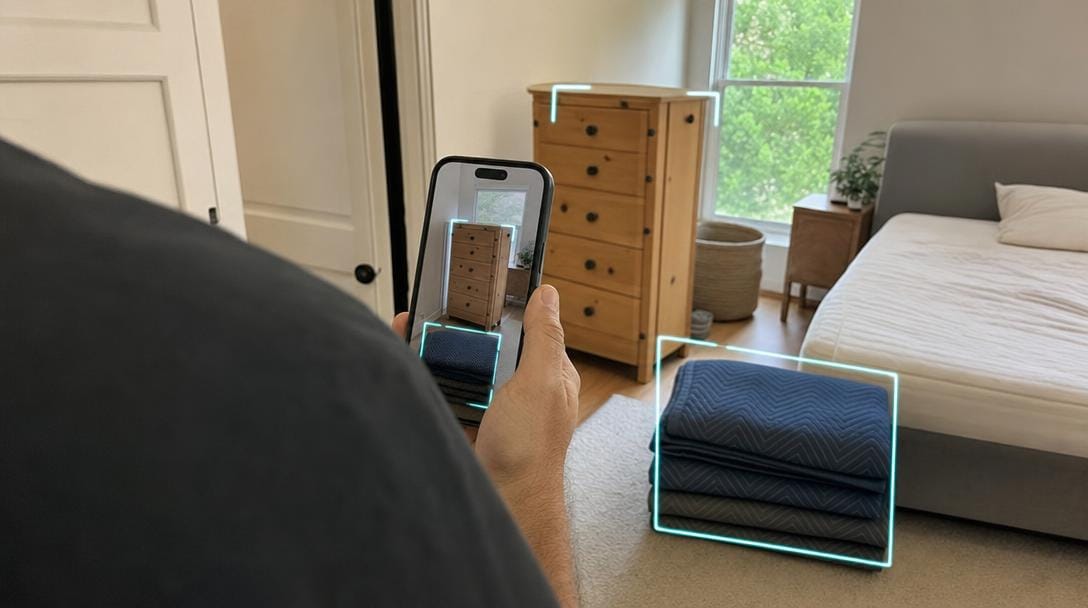
- Recording — The customer records a video moving survey, panning slowly across each room and open closets.
- Upload — The footage transfers to the estimator's dashboard automatically.
- Review and scan — Software and a human check the video, tagging items and flagging anything unclear.
- Estimate — The tagged inventory converts into volume, then into a remote moving estimate.
Q: Do customers need to visit an office for a virtual pre-move survey?
A: No. The entire remote inventory survey happens from home on a smartphone, with nothing to install in many cases.
Pro Tip: Ask customers to narrate as they film — saying "this dresser stays, that one goes" removes the single biggest source of estimator error: items in the frame that aren't actually moving. That one habit prevents most volume disputes on move day.
Companies that want a repeatable script can follow a guide on how to conduct a virtual pre-move survey step by step, which breaks the recording phase into room-level prompts.
Video Survey vs. In-Home Survey
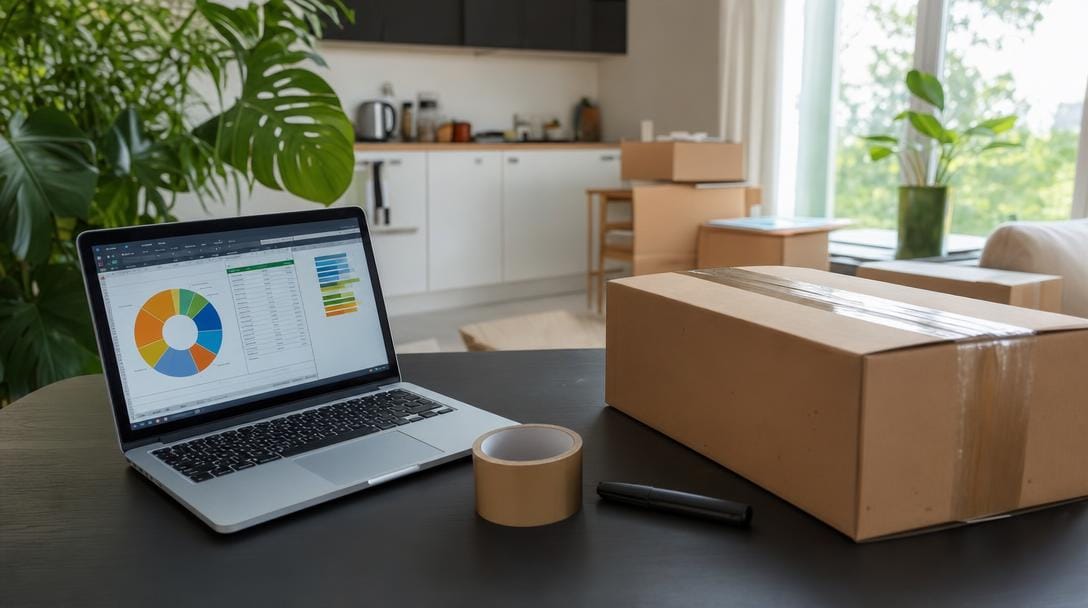
A video survey and an in-home survey aim for the same output — an accurate inventory — but reach it differently. The video method trades a scheduled visit for on-demand recording, which collapses the timeline from days to minutes.
| Criteria | Virtual (Video) Survey | In-Home Survey |
|---|---|---|
| Scheduling | On demand, on the customer's own time | Fixed appointment, business hours |
| Time on task | 5-15 minute recording | 1-2 hour visit |
| Travel cost | None | Surveyor drive time plus fuel |
| Geographic reach | Any location, remotely | Local radius only |
| Best fit | Standard homes, long-distance leads | Complex, high-value, specialty items |
The in-home visit still wins for edge cases: pianos, dense basements, or antique-heavy estates where a surveyor's eyes catch nuance a camera misses. For everything else, the video approach is faster and cheaper without sacrificing much precision.
Estimate type also shapes the choice. Because binding and non-binding estimates carry different rules, companies offering binding quotes lean harder on documented video evidence to protect both sides. The recording is the receipt. For a broader look at quote formats, see the overview of types of moving estimates.
Benefits for Moving Companies and Customers
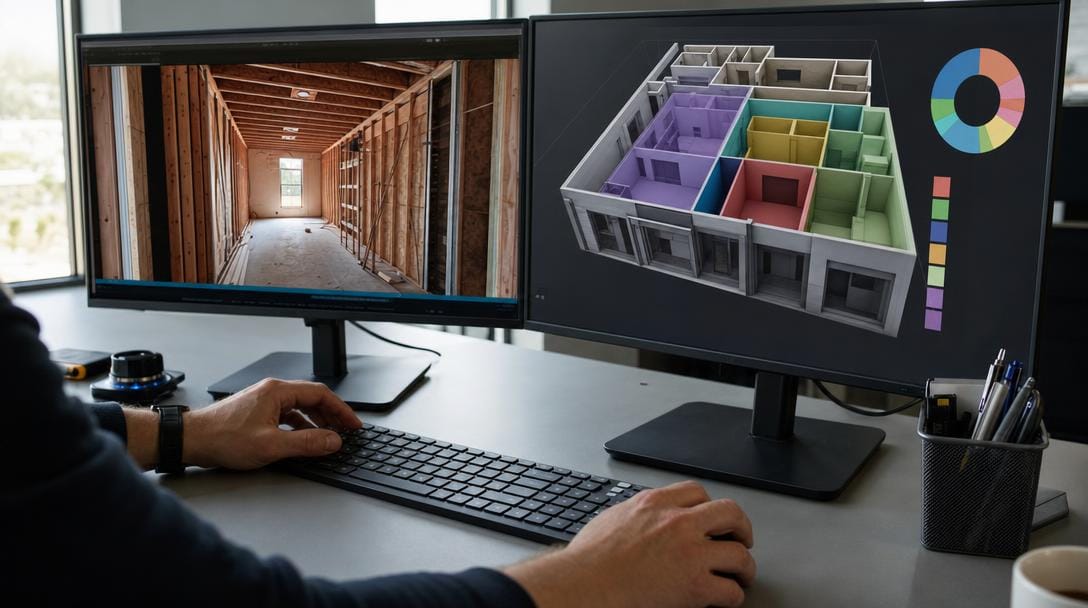
The virtual model creates value on both sides of the transaction. Companies cut the cost of quoting, and customers skip the appointment entirely.
| Stakeholder | Primary benefit | Practical impact |
|---|---|---|
| Moving company | Lower survey cost | Eliminates surveyor travel and windshield time |
| Sales team | Faster quotes | Same-day remote moving estimate turnaround |
| Customer | Convenience | No time off work for an appointment |
| Operations | Better load planning | Cubic-feet inventory ready before move day |
The labor math is compelling. With material-moving roles numbering in the millions across the U.S. workforce, every hour a skilled estimator spends driving to a home is an hour not spent booking jobs. Video surveys reclaim that time.
Customers benefit from speed and control. They record when it suits them, redo a shaky clip, and receive a number without a stranger walking through their bedrooms. Companies using dedicated virtual survey software can quote leads across an entire region instead of a single drive radius.
Pro Tip: Track your quote-to-book rate before and after adopting video surveys, segmented by lead source. Faster response times move the needle most on price-shopping leads, so the gain shows up first there — that's where to prove ROI internally.
Technology Behind AI Video Scanning
AI video scanning is what turns raw footage into a priced inventory. Computer-vision models detect objects frame by frame, classify them by type, and estimate their dimensions, which the system converts into cubic feet.
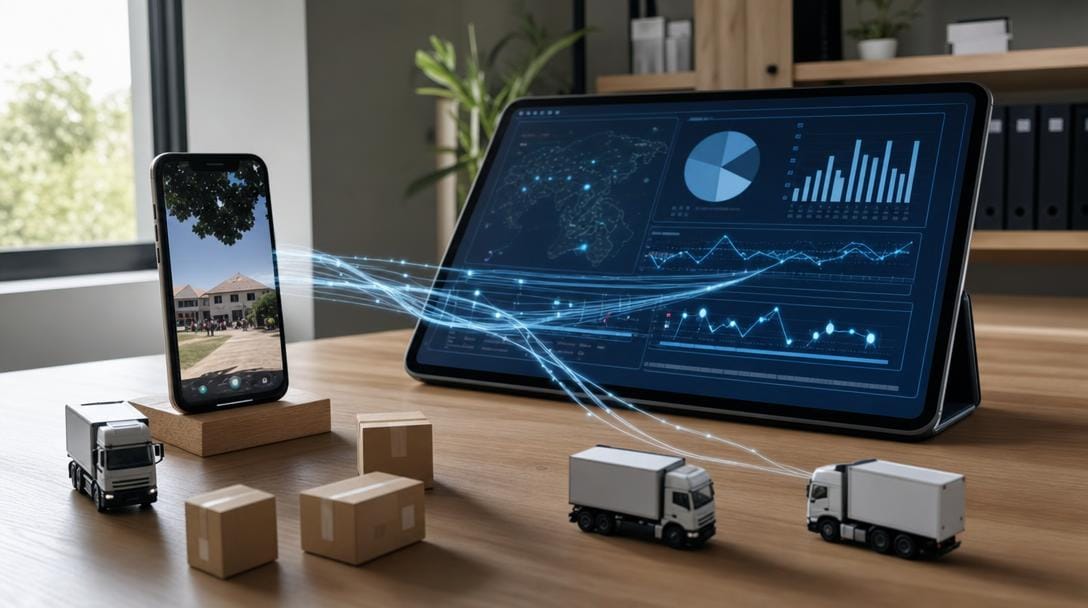
Q: What technology powers AI video scanning in a move survey?
A: Computer-vision object-detection models identify and size items, then convert them into cubic-feet volume that feeds the price calculation.
An ai move survey layers this automation on top of the human review. The model produces a first-draft inventory in seconds; the estimator corrects, adds context, and approves. This human-in-the-loop design is why accuracy holds up — the AI handles volume, the human handles judgment.
Feasibility rests on ubiquitous hardware. Because roughly 90% of U.S. adults own a smartphone, nearly every prospect already carries a camera capable of feeding the pipeline. No specialized equipment is needed on the customer's end.
The deeper mechanics — how detection models replace a surveyor's trained eye — are covered in how AI video scanning replaces the in-home survey. Companies evaluating vendors should look closely at the AI video estimation engine, since detection quality drives everything downstream.
Preparing Customers for a Virtual Survey
Survey quality depends almost entirely on the customer's recording. A little coaching up front prevents most of the problems that force a re-do.
Send a short instruction set with the invitation. The best briefs cover four things:
- Lighting — Open blinds and turn on lights; dark rooms hide items.
- Pace — Pan slowly; fast motion blurs the footage AI needs to detect objects.
- Coverage — Open closets, cabinets, and the garage, not just main living areas.
- Narration — Call out what stays and what goes to keep the inventory clean.
This coaching is part of a smooth pre-move intake — the stage where a company gathers everything needed to quote and schedule. Well-designed automated pre-move intake collects addresses, dates, and access details alongside the video so nothing gets rekeyed later.
Pro Tip: Pre-fill the customer's move date and both addresses in the intake link before you send it. Every field they don't have to type raises completion rates, and abandoned surveys are lost jobs — reducing friction here directly protects pipeline.
Set expectations on timing too. Telling customers the recording takes about ten minutes and the quote follows the same day removes hesitation and speeds submissions.
Common Challenges and How to Solve Them
Virtual surveys are reliable, but three issues surface repeatedly. Each has a straightforward fix that keeps accuracy high.
Incomplete footage. Customers skip storage areas or film too fast. Solution: a guided prompt that requires each room before submission, plus an estimator flag that requests a specific re-shoot rather than a whole redo.
Hidden or ambiguous items. A packed closet or a covered piece hides volume. Solution: human review catches gaps the AI can't, and a quick follow-up question resolves them. This is why a documented inventory record before you move matters — it settles disputes with evidence.
Customer hesitation. Some prospects still prefer a person in their home. Solution: offer both options and let the customer choose; the video path wins most standard jobs on convenience alone.
Edge cases like specialty items or hoarding-level density remain better suited to an in-home visit. Knowing when to escalate is a mark of a mature process, not a weakness in the tool. For the estimate mechanics behind these decisions, the guide to AI-powered moving estimates is a useful companion.
How Virtual Surveys Feed Into an AI Estimate and CRM
The survey is only valuable if it flows straight into pricing and scheduling. In a connected system, the video, inventory, and volume feed the estimate automatically, and the estimate lands in the customer record without manual re-entry.
This end-to-end path is what separates a standalone tool from a real workflow. The completed remote inventory survey becomes cubic feet, cubic feet becomes a price, and the price populates the deal in the moving CRM. One capture, no rekeying.
That continuity is the core of virtual estimate moving workflows: a single recording drives the quote, the follow-up, and the job file. When the survey, the moving estimate app, and the CRM share one database, sales sees quote status in real time and operations sees an accurate load plan days early.
Q: How does a virtual survey connect to the final price?
A: AI video scanning converts the walkthrough into cubic-feet volume, which the estimate engine multiplies against rate tables to generate the quote automatically.
Companies stitching these stages together should study a full moving company CRM operations guide to see how survey data, estimates, and job scheduling connect across a single pipeline.
Related Articles
- Marketing for Moving Companies: Strategies That Fill Your Pipeline — how faster quoting supports lead conversion across your marketing funnel.
- CRM for Moving Companies: Streamline Operations — how survey data flows into scheduling, dispatch, and follow-up.
- Customer Experience Excellence in Moving Services — why fast, low-friction estimates raise satisfaction and reviews.
- Pricing Strategies for Moving Companies — turning accurate inventory volume into profitable, defensible quotes.
Recommended Reading
Ready to see it in action?
Book a free 20-minute demo and explore how Virtual Estimate can help your business.