
Most moving companies can book more jobs by converting more of the leads they already get, before spending more on new ones. This guide is for owners, general managers and sales managers of US moving companies who have steady inquiries but lose too many of them between the first contact and the signed booking. The losses usually come from four places: slow replies, quotes that wait days for an in-home visit, estimates nobody follows up on, and a booking step that asks too much of the customer.

The sections below follow your sales funnel one stage at a time. Each fix has three parts: a diagnostic question, the change to make, and the metric that shows whether it worked. Where a topic has its own in-depth guide, this page links to it.
Key Takeaways
- Measure the funnel first. Count how many of your last 60–90 days of leads reached each stage, from received to booked, and start with the biggest drop between two stages.
- Speed sets the frame. Send an instant acknowledgment and make a fast human call, including after hours. Track the median time to first contact by lead source.
- Quote without a visit. A phone-link virtual survey or AI video estimate removes the wait for an in-home visit. The estimator still reviews the inventory before sending the quote.
- Automate follow-up. A five-step SMS and email sequence with merge variables and lead scoring keeps open quotes from going cold.
- Book in one step. Combine e-signature and a card deposit on your own merchant account in a single link.
- Judge sources by bookings. Lead-source ROI and cost per booked job show which channels are worth paying for. Lead volume alone does not.
Find Where You're Losing Jobs: Map Your Lead-to-Booking Funnel
Start by measuring before you change anything. Pull every lead from the last 60 to 90 days and count how many reached each stage. The biggest drop between two neighboring stages is where you should start.
Most moving companies have the data for this already, spread across a CRM, an inbox, a phone log and a spreadsheet. Bringing it together the first time is slow. After that, it becomes your baseline.
Q: How do you calculate a moving company booking rate?
A: Divide booked jobs by qualified leads for the same period. For example, 30 booked jobs from 120 qualified leads is a booking rate of one in four.
Use the table below as a diagnostic map. Each row names a funnel stage, the leak that typically happens there, the fix, and the number to watch.
| Funnel stage | Common leak | Fix | Metric to watch |
|---|---|---|---|
| Lead received | Form sits unanswered after hours or on weekends | Instant acknowledgment plus a fast human reply | Time to first human contact |
| Contacted | Customer never schedules a survey | Offer a survey the customer can do from a phone link | Contacted-to-surveyed rate |
| Surveyed | In-home visit or video call is delayed or missed | Customer-recorded video walk-through | Lead-to-quote time |
| Quoted | Lump-sum price with no explanation | Itemized estimate with crew, truck, hours and rates | Quote-to-booking rate by estimator |
| Followed up | One email, then silence | Automated SMS and email sequence | Open quotes with no touch in 72 hours |
| Booked | Customer agrees but never signs or pays | E-sign and deposit in one link | Time from verbal yes to deposit |
Pro Tip: Tag unqualified leads, such as wrong dates, outside your service area or too small to serve, as disqualified instead of lost. If you leave them in, your booking rate looks worse than it is and you end up fixing the wrong stage.
For the full sequence behind this table, see the guide to the moving company sales process from inquiry to booked job.
Fix 1: Respond to New Leads Before Competitors Do
The problem: A customer who fills out a quote form often sends the same request to several movers. The first credible reply usually sets the terms of the conversation. Every company after that has to compete with it.
The fix: Send an automatic acknowledgment by text and email within minutes. Make sure it names your company and says what happens next. Then route the lead to a person who can call while the customer is still thinking about the move. Cover evenings and weekends.
Companies with several salespeople should use round-robin assignment, meaning leads rotate among reps automatically. That way no lead waits for the one person who usually picks it up. For more, see the deeper explanation of why lead response time decides which movers win jobs.
How to measure: Track the median time from lead submission to first human contact. Break it down by lead source and hour of day. This page does not cite a mover-specific response-time statistic. Treat speed as operational logic and compare against your own baseline. The companion piece on slow lead response time and booked jobs explains how to audit it.
Fix 2: Quote Without Waiting for an In-Home Visit
The problem: The in-home estimate is often the slowest step in a moving sales process. Scheduling one can add days. Video-call walkthroughs depend on the customer showing up at a set time, and many do not. Meanwhile, a competitor sends a number.
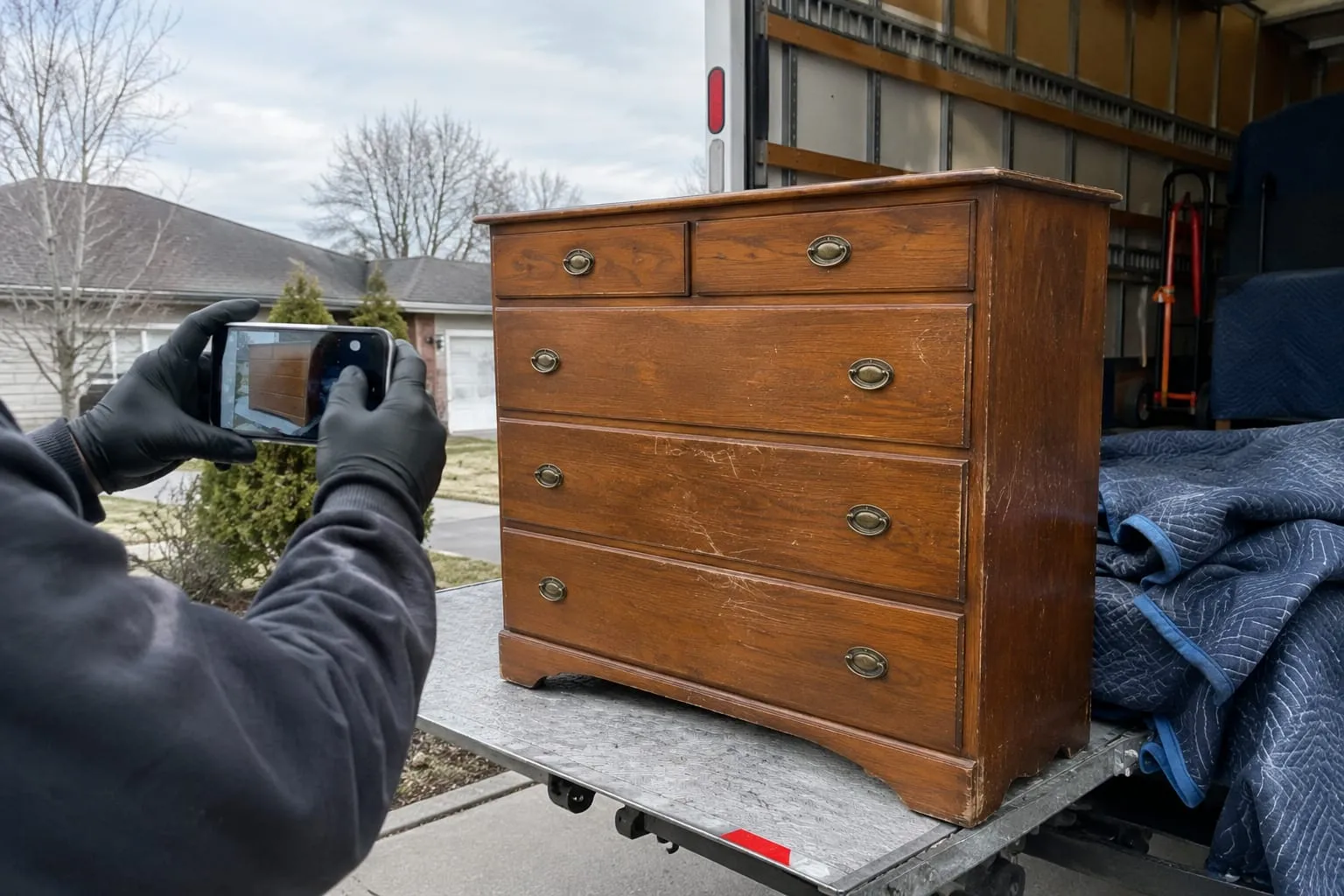
The fix: Let the customer survey their own home. With a self-guided virtual survey the customer completes from a link, the customer gets a text, opens it in their phone's browser without installing an app, and records a guided walk-through on their own schedule. A live quality coach prompts them to cover each room properly. The result is a moving brief and an inventory, with no visit required.

An AI video estimate goes a step further. Software turns the recording into an itemized inventory with cubic feet. Your estimator then reviews it, adjusts it and sends the quote. The estimator still makes the final call, but no longer drives across town to make it. The guide to AI video scanning versus the in-home survey explains where each method fits.
Keep in-home visits for jobs where they add real value. Examples include large estates, commercial relocations and moves with heavy specialty items.
How to measure: Track hours from lead to quote sent, how many surveys customers start versus finish, and estimated versus actual volume on completed jobs. For ways to shorten the whole cycle, see the guide to faster quote turnaround.
Fix 3: Send an Estimate Customers Can Understand and Trust
The problem: A single total with no breakdown makes the customer compare price alone. A lower, vaguer number from another mover then looks like the better deal, even when it is not.
The fix: Show your work. List the inventory, crew size, truck, estimated hours, hourly or flat rates, materials and any surcharges, such as stairs, long carries or specialty items. Send it as a clean, branded PDF. Use one calculator loaded with your company's rates so every estimator prices the same job the same way. See the overview of estimating software for movers.
State the estimate type clearly. Customers who understand what they are signing are less likely to dispute the bill later.
Q: What is the difference between a binding and a non-binding moving estimate?
A: Confirm the current requirements for binding estimates directly with FMCSA.
Pricing strategy also affects how the estimate reads. A clear structure makes higher-value quotes easier to defend. The guide to pricing strategies for moving companies covers how to build rates that hold up.
How to measure: Track quote-to-booking rate by estimator and by move type, plus estimated versus actual cost on completed jobs. A wide gap between estimated and actual cost leads to disputes, bad reviews and lost referrals.
Fix 4: Follow Up on Every Open Quote Automatically
The problem: Many quotes get one follow-up or none. Sales reps answer new calls first, and open quotes go cold in an inbox. A customer who has not decided yet is often still a live deal.
The fix: Build a follow-up sequence that runs without anyone remembering to start it. A practical cadence looks like this:
- Same day: confirm the quote arrived and offer to walk through it.
- Day 1: answer the most common question, such as what is included.
- Day 3: ask whether the move date is still firm.
- Day 7: offer to adjust scope, for example the packing level or crew size.
- Before the move date: send a final check-in while the date can still be held.
Mix text and email. Use templates with merge variables, which are placeholders that fill in the customer's name, move date and quote total automatically. Lead scoring ranks open quotes by how likely they are to book, so reps call the strongest prospects first. Log every message against the customer record so any rep can pick up the conversation. The walkthrough on setting up automated quote follow-up includes sample message copy. For how the tools work, see this overview of automated SMS and email follow-ups.
Stop the sequence as soon as the customer replies, and honor opt-outs right away.
How to measure: Track how many open quotes have had no contact in 72 hours, and how many bookings came in after the first follow-up.
Fix 5: Make Booking Easy — E-Sign and Deposit in One Step
The problem: The customer says yes on the phone. Then they are asked to print a contract, sign it, scan it and call back with a card number. Every extra step is a chance for them to stall or reconsider.
The fix: Send one link that lets the customer review the estimate, sign it electronically and pay the deposit by card, all in one session.

Take the deposit through your own merchant account. That keeps the funds and the customer relationship under your control. The guide to taking deposits on your own merchant account explains how card deposits connect to the job record. Put your deposit amount, refund terms and cancellation window in writing on the same page the customer signs.
When the deposit clears, the job should move to the dispatch board automatically, with no retyping. That handoff protects the booking you just won from scheduling mistakes.
How to measure: Track the time from verbal yes to deposit received, and the number of accepted quotes that never turn into a paid booking.
Fix 6: Track Which Lead Sources Actually Book
The problem: Many owners judge lead sources by volume or cost per lead. A cheap source that never books costs more than an expensive one that does. Without tracking, you cannot tell them apart.
The fix: Tag every lead with its source when it comes in, whether that is your website, referrals, paid search, a lead vendor or repeat customers. Then report bookings and revenue for each source, not just lead counts. Lead-source ROI is the revenue a source produces compared with what it costs. It shows which channels deserve more budget. The guides to lead generation for moving companies and moving lead sources ranked explain how channels differ.
Source data also helps every other fix on this page. If shared leads book poorly even when you reply fast, the problem is the source, not your process. Reporting with lead-source ROI and estimated-versus-actual by job keeps that view current without exporting spreadsheets.
How to measure: Track cost per booked job and revenue per lead for each source, reviewed monthly.
A 30-Day Plan to Raise Your Booking Rate
Do not try all six fixes in one week. Work through the funnel in order so each change can be measured on its own.
- Days 1–7, set a baseline. Pull 60 to 90 days of leads, fill in the funnel table, tag disqualified leads and record your current booking rate for each source.
- Days 8–14, fix speed and follow-up. Turn on instant acknowledgments, set after-hours coverage and launch the five-step follow-up sequence. These are usually the quickest changes to make.
- Days 15–21, fix quoting. Offer a phone-based virtual survey on routine residential moves, standardize your estimate template and state the estimate type on every quote.
- Days 22–28, fix booking. Combine e-signature and deposit in one link, publish your deposit and refund terms, and confirm that booked jobs move straight to dispatch.
- Days 29–30, compare and repeat. Measure each stage against your week-one baseline. Keep what moved your numbers, and start the next cycle at the stage that now loses the most leads.
Related Articles
- Lead Response Time and Moving Jobs — How reply speed shapes which mover wins the job, and how to staff for it.
- Automated Moving Survey: Collect Client Information — How automated surveys gather move details without back-and-forth calls.
- Customer Experience Excellence in Moving Services — How the customer experience from quote to delivery drives referrals and repeat business.
- CRM for Moving Companies: Streamline Operations — How a moving CRM connects leads, estimates, dispatch and payroll.
Useful Links
- Estimate Follow-Up Software for Movers
- AI Estimating Software for Movers
- Virtual Moving Estimate and Survey Software
- Moving Company Lead Management: Track, Nurture, Convert
- Moving Company Reporting and Analytics Software
Need help with this? Moving Lead Integrations & Lead ROI · Get started · Call (888) 611-7483
Ready to see it in action?
Book a free 60-minute demo and explore how Virtual Estimate can help your business.