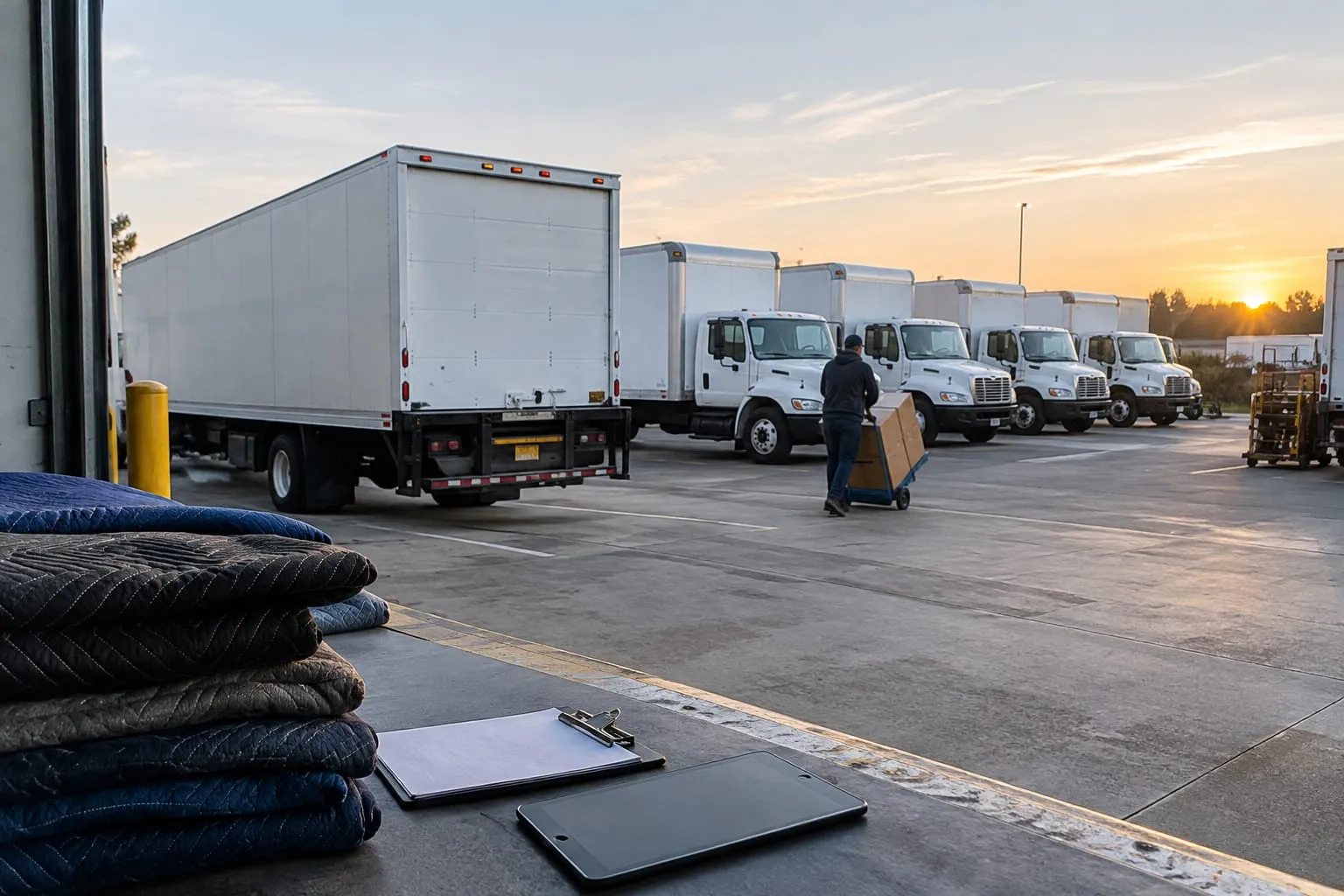

Moving company damage claims on interstate household goods moves run on a federal clock. This guide is for US moving company owners, general managers and dispatchers who receive those claims and have to resolve them.
Here's the thing: the evidence that settles most disputes already exists, or doesn't, before the claim letter arrives. What the crew recorded at the survey, at loading and at delivery decides whether a claim closes in one reply or drags on for months.
This playbook covers four things. It explains the federal framework, gives a stage-by-stage documentation checklist, sets out a written response procedure an office can adopt this week, and shows how to reduce payouts while still paying the claims a company owes. It explains the rules. It is not legal advice.
Key Takeaways
Federal rules cover interstate moves only. Carmack liability, Part 375 valuation and Part 370 claim deadlines apply to interstate household goods. In-state moves follow state rules.
Deadlines run from receipt. The mover has 30 days to acknowledge a claim and 120 days to resolve it or send written status updates.
Evidence beats argument. Condition codes, photos and signed inventories at origin and destination resolve most disputes on the facts.
How Household Goods Damage Claims Work: Liability, Valuation and the Federal Timeline
For interstate moves, three rules work together. Federal law makes the carrier liable for actual loss or damage, the valuation option on the Bill of Lading limits how much it owes, and Part 370 sets the deadlines for handling the claim. Intrastate moves follow state law and state tariffs instead.
Carmack liability and the filing window
The Carmack Amendment is codified at 49 U.S.C. 14706.
For a moving company, liability is the starting point, not the debate. Suppose a customer shows that goods went onto the truck in good condition and came off damaged. The outcome then depends on what the company's records prove about condition, cause and amount.
Household goods carriers also operate under 49 CFR Part 375, the consumer protection rules for interstate moves. Part 375 covers valuation and dispute settlement. For a broader map of which agencies regulate your moves, including the state regulators that govern local work, see the dedicated overview.
Released value vs. full value protection
The valuation rules in 49 CFR 375.201 define two levels of carrier liability.
Q: What is the difference between released value and full value protection?
A: Under 49 CFR 375.201, full value protection makes the mover liable for the replacement value of lost or damaged goods, up to the shipment's declared value. Released value caps liability at 60 cents per pound per article and requires the customer's signed waiver.
| Full value protection | Released value protection | |
|---|---|---|
| Liability limit | Replacement value of lost or damaged goods, up to the declared value of the shipment | No more than 60 cents per pound per article |
| How it applies | Default level of liability | Customer must waive full value in writing |
| How the carrier settles | Repair, replace with like kind and quality, or cash settlement, at the carrier's option | Article weight multiplied by the per-pound rate |
| Source | 49 CFR 375.201 | 49 CFR 375.201 |
Full value protection has one important carve-out. A high-value inventory form signed at origin settles the question before it becomes one.
Valuation is not insurance. It defines what the carrier owes the shipper. How the company funds that liability is a separate decision, covered in this guide to cargo insurance for moving companies. Before changing claim procedures, ask your insurer and an attorney to confirm how your valuation terms, tariff and cargo policy interact.
The federal claims timeline at a glance
The table below summarizes the interstate household goods deadlines a claims procedure has to meet.
| Stage | Federal rule (interstate household goods) | Source |
|---|---|---|
| Customer files the claim | Carrier may not allow less than 9 months to file a written claim; the customer then has at least 2 years to sue after a written disallowance | 49 U.S.C. 14706(e) |
These deadlines apply to interstate household goods moves. Check the current text at the linked eCFR and U.S. Code pages before writing them into company policy. Confirm the state rules separately for in-state moves.
What to Document Before, During and After Every Job
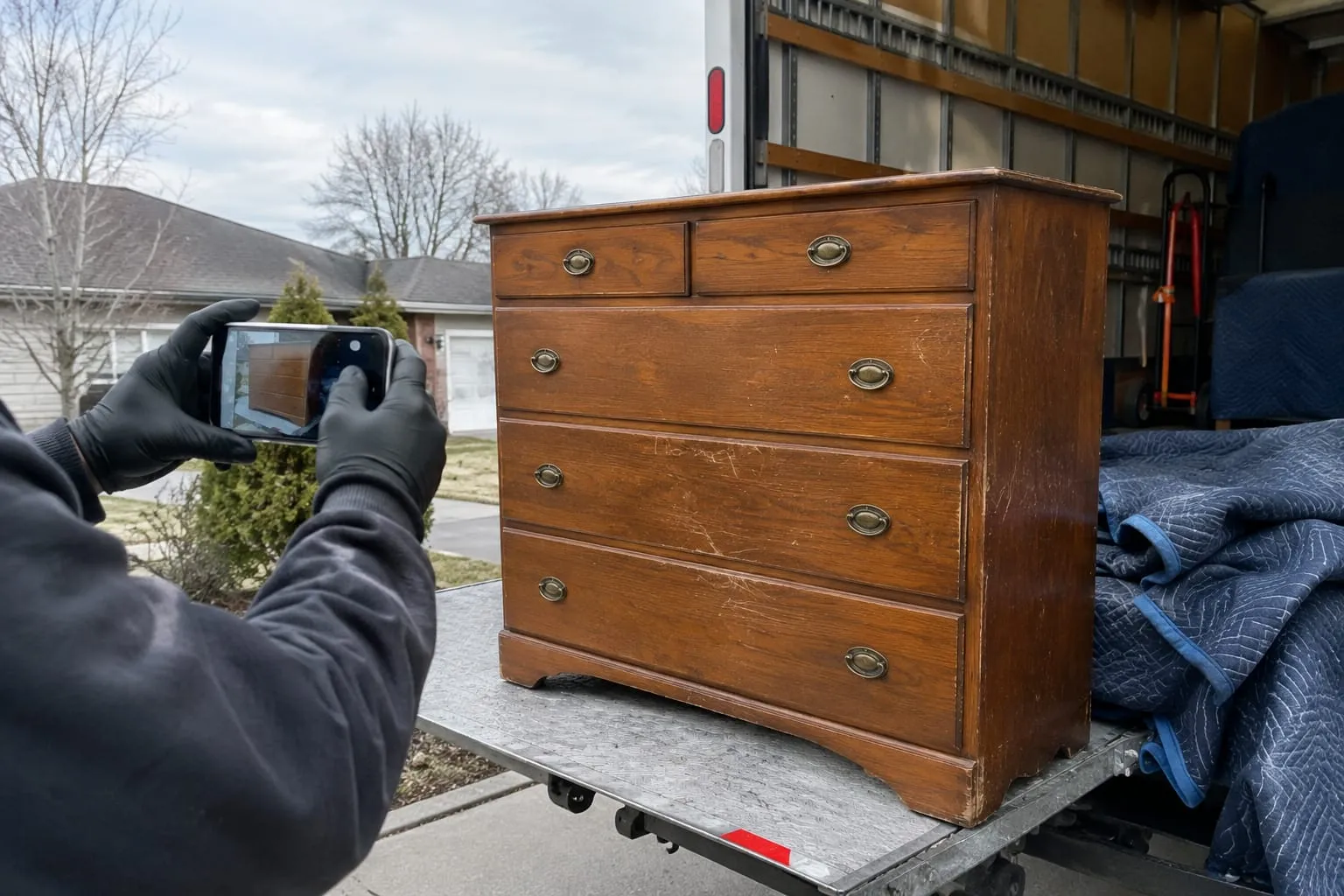
Document the condition of the goods every time they change hands: at the survey, at loading, in transit or storage, and at delivery. Each record needs codes, photos and a customer signature. A claim file is only as strong as its weakest stage.
- Estimate and survey
- Record any pre-existing damage you see during the survey, whether it happens in the home or on a customer-recorded video. A video-based survey that replaces the in-home walkthrough leaves a dated visual record of furniture condition before move day.
- Store the signed estimate and Order for Service with the job. Some estimating tools automatically void a signature if the price changes after signing. That way, the signed version on file is the one the customer actually accepted.
- Record which valuation option the customer chose, any signed released-value waiver, and confirmation that the FMCSA booklet was provided.
- Packing and loading
- Put a numbered inventory sticker on every item and carton.
- Write condition and location codes for each furniture item before it leaves the residence.
- Photograph high-value items, existing damage and anything the customer packed themselves.
- Mark cartons packed by the owner as PBO.
- Have the customer review and sign the origin inventory. If they disagree with an entry, record that on the form, not just verbally.
- In transit and storage
- Record trailer seal numbers, transfers between trucks, and the condition of goods at warehouse check-in for storage-in-transit shipments.
- Note any incident, such as a shifted load or a dropped item, on the day it happens. Add a photo and the foreman's name.
- Delivery
- Check off every tag number as it comes off the truck.
- Write any exceptions, such as missing tags or new damage, on the inventory before the customer signs.
- Photograph each exception and record the time.
- Get the customer's signature on the delivery receipt and the inventory.

Delivery is the easiest stage to rush at the end of a long day. A quick signature with no exceptions noted leaves both sides arguing from memory. A slower, accurate walkthrough gives both sides a record.
Writing Inventory and Exception Notes That Hold Up in a Dispute
Strong notes do four things. They are specific, they give a location code, the customer agrees to them at origin, and they are matched by delivery exceptions written before the customer signs. Vague or blanket notes help nobody.
Most household goods inventory forms use shorthand condition codes and location numbers. Codes vary by company, so print the legend on every form and train every crew on the same set.
| Code type | Common examples |
|---|---|
| Condition | BR broken, CH chipped, D dented, G gouged, M marred, R rubbed, SC scratched, T torn, W badly worn, Z cracked |
| Location | 1 arm, 2 bottom, 3 corner, 4 front, 5 left, 6 legs, 7 rear, 8 right, 9 side, 10 top, 11 veneer |
| Packing | PBO packed by owner, CP carrier packed |
The difference between a weak note and a defensible one is detail:
| Weak note | Defensible note |
|---|---|
| "Scratched" | "SC 10: 3-inch scratch on top, rear left corner; photo attached; customer initialed" |
| "Old furniture, wear throughout" | "W 1, 6: worn finish on both arms and legs; R 4: rub marks on front" |
| "Box damaged" at delivery | "Carton 47 crushed at one corner, contents not yet inspected; photographed; noted before signature" |
Avoid blanket notes. A crew that writes "scratched" on every item gives an arbitrator no reason to trust any single entry. Code what is actually there, and nothing more.
Agreement matters as much as accuracy. If a customer disputes a code at origin, write down the disagreement and photograph the spot. That way the record shows both views and the evidence behind them.
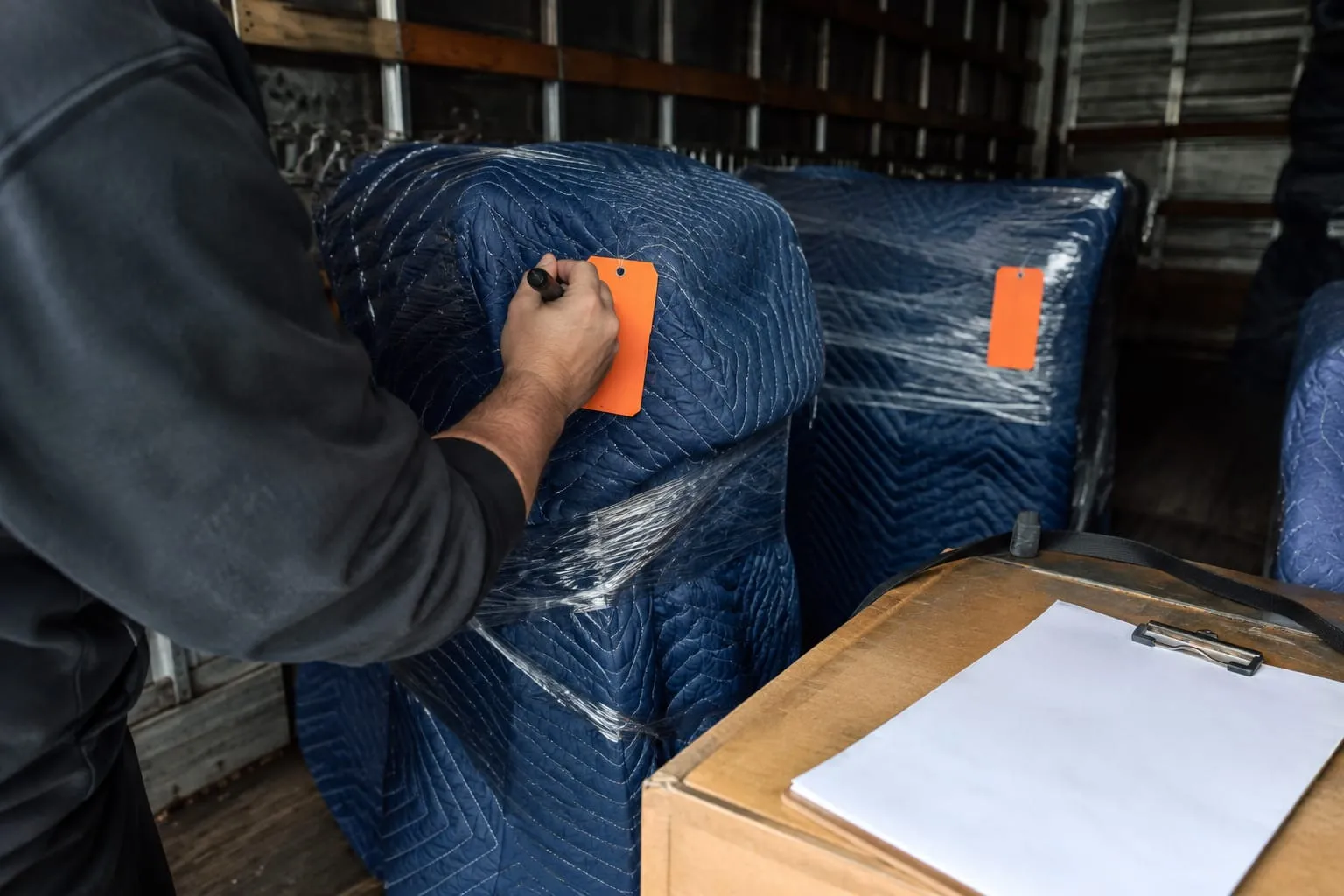
Pro Tip: Tie every photo to an inventory tag number, either in the file name or in the job record. An untagged photo proves a scratch exists somewhere. A photo tied to tag 112 proves where it was and when.
How to Respond When a Claim Arrives: A Step-by-Step Process
Log the date the claim arrives and acknowledge it in writing within 30 days. Then assemble the job file, investigate, calculate the amount under the valuation option, and send a written decision within 120 days. Put this procedure in writing so every claim gets handled the same way, no matter who opens it.
- Log the receipt date. The Part 370 deadlines run from the day the company receives the claim. Check that it meets the written-claim requirements. If information is missing, ask for it in writing.
- Acknowledge in writing. Send the acknowledgment within 30 days, as 49 CFR 370.5 requires. Sending it the same day, with a list of the documents needed, sets a professional tone.
- Open one file. Pull together the estimate, Order for Service, valuation election, signed Bill of Lading, origin and delivery inventories, photos, crew notes and every message with the customer.
- Investigate. 49 CFR 370.7 requires a prompt and thorough investigation. Compare the origin and delivery condition codes and review the photos side by side. Get a written statement from the foreman, then inspect the item or ask for photos and a repair estimate.
- Calculate the amount under the valuation option. Confirm the current requirement with the relevant authority before settling.
- Decide and send the disposition. Within 120 days, pay, decline or make a firm compromise offer in writing, as 49 CFR 370.9 sets out. If that is not possible, send a written status update at the 120-day mark and every 60 days after, giving the reason for the delay.
- Explain the next step. If you decline the claim or offer a compromise, state the reasons and point to the evidence. Remind the customer that the arbitration program is available.
- Close the file. Record the payment, any signed release, and the root cause, so the claim feeds into claims reporting.

Q: Does the 120-day claim deadline start at delivery or when the claim is received?
A: It starts when the claim is received.
Repair, Settle or Decline: Choosing the Resolution
Repair or replace when the evidence shows the damage happened while the carrier had the goods. Offer a compromise when the cause is genuinely unclear. Decline only when the file documents why the carrier is not liable, and point every decision to a specific piece of evidence.
| Resolution | When it fits | Evidence to have in the file |
|---|---|---|
| Repair | Damage is localized and restorable | Written estimate from a furniture repair technician; before and after photos |
| Replace or cash settlement | Item is lost, or repair would cost more than the item is worth | Inventory showing the item was tendered; proof of value |
| Firm compromise offer | Cause or amount is genuinely disputed | Partial evidence on both sides; a calculation the customer can follow |
| Decline | Damage was coded at origin, or the item does not appear on the inventory | Signed origin inventory with a matching condition code; pickup photo |
A decline letter should do more than say no. Attach the pickup photo and the signed origin inventory, and explain the arbitration program. When the customer sees their own initials next to a dated photo, the conversation shifts from an argument to a review of the record.
Pay clear claims quickly. A fast, fair settlement on an obvious claim usually costs less than the dispute, the review and the referral you lose by stalling. It is also part of the customer experience in moving services that brings repeat business.
When the Customer Disagrees: Arbitration and Escalation
Under 49 U.S.C. 14708, it is binding at the customer's request for claims of $10,000 or less.
Prepare as if the file is the whole case, because to the arbitrator it largely is. The arbitrator sees only the inventories, photos, signatures and correspondence the company can produce. Testimony about what the crew "always does" is no substitute for a coded entry and a timestamp.
Customers have other options too. Answer any complaint promptly and keep the response in the claim file. If a dispute moves toward a lawsuit, bring in your insurer and an attorney early.
Reducing Payouts Through Crew Practices and Claims Data
Payouts fall for two reasons: fewer items get damaged, and the file can prove what happened to the ones that do. Both come from crew habits and from tracking every claim by its cause.
Crew practices that prevent the most common incidents:
- Pad and stretch-wrap furniture before it leaves the room, not at the truck.
- Take off legs and remove glass tops and mirrors using a standard checklist. Bag the hardware and label the bag with the tag number.
- Use floor runners, door jamb protectors and banister pads on every job.
- Load heavy, square items first, tie off each tier, and keep fragile cartons on top.
- Do a final walkthrough with the customer at both origin and destination.
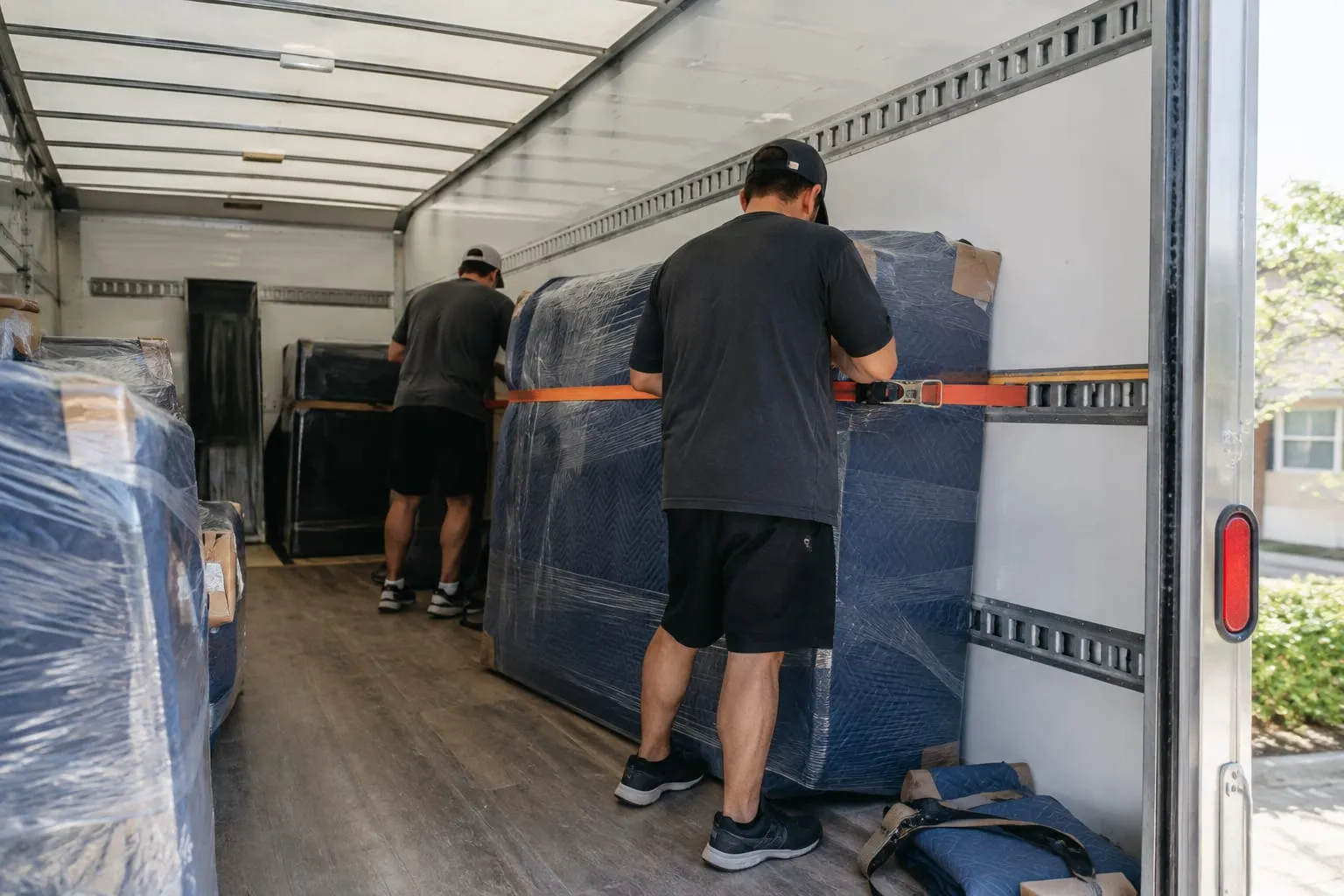
Experienced crews are among the most effective claims controls a company has, and turnover resets that training. That makes retaining experienced crew members a claims issue as well as a staffing issue.
Then measure. Tag each claim with the crew, truck, item type, job stage, cause and amount paid, and review the totals every month. Pairing claims data with crew performance reporting shows where training will pay off. For example, repeated television damage from one crew points to a packing method, while recurring stair incidents point to equipment.
Running Claims From One File Instead of Email Threads
Claims resolve faster when every piece of evidence lives on the job record, not in phones, inboxes and paper folders. The point is to find the evidence quickly, not to avoid paying. A good system makes paying a valid claim and declining an unsupported one equally quick.
Picture the usual mess: the photos are on a foreman's phone and the signed inventory is in a truck cab. A defensible claim can end up paid simply because nobody can find the proof. Tools built for movers close that gap at each stage:
- Photos captured on the job. A foreman app that captures before-and-after photos offline syncs when signal returns, so basements and rural pickups still produce a record.
- Signed documents carried from the estimate. An electronic Bill of Lading with timestamped signatures records multi-party signatures with geolocation. It pulls the inventory from the estimate, so nobody re-enters it.
- Customer input before move day. A customer portal where shippers can flag inventory that doesn't match surfaces disagreements before the truck arrives, not after delivery.
- One claim record. Moving claims software ties before-and-after photos to each job, keeps the signed Bill of Lading and inventory on record, and maintains a tamper-evident trail. A claim becomes a file you open, not an email hunt.
The moving industry glossary defines the operational terms used throughout this guide.
Related Articles
- Customer Experience Excellence in Moving Services — how service standards at each touchpoint shape reviews, referrals and repeat bookings.
- Employee Retention Strategies for Moving Companies — practical ways to keep trained crew members through peak season and beyond.
- Automated Survey Removals: A Guide to Pre-Move Intake — how structured pre-move surveys capture inventory and job details before move day.
- CRM for Moving Companies: Streamlining Operations — how a moving CRM connects leads, estimates, dispatch and billing in one workflow.
Useful Links
- Moving Claims Software
- Moving Crew App: Foreman Field App
- Electronic Bill of Lading Software for Movers
- Business Insurance for Moving Companies: Complete Guide
- Branded Customer Portal for Moving Companies
Need help with this? Moving Claims Software · Get started · Call (888) 611-7483
Ready to see it in action?
Book a free 60-minute demo and explore how Virtual Estimate can help your business.