

A video survey moving estimate lets a customer record a short smartphone walkthrough of their home, then uses AI to identify each item, measure cubic feet, and produce a priced inventory — with no in-home visit and no scheduled live video call. It is the fastest-growing way for a new york moving company to quote a job accurately.
For decades, estimators lost hours crossing the city for walkthroughs, and phone estimates simply guessed at volume. This guide explains how AI video scanning works, why it produces defensible quotes, and how it handles the realities of new york city moving — walk-ups, certificates of insurance, and tight Manhattan streets.

| Point | Details |
|---|---|
| No appointment needed | The customer records a guided walkthrough on their own phone; no estimator travel and no scheduled call. |
| Measured, not guessed | AI matches furniture to known dimensions and sums the volume, replacing eyeball phone estimates. |
| Faster response wins jobs | Movers who quote first tend to book the job; a remote moving quote returns in minutes, not days. |
| One scan, many uses | The same inventory prefills the priced quote and the DOT bill of lading. |
| Built for NYC | The survey captures walk-up floors, elevator access, and building entry that drive local labor time. |
Why In-Home and Video-Call Walkthroughs Are Costing Movers Jobs
Speed decides who books the move. A lead that waits two days for an in-home visit, or two hours for a live video call, often signs with whoever answered first.
Americans relocate constantly — the U.S. Census Bureau tracks tens of millions of movers each year, and most request several quotes at once. In-home estimates burn an estimator's day on round-trip travel. Live video calls need both people free at the same moment, which rarely happens on the first try.
Phone estimates solve the speed problem but wreck accuracy. Without seeing the home, the estimator guesses the volume, and a wrong guess becomes a day-of price dispute. The asynchronous video survey removes that trade-off.

What a Video Survey Estimate Actually Is

A video survey — sometimes called a virtual moving survey — is an estimate built from a recorded walkthrough of the customer's home rather than a physical or live visit. The customer films the rooms once; the mover reviews or auto-processes the footage on their own schedule.
This sits in a different category from the estimate types most people know. A breakdown of the main types of moving estimates covers binding, non-binding, and not-to-exceed pricing — the video survey is simply the data-collection method feeding any of those.
It matters most in dense markets. As a guide to top moving companies and costs across NYC shows, buildings and access vary block to block, and a recorded survey captures those details a phone call misses.
How AI Measures Furniture and Calculates Cubic Feet From a Customer Video
The AI does three things in sequence: it detects each object, matches it to a library of known furniture dimensions, and adds up the total volume. The output is a room-by-room inventory measured in cubic feet, not a rough guess.
Q: How does AI calculate cubic feet from a phone video?
A: It detects each item, matches it to known furniture dimensions, then sums the volume — the same logic behind a cubic feet moving calculator, applied automatically to every frame.
Volume is the number that drives price. Once the system knows total cubic feet, it estimates truck space, crew size, and hours, which is why a measured scan is far more reliable than a verbal walk-through of "a couch and some boxes."

Pro Tip: Ask customers to open every closet, cabinet, and under-bed space on camera. Hidden items are the top cause of volume underestimates and the day-of disputes that follow.
From Text Link to Quote: The No-Appointment Estimate Workflow
The workflow removes scheduling entirely. Here is the typical path from lead to priced quote:
- A new lead comes in by web form or phone.
- The mover sends a survey link by SMS.
- The customer records a guided walkthrough, usually in three to five minutes.
- AI processes the footage into a cubic-feet inventory.
- The estimator reviews, adjusts, and sends a priced remote moving quote.
Q: How long does a video survey take to complete?
A: Most customers finish a guided smartphone walkthrough in three to five minutes, and the priced inventory comes back within minutes to a few hours.
This is the same async logic detailed in a step-by-step virtual pre-move survey walkthrough, applied at scale. For high-volume markets, a guide to the top moving companies in NYC shows how much booking depends on response time.
Pro Tip: Send the survey link by SMS, not email. Text messages get opened fast, so the walkthrough gets completed while the lead is still deciding between movers.
Consistent, Defensible Quotes: The AI Inventory Advantage
AI-measured inventory produces the same number every time, because it applies fixed dimensions rather than an estimator's mood or workload. That consistency is what makes a quote defensible when a customer questions the price.
Federal rules reward that rigor. The FMCSA requires movers to provide written estimates tied to the goods being shipped, and an itemized scan is far easier to stand behind than a hand-scribbled list. Here is how the three approaches compare:
| Criteria | Video Survey (AI) | In-Home Estimate | Phone Estimate |
|---|---|---|---|
| Turnaround | Minutes to hours | 2–5 days to schedule | Immediate but rough |
| Estimator travel | None | Full round trip | None |
| Volume accuracy | High (measured) | High | Low (guesswork) |
| Customer effort | 3–5 min recording | Half-day at home | Short call |
| Scales with lead volume | Yes | Limited | Yes |
| Produces itemized record | Yes | Manual notes | None |
The measured record also protects the mover. When the inventory is documented on video, a claim of extra items at the door is easy to check against the original scan.
NYC Move Costs and Building Requirements a Video Survey Captures

Manhattan and Brooklyn moves are priced on more than volume — access drives labor time as much as cubic feet. A recorded survey captures the fourth-floor walk-up, the freight-elevator window, and the distance from truck to door that a phone call never surfaces.
Q: Do NYC buildings require a certificate of insurance for movers?
A: Yes. Most Manhattan and Brooklyn co-ops and rental buildings require a certificate of insurance naming the building and management before the crew is allowed in.
The certificate of insurance is non-negotiable in most doorman and elevator buildings, and missing it can cancel a move on the day. Licensing is equally strict: New York State requires household-goods movers to be permitted by NYSDOT, a credential worth confirming before booking.
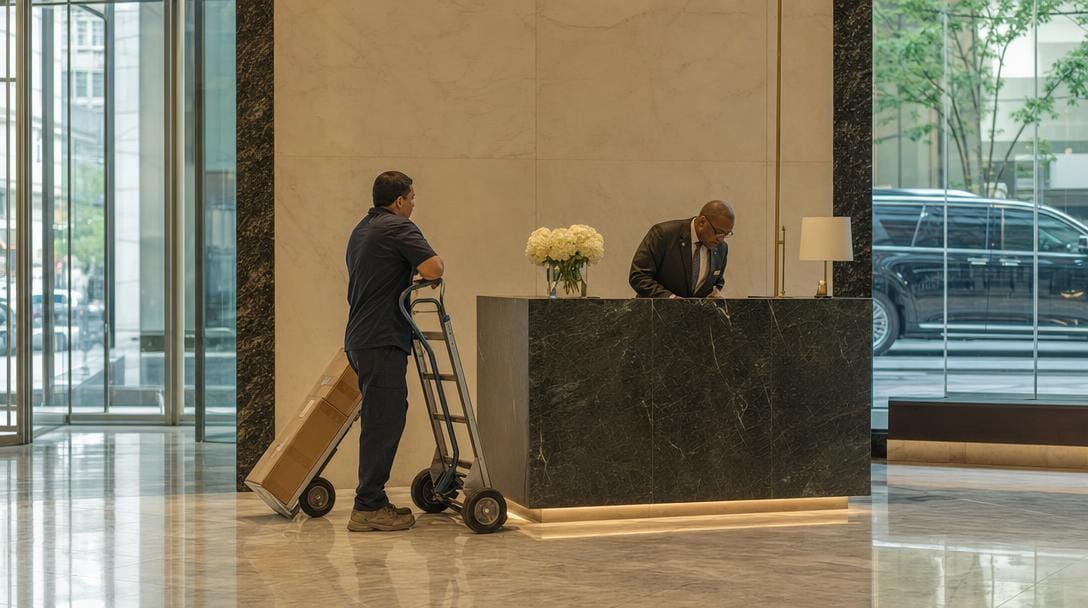
The following illustrative local-move ranges, consistent with figures compiled in a detailed NYC moving cost breakdown, show how home size and borough shift the estimate:
| Home size | Manhattan (USD) | Brooklyn / Queens (USD) |
|---|---|---|
| Studio | 400–1,000 | 350–850 |
| 1-bedroom | 700–1,600 | 600–1,400 |
| 2-bedroom | 1,200–2,800 | 1,000–2,400 |
| 3-bedroom | 2,200–4,500 | 1,800–4,000 |
Parking is the other NYC variable. There is no residential moving-truck permit in most of the city, so crews stage on tight streets, and a survey that shows the block helps the estimator plan the carry.

Pro Tip: Have the customer pan to the building entrance, stairwell, and street on the same video. Walk-up floors and loading distance drive NYC labor time as much as the cubic feet inside the apartment.
Prefilling Your DOT Bill of Lading From One Scan
The scan is not a throwaway. The same itemized inventory that priced the quote can prefill the paperwork the mover is legally required to produce on move day.
The FMCSA requires a bill of lading for every household-goods move — the contract listing the goods, terms, and charges. When moving company video estimate software carries the AI inventory straight into that document, the crew skips a duplicate count and the customer sees a consistent record from quote to load-out.
This is where the survey connects to the back office. A modern Moving CRM stores the scan, the quote, the follow-ups, and the invoice in one lead record, and most of these tools ship as SaaS so updates reach every user instantly. A guide to the moving company technology stack maps how the estimate feeds the rest of that pipeline.
Is a Video Survey Right for Your Moving Company?
A video survey fits any mover competing on speed and accuracy, which today means nearly all of them. If leads shop three companies at once and expect a same-day figure, an AI moving estimate answers faster than an in-home visit while measuring more precisely than a phone call.
The fit is strongest for local and long-distance residential movers in access-heavy markets like NYC, where building rules and carry distance shape the price. For a deeper walkthrough of the method itself, the complete virtual pre-move survey guide covers setup, customer scripts, and common pitfalls.
The core trade is simple: less estimator windshield time, faster quotes, and one measured inventory that follows the job from first contact to signed bill of lading.
Related Articles
- Types of Moving Estimates: Choosing the Best Option — Understand binding, non-binding, and not-to-exceed quotes before you book.
- Virtual Pre-Move Survey: Complete Guide — Learn how remote surveys are set up, run, and reviewed end to end.
Recommended Reading
Ready to see it in action?
Book a free 20-minute demo and explore how Virtual Estimate can help your business.