

A video survey moving estimate is a quoting method where the customer records a short smartphone walkthrough of their home, then the moving company — usually with AI software — identifies and measures every item to calculate volume, weight, and a binding price. No estimator enters the house, and no live call is scheduled. This method replaces the in-home visit that has anchored moving sales for decades. This guide explains how the technology works, why it produces more consistent quotes, and how movers in sprawling markets like Phoenix use it to win jobs faster.
Key Takeaways
| Point | Details |
|---|---|
| No visit required | A video survey replaces the in-home walkthrough; customers record a phone video on their own schedule. |
| AI does the counting | Software builds an itemized inventory and converts furniture into cubic feet for consistent pricing. |
| Speed wins jobs | Estimators skip travel time and quote far more leads per day across a metro like Phoenix. |
| Verify every mover | Confirm any Phoenix mover's USDOT number in the FMCSA SAFER company snapshot database before booking. |
| One dataset, one workflow | The measured inventory flows straight into the quote, contract, and DOT bill of lading. |
Why In-Home Visits Cost Movers Time and Jobs
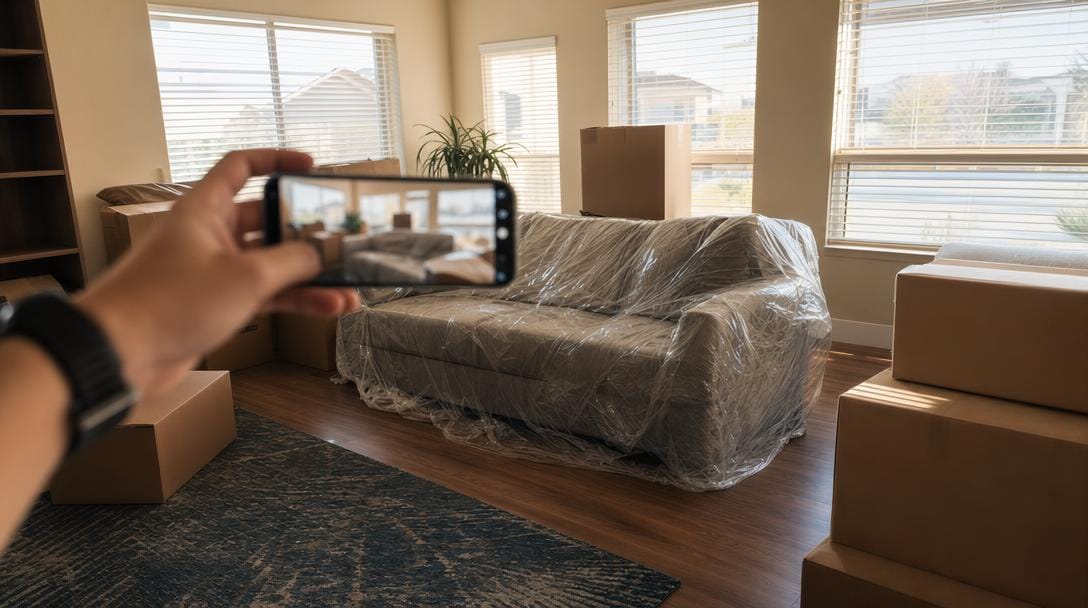
The traditional in-home estimate is expensive before a single box is packed. An estimator drives to the prospect, walks every room, and hand-tallies furniture — commonly 60 to 90 minutes on site plus round-trip travel. Across the Phoenix metro, where neighborhoods stretch from Scottsdale to the West Valley, that windshield time swallows most of a workday.
Speed decides who books the job. With roughly 8% of Americans relocating each year and most requesting several quotes, the first accurate number often wins. A mover who needs three days to schedule a visit loses to one who quotes the same afternoon.
Live video calls solved travel but created a new bottleneck: scheduling. Both parties must be free at the same moment, and a dropped signal or a nervous customer can derail the walkthrough. A recorded remote moving survey removes that friction entirely.
Pro Tip: Track "speed to quote" as a core sales metric. Log the minutes between lead capture and delivered estimate — crews that quote within two hours of first contact consistently out-book slower competitors.
What a Video Survey Moving Estimate Actually Is
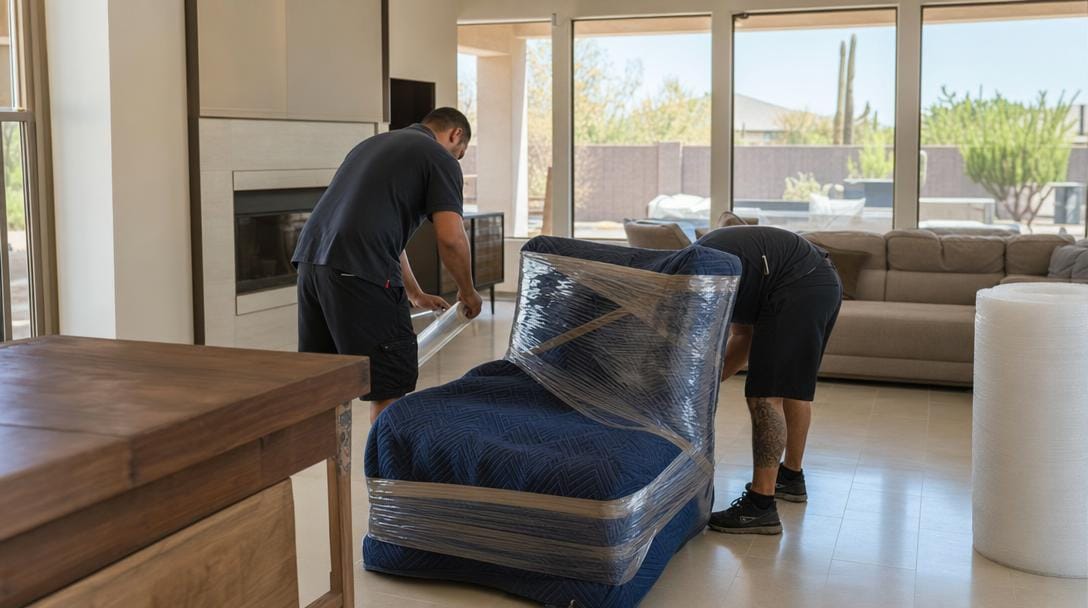
A video survey moving estimate is a quote built from a customer-recorded home walkthrough instead of a physical or live visit. The customer films each room following on-screen prompts, uploads the clip, and the mover — or the AI inside virtual moving estimate software — identifies each item and calculates volume.
This differs from a live video estimate in one key way: timing. A recorded survey is asynchronous. The customer films at 11 p.m.; the estimator reviews at 8 a.m. Neither waits on the other.
Q: What is the difference between a video survey and a live video estimate?
A: A live video estimate is a real-time call where both parties join together; a video survey is a pre-recorded walkthrough the customer uploads on their own schedule, then the mover reviews asynchronously.
The method sits alongside older options and mirrors the workflow in this step-by-step virtual pre-move survey walkthrough. For a market-specific view, the roundup of the Best Moving Companies in Phoenix, AZ: Top 12 Picks shows how local firms increasingly quote this way.
| Criteria | In-Home Visit | Live Video Call | Recorded Video Survey |
|---|---|---|---|
| Estimator travel | Required | None | None |
| Scheduling | Appointment | Synchronous call | Asynchronous |
| Turnaround | 1–3 days | Same day if both free | Often same hour |
| Inventory method | Hand-tally | Manual on call | AI item detection |
| Audit trail | Notes only | Rarely recorded | Full video retained |
How a Customer Video Becomes a Defensible Quote
The path from raw clip to signed price follows five repeatable steps:
- Guided capture — the customer films each room using prompts that force slow, complete pans.
- Upload — the clip lands in the estimator's queue, timestamped and stored.
- AI moving inventory — the software detects and labels every visible item, from sofas to lamps.
- Human review — the estimator confirms edge cases, flags packed closets, and adds anything the camera missed.
- Quote generation — the finished inventory converts to volume, weight, and price.
A defensible quote survives disputes because the video is retained. If a customer later claims an item was missed or added, the mover replays the original walkthrough frame by frame.
Q: Is a video survey estimate binding?
A: The estimate becomes binding when both parties sign; federal rules require interstate movers to issue a written estimate and honor its terms, per FMCSA's Protect Your Move guidance.
AI Furniture Measurement and Cubic-Feet Calculation for Consistent Pricing
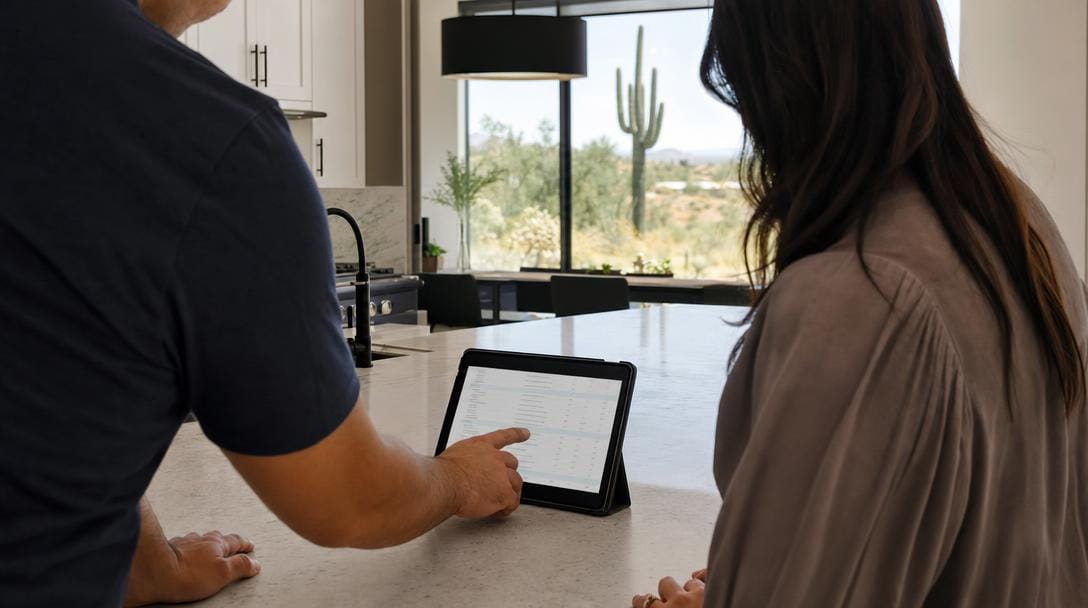
Volume drives price in moving, and volume is where human estimators disagree most. AI measurement fixes that. The software estimates each item's dimensions and runs them through a cubic feet moving calculator, converting furniture into a single volume figure the whole crew can trust.
Consistency is the real prize. Two estimators eyeballing the same living room might book it 15 cubic feet apart; a trained model applies the same logic every time. That repeatability protects margins and reduces underpriced jobs.
Most systems lean on standard household-goods "cube sheets" — the same conversions professional movers have used for decades — then adjust for what the camera actually shows.
| Item (common cube-sheet estimate) | Approx. Cubic Feet | Weight Convention |
|---|---|---|
| Queen mattress set | ~65 cu ft | ~7 lb per cu ft |
| 3-seat sofa | ~50 cu ft | ~7 lb per cu ft |
| Dining table | ~30 cu ft | ~7 lb per cu ft |
| Refrigerator | ~45 cu ft | ~7 lb per cu ft |
| Standard medium box | ~1.5 cu ft | ~7 lb per cu ft |
Pro Tip: Spot-check the AI's cube total against your crew's actual truck load on the first ten jobs. Calibrating the model to your local Phoenix housing stock — heavy on tile, patio furniture, and garage storage — tightens accuracy fast.
From Measured Inventory to Price, Contract, and DOT Bill of Lading

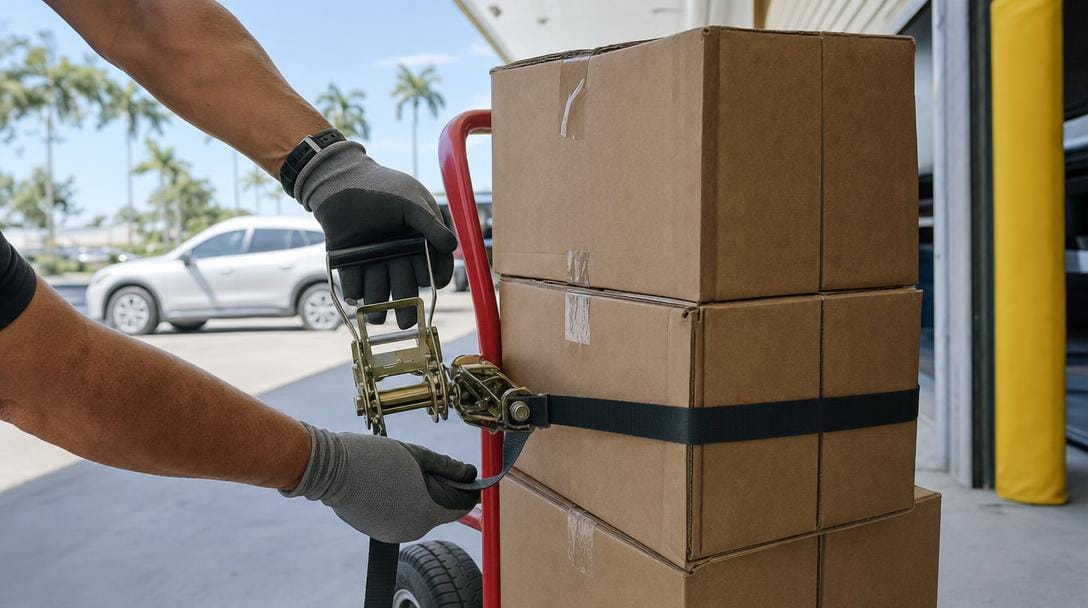
Here's the operational payoff: the measured inventory is captured once and reused everywhere. That single dataset becomes the pricing input, the contract line items, and the DOT bill of lading — the shipping document FMCSA requires every mover to issue before a load leaves the curb.
When the inventory lives in one system, nobody re-keys it. Good moving quote software pushes the itemized list straight into the estimate, then into the booking record and the driver's paperwork. Errors from manual re-entry disappear.
That continuity also feeds the sales pipeline. The same record that priced the job tracks follow-ups, notes, and invoices — the backbone of any modern estimating software for movers. Pricing itself still depends on distance, labor, and season, which is why understanding how much movers cost matters before finalizing any binding number.
Pro Tip: Attach the recorded survey video to the bill of lading record. If a claim arises after delivery, the timestamped walkthrough is your strongest evidence of the pre-move condition and item count.
Choosing Between Estimate Methods
No single method fits every job. The right choice depends on move distance, inventory size, and how tech-comfortable the customer is. Understanding the full menu of types of moving estimates helps set expectations before you quote.
| Factor | In-Home Visit | Recorded Video Survey |
|---|---|---|
| Best for | Large, complex, high-value homes | Most local and long-distance moves |
| Estimator cost | High (travel + labor) | Low |
| Customer effort | Low | Moderate (must film) |
| Turnaround speed | Slow | Fast |
| Data reuse | Manual | Automatic |
For packed storage units, hoarding situations, or antique-heavy estates, an in-home visit still earns its keep. For everything else — the bulk of Phoenix metro relocations — a video survey delivers a faster, more consistent number.
Is a Video Survey Right for Your Moving Company?
If your crews cover a wide service area and your close rate suffers from slow quoting, the answer is almost certainly yes. Video surveys shine where travel is expensive and speed is the differentiator — an exact description of the Phoenix and greater Arizona market.
Adoption does require discipline. Train customers to film thoroughly, keep a human in the review loop, and calibrate the model to local inventory. The deeper mechanics are covered in this guide to AI-powered moving estimates, and selecting the right platform starts with comparing the best moving company software on the market.
One rule outranks the technology: verify licensing. Interstate carriers need a valid USDOT number searchable in FMCSA's public database, while Arizona intrastate movers register with the Arizona Department of Transportation motor carrier division. No estimate method — however slick — substitutes for confirmed authority and active insurance.
Related Articles
- Types of Moving Estimates: Choosing the Best Option — Compares binding, non-binding, and not-to-exceed estimates so you pick the right one.
- How to Conduct a Virtual Pre-Move Survey: Step-by-Step — A practical walkthrough for running remote surveys that produce accurate inventories.
- AI-Powered Moving Estimates: Complete Guide — Explains how AI measurement and automation reshape quoting accuracy.
Recommended Reading
Ready to see it in action?
Book a free 20-minute demo and explore how Virtual Estimate can help your business.