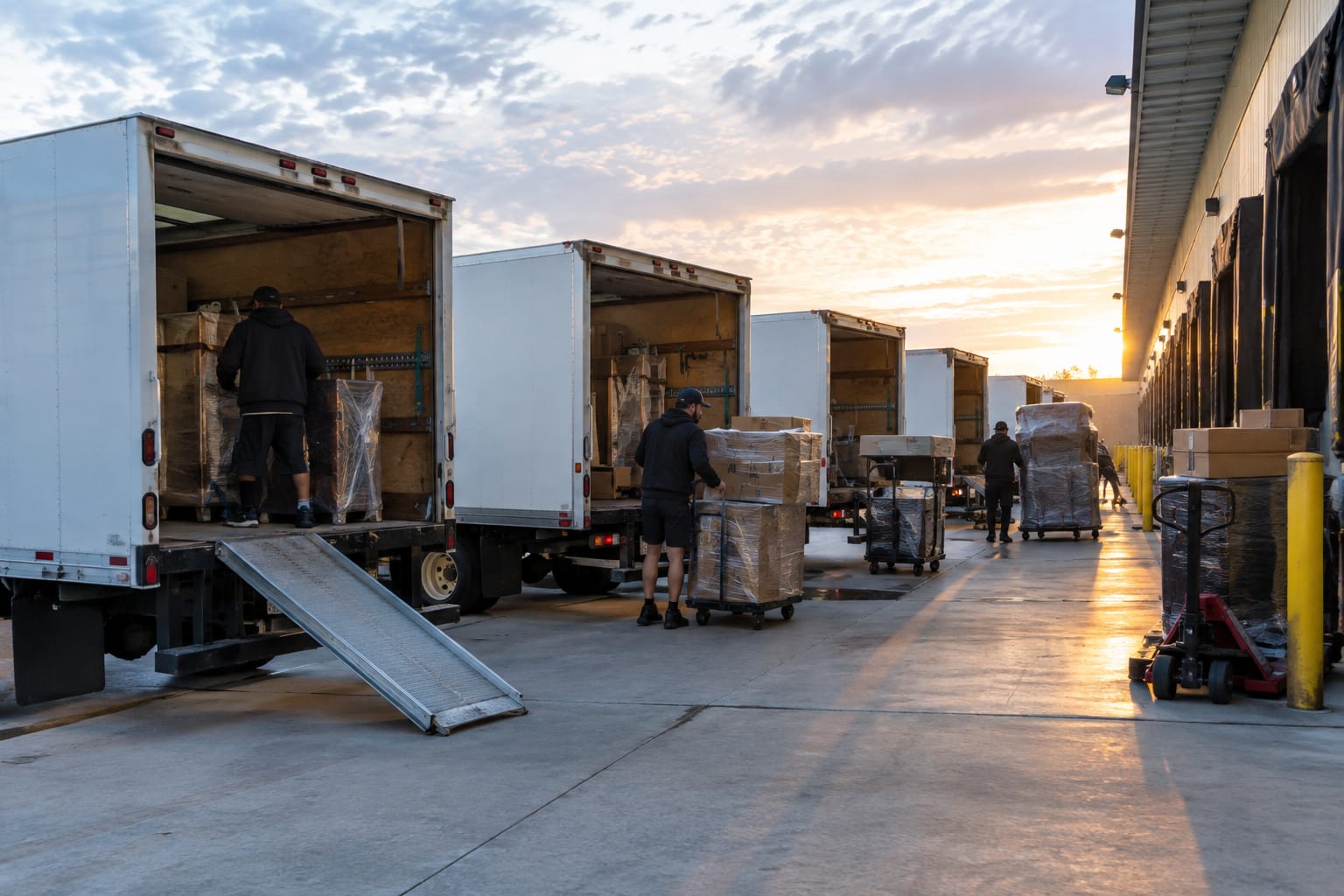

A moving logistics company is a household-goods mover that coordinates the full chain of a relocation: estimate, crew and truck dispatch, transport, storage, paperwork and billing. A basic truck-and-crew mover supplies a truck and a crew. This explainer is for owners, general managers, sales managers and dispatchers of US moving companies who want a working model of moving logistics. It covers what the job includes, where it breaks, and which systems keep it running.
A moving logistics operation runs six connected functions:
- Estimating: inventory, volume, access and price before the job is booked.
- Dispatch and scheduling: matching crews and trucks to dates and addresses.
- Field execution: the crew's work on site, documented as it happens.
- Storage: warehouse space for shipments that cannot deliver right away.
- Documentation and compliance: estimates, orders for service, inventories and the Bill of Lading.
- Billing, payroll and reporting: deposits, final invoices, crew pay and job profitability.
The handoffs between these functions affect margins more than any single function does. The sections below explain how each function works, how local and long-distance logistics differ, and how to find the weak points in your own operation.

Key Takeaways
- Coordination, not just labor. A moving logistics company coordinates estimating, dispatch, field work, storage, documentation and billing as one connected system.
- Handoffs drive margins. Most losses come from gaps between functions: undercounted inventories, double bookings, retyped paperwork and missed storage charges.
- Local and long-distance differ.
- Compliance is a trust signal. FMCSA's Protect Your Move program tells shippers to verify a mover's registration, so USDOT and operating authority details must be accurate and visible.
- One job record wins. Software that carries one job record from lead to invoice removes the retyping that causes estimate, Bill of Lading and billing errors.
What a Moving Logistics Company Is
A moving logistics company plans and coordinates moves as a system. It uses its own crews and trucks, and often its own warehouse. Here, logistics coordination means getting the right crew, truck, materials and paperwork to the right address on the right day.
Most moving logistics companies start as local labor-and-truck operations. They change as they add long-distance routes, commercial jobs and a storage division. Each addition creates dependencies that a whiteboard and a phone can no longer track.
This article covers household and commercial moving, including a mover's own storage and long-haul divisions. Freight brokerage and auto transport follow different rules and workflows.
Owners making the shift from crew-based mover to logistics operation can use this guide on how to write a moving company business plan to map services, capacity and growth targets. For unfamiliar vocabulary such as cube sheet, line haul and accessorial charges, keep a reference list of moving and storage terms handy.
Core Functions: Estimating, Dispatch, Storage, Billing
Every booked job passes through the same four business functions. Mistakes in one function carry into the next.
Estimating. The estimate converts a customer's household into volume or weight, crew hours, truck size and price. It must account for access issues such as stairs, elevators and long carries, plus specialty items like pianos or safes. An undercounted inventory causes two problems: the crew runs out of truck space on move day, and the customer disputes the final bill.
Q: What is the difference between a binding and a non-binding moving estimate?
A: Confirm the current rules on binding estimates with the relevant authority. A non-binding estimate is a reasonable approximation. Any remaining balance is billed afterward.
Dispatch and scheduling. Dispatch turns booked jobs into a daily plan: which crew, which truck, what start time and what route. Dispatchers balance crew skills, truck capacity, drive time and overtime. They rebuild the plan when a job runs long or a customer reschedules.
Dedicated moving dispatch and scheduling software replaces the whiteboard with one shared board. It flags double-booked crews and trucks before they cause a missed job.
Storage. Many moves cannot deliver on the day they load. A closing date slips, a renovation runs late, or a long-distance shipment waits for its delivery window. The warehouse team tracks each shipment by vault or lot, and the office bills storage on a recurring schedule.

Storage revenue is easy to lose without noticing. Missed recurring charges, unclear start dates and untracked vault locations add up across dozens of shipments. Software that ties storage billing and storage-in-transit agreements to the original move record keeps billing and inventory in sync.
Billing and payroll. Billing covers deposits at booking, adjustments for actual hours or added services, and final payment at delivery. Payroll runs alongside it. Crew hours, helper rates, foreman premiums and sales commissions all come from the same job record. When billing and payroll pull from different sources, someone in the office reconciles them by hand every week.
How Local vs Long-Distance Logistics Differ
Local and long-distance moves use the same functions. They differ in timelines, regulations and cost drivers. The table below summarizes the main operational differences.
| Factor | Local moves | Long-distance moves |
|---|---|---|
| Typical pricing basis | Hourly rate plus crew size, under state rules where regulated | Weight or volume, plus distance and accessorial charges |
| Crew model | The same crew loads and unloads, usually on the same day | Line-haul driver, sometimes with separate load and delivery crews |
| Truck use | Several jobs per truck per day | One truck committed for days on a single route |
| Delivery timing | Fixed date and arrival window | Agreed pickup and delivery dates or periods |
| Storage | Short-term, often a few nights | Storage in transit while awaiting delivery |
Long-distance moving logistics adds a problem that local work rarely has: keeping trucks full across several days. A half-empty truck costs nearly as much to run across several states as a full one. Long-haul divisions therefore plan routes and backhauls, and they consolidate loads where customer agreements allow.
Q: What is storage in transit (SIT) in moving?
A: Confirm the current rules on storage in transit with the relevant authority.
Compliance Signals: USDOT, FMCSA and State Tariffs
Compliance is a legal requirement. Customers also check it before they book. Three layers apply to most US moving logistics companies.
Federal registration. For-hire carriers that move household goods across state lines should confirm current registration requirements with FMCSA, the Federal Motor Carrier Safety Administration. Customers are told to check these: FMCSA's Protect Your Move program advises shippers to verify a mover's registration before booking.
Q: Does a local moving company need a USDOT number?
A: Confirm the current requirement with the relevant federal authority.
This walkthrough of Bill of Lading DOT requirements explains what each document must contain.
State tariffs. State law governs intrastate moves, and the rules vary widely. A tariff is the published schedule of rates and rules a mover must charge by. Before quoting intrastate work, confirm your state's licensing and state DPU tariff requirements directly with the state regulator.
USDOT and FMCSA compliance covers trucks and paperwork. Data handling is a separate concern. Customer addresses, inventories and payment details all pass through the operation's software, so check how each vendor documents encryption, data isolation and login protection. A published security and compliance page is the right place to start.
The Systems a Logistics Operation Runs On
A moving logistics company runs best on one record per job that every role can see. Most current moving software is SaaS (software as a service), which is hosted in the cloud and billed by subscription. Crews, dispatchers and the office therefore all work from the same live data. The systems around that job record typically include:
- Moving CRM: lead capture, follow-ups, estimates and the job pipeline. A moving CRM is a customer relationship management system built around moving-specific data such as inventories, cubic feet and move dates.
- Estimating tools: in-home, video or self-guided virtual surveys that produce an inventory and a price.
- Dispatch board: crews, trucks and calendars in one view.
- Crew app: job details, Bill of Lading completion and photos on site. A foreman app that works offline keeps paperwork moving in basements, high-rises and rural pickups with weak signal.
- Customer portal and eSign: documents, move timelines and payments the customer handles online.
- Payments, payroll and reporting: deposits on the company's own merchant accounts, crew pay calculated from completed jobs, and profitability for each job.
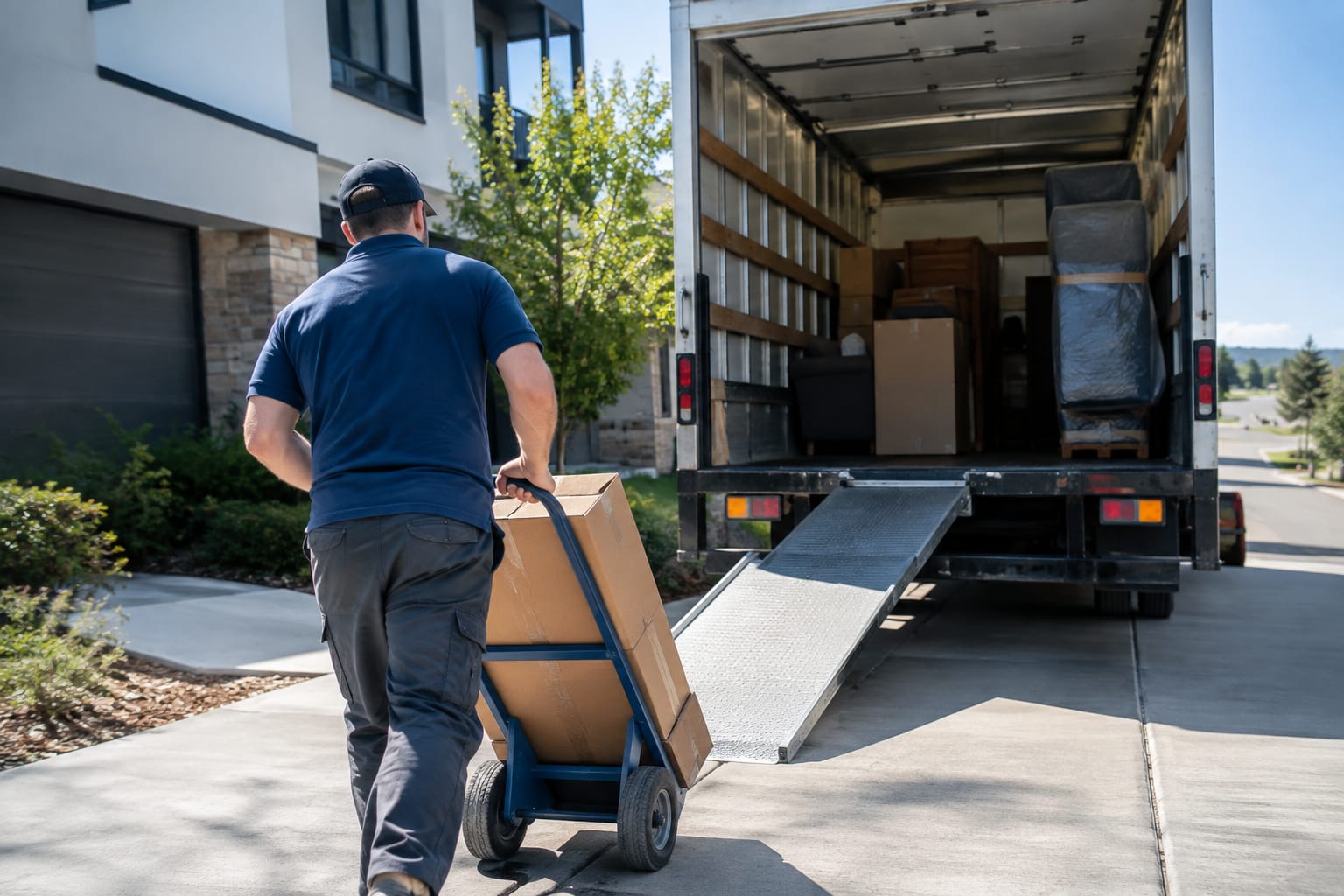
Many growing movers run these as separate tools and connect them with spreadsheets and retyping. Every handoff is a chance for an inventory, a time or a price to change without anyone noticing.
Platforms that cover moving company software from lead to invoice remove those handoffs. They keep the estimate, dispatch, Bill of Lading, storage and billing on one job record.
Where Logistics Breaks Down and How to Fix It
Most operational failures in moving logistics come from a small set of recurring gaps. Each gap has a process fix and a systems fix.
- Estimate does not match the truck. The inventory undercounts, so the crew is short on truck space or runs into overtime. Fix: standardize surveys, and compare estimated and actual volume and hours on every job.
- Phone-tag scheduling. Dates live in texts and voicemail, and two jobs land on one crew. Fix: use one dispatch board with conflict checks and calendar sync.
- Retyped paperwork. Office staff retype the inventory into the Bill of Lading, and errors creep in. Fix: carry the estimate inventory straight into an electronic Bill of Lading.
- Storage billing gaps. Recurring storage charges start late or stop without anyone noticing. Fix: tie storage accounts to the move record and bill them automatically.
- Undocumented damage claims. Without before-and-after photos, a claim comes down to one person's word against another's. Fix: require crew photos of high-value items before loading and after delivery.
- Spreadsheet payroll. Crew pay and commissions are calculated by hand from timesheets. Fix: calculate pay directly from completed job records.

Pro Tip: Review estimated and actual hours every week, broken down by estimator and by crew. A steady gap for one estimator points to a survey problem. A steady gap for one crew points to a field or routing problem. With estimated-versus-actual reporting tied to payroll, this review becomes a standard report instead of a spreadsheet project.
For a framework that covers every department, the moving company operational efficiency playbook goes deeper.
Choosing Software Built for Moving Logistics
Generic CRMs track contacts and deals. Moving logistics needs software that handles cubic feet, crews, trucks, Bills of Lading and storage in transit. When you evaluate dispatch software or a full moving CRM, test it against these criteria:
- Moving-specific data model: inventories, volume, crew sizing, and your own rates and surcharges, not custom fields added to a generic sales tool.
- One job record from start to finish: the estimate inventory flows to dispatch, the Bill of Lading, storage and the invoice with no retyping.
- Field-ready crew tools: offline mode, on-site eSign and photo capture.
- Payments on your own merchant accounts: deposits settle to the business, not to a third party's balance.
- Security basics: data isolated for each company, encryption in transit and at rest, and two-factor authentication on admin logins.
- Clear terms: month-to-month or contract, what each plan includes, and any usage limits on features such as video surveys.
Start by mapping your current moving company workflow from first call to final payroll, and mark every point where someone retypes data. Then test candidate moving company CRM software against real jobs from your last busy week. For moving operations management, the strongest choice removes the most retyping without adding steps for crews.
Written by Virtual Estimate Team
Related Articles
CRM for Moving Companies: Streamlining Operations in 2026: how a moving-specific CRM connects leads, jobs and back-office work.
Faster Quote Turnaround Helps Moving Companies Book More Jobs: why estimate speed affects close rates and how to shorten the gap.
Automated Moving Surveys to Collect Client Information: how structured surveys capture inventory and access details before move day.
Customer Experience Excellence in Moving Services: ways to keep customers informed and confident from booking to delivery.
Useful Links
- Moving Company Software & Solutions: CRM, AI Estimates, Dispatch
- Complete Guide to Moving Operations
- Moving Company Dispatch and Crew Scheduling
- Moving Company Operational Efficiency: A Complete Playbook
- California Moving & Storage Association Guide
Need help with this? Moving Company Reporting & Analytics Software · Get started · Call (888) 611-7483
Ready to see it in action?
Book a free 20-minute demo and explore how Virtual Estimate can help your business.