

The California Moving & Storage Association (CMSA) is a non-profit trade association that represents professional moving and storage companies across California through advocacy, training, industry events, and a consumer-facing member directory. It is not a government agency, and joining it does not license you to operate. That single distinction trips up more new movers than any other, and it shapes every decision below.
Here is what CMSA actually provides members:
- Legislative and regulatory advocacy on behalf of California movers
- Training, education, and safety programs for crews and owners
- Networking through conventions, regional meetings, and committees
- A public directory that helps consumers find member companies
- Industry updates on rules, rates, and compliance changes
This guide explains what the association does, what it costs, how to join, and — most importantly — how membership sits alongside the licensing California genuinely requires. By the end, you will know whether dues earn their keep at one truck, five trucks, or twenty.

What Is the California Moving & Storage Association?
CMSA is a statewide, non-profit trade association for California movers (accessed September 2026). It represents member companies collectively, publishes guidance, and runs an annual convention that has been held for more than a century.
A trade association exists to serve its members and the industry, not to police it. That means CMSA lobbies lawmakers, negotiates group benefits, and sets voluntary standards. It does not issue permits, and it cannot grant you legal authority to haul household goods.
Think of it as a professional community with a shared voice. Membership signals that a company chooses to align with industry peers and stay current on the rules. It is a credibility marker, not a credential.
Q: Is the California Moving & Storage Association a government agency?
A: No. CMSA is a private, non-profit trade association. The state agency that regulates and licenses household goods movers in California is the Bureau of Household Goods and Services, a separate public body.
What CMSA Actually Does for Member Movers
Start with the practical value: CMSA turns scattered regulatory noise into digestible updates. When California changes a rule on rates, tariffs, or consumer disclosures, members typically hear it explained in plain terms rather than discovering it during an audit.
The association also concentrates the industry's political weight. One small company rarely gets a hearing in Sacramento. A statewide body representing hundreds of operators does, which is why advocacy is the benefit most members cite first.
Beyond advocacy, CMSA runs education and events that are hard to replicate alone. Training curricula, safety materials, and peer connections all live under one roof. For a full vocabulary of the terms that come up in these programs, a moving and storage glossary is a useful companion.
Membership Categories, Requirements, and How to Join
CMSA organizes membership into categories that reflect the different businesses in the moving ecosystem. Active or regular membership is designed for licensed moving and storage companies. Associate or allied categories serve suppliers, insurers, and technology vendors who sell to the industry rather than perform moves.
The practical prerequisite for a mover joining as a full member is straightforward: you should already hold the proper California operating authority. The association expects members to be legitimate, permitted businesses, which reinforces the point that licensing comes first and membership comes second.
To join, prospective members apply directly through the CMSA membership pages (accessed September 2026), select the category that matches their business, and pay the applicable dues. Exact category names, eligibility rules, and any vetting steps are set by the association and can change, so confirm the current requirements with CMSA before applying.

What Membership Costs and What's Included
Here is the honest answer most articles dodge: CMSA does not publish a simple, public dues schedule that applies to every applicant. Dues commonly vary by membership category and company size, and the current figures are not posted as a fixed public price list — not published; contact CMSA directly to confirm what your category costs.
What you can count on is the benefit mix rather than a headline number. Membership typically bundles advocacy, access to training and safety programs, event and convention participation, industry communications, and a directory listing that consumers can search. The relative value of each depends entirely on how you run your business.
When you evaluate the price, weigh dues against what you would otherwise pay piecemeal. Standalone safety training, legislative monitoring, and networking events all carry their own costs, and a single avoided compliance mistake can dwarf an annual membership fee.
Q: How much does CMSA membership cost?
A: CMSA does not publish a single flat dues figure; costs generally depend on membership category and company size. Request the current schedule directly from the association, since posted numbers can be outdated.
How CMSA Fits Alongside California's Licensing Requirements
This is the section every mover should read twice, because the association and the regulator are frequently confused.
Who regulates moving companies in California? Intrastate household goods movers are regulated by the Bureau of Household Goods and Services (BHGS) (accessed September 2026), a part of the California Department of Consumer Affairs. Oversight of household movers moved to BHGS in 2018, so any guide still naming the California Public Utilities Commission as the licensing body is out of date.
To operate legally inside California, a moving company needs a household mover permit issued by BHGS, adequate insurance, and compliant paperwork. Membership in CMSA is not part of that legal checklist. You can be fully licensed without ever joining, and you cannot substitute membership for a permit.
Moves that cross state lines fall under a different authority. Interstate carriers register with the Federal Motor Carrier Safety Administration and operate under a USDOT number, and the FMCSA even maintains a list of state movers associations (accessed September 2026). The paperwork side of both regimes — including bill of lading and DOT requirements — is where compliance is won or lost on every job.
Insurance sits alongside the permit as a hard requirement, not an optional extra. Before you worry about association dues, confirm you meet the business insurance requirements for moving companies that the state and your customers expect.
Q: Do you have to join CMSA to operate a moving company in California?
A: No. Membership is voluntary. Legal operation requires a BHGS household mover permit (for intrastate moves) or FMCSA authority (for interstate moves), plus proper insurance — not association membership.
Training, Certification, and Safety Programs
CMSA's education programs are one of the clearest reasons operators join. The association offers training and safety resources aimed at reducing damage claims, injuries, and disputes — the three things that quietly erode a mover's margin.
Safety programs matter because moving is physically demanding and claims-prone. Structured instruction on lifting, padding, loading, and documentation turns tribal knowledge into a repeatable standard your crews can actually follow.
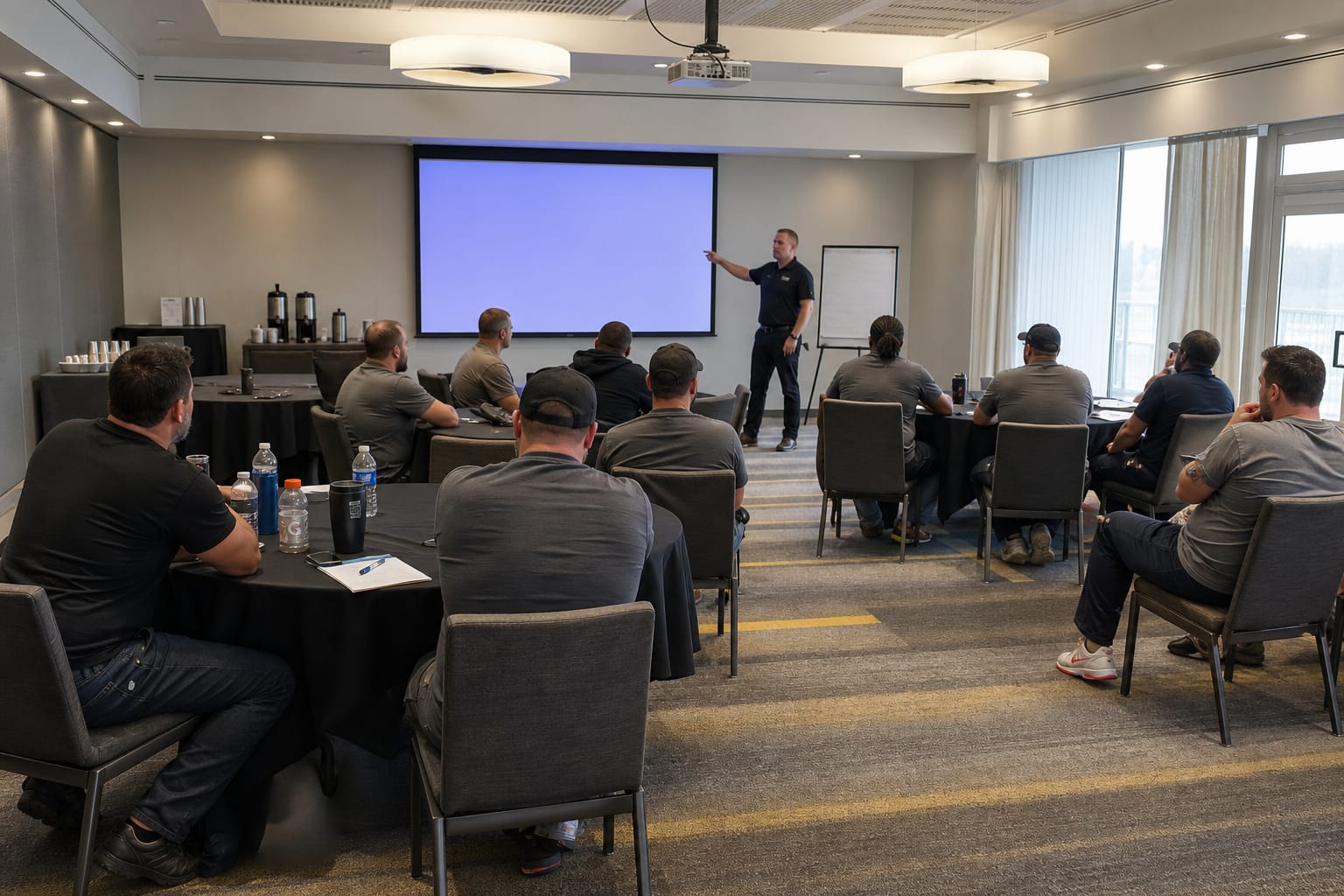
For a small company, the value is leverage. Instead of building a training program from scratch, you plug into curricula the association has already refined across many member businesses.

Pro Tip: Treat certification as a marketing asset, not just a compliance box. Customers comparing quotes rarely understand permit numbers, but "trained and certified crews" is a claim they grasp immediately — provided you can back it up.
Advocacy, Events, and Industry Networking
Advocacy is the benefit that scales with the whole industry, whether or not you personally show up in Sacramento. When the association shapes a rule or blocks a costly mandate, every licensed mover feels the effect.
Events convert dues into relationships. The annual convention and regional meetings put owners in the same room as suppliers, insurers, and peers who have already solved the problem keeping you up at night.
Networking also generates referrals. Movers routinely hand off jobs they cannot service — wrong date, wrong region, wrong specialty — and members near you are the natural first call. Those informal partnerships often outlast any single benefit line item.
Association Membership vs. the Alternatives: AMSA, Local Chambers, and Going It Alone
CMSA is not your only option, and the right mix depends on your footprint. Here is how the common choices compare.
| Option | Primary value | Best fit |
|---|---|---|
| CMSA | California-specific advocacy, training, and directory | Movers operating primarily inside California |
| National moving trade body (historically AMSA) | Interstate representation and federal-level standards | Long-distance and interstate carriers |
| Local chamber of commerce | Community visibility and local B2B networking | Owners focused on a single city or metro |
| No association | Zero dues, full independence | Very lean startups testing the market |
A note on the national picture: the American Moving & Storage Association (AMSA) long served as the industry's national counterpart, and national-level representation has since consolidated under broader trucking-industry organizations. If most of your revenue crosses state lines, national and federal alignment may matter more than a state association.

Going it alone is a legitimate choice for a brand-new operator conserving cash. Just be clear about the trade: you save the dues and forfeit the advocacy, structured training, and directory exposure that members receive.
Is CMSA Membership Worth It for Your Company?
Skip the generic "it depends" and use a size-based test. The answer changes as you scale.
At one truck, membership is optional and often premature. Your first dollars belong to your permit, insurance, and a working sales process. A clear plan matters more here than a directory listing, which is why writing a business plan for a moving company is the better early investment.
At around five trucks, the math tips toward joining. You now have crews to train, claims to prevent, and enough at stake that one avoided regulatory mistake or one referred job can cover the dues outright.
At twenty trucks and up, membership is close to table stakes. Advocacy protects a business large enough to be hurt by bad rules, and a directory presence plus visible certification support the premium positioning a larger operation needs.
Turning Compliance and Membership Costs Into Margin, Not Overhead
The operators who win treat compliance as a system, not a scramble. Permits, insurance certificates, training records, and job paperwork all expire, renew, and get audited — and chasing them by memory is how avoidable fines happen.
The fix is centralization. Whether you join CMSA or not, keeping licensing, insurance, and job records in one system means renewals never lapse and any auditor's request is answered in minutes, not days.
Seen this way, both dues and compliance stop being pure overhead. Advocacy protects your right to operate, training protects your margin from claims, and clean records protect you from penalties — each one a cost that quietly pays for itself.
Related Articles
- Business Insurance for Moving Companies: Complete Guide — what coverage California movers actually need before they take a single job.
- Moving Company Bill of Lading & DOT Requirements — the paperwork rules that keep every move compliant and dispute-free.
- How to Write a Business Plan for a Moving Company — a structured way to plan permits, costs, and growth from day one.
- CRM for Moving Companies: Streamline Operations — how to keep records, jobs, and renewals organized as you scale.
Useful Links
Ready to see it in action?
Book a free 20-minute demo and explore how Virtual Estimate can help your business.