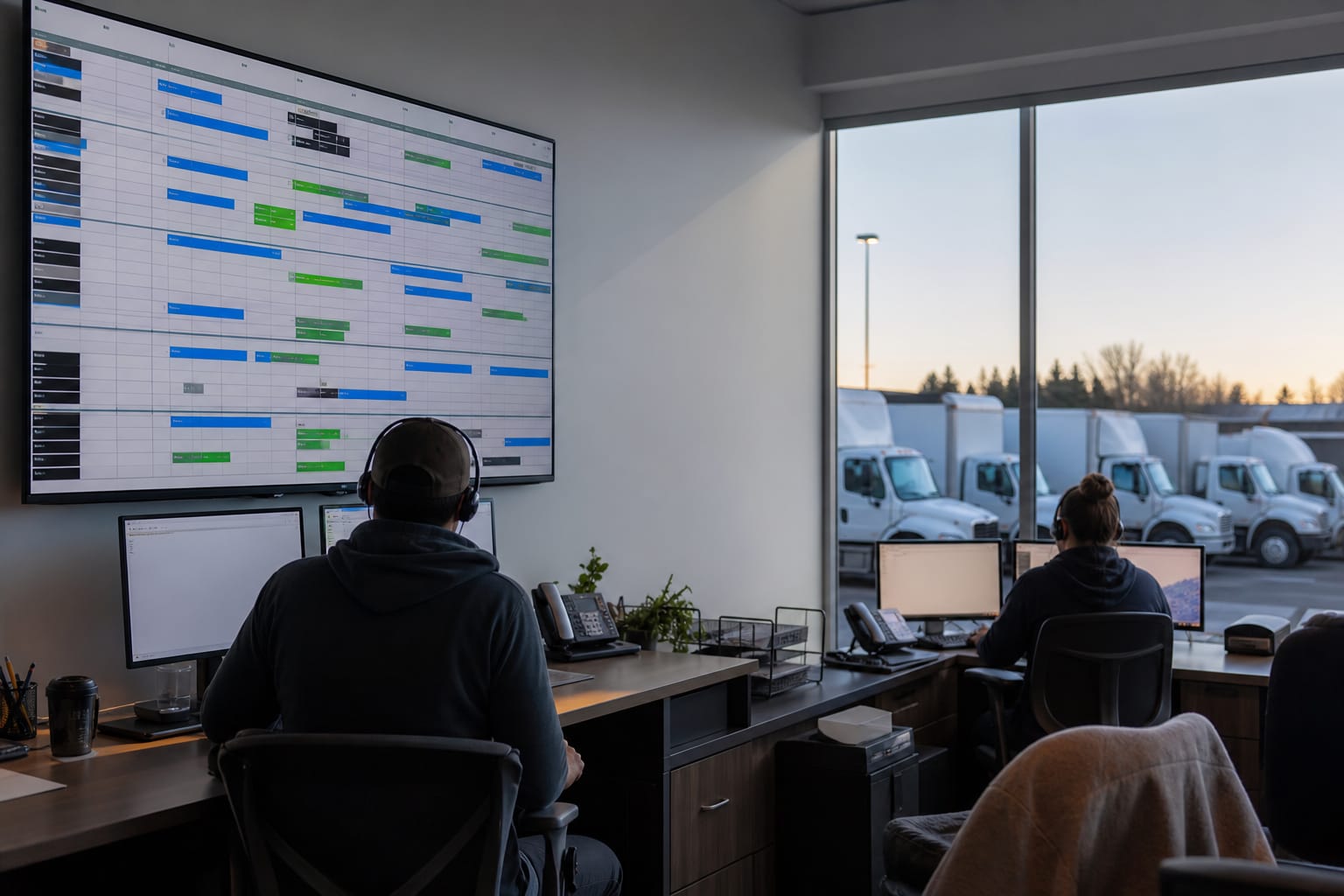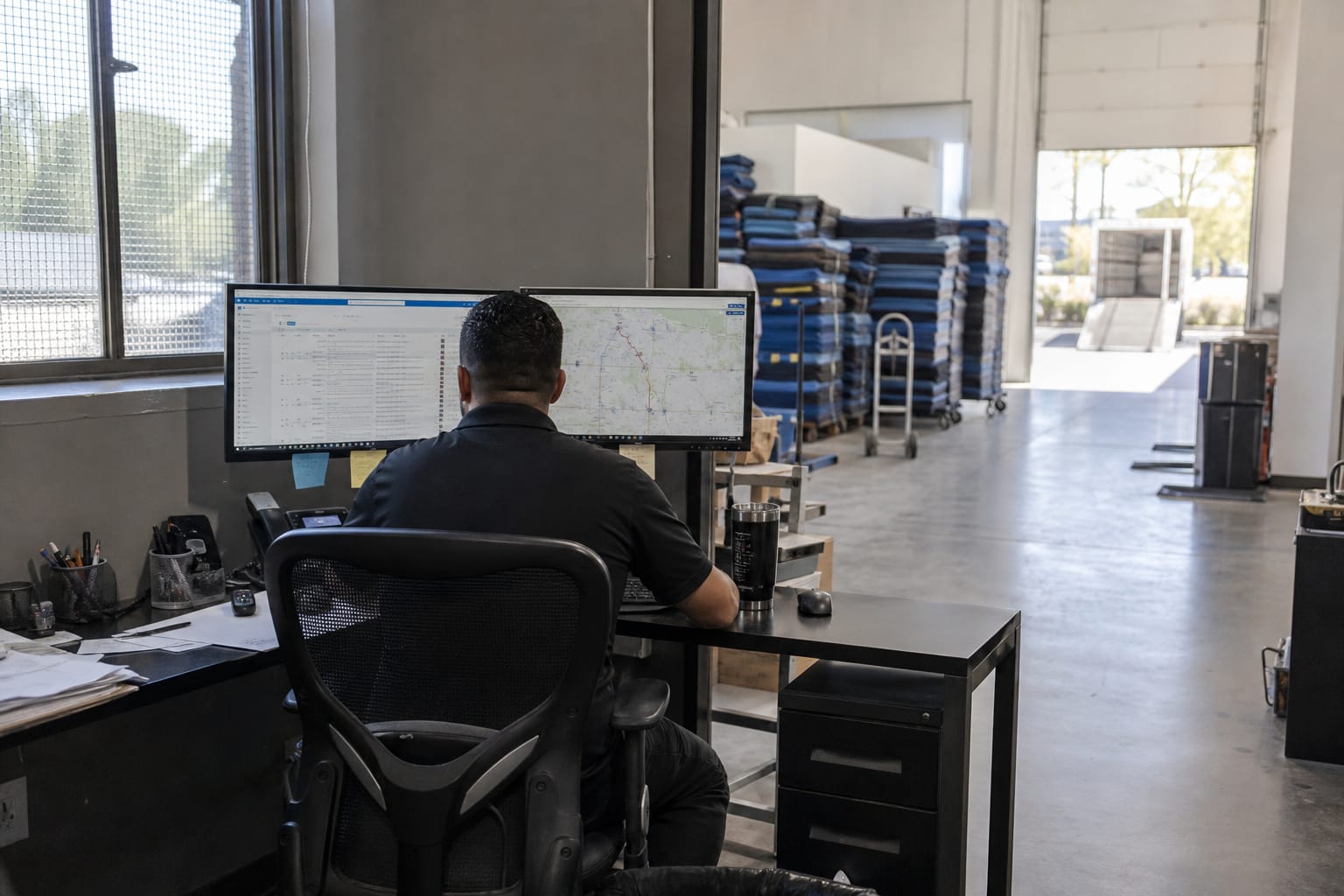

A moving company bill of lading is the legal contract between the carrier and the customer. It lists the shipment details, agreed services, charges, and liability terms — and federal law requires movers to issue one for every household goods shipment before the truck leaves the origin. Get it wrong, and the whole job is exposed to disputes and denied claims. This guide breaks down what the Department of Transportation requires on the form, why hand-copying the estimate onto it wastes crew time, and how one digital record can carry the same data from quote to signature.
Key Takeaways
| Point | Details |
|---|---|
| It is a federal contract | Movers must prepare a bill of lading for every household goods shipment, per FMCSA rules on the bill of lading. |
| Specific fields are mandatory | 49 CFR 375.505 spells out the exact information the document must contain. |
| Rekeying causes errors | Transcribing the estimate onto the form by hand introduces mismatches that later fuel billing and claims disputes. |
| Inventory ties to the BOL | The condition report and item list attached to the shipment become the evidence in any damage claim. |
| Digital beats paper | An e-signed bill of lading carries the same legal weight as ink and stays retrievable years later. |
Why the Bill of Lading Is the Contract Your Crew Carries
The bill of lading, often shortened to BOL, is two documents in one: a receipt for the goods and the binding contract for the move. The moment the customer signs it, the terms of service become enforceable. Everything after that — payment, delivery windows, liability — traces back to what the form says.
Federal regulators treat it as the central record of the transaction. The FMCSA requires interstate movers to issue a bill of lading before loading begins, and the customer is entitled to keep a copy. Skip it, and the mover is operating outside federal law.
Here's the thing: the crew in the field, not the office, controls whether this document is accurate. A driver who fills it out sloppily on a driveway creates a liability the company inherits weeks later. That is why the BOL deserves more attention than any other paper on the truck.
Q: Is a bill of lading legally required for a move?
A: Yes. Federal law requires household goods carriers to prepare a bill of lading for every shipment, and the customer must receive a copy before the truck is loaded.

What a DOT-Compliant Bill of Lading Must Include
A compliant bill of lading is not free-form. 49 CFR 375.505 lists the specific information the document must contain, and the DOT bill of lading requirements leave little room for improvisation. Miss a required field and the form is technically deficient.
At minimum, the FMCSA bill of lading rules require these elements on the document:
| Required Field | What It Covers |
|---|---|
| Carrier and shipper identity | Mover's name, address, and USDOT number; the customer's name and contact |
| Origin and destination | Full pickup and delivery addresses |
| Service dates | The agreed pickup date and delivery spread |
| Rates and charges | Itemized services, the chosen valuation option, and the total estimate |
| Terms and conditions | Liability limits, the claims process, and payment terms |
| Inventory reference | The condition report tying items to the shipment |
These fields are not busywork. Each one closes a common dispute before it starts — who ordered what service, at what price, under which liability terms. Crews that understand the different types of moving estimates also understand which estimate figures must flow onto the BOL unchanged.
Pro Tip: Print the USDOT number and the valuation election directly onto your BOL template rather than writing them by hand each time. Those two fields are the most frequently omitted, and both are the first things a regulator or claims adjuster checks.
The Hidden Cost of Retyping the Estimate by Hand
Most disputes do not come from bad movers. They come from bad transcription. When a coordinator quotes a job, then a driver copies those numbers onto a paper BOL by hand, every keystroke is a chance for the two documents to disagree.
That mismatch is expensive. A customer who sees one price on the estimate and another on the signed form has grounds to contest the bill. Understanding how much movers cost is meaningless if the final contract quotes a different figure than the quote did.
Double entry also burns labor. A crew that spends 15 minutes per job hand-writing details already captured in the office is paying twice for the same data. Across a busy season, that is dozens of hours the dispatch board could have used for another stop.
Q: Why do moving disputes so often trace back to the bill of lading?
A: Because the BOL is the binding contract, any figure that differs from the original estimate — usually from manual retyping — becomes the customer's argument to withhold payment.
When Your Inventory Becomes the BOL: One Set of Data
The cleanest fix is to stop treating the quote, the inventory, and the contract as three separate documents. When the survey captures the shipment once, that record can populate the bill of lading inventory list automatically — no second entry, no drift between versions.
An electronic bill of lading for movers pulls client details, item counts, room-by-room condition notes, and pricing straight from the original survey. The same data that produced the AI-powered moving estimate becomes the contract the customer signs. Nothing is rekeyed, so nothing can be mistyped.
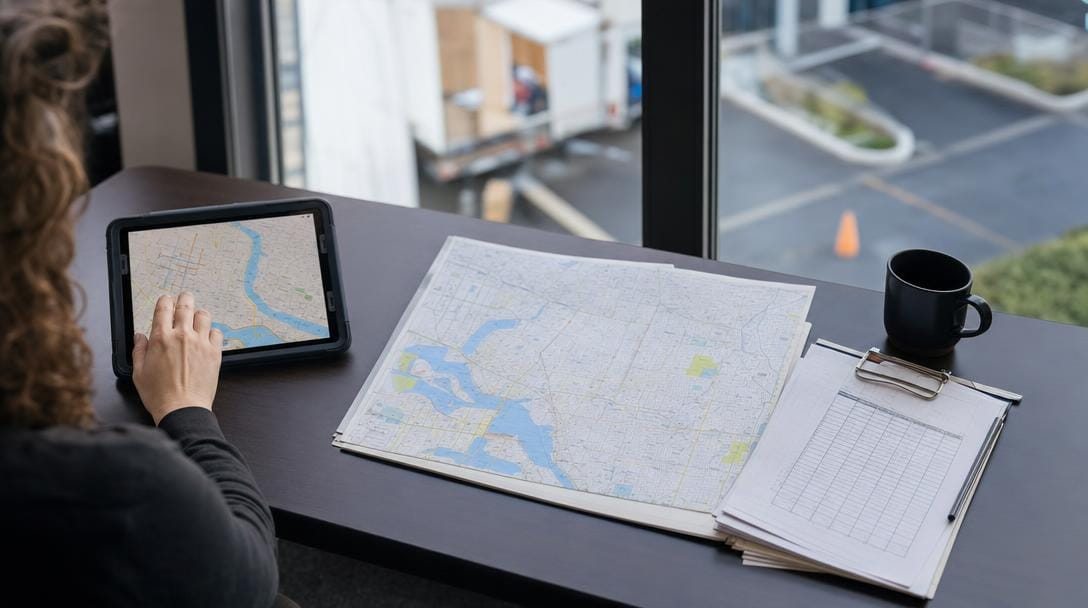
This is where a connected pipeline earns its keep. A CRM built for moving companies keeps the lead, inventory, follow-ups, and invoice on one record, so the field crew opens a job that is already a significant share complete. The driver confirms condition and quantity rather than building the paperwork from scratch.
Pro Tip: Have the crew photograph high-value items and attach the images to the digital inventory at pickup. Those timestamped photos live inside the same record as the BOL and settle "it was already scratched" arguments instantly.
E-Signing on Any Screen, Even With No Signal
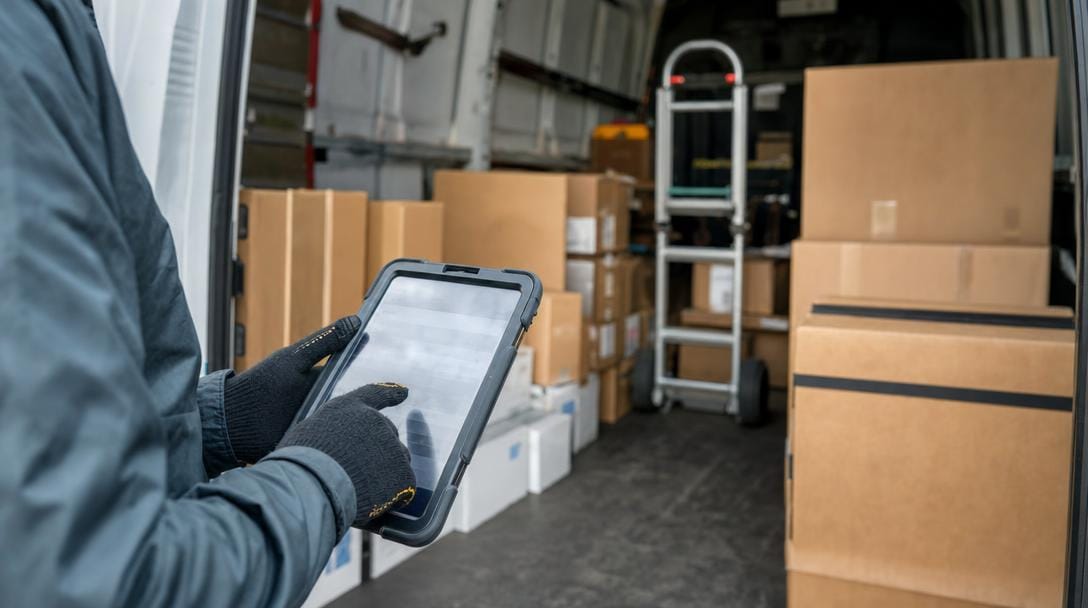
A signature is only useful if the customer can actually provide it on-site. Modern crews collect an e-signed bill of lading on a phone or tablet at the door, and the federal ESIGN Act gives that electronic signature the same legal force as ink. There is no need to chase a paper copy back to the office.
The practical hurdle is connectivity. Basements, rural pickups, and dead-zone apartments all break cloud-only tools at the exact moment the signature is needed. A workflow that captures the signature offline and syncs when the device reconnects keeps the crew moving regardless of signal.
That offline-first approach matters more than most vendors admit. A form that fails when the WiFi drops is worse than paper, because the crew still needs a signed contract to load. Choosing the right moving company technology stack means verifying the BOL tool works with zero bars.
How an Accurate BOL Protects You in a Damage Claim
When a claim arrives, the bill of lading and its inventory decide the outcome. The document establishes what was picked up, in what condition, and under which liability option the customer chose. Without that paper trail, the mover argues from memory and usually loses.
Valuation is the pivotal field. Under released-value protection, carrier liability is limited to 60 cents per pound per article, while full-value protection carries a far higher obligation. If the BOL does not record which option the customer elected, the mover cannot enforce the lower limit.
An accurate condition report does the rest. A detailed inventory noting pre-existing wear stops customers from claiming that old damage happened in transit. This is exactly why customer experience in moving services and airtight documentation are the same discipline, not competing ones.
Pro Tip: Always have the customer initial the valuation election as a separate line, not just sign the bottom of the page. Adjusters treat a specifically acknowledged liability choice as far stronger evidence than a single signature covering the entire form.
Building a Paperless BOL Workflow That Holds Up
Moving from paper to digital is less about the signature and more about where the data originates. The comparison below shows why a connected record beats a hand-filled form on every axis that affects a dispute.
| Criteria | Paper BOL | Electronic BOL |
|---|---|---|
| Data entry | Rekeyed from the estimate | Carried from the quote automatically |
| Legibility | Handwriting varies | Typed and consistent |
| Signatures | Ink, on-site only | e-signed on tablet or phone |
| Offline capture | Always works | Works offline, syncs later |
| Retrieval | Filing cabinet search | Searchable database |
| Claim evidence | Can be lost or smudged | Time-stamped and backed up |
The goal is a single source of truth from lead to delivery. When the survey, inventory, and contract share one record, the crew stops rebuilding paperwork and the office stops reconciling three versions of the same job. Reviewing the best moving company software options against that standard — data flows once, works offline, e-signs anywhere — filters out tools that only digitize the last step.
Retrieval is the quiet payoff. A complete moving company operations record keeps every signed BOL searchable for years, so a claim from six months ago takes seconds to pull rather than an afternoon in a filing cabinet.
Related Articles
- Moving Companies in New York, NY: How to Compare & Choose — a framework for vetting movers on licensing, insurance, and service type.
- Local Moving Companies: How to Compare and Choose Movers — what to check before booking a short-haul move.
- Marketing for Moving Companies: Strategies That Fill Your Pipeline — practical tactics to keep booked jobs flowing.
- Moving Company Leads: Best Sources and How to Convert Them — where quality leads come from and how to close them.
Recommended Reading
Ready to see it in action?
Book a free 20-minute demo and explore how Virtual Estimate can help your business.