

Faster quote turnaround helps moving companies book more jobs because the first mover to send an accurate estimate usually wins the customer. When a household compares three or four movers, speed signals reliability — and the quote that lands first anchors the entire buying decision. Slow estimates lose deals before price ever enters the conversation. This article breaks down where quoting time disappears, how response speed changes booking rates, and what a faster workflow looks like in practice.

Key Takeaways
| Point | Details |
|---|---|
| Speed beats price early | The first accurate estimate anchors the decision before rivals even reply. |
| Response time is decisive | Contacting a lead within an hour makes qualification nearly 7x more likely than waiting a day. |
| Time drops sharply | Manual surveys run 2+ hours per lead; AI self-scans produce an estimate in about 10 minutes. |
| Demand is massive | 8.7% of Americans moved in 2022, flooding the market with cooling leads. |
| Systems hold it together | A CRM pipeline stops fast estimates from leaking out of a messy inbox. |
Why Slow Quotes Cost Moving Companies Jobs
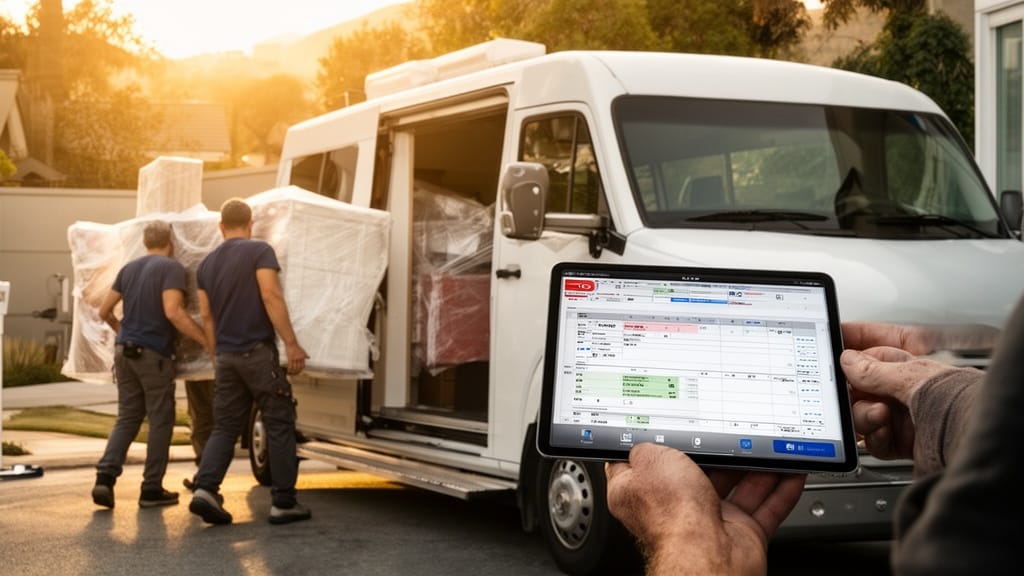
Moving is a high-consideration purchase, and most households shop around. When a customer requests estimates from several companies, the clock starts immediately. The mover who replies fast earns the first conversation — and often the deposit.
Here's the thing: relocation demand is enormous. About 8.7% of Americans moved in 2022, which means millions of quote requests flood the industry every year. Each one is a lead that cools by the hour.
The market is also crowded. Material-moving occupations employ well over a million workers across thousands of competing companies. Standing out on speed is one of the few levers a small operator fully controls.
Slow quotes fail for a simple reason. A customer holding three estimates rarely waits for a fourth. By the time a delayed quote arrives, the decision is usually made.
Q: Why do faster quotes win more moving jobs?
A: The first accurate estimate anchors the customer's decision, and replying within an hour makes qualification nearly 7 times more likely than waiting longer.
Pro Tip: Track the timestamp between lead arrival and quote sent for every job this month. Most companies discover the gap is measured in hours, not minutes — and every hour quietly hands leads to faster competitors.
From 2 Hours to 10 Minutes: Where Estimation Time Actually Goes
Traditional estimating is slow because it is manual. A scheduled in-home survey requires a coordinator, a drive across town, a walkthrough, and hand-tallied inventory. That process routinely consumes two hours or more per lead.

Break the old workflow down and the lost time is obvious:
- Scheduling lag: waiting days for a mutually free appointment slot.
- Travel: an estimator burns an hour driving to and from a single home.
- Manual inventory: counting boxes and furniture by hand invites errors.
- Write-up: transcribing notes into a formal quote after the visit.
Video-based and AI-assisted surveys collapse this. Fast moving estimates now come from a customer scanning their own rooms on a phone, with software auto-generating an itemized inventory and cost figure in roughly ten minutes.
Q: How long should a moving quote take to produce?
A: Manual in-home surveys average two-plus hours per lead, while AI-assisted virtual scans generate an itemized estimate in about 10 minutes.
The math is stark. Same-day capacity multiplies when each estimate drops from hours to minutes, letting one estimator handle far more leads. To understand the mechanics, see this guide on AI-powered moving estimates.
How Response Speed Drives Booking Rates
Speed is not a nicety — it is the strongest predictor of whether a lead converts. Classic sales research found that firms responding within an hour were almost 7 times more likely to have a meaningful conversation with a decision-maker than those waiting even a day.
Moving is unusually time-sensitive because customers often have a hard move date. A slow reply reads as a slow company. To improve moving company booking rate, treat the moving lead response time as the single metric that gates everything downstream.
The evidence is clear that lead response time makes or breaks moving companies, especially for online leads that expect near-instant answers.
| Response window | Customer perception | Relative booking odds |
|---|---|---|
| Under 22 minutes | Highly responsive, professional | Strongest |
| 1–2 hours | Acceptable, still in the running | Moderate |
| 6+ hours | Slow, likely already compared | Weak |
| Next day | Unresponsive, often too late | Lowest |
Illustrative comparison based on documented lead-response patterns; individual results vary.
Pro Tip: Set an internal service standard of a first response under 22 minutes for every web lead. Automate the acknowledgment so no lead ever waits on a human being available.
Tools and Methods That Speed Up Moving Quotes
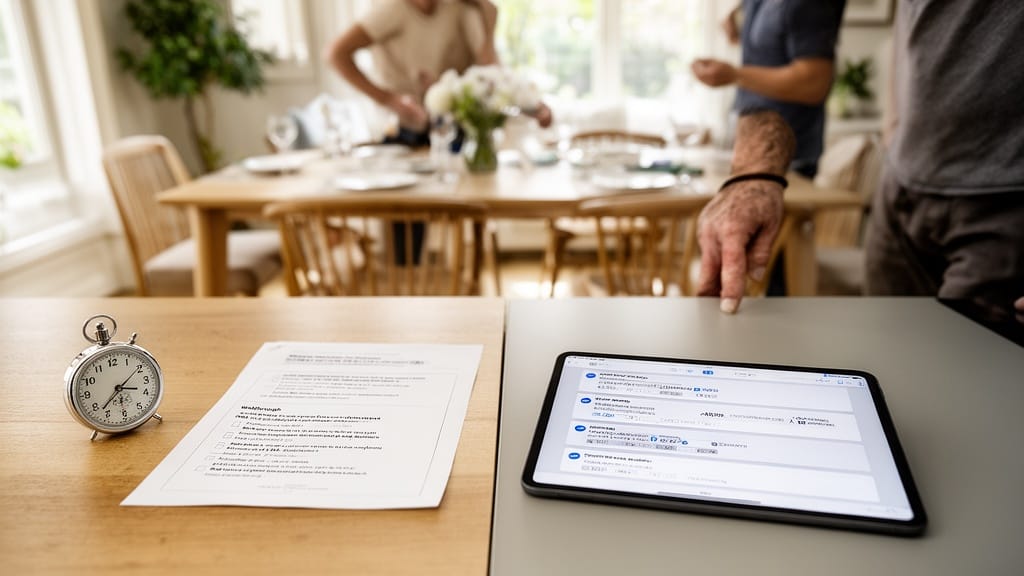
Several methods speed up moving quotes, and they are not equal. The right choice depends on move complexity, lead volume, and how much accuracy a company needs.
| Method | Time to estimate | Accuracy | Best for |
|---|---|---|---|
| In-home survey | 2+ hours | High | Large, complex homes |
| Phone estimate | 15–30 min | Low–medium | Small, simple moves |
| Cubic-foot form | 20–40 min | Medium | DIY-style quoting |
| Video call survey | 30–45 min | Medium–high | Remote walkthroughs |
| AI self-scan | ~10 min | High | High-volume lead flow |
A moving company CRM ties these methods together by capturing the lead, triggering the estimate, and tracking follow-ups in one pipeline. Without a system of record, fast estimates still leak out of a messy inbox.
Pro Tip: Route every inbound lead into one pipeline with automatic reminders. Speed at the estimate stage is wasted if follow-up depends on someone remembering to call back.
What a Faster Quote Process Looks Like Day to Day

On the ground, a fast workflow feels almost boring — which is the point. A lead arrives, gets an instant acknowledgment, and receives a scan link within minutes.
The customer walks their phone through each room. Software builds the inventory and returns a price while interest is still hot. A coordinator then reviews, adjusts for stairs or long carries, and sends the final number.

This is where a full lead pipeline with client info, inventory, follow-ups, and invoicing earns its keep. Everything sits in one record, so nothing falls through the cracks.
The industry backdrop rewards this discipline. The U.S. moving sector is a large market — IBISWorld pegs moving services revenue in the tens of billions annually — and competition for every booked job is fierce.
Turning Quote Speed Into More Booked Moves
Faster quote turnaround is not a single feature; it is a chain. Instant acknowledgment, minutes-not-hours estimates, and disciplined follow-up compound into a measurably higher booking rate.
Start with measurement. Log response time and quote-delivery time for 30 days, then attack the biggest delay. Most companies find scheduling and manual write-ups are the worst offenders.
Then remove the human bottleneck wherever possible. Automated acknowledgments, self-serve scans, and a CRM that never forgets a follow-up turn speed from an occasional win into a repeatable system. Accuracy matters too: regulators like the FMCSA warn customers to scrutinize suspiciously vague estimates. Fast and accurate together is the combination that books moves.
Related Articles
- How AI Video Scanning Is Replacing In-Home Moving Estimates — Learn how self-scan video technology is retiring the two-hour in-home survey.
- How Virtual Estimates Work: A Complete Step-by-Step Guide — A walkthrough of the full remote quoting process from scan to signed job.
- Why Lead Response Time Makes or Breaks Moving Companies — See why the first few minutes decide which mover wins the booking.
- What Is a Moving Company CRM? A Complete Guide for Movers — Understand how a pipeline keeps fast estimates and follow-ups from slipping.
Ready to see it in action?
Book a free 20-minute demo and explore how Virtual Estimate can help your business.