
The moving industry generates hundreds of billions in annual revenue, yet it still relies on a quoting process developed decades ago: send a salesperson to the home, take manual notes, calculate a price, and hope the estimate holds. That process is slow, inconsistent, and expensive — and it costs moving companies customers who expect instant digital responses. Learning how to discover AI moving estimates and implement them is now one of the most important competitive decisions a moving company can make. This article breaks down the exact workflow, from remote video capture to signed quote, and explains why automated moving estimate technology consistently outperforms human estimators on speed, accuracy, and scalability.

Key Takeaways
| Point | Details |
|---|---|
| Speed advantage | AI generates itemized moving quotes in under 15 minutes, compared to 24–72 hours for manual estimates |
| No in-person visit required | AI analyzes customer-submitted video or photos remotely, eliminating scheduling friction for both parties |
| Accuracy through computer vision | Object detection models identify hundreds of household items with high precision, reducing post-move billing disputes |
| Scalability without added headcount | AI systems process unlimited concurrent quote requests without hiring more estimator staff |
| Further reading | How AI technology works and why it matters — a foundational overview of AI capabilities in business operations |
The Problem With How Moving Estimates Have Always Worked

Moving companies face a fundamental quoting dilemma. Accurate estimates require seeing the inventory. Seeing the inventory requires scheduling an in-person visit. In-person visits cost time, money, and staff — for a job that may never convert.
According to the U.S. Census Bureau, millions of Americans change residence each year, creating massive recurring demand for moving quotes. Yet a significant portion of potential customers abandon the process before receiving an estimate because scheduling an in-person survey creates too much friction. Every hour a customer waits is an hour a competitor can step in with a faster answer.
The manual process compounds failure at every stage. Estimator judgment varies — the same home, visited by two different estimators, can produce quotes that differ by hundreds of dollars. Miscounted items and overlooked specialty pieces generate disputes on moving day. Seasonal demand spikes leave companies unable to schedule surveys fast enough. The economics are unforgiving: a single in-person estimate can consume $80–$150 in estimator time and travel before a single dollar is earned.
Phone and video estimates exist as a middle ground, but without AI analysis they depend entirely on the estimator's ability to identify items through variable-quality footage and accurately translate observations into weights and volumes. Human error compounds at every handoff.

What AI Actually Does in the Estimate Process
AI-powered moving estimates use a combination of computer vision, machine learning, and automated pricing logic to replace most of the manual work in quoting. The system doesn't just accelerate the process — it changes the fundamental architecture of how a quote is built.
Computer vision — the AI's ability to identify objects in images or video — is the core engine. Trained on thousands of labeled household item images, the model recognizes furniture, appliances, and boxes with high accuracy, assigning each a standard weight and volume from a calibrated database. This is how AI generates moving quotes with itemization that rivals in-person surveys.
Machine learning layers on top of item detection, using historical move data to adjust estimates based on home size, room count, access conditions, and regional cost variables. The more moves the system processes, the more precisely it learns patterns specific to local markets, building types, and seasonal demand. AI-powered moving estimate solutions combine these layers into a single workflow accessible from any device.
The system also applies natural language processing to customer-submitted information — flagging mentions of specialty items like grand pianos, gun safes, and hot tubs that may not appear clearly in video footage. These triggers generate automatic line-item additions and specialist crew flags without any estimator involvement.
Step 1: Capture the Move Remotely With Video or Photos
The AI estimation process begins before any estimator involvement. The customer receives a link — typically via SMS within minutes of their inquiry — directing them to a self-guided video survey. No app download is required on modern platforms.
The customer walks through each room, panning slowly with their smartphone. The video is analyzed in real time using live AI object detection or processed immediately after submission. Either way, the customer completes the survey in 10–20 minutes on their own schedule, without coordinating around a salesperson's calendar.
Pro Tip: Send the survey link within 5 minutes of the initial customer inquiry. Response rates drop sharply after the first 30–60 minutes — capturing the customer while their intent is highest is the single most effective conversion tactic in an AI-based estimate workflow. Automated lead intake tools can trigger this send without any staff involvement.
Some platforms also accept still photos when video capture isn't feasible. The AI processes a series of images from multiple angles, using depth estimation and spatial reasoning to approximate room dimensions and item placement. Video yields higher accuracy, but photo-based intake serves as an effective fallback for less tech-comfortable customers.
Understanding how AI technology works and why it matters helps moving company owners set accurate expectations about what the video capture step can and cannot reliably detect.
Step 2: AI Analyzes Inventory, Volume, and Move Complexity
Once footage is submitted, the AI engine processes it frame by frame. Object detection algorithms identify each item in the home, cross-referencing a database of standard weights and cubic footage measurements calibrated from real move data.
The output is a structured inventory: every detected item listed with its estimated weight, volume, and special handling flags. The system identifies pianos, treadmills, safes, large appliances, and other specialty items that require additional labor or equipment — flagging each automatically with appropriate upcharges.
Beyond raw inventory, the AI evaluates move complexity signals: number of floors, elevator or stair access inferred from property type data, long carry distance indicators, and parking conditions drawn from address metadata. These inputs feed directly into the pricing model.
| AI Analysis Component | What It Evaluates | Business Impact |
|---|---|---|
| Object detection | Identifies and labels each visible item | Reduces missed-item billing disputes |
| Weight/volume database | Assigns standard measurements per item | Standardizes truck size and crew planning |
| Specialty item flags | Detects pianos, safes, gym equipment | Prevents labor surprises on moving day |
| Access condition modeling | Estimates stairs, elevators, parking | Improves crew scheduling accuracy |
| Historical data weighting | Adjusts for similar past moves | Increases overall price accuracy over time |
The machine learning pricing layer then applies the company's specific rate structure — local vs. long-distance, hourly vs. flat-rate, seasonal adjustments, minimum charges. The estimator reviews a completed output rather than building one from scratch.
Step 3: Generate an Accurate, Itemized Quote in Minutes
After analysis completes — typically within 2–5 minutes of video submission — the platform generates a complete, itemized quote. The document lists every detected item, total estimated weight, truck size recommendation, crew size, and final price broken down by service component.

The estimator reviews the draft before it reaches the customer. This review step typically takes under 5 minutes. The estimator adjusts any items the AI miscounted, adds customer-specific notes, and approves. High-volume operations commonly configure automated approval thresholds for standard residential jobs below a defined value.
Pro Tip: Build a tiered review system: quotes under $1,500 auto-send after AI generation; quotes between $1,500–$5,000 receive a 3-minute estimator review; quotes above $5,000 get full senior review. This preserves accuracy on complex moves without slowing down the majority of standard bookings that don't require close scrutiny.
The itemized format also builds customer trust. Customers who receive a line-item breakdown — sofa (320 lbs), dining table and chairs (180 lbs), king-size mattress (130 lbs) — rather than a lump-sum number are significantly less likely to dispute the final bill. Transparency at the estimate stage sets expectations that protect the company on moving day.
Reducing operational costs with AI technology covers how this efficiency gain cascades through dispatch, crew assignment, and fuel planning — well beyond the quoting stage.
Step 4: Deliver the Estimate and Trigger Automated Follow-Up
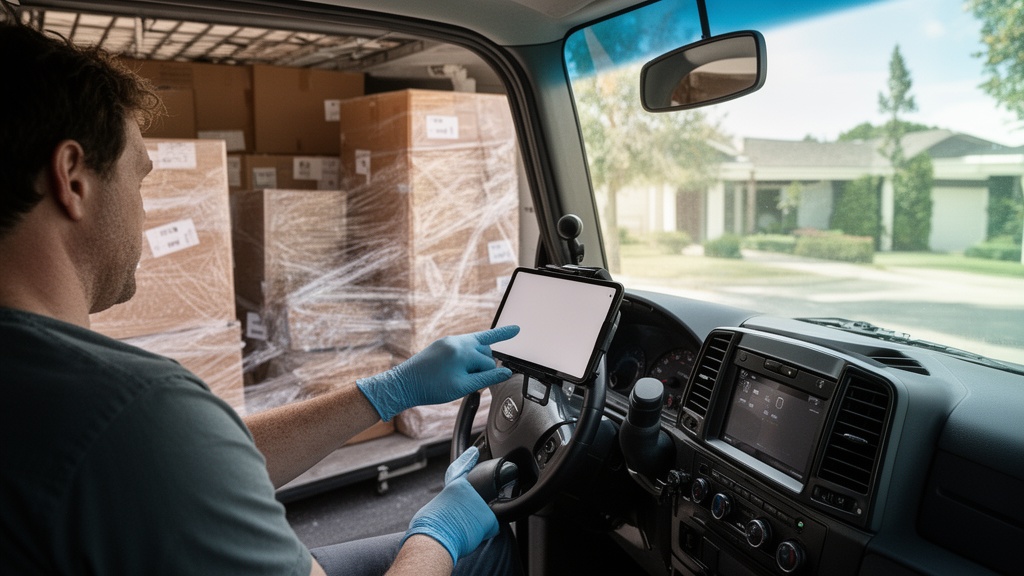
Estimate delivery is where AI compounds its advantage through automation. The approved quote reaches the customer via email and SMS simultaneously, formatted as a professional branded document with an electronic signature block.
Built-in follow-up sequences activate the moment the quote is sent. If the customer hasn't opened the email within 2 hours, the system sends a text reminder. If they've opened it but haven't signed within 24 hours, a second follow-up goes out with a direct booking link. If a competitor quote is mentioned in a customer reply, the system can trigger a manager alert for a personal outreach call.
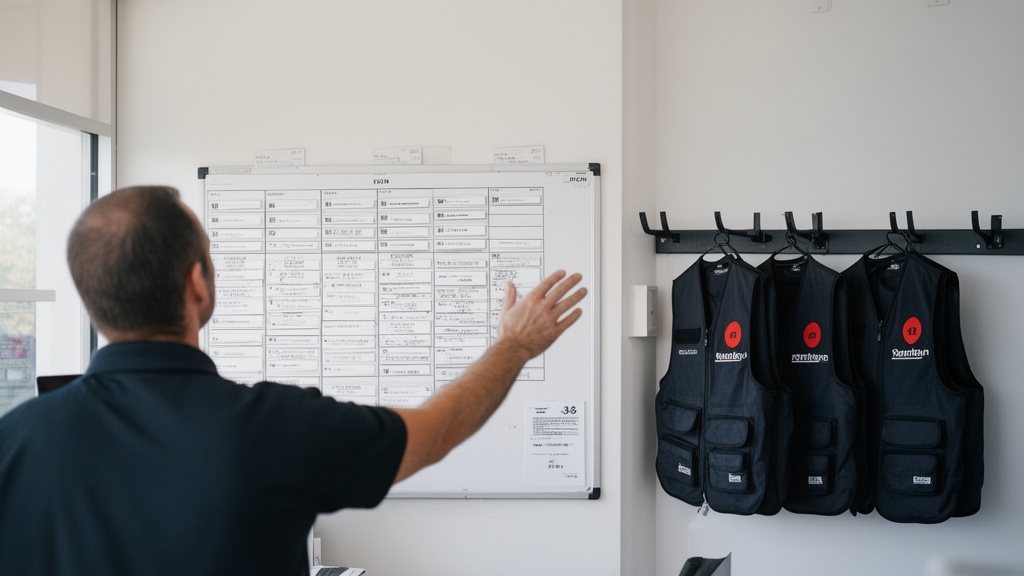
This follow-up logic runs without any staff involvement. The estimator's job ends at quote approval. Everything downstream — tracking opens, sending reminders, escalating stalled leads — operates automatically. McKinsey & Company's research on AI in business operations consistently identifies automated follow-up as a key driver of conversion improvement in service industry contexts.
Machine learning moving quotes also integrate with booking software, so a customer's digital signature automatically triggers crew assignment, route planning, and confirmation communications — creating a seamless handoff from quote to job without manual data re-entry.
How AI Estimates Compare to Manual Quoting on Accuracy and Speed
The performance gap between AI and manual quoting is significant across every key metric. Automated moving estimate technology doesn't just do the same job faster — it removes structural weaknesses that manual quoting cannot overcome regardless of staff quality.
| Criteria | Manual Quoting | AI-Powered Estimates |
|---|---|---|
| Time to deliver quote | 24–72 hours | 5–15 minutes |
| In-person visit required | Yes (most cases) | No |
| Estimator consistency | Variable by individual | Standardized algorithm |
| Scalability | Capped by headcount | Unlimited concurrent requests |
| Follow-up automation | Manual or none | Built-in sequences |
| Specialty item detection | Relies on estimator recall | Automatic flagging |
| Data retention | Notes, spreadsheets, paper | Structured searchable database |
| Customer experience | Scheduling friction | Self-service, immediate |
Accuracy matters most for long-distance moves. Under FMCSA binding estimate regulations, moving companies are legally bound to their estimates when customers pay the required deposit. AI systems trained on large datasets consistently produce weight estimates within acceptable tolerances when customers provide thorough video coverage — reducing the frequency of legally and financially costly overruns.
Pro Tip: When evaluating AI estimate platforms, ask vendors specifically for their weight accuracy rate — the percentage of estimates that come within 10% of actual shipment weight. Best-in-class systems achieve this threshold on the majority of standard residential moves. This single metric directly predicts your dispute rate and post-move customer satisfaction scores.
Manual quoting retains a clear role for complex commercial relocations requiring on-site assessments and specialized logistics planning. But for residential moves — which represent the bulk of most moving company revenue — moving company AI tools consistently outperform human estimators on every measurable dimension.
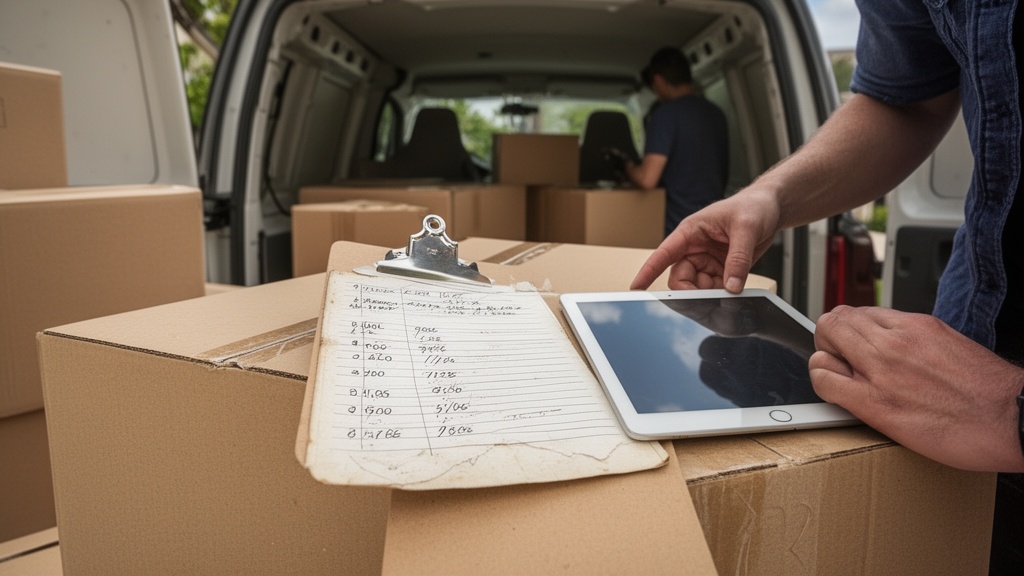
What Moving Companies Are Seeing After Switching to AI Estimates
Moving companies that have adopted AI-powered quoting report consistent patterns across three areas: faster response times, higher close rates, and reduced estimator overhead.
Response time improvement is the first and most immediate gain. Research published in the Harvard Business Review on sales lead response time demonstrates that customers who receive a response within the first hour convert at dramatically higher rates than those who wait 24 hours or more. In moving, where customers contact multiple companies simultaneously, speed of quote delivery is a direct conversion lever.
Estimator workload shifts fundamentally. Instead of spending 3–4 hours per estimate on travel, in-home assessment, and manual calculation, estimators spend 5–10 minutes reviewing AI-generated drafts. A single estimator handles 30–50 quote reviews per day instead of 5–8 in-person visits — a capacity multiplier that allows companies to scale quote volume without proportional headcount growth.
| Operational Area | Before AI Estimates | After AI Estimates |
|---|---|---|
| Staff time per estimate | 3–4 hours | 5–10 minutes |
| Quotes processed per estimator/day | 5–8 | 30–50 |
| Average quote delivery time | 24–72 hours | Under 30 minutes |
| Follow-up automation | Manual calls and emails | Fully automated sequences |
| Missed specialty item rate | Moderate (human recall) | Near-zero (algorithmic flagging) |
Customer satisfaction improves measurably as well. Customers value completing a video survey on their own schedule, receiving a professional itemized document promptly, and tracking progress without phone tag. The entire experience signals operational competence that builds trust before the crew arrives. The American Moving and Storage Association consistently identifies communication quality and responsiveness as top drivers of post-move satisfaction scores in its member research.
How to Get Started With AI-Powered Estimates at Your Company
Implementing AI estimates doesn't require a large technology team or a complete software replacement. Most platforms integrate with existing CRM and dispatch systems. The adoption path follows a predictable sequence.
Audit the current quoting process first. Document every step from lead inquiry to signed estimate. Identify where time is lost, where disputes originate, and where staff capacity is consumed. This audit creates the baseline against which improvement is measured after implementation.
Select a platform built specifically for moving companies. Generic AI tools don't account for the domain-specific variables that affect moving estimates — item weight databases, move complexity signals, FMCSA compliance requirements, and carrier liability thresholds. Specialized AI-powered moving estimate solutions are calibrated for these factors from the ground up.
The integration process typically involves: connecting the platform to your lead intake system, configuring your pricing model (hourly rates, flat rates, fuel surcharges, add-on services), uploading branding assets, and training estimators on the 5-minute review workflow. Most companies reach full operational readiness within two weeks of onboarding.
Run a 30-day parallel test: process a defined portion of leads through the AI system while continuing manual quotes on the remainder. Compare accuracy rates, conversion rates, and staff time consumed. The data from this period builds internal confidence and surfaces any adjustments needed to the pricing configuration before full cutover.
Understanding how AI agents can transform business operations provides additional context on the broader potential of AI automation — extending well beyond the estimate workflow into dispatch, CRM, and customer communication management. Moving company AI tools have expanded rapidly into end-to-end operations management.
Gartner's ongoing research on AI adoption in service industries consistently shows that service businesses investing in AI-driven workflows during the early adoption phase capture disproportionate market share before competitors respond. In moving, that adoption window is open now.
Related Articles
- Types of Moving Estimates: Choosing the Best Option — Compare binding, non-binding, and not-to-exceed estimates to understand which structure works best for your market.
- How to Conduct a Virtual Pre-Move Survey: Step-by-Step Guide — Detailed walkthrough of the virtual survey process from customer invite to completed inventory.
- Pricing Strategies for Moving Companies: Maximizing Profitability — How to structure your rates to compete effectively while protecting margins.
- CRM for Moving Companies: Streamline Operations — How CRM systems integrate with AI estimate tools to automate the full customer journey from quote to close.
Recommended Resources
- AI-Powered Moving Estimate Solutions — Explore how automated estimate technology works for moving companies.
- Virtual Pre-Move Survey: Complete Guide — Everything moving companies need to run remote surveys efficiently at scale.
- Moving Company Technology Stack Guide — Overview of the technology tools that power modern, high-efficiency moving operations.
- Platform Pricing — Review available plans for AI estimate and automation tools.
Ready to see it in action?
Book a free 20-minute demo and explore how Virtual Estimate can help your business.