

AI tech — shorthand for artificial intelligence technology — has moved from boardroom buzzword to operational backbone for businesses of all sizes. According to McKinsey's 2025 State of AI report, 72% of organizations now use AI in at least one business function, up from 55% just two years prior. For service businesses — from moving companies to home contractors — understanding how AI technology works is no longer optional. This guide delivers a practical, step-by-step breakdown of ai tech: what it is, how it functions, and exactly how to put it to work in 2026.

| Point | Details |
|---|---|
| AI is mainstream | 72% of organizations use AI in at least one function as of 2025 (McKinsey) |
| Machine learning drives ROI | Companies using ML-powered automation report 20–30% operational efficiency gains within 12 months |
| No-code tools remove barriers | Small businesses can deploy AI automation tools with zero developers using platforms built for their industry |
| Salaries signal demand | Machine learning engineers earn a median of $148,000 annually — demand is growing 38% over five years |
| Start with one workflow | See how reducing moving costs with AI technology turns theory into measurable savings |
Step 1: Understand the Core Types of AI Technology
AI tech is not a single tool — it is a family of related technologies, each solving a different class of business problem. The agency AI: the complete guide resource breaks this down further, but four core categories cover 95% of what businesses actually deploy today.
Narrow AI (also called weak AI) is the most common form in production. It performs one specific task exceptionally well — spam filters, OCR invoice readers, and voice-to-text transcription all qualify. Generative AI creates original content: text, images, code, and audio, based on patterns learned from massive datasets. Large language models (LLMs) powering chat assistants fall into this category.
Machine learning (ML) is a subset of AI where systems improve automatically through exposure to data — no reprogramming required. AI agents are the newest frontier: autonomous software programs that complete multi-step tasks independently, making decisions and using tools along the way. Knowing which category matches your use case is the first decision in any AI tech adoption process.
| AI Type | Core Function | Practical Business Example |
|---|---|---|
| Narrow AI | Single-task automation | Email spam filter, invoice OCR |
| Generative AI | Creates original content | AI-written estimates, customer chatbots |
| Machine Learning | Improves from historical data | Demand forecasting, pricing optimization |
| AI Agents | Autonomous multi-step task completion | Lead follow-up, dispatch scheduling |
| Computer Vision | Interprets visual input | Damage assessment, inventory scanning |
Pro Tip: Start with narrow AI applied to one high-frequency task — customer follow-up emails or invoice categorization. A single workflow saving 2 hours per week compounds to 100+ hours annually before you deploy a second tool.
Step 2: Learn How Machine Learning Powers Modern AI Tech
Machine learning is the mechanism behind most practical ai tech in business today. Understanding the process demystifies the "black box" reputation that keeps many service business owners from adopting it.

The process has three stages. First, data collection: the system ingests historical examples — past job quotes, customer records, market pricing data. Second, training: algorithms identify statistical patterns across thousands of data points, finding correlations humans would miss or take years to find manually. Third, inference: the trained model applies those patterns to new inputs, producing predictions or decisions in milliseconds.
For a moving company, this looks like: feed the model 10,000 past jobs with final costs, customer locations, item counts, crew sizes, and seasonal variables. The model learns which factors actually drive cost overruns. When a new job arrives, it flags risk factors before a crew ever loads a truck. This is how ai technology works in practice — not as magic, but as pattern recognition at scale.
According to the Stanford AI Index, the cost of training machine learning models has fallen over 70% since 2022, making applied ai technology accessible to businesses with modest technology budgets. Machine learning for business is no longer a Fortune 500 privilege.
Pro Tip: You do not need to train a model from scratch. Industry-specific AI tools come pre-trained on sector data. A moving company AI tool trained on 500,000 residential moves outperforms a generic model trained on your 2,000 job records — choose vertical-specific tools over horizontal ones for faster time-to-value.
Step 3: Explore Real-World AI Tech Applications by Industry
AI technology explained in abstract terms means little. The value becomes clear when mapped to specific industries and workflows where service businesses are seeing the fastest, most measurable returns.
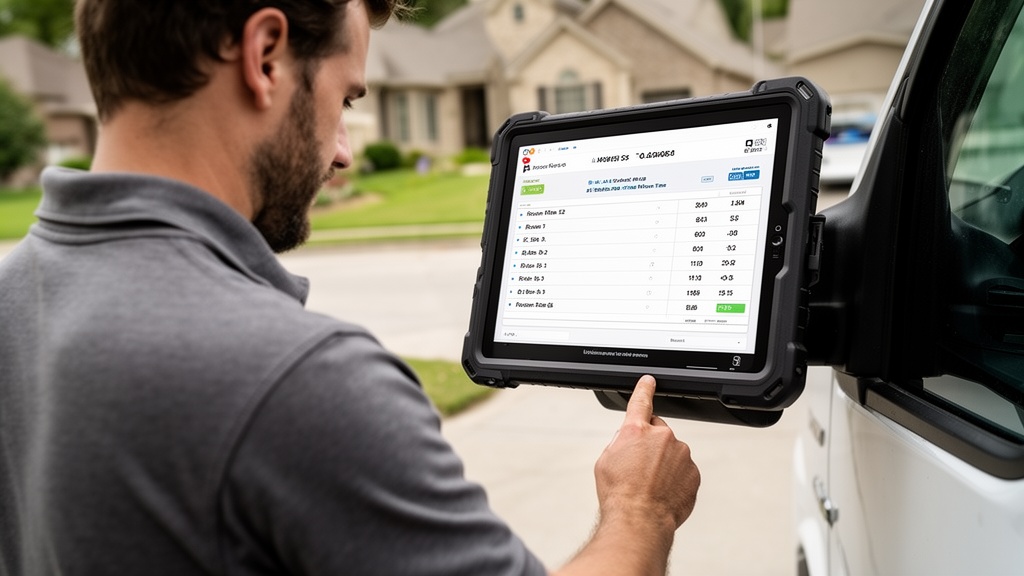
Moving and field services lead in applied ai technology adoption among SMBs. Moving software platforms already using AI features now include automated inventory assessment, route optimization, and predictive pricing — these are production features generating revenue daily, not pilot programs. AI-powered move estimates cut quoting time from 45 minutes to under 90 seconds in documented deployments.
Retail and e-commerce use AI for demand forecasting at 85–95% accuracy, reducing overstock carrying costs by 20–30%. Healthcare administration uses AI to pre-authorize claims and flag billing errors, cutting administrative costs by up to 40%. Professional services firms use generative ai business applications to draft documents, summarize case files, and generate client-ready reports in minutes rather than hours.
The throughline across every industry: AI eliminates low-value, high-volume cognitive work that drains employee capacity. From a customer experience excellence in moving services standpoint, that freed capacity flows directly into service quality and client communication. See how VirtualEstimate uses AI technology to apply these principles specifically to the moving industry.
Virtual Estimate can help: VirtualEstimate's AI-powered platform automates move estimates, lead follow-ups, and job costing — so your team spends time closing jobs, not calculating them. Learn more →
Step 4: Evaluate Which AI Tech Is Right for Your Business
The most common ai tech adoption mistake is chasing the tool, not the problem. A structured evaluation framework prevents wasted spend and implementation fatigue.
Start with a problem audit: list the five most time-consuming repetitive tasks in your operation. Rank each by (a) weekly frequency, (b) time cost per occurrence, and (c) error rate. High-frequency, high-error-rate tasks are the strongest AI candidates. For most service businesses, the top three are: customer quoting, scheduling coordination, and follow-up communication.
Evaluate ai tools for business against three criteria before committing:
- Integration depth — Does it connect natively to your CRM, dispatch software, or accounting platform? Standalone tools create data silos that eliminate most of the efficiency gain.
- Training data requirements — How much historical data does the tool need to perform accurately? Vertical-specific tools require far less than generic platforms.
- Total cost of ownership — Include setup, onboarding, and ongoing subscription costs. A $200/month tool saving 15 hours of labor at $25/hour generates $175 in net monthly profit from day one.
The question of how AI is reshaping management software for service businesses is directly relevant here — modern management platforms increasingly bundle AI features, reducing the need for separate point solutions.
Step 5: Implement AI Tech Without a Development Team
AI tech for small business no longer requires engineers. The no-code and low-code ecosystem has matured to where a business owner with spreadsheet skills can deploy functional ai automation tools in a single afternoon.

The implementation path for non-technical teams follows four steps:
- Select a workflow trigger — Identify the event that initiates the automation: new lead form submission, completed job, invoice sent, or inbound call.
- Choose a no-code AI platform — Tools like Zapier AI, Make (formerly Integromat), or industry-specific platforms handle the logic layer without code.
- Connect your data sources — Link your CRM, email, and job management software via native integrations. Most major platforms support 500+ app connections.
- Test with a small batch — Run 20–30 real cases through the automation before scaling. Measure AI outputs against your manual baseline.
AI agents for business automation — autonomous programs handling entire workflows end-to-end — are now available as pre-built templates inside most major platforms. These are packaged versions of enterprise-grade technology, accessible without a single line of code.
The average implementation timeline for a no-code AI automation in a small service business is 3–5 business days, including testing. Productivity gains typically appear within the first two weeks. Ai tech adoption at this level requires no capital expenditure beyond the monthly subscription.
How Much Do AI Tech Professionals Get Paid in 2026?
This question attracts two distinct audiences: career seekers evaluating AI roles, and business owners benchmarking the cost of internal AI talent. Both deserve a direct, data-backed answer.
According to the U.S. Bureau of Labor Statistics, computer and information technology occupations have a median annual wage exceeding $104,000, with AI-specific specialists commanding significantly higher compensation.
| AI Tech Role | Median Annual Salary (2026) | 5-Year Demand Growth |
|---|---|---|
| ML Research Scientist | $162,000 | +31% |
| Machine Learning Engineer | $148,000 | +38% |
| AI Product Manager | $139,000 | +29% |
| Data Scientist (AI-focused) | $128,000 | +35% |
| Prompt Engineer | $98,000 | +45% |
| AI Implementation Specialist | $89,000 | +52% |
For business owners, these figures reframe the build-vs-buy calculation. Hiring a full-time AI specialist costs $90,000–$162,000 annually. An AI-powered estimating platform for moving companies at $300–$800/month delivers 80% of the operational benefit at roughly 2% of the cost. For most SMBs, purpose-built SaaS tools outperform in-house development on both speed and ROI.
Who Is Leading AI Technology Development Today?
The artificial intelligence platform landscape is controlled by a small group of technology companies whose infrastructure powers most of the AI tools businesses use daily. Understanding this landscape informs vendor selection and long-term risk management.
Frontier model providers — OpenAI (GPT-4o), Google DeepMind (Gemini), Anthropic (Claude), and Meta (Llama open-source) — develop the large language models underpinning most generative ai business applications. These organizations collectively invested over $50 billion in AI research and infrastructure in 2025.
Cloud AI platforms — AWS Bedrock, Microsoft Azure AI, and Google Cloud Vertex AI — provide the compute infrastructure and deployment tooling that allow businesses to integrate AI without managing model infrastructure. They control approximately 65% of enterprise AI workloads.
Applied AI vendors build purpose-specific tools on top of these foundation models, translating raw capability into domain-specific workflows with pre-trained industry data. For service businesses and moving companies, this layer delivers the highest practical ROI. About VirtualEstimate explains how this applied ai technology approach was developed specifically for field service operations — translating frontier model capability into tools that require zero technical expertise to operate.
The ai tech trends 2026 story is the rapid expansion of this applied layer. Vertical AI tools are outpacing horizontal platforms in enterprise adoption for the first time, with domain-specific accuracy rates 15–25% higher than general-purpose alternatives.
Related Articles
- Agency AI: How to Use AI Agents for Your Business 2026 — Deep-dive guide to deploying AI agents for service business automation, including setup workflows and ROI benchmarks.
- Management Software for Business: How to Choose in 2026 — How modern management platforms bundle AI features and what criteria matter most before purchasing.
- Supermove: Features, Pricing & Alternatives in 2026 — Detailed review of moving software platforms with built-in AI capabilities and how they compare.
- How Much Does It Cost for Movers to Move? 2026 Guide — Understand moving cost structures and how AI-powered estimating is changing the pricing model for consumers and companies alike.
Ready to see it in action?
Book a free 20-minute demo and explore how Virtual Estimate can help your business.