
Moving companies that contact a new lead within five minutes book far more jobs than those that reply hours later. The faster you reach a prospect, the more likely you catch them while they are still shopping — which is why faster lead response for moving companies is the cheapest growth lever available. This guide breaks down what slow replies cost you, how automation closes the gap, and how speed turns into booked moves.
| Point | Details |
|---|---|
| Speed wins the deal | Firms that respond within an hour are nearly 7x more likely to qualify a lead than those that wait. |
| Most companies are slow | Average B2B first-reply time runs around 42 hours, and only a minority answer within the first hour, per the same Harvard Business Review analysis. |
| Automation is the fix | Automated follow-ups for movers fire in seconds, around the clock, before a competitor replies. |
| Track everything | A tracked moving company CRM pipeline prevents leads from leaking between first contact and booking. |
| Speed compounds | Quicker replies raise contact rates, contact rates raise booking rate, and booking rate raises revenue per lead. |
Why slow lead response costs moving companies jobs
Moving is a high-intent, time-sensitive purchase. When someone requests a quote, they usually request several within the same hour. Census Bureau migration data shows tens of millions of households relocate each year, and most of them comparison-shop movers in a tight window.
The first company to reply sets the anchor price and builds rapport first. Research published in Harvard Business Review found firms that contact a lead within an hour are nearly seven times more likely to have a meaningful conversation with a decision-maker. Wait a day, and the odds collapse.
Slow replies do not lose one job. They quietly drain the most expensive part of your funnel — the leads you already paid to acquire.
Q: Why do moving leads go cold so fast?
A: Movers request multiple quotes in one sitting, so a lead that is hot at 9:00 a.m. may be booked elsewhere by noon — Harvard Business Review found the odds of qualifying a lead drop more than 60-fold after 24 hours.
The real cost of a six-hour reply (and what 22 minutes looks like)

The U.S. moving market is crowded. The FMCSA Protect Your Move program lists thousands of registered household goods carriers, so your prospect has no shortage of alternatives while you draft a reply.
Here is the math in plain terms. A six-hour reply usually means the customer has already spoken to two or three competitors. A 22-minute reply — used here as an illustrative target, not a fixed rule — typically lands while the form is still open in a browser tab.
Demand stays steady: the Bureau of Labor Statistics projects ongoing need for moving and material-handling workers. That means slow operators are not waiting for fewer leads — they are handing warm leads to faster rivals.
| First reply window | Relative odds of a meaningful conversation |
|---|---|
| Within 1 hour | Baseline — roughly 7x higher than waiting one more hour |
| 1 to 24 hours | Sharp, measurable drop-off |
| 24+ hours | Up to ~60x lower than the within-1-hour group |
Source: Harvard Business Review, "The Short Life of Online Sales Leads."
Set up automated follow-up sequences with smart triggers
No human team answers every lead in under five minutes, every day, including weekends. Automation does. Automated follow-ups for movers fire the instant a lead arrives and continue on a schedule until the prospect responds or books.
Build the sequence around triggers, not guesswork:
- Instant trigger: an automatic text and email the moment a quote request hits your form.
- No-reply trigger: a second touch 15 to 30 minutes later if the lead has not answered.
- Same-day trigger: a third touch that evening with a clear next step.
- Multi-day trigger: a short drip over the following days before the move date.
This structured moving leads follow-up rhythm is where most companies win or lose the booking. A single auto-reply is not enough — persistence across channels is what converts the silent majority.
Pro Tip: Lead with the customer's own details in the first automated message — pickup city, move date, home size. Generic "thanks for your inquiry" texts get ignored; a reply that already knows their move feels human and earns a response.
Use task assignments and mobile notifications to never miss a lead
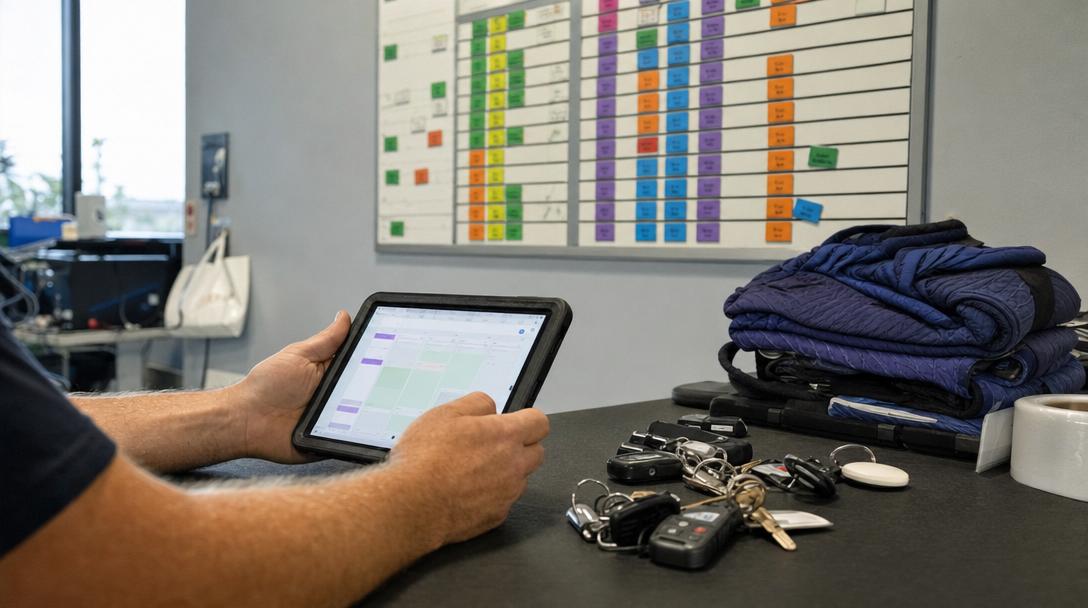
Automation starts the conversation. People close it. The handoff between the two is where leads slip — a notification fires, nobody owns it, and the lead sits.
Fix the handoff with two mechanics. First, auto-assign every new lead to a specific rep with a due time, so ownership is never ambiguous. Second, push that assignment to the rep's phone, because most reps are not at a desk.
A CRM built for movers routes the alert, logs who responded, and escalates if the clock runs out. That accountability layer is what turns a fast auto-text into a fast human call.
Pro Tip: Set an escalation rule: if the assigned rep has not actioned a new lead within 10 minutes, the lead re-routes to a second person. This single rule eliminates the "I thought you had it" gap that kills response time on busy days.
Track your full lead pipeline from first contact to booked job
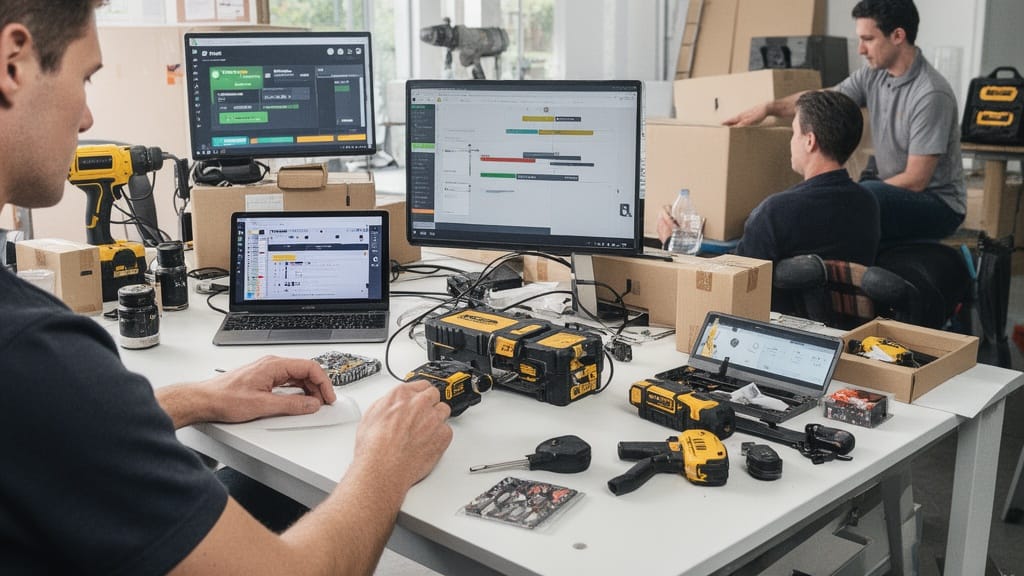
Speed without tracking is leaky. To improve consistently, you need visibility into every lead from first contact to booked job. A clean moving sales pipeline shows exactly where deals stall.
Organize the pipeline into clear stages and keep each lead's record in one place — client info, moving details, inventory, follow-ups, notes, and invoices. When everything lives in organized tabs, no rep wastes time hunting for context before they call.
Q: What should a moving company track in its pipeline?
A: At minimum: lead source, first-response timestamp, stage, assigned rep, and outcome — measuring first-response time per lead is the single most actionable metric for raising booking rate.
This is also how you spot patterns: which sources convert, which reps respond fastest, and where leads go quiet. Reviewing that data weekly is how good operators steadily convert moving leads that competitors abandon.
What faster response time does to your booking rate

Speed lifts every stage downstream. Reach more prospects live, hold more estimate conversations, and the moving company booking rate climbs without buying a single extra lead.
Think of it as a chain. Faster reply raises contact rate. Higher contact rate raises estimate rate. More estimates produce more signed jobs — all from the leads you already have.
| Funnel stage | What faster response changes |
|---|---|
| Contact rate | More leads answer because you call while intent is highest |
| Estimate rate | More live conversations mean more completed quotes |
| Booking rate | More quotes from engaged prospects convert to signed jobs |
| Cost per booked job | Falls, because the same ad spend yields more closes |
Benchmarks vary by market and lead source; this breakdown of a healthy booking rate for contractor and service businesses puts the numbers in context. The lever, though, is consistent: respond first, respond fast.
Pro Tip: Track first-response time as a team KPI on a visible dashboard, not just close rate. Reps optimize what they can see, and a median response time under five minutes correlates directly with more booked moves.
Turning quicker responses into more booked moves
Faster lead response for moving companies is not a software trick — it is an operating discipline. Automate the instant first touch, assign clear ownership, push mobile alerts, and track every lead through a single pipeline.
Do that, and you convert moving leads that slower competitors let go cold. The leads already exist in your inbox; speed is what turns them into signed jobs. Start by measuring your current first-response time this week — you cannot improve a number you do not track.
Related Articles
- CRM for Moving Companies: Streamline Operations — how a purpose-built CRM organizes leads, follow-ups, and bookings in one place.
- Buy Moving Leads: Best Providers Compared — where to source quality leads worth responding to fast.
- Digital Marketing Strategies for Moving Companies — how to generate the inbound leads your fast-response system will convert.
Recommended Reading
Ready to see it in action?
Book a free 20-minute demo and explore how Virtual Estimate can help your business.