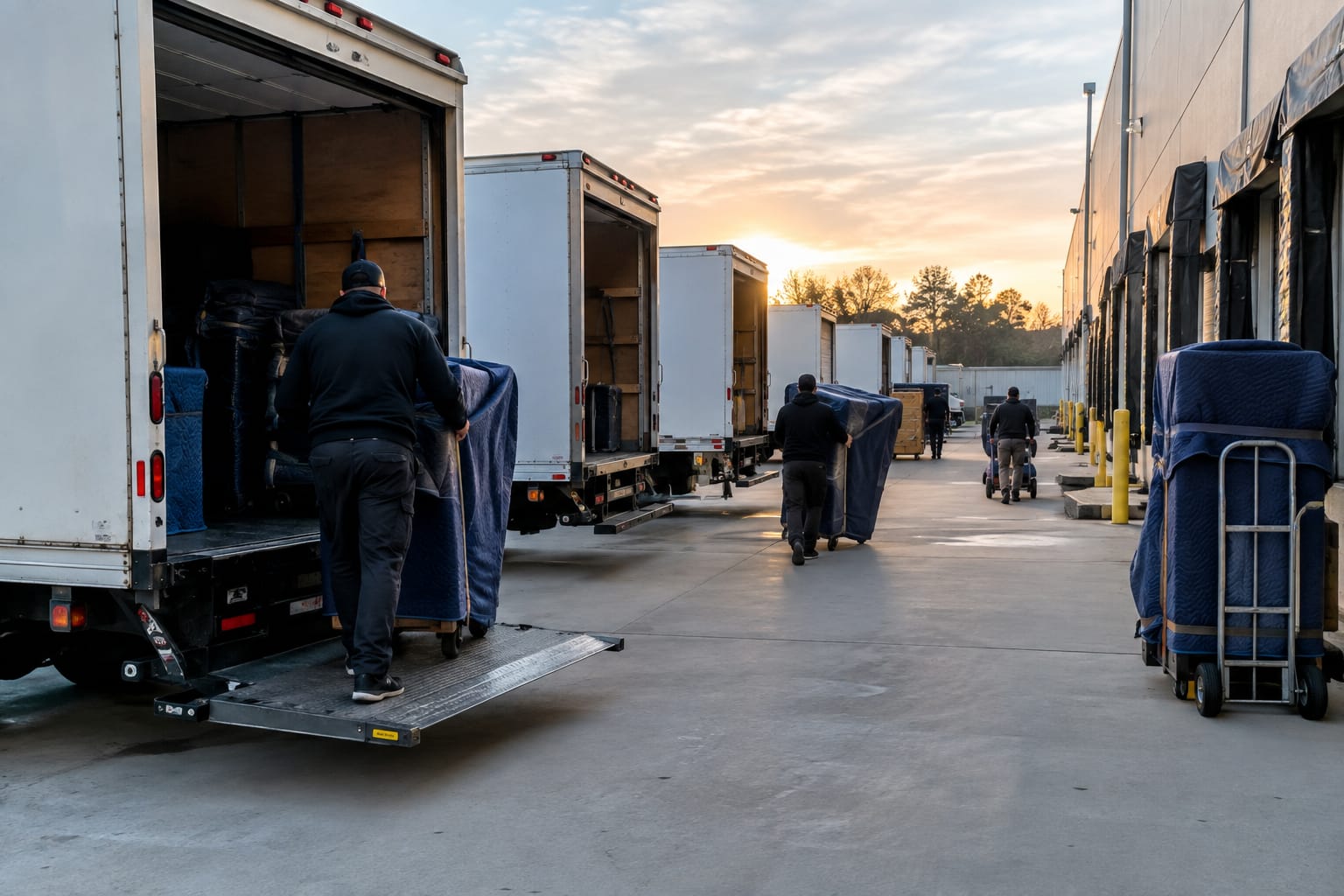

Virtual moving tech uses live video or AI-analyzed footage to inventory a home and generate a moving estimate remotely, replacing the traditional in-home visit. It shrinks survey time from hours to minutes, removes estimator travel, and lets a mover quote more jobs per day without dispatching a truck.
That shift matters because demand keeps moving. Tens of millions of Americans relocate every year, per U.S. Census Bureau geographic mobility data, and each one needs an accurate quote fast. This article compares virtual moving technology and traditional surveys head-to-head — accuracy, speed, cost, and the honest cases where the old way still wins.
Key Takeaways
| Point | Details |
|---|---|
| Virtual is faster | A remote survey typically runs 15–30 minutes versus 1–3 hours for an in-home visit including travel. |
| Accuracy is comparable | Well-run video surveys produce cube counts close to on-site estimates when a structured room-by-room process is followed. |
| Cost drops sharply | No truck roll means no fuel, no estimator drive time, and no scheduling bottleneck per lead. |
| Adoption is climbing | Digital self-service surged after 2020, and remote surveys are now a standard option, not an experiment. See how AI video scanning replaces the in-home moving survey. |
| Traditional still fits | Very large, high-value, or complex moves and non-tech-savvy customers can still justify an on-site visit. |
What Is Virtual Moving Tech?
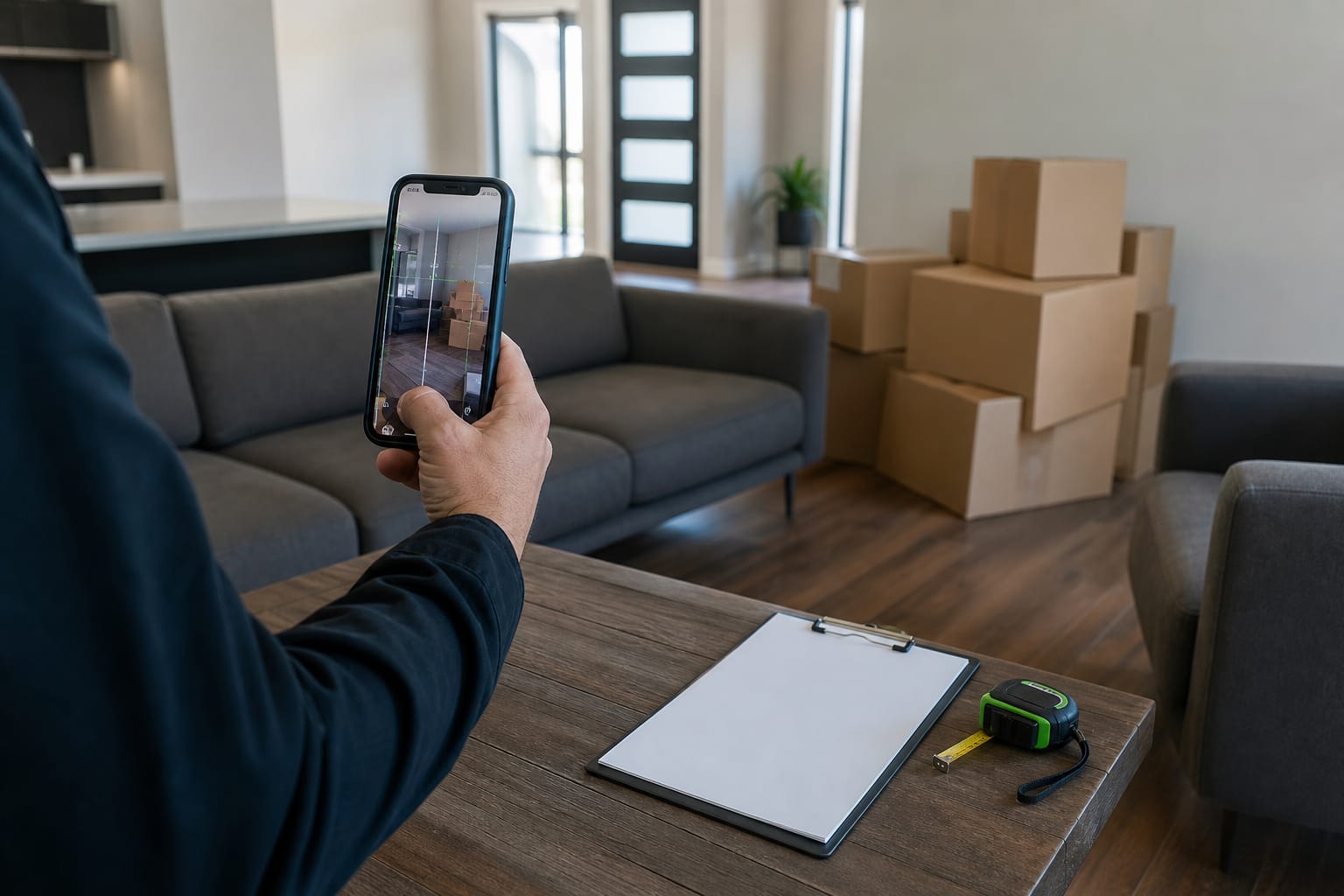
Virtual moving tech is any tool that lets a mover survey a customer's belongings remotely instead of sending an estimator to the home. The customer walks through each room with a smartphone camera while software captures the inventory and calculates cubic feet.
Two formats dominate. A live video call moving quote connects customer and estimator in real time. An AI video moving survey lets the customer record a guided walkthrough that software analyzes afterward, tagging items and estimating volume automatically.
Q: What equipment does a customer need for a virtual survey?
A: Only a smartphone with a working camera — nearly all U.S. adults now own one, so no special hardware or app store hunt is required.
The category sits inside a broader virtual moving technology shift. Modern remote moving estimate tools connect the survey directly to a quote, a calendar, and a customer record, so the inventory never gets re-keyed. For the full workflow, see this complete guide to virtual pre-move surveys.
How Traditional In-Home Estimates Work
A traditional in-home moving estimate sends a trained estimator to the customer's home. They walk each room with a clipboard and tape measure, list every item, and tally cubic feet by hand or on a pre-move survey app.
The estimator uses that count to produce a written quote, often a binding estimate the customer signs. For interstate jobs, FMCSA requires movers to give written estimates and honor the terms, which raises the stakes on getting the cube count right.
The method is thorough but heavy. It consumes an estimator's day in drive time, caps how many homes one person can visit, and limits reach to a practical driving radius.
Pro Tip: Track your estimators' non-selling hours for two weeks. Most teams discover that drive time and no-show visits eat a large share of the workday — the exact overhead a remote survey removes.
Virtual Moving Tech vs Traditional Methods: Side-by-Side Comparison
The clearest way to weigh virtual survey vs in-home estimate is a direct table. The values below reflect typical patterns, not a single guaranteed outcome, since every move and market differs.
| Criteria | Virtual Moving Tech | Traditional In-Home Estimate |
|---|---|---|
| Survey duration | 15–30 minutes | 1–3 hours including travel |
| Scheduling lead time | Same-day or on-demand | Often several days out |
| Geographic reach | Unlimited | Limited by drive radius |
| Estimator travel cost | None | Fuel, wages, and vehicle wear per truck roll |
| Inventory record | Timestamped video plus itemized list | Handwritten clipboard notes |
| Best fit | Standard homes and apartments | Very large or high-value moves |
The pattern is consistent: virtual wins on speed, reach, and cost per lead, while traditional retains an edge on complex, high-touch jobs. The next sections quantify each dimension.
Accuracy: Which Method Produces Better Estimates?
Accuracy is the question movers ask first, and the honest answer is that a well-run video survey lands close to an in-home count. The gap narrows to near zero when the survey follows a structured, room-by-room script instead of a casual phone pan.
The reason is simple. A recorded walkthrough creates a permanent, timestamped record. An estimator can pause, zoom, and re-count — something impossible during a live in-home visit where the tape measure moves on.
Q: Is a video survey accurate enough for a binding estimate?
A: Yes, when the walkthrough captures every room and closet on camera; the recorded footage lets an estimator verify cube counts before locking a binding number.
Errors in either method come from the same source: hidden items. Garages, attics, and packed closets get missed on-site and on-camera alike. For a deeper breakdown, review how in-home estimates compare to AI video surveys.
Pro Tip: Send customers a one-line prompt before the survey — "open every closet, cabinet, and the garage on camera." This single instruction closes the biggest accuracy gap in remote surveys.
Speed and Convenience for Customers
Speed is where virtual moving tech pulls decisively ahead. A remote survey needs no cleaning, no waiting for a stranger, and no half-day off work — the customer starts whenever it suits them.
Convenience drives conversion. The pandemic pushed digital self-service adoption years forward, and customers now expect to handle major purchases from the couch. A quote delivered minutes after a walkthrough beats one that arrives days after a scheduled visit.
That responsiveness compounds. The first mover to send an accurate number often wins the job, because the customer stops shopping once a credible quote lands in their inbox.
Cost and Operational Impact for Movers
For the business, the cost difference is structural, not marginal. Every in-home visit is a truck roll: an estimator's wages, fuel, vehicle wear, and the opportunity cost of a booking they couldn't reach that day.
A virtual survey removes all of it. One estimator can run several remote walkthroughs in the time a single in-home visit consumes, which raises quotes-per-day without adding headcount. Wages for hand laborers and material movers are a real line item, so reclaiming those hours matters.
Digital moving survey software also cuts rework. When the inventory flows straight into a quote and a record, nobody re-types cube counts — a common source of pricing errors. Purpose-built virtual survey software ties the walkthrough to the estimate in one pass.
Q: How much cheaper is a virtual survey than a truck roll?
A: A virtual survey carries no fuel or drive-time cost, so each avoided in-home visit reclaims an estimator's travel hours for additional bookings.
Pro Tip: Route your smallest and most standard jobs — studios, one-bedrooms, apartments — to virtual first. They convert well remotely and free your on-site estimators for the complex moves that genuinely need a visit.
When Traditional Surveys Still Make Sense
Virtual tech does not win every scenario, and pretending otherwise costs credibility. Some moves still justify sending a person to the door.
Use this quick decision guide.
| Scenario | Recommended Method | Why |
|---|---|---|
| Very large estate or 5+ bedrooms | In-home | High cube volume raises the cost of any counting error |
| High-value or fragile antiques | In-home | Physical inspection informs packing and liability |
| Non-tech-savvy customer | In-home or assisted video | Camera friction can produce a poor walkthrough |
| Standard apartment or condo | Virtual | Fast, accurate, and low overhead |
| Long-distance lead outside drive radius | Virtual | On-site visit is impractical or impossible |
The smartest operators run both. They default to virtual and reserve on-site visits for jobs where the stakes or the customer clearly call for one.
How to Transition Your Moving Business to Virtual Tech
Moving to remote surveys is a process, not a switch. Start by offering virtual as the default option on inbound leads while keeping in-home available on request.
Follow a phased rollout:
- Pilot virtual on standard, local jobs for 30 days and compare quote accuracy against past in-home numbers.
- Script a room-by-room walkthrough so every survey captures the same detail.
- Integrate the survey with your quote and customer record so inventory never gets re-entered.
- Train staff to coach nervous customers through the camera flow.
- Measure conversion, quote-to-actual variance, and estimator hours saved.
Virtual surveying is one layer of a larger stack. Connecting it to a moving CRM turns each walkthrough into a tracked lead with inventory, follow-ups, and invoices in one place. For the wider picture, see this guide to building a modern moving company technology stack.
Q: Does virtual surveying work for interstate moves?
A: Yes — a recorded walkthrough supports the written and binding estimates FMCSA requires for interstate moves, and it reaches customers outside any drive radius.
Customers are ready. The FTC's own guidance on hiring a mover tells consumers to gather multiple written estimates — and the fastest, most reachable mover usually gets the booking.
Related Articles
- CRM for Moving Companies: Streamline Operations — how a moving CRM ties surveys, leads, and invoices into one pipeline.
- Pricing Strategies for Moving Companies — turn accurate cube counts into profitable, competitive quotes.
- Customer Experience Excellence in Moving Services — meet the speed and convenience today's movers expect.
- Digital Marketing Strategies for Moving Companies — attract the leads your virtual survey process converts.
Recommended Reading
- AI Video Estimation — how automated video analysis builds a room-by-room inventory.
- How to Conduct a Virtual Pre-Move Survey: Step-by-Step Guide — the exact walkthrough script that maximizes accuracy.
- AI vs. Manual: Improved Estimation Accuracy for Movers — a data-focused look at where each method errs.
- What Is a Virtual Estimate? — a plain-language primer for teams new to remote surveys.
- Moving Company Software & Solutions — an overview of the tools behind a modern survey workflow.
Ready to see it in action?
Book a free 20-minute demo and explore how Virtual Estimate can help your business.