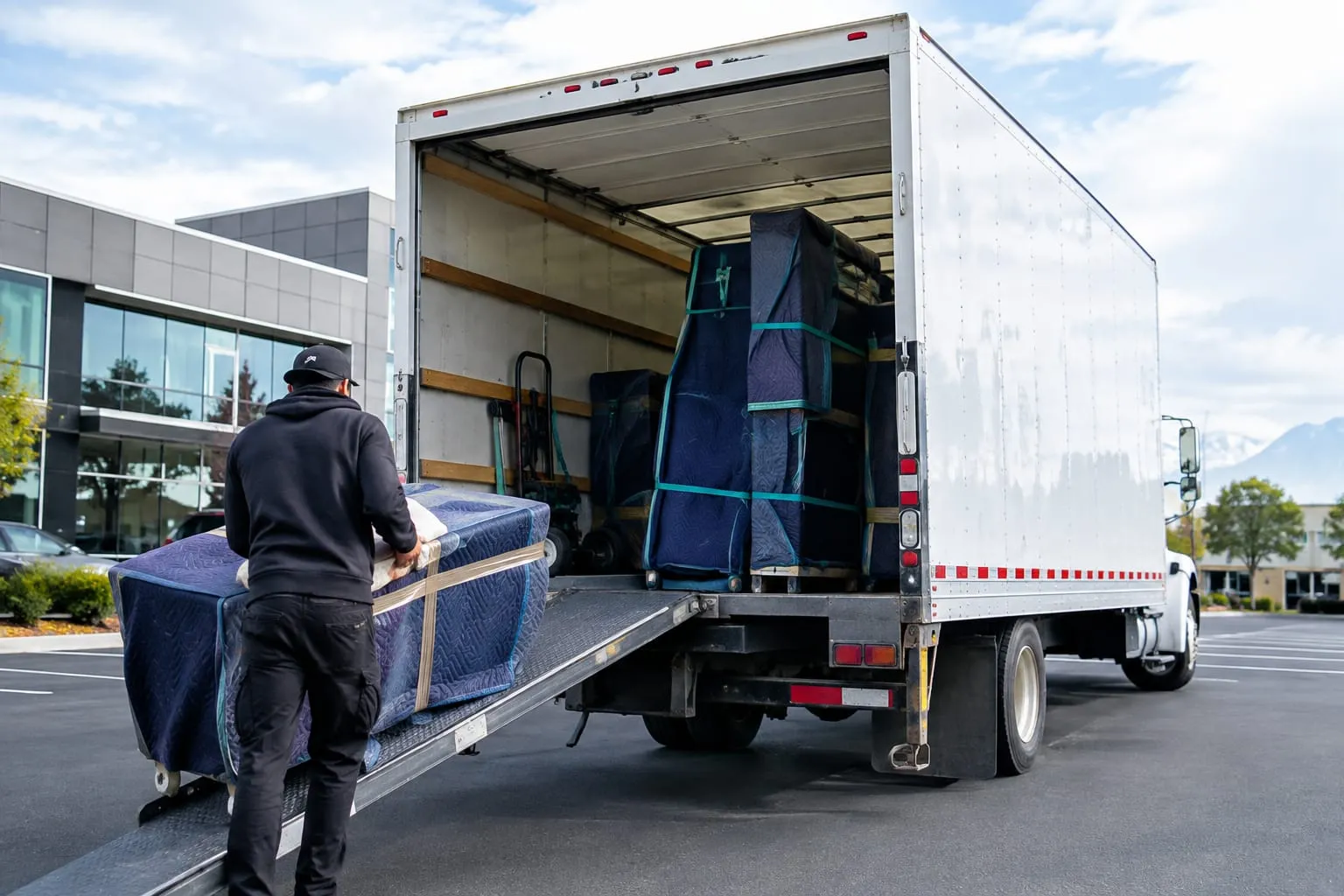

Balancing business growth and quality at a moving company comes down to one rule: standardize the work that breaks first before you add the next truck. This guide is for owners, general managers and dispatchers of US moving companies running roughly 2 to 15 trucks. It is for operators who want more booked jobs without more claims, late arrivals or blown estimates.
Growth rarely wrecks service overnight. It wears it down in predictable places. Quotes drift as volume rises, leads wait longer for a callback, new crews pick up shortcuts, and dispatch turns into a daily scramble. This guide sets out a moving company growth strategy organized around each of those breaking points. Every section includes actions you can take this month, with or without software.

Key Takeaways
- Quality breaks where owner oversight was the only control. Each new truck adds jobs the owner never sees. Turn unwritten habits into written standards or systems before volume outgrows them.
- Standardize estimates first. Use one rate card, one inventory method and a weekly estimated vs. actual hours review by estimator.
- Write down and automate lead response. Set a response target per channel, template the first reply and automate follow-ups so speed holds as inquiries grow.
- Train crews against a written standard. Pair each new hire with a set foreman and require a skills sign-off before anyone leads a job.
- Measure a short KPI list weekly. Track estimated vs. actual hours, lead response time, booking rate, claims, on-time arrival and crew turnover against your own 90-day baseline.
Where Quality Breaks First as a Moving Company Grows
Short answer: quality breaks wherever the owner's personal oversight used to be the only control. Name that control and turn it into a written standard or a system before volume outgrows it.
At two or three trucks, the owner usually quotes the jobs, answers the phone and checks every Bill of Lading. Nobody writes those habits down because nobody needs to. Each new truck adds jobs the owner never sees, and those unwritten standards do not carry over to the new work.
Scaling a moving business shifts that pressure in a fairly consistent pattern. The table below shows how it typically moves by fleet size. Treat the truck counts as rough markers, not hard thresholds.
| Growth stage | Where quality slips first | The fix that holds |
|---|---|---|
| 2–4 trucks | Estimates and callbacks depend on one person's availability | A written estimate checklist and a same-day lead response rule |
| 5–9 trucks | A second estimator and newer crews produce uneven results | One rate sheet, structured crew training, a weekly estimated vs. actual review |
| 10–15 trucks | Dispatch, paperwork and peak capacity overload the office | A dedicated dispatch role, digital paperwork, capacity planned months ahead, KPIs by crew |
Here's the thing: every row describes the same problem at a different scale. The sections below take each breaking point in order.
Keep Estimates Accurate as Quote Volume Rises
Short answer: estimates drift because each person quotes differently. Lock in one inventory method, one rate sheet and one weekly review of estimated vs. actual hours.
Estimate accuracy is a service issue before it is a pricing issue. A low quote leads to a tense delivery day, a rushed crew and a customer who feels misled. For interstate household goods moves, the stakes are also regulatory.
Q: What happens if a non-binding interstate moving estimate comes in too low?
A: Confirm the current requirement with FMCSA before relying on it. An underquote therefore delays your cash and frustrates the customer.
Let's break down what to standardize:
- One rate card. Put hourly rates, travel time and every surcharge in a single shared document. That includes stairs, long carries, shuttles and packing materials. No estimator keeps a private version.
- One inventory method. Quote room by room, using the same cubic-foot reference for common items. A shared cubic feet calculator gives estimators a quick planning starting point.
- One review loop. Each week, compare estimated and actual hours for every completed job, grouped by estimator. Patterns show up within a few weeks. One person may keep missing packing time, while another underprices long carries.
- Fewer drive-out surveys. In-home walkthroughs limit how many quotes one estimator can produce, and some customers never show up for them. With customer-recorded video, the same person can quote more jobs from the office.

Software removes the manual reconciliation. With estimates built from a customer-recorded video, teams get an itemized inventory without a site visit. One estimate calculator with your own rates and surcharges then applies the same pricing logic to local, long-distance, flat-rate and commercial moves. Virtual Estimate takes this approach with AI-assisted, moving-specific estimates, where the priced inventory flows straight into the estimate and the Bill of Lading. For the tradeoffs in more depth, see this breakdown of AI vs. manual estimate accuracy.
Respond to Every Lead Fast Without Hiring More Salespeople
Short answer: response times slip once inquiries outnumber the people answering them. Set a written response standard, then automate the first reply and the follow-up sequence.
The first mover to send a credible quote usually sets the price the customer compares everyone else against. That is why lead response time decides who wins the job. It is also the first standard to fail when the office gets busy.
Actions for this month:
- Write the rule down. Set a response target for each channel (web form, phone, email). Decide who owns leads after hours and on weekends.
- Template the first reply. A short message that confirms the move date, asks for a video or inventory and names the next step works better than a promise to call back.
- Set a follow-up cadence. Decide how many follow-ups an unbooked quote gets, over what period, and when the lead is closed.
- Track lead source. Know which channels produce booked jobs, not just inquiries, before spending more on any of them.
This is where moving company automation earns its keep. Automated SMS and email follow-ups run the cadence without anyone having to remember it. Lead scoring points a small sales team at the inquiries most likely to book. Message templates with merge variables, which fill in details such as the customer's name and move date automatically, keep each message personal without retyping it.
Pro Tip: Review response time by hour of day and day of week, not just as an overall average. Evening and weekend leads often wait the longest, and a single number hides that gap.
Hire and Train Crews Without Diluting Your Standards
Short answer: new movers learn from whoever happens to be on their truck. Replace that with written job standards, paired training under a set foreman, and a sign-off before anyone leads a job.
Hiring pressure is built into this trade. A growing mover is almost always onboarding someone.

Build moving crew training around five steps:
- Write the standard. Cover floor and doorway protection, pad-wrapping and strapping, disassembly and hardware bagging, and the pre-move and final walkthroughs. Photos teach better than paragraphs.
- Pair every new hire. Assign each new mover to a specific foreman for their first stretch of jobs instead of rotating them between crews.
- Sign off skills. Use a checklist the foreman initials as each skill is shown on a real job. No one leads a crew until the list is complete.
- Pay for teaching. Recognize foremen who train in pay or title. Without that, training quietly stops.
- Track quality by crew. Claims, complaints and estimated vs. actual hours by crew show where training needs reinforcing.
Training only pays off if people stay. Moving crew retention depends on predictable schedules, fair pay and a clear path to foreman. This guide to retaining experienced movers covers those levers in detail.
Standardize Customer Communication and Job Paperwork
Short answer: customers start hearing different things from different people, and paperwork goes missing between the truck and the office. Fix both with one communication timeline and one digital paper trail per job.
For interstate household goods shipments, paperwork is not optional. When those documents live on clipboards, every added truck is another chance for a missing signature or a lost inventory sheet.
Standardize the moving customer experience with a fixed sequence that every customer receives:
- A booking confirmation with the date, arrival window, services and estimate type
- A reminder a few days ahead covering preparation and access details
- A day-before message confirming the arrival window and crew
- A same-day update when the crew is on the way
- A post-move follow-up asking about the experience

Two tools carry most of this load. A foreman app that completes the Bill of Lading on-site captures signatures and before/after photos at the job. Its offline mode covers basements and rural driveways with weak signal. On the customer side, a branded customer portal with a live move timeline gives every customer the same view of their inventory, documents and payment status. That view stays the same no matter which coordinator booked the move.
Plan Dispatch and Capacity Before Peak Season
Short answer: peak season exposes double bookings, undersized crews and burned-out movers. Plan capacity weeks ahead from booked and projected volume, and run every truck and crew from one board.
Most quality failures in summer trace back to decisions made in spring. Selling a day the company cannot staff well sets up a late arrival or a rushed load. This peak season preparation checklist lays out the full timeline. The dispatch essentials are below.
- Cap daily bookings by available crews and trucks, not by how many calls came in.
- Set crew-sizing rules by job size and access, so a dispatcher never has to guess how many movers a third-floor walk-up needs.
- Hold buffer capacity on the busiest dates, usually weekends and month-end, for overruns and reschedules.
- Run a morning huddle where each foreman confirms jobs, equipment and customer notes before the trucks leave.
- Cross-train office staff and senior movers so one absence does not stall dispatch.
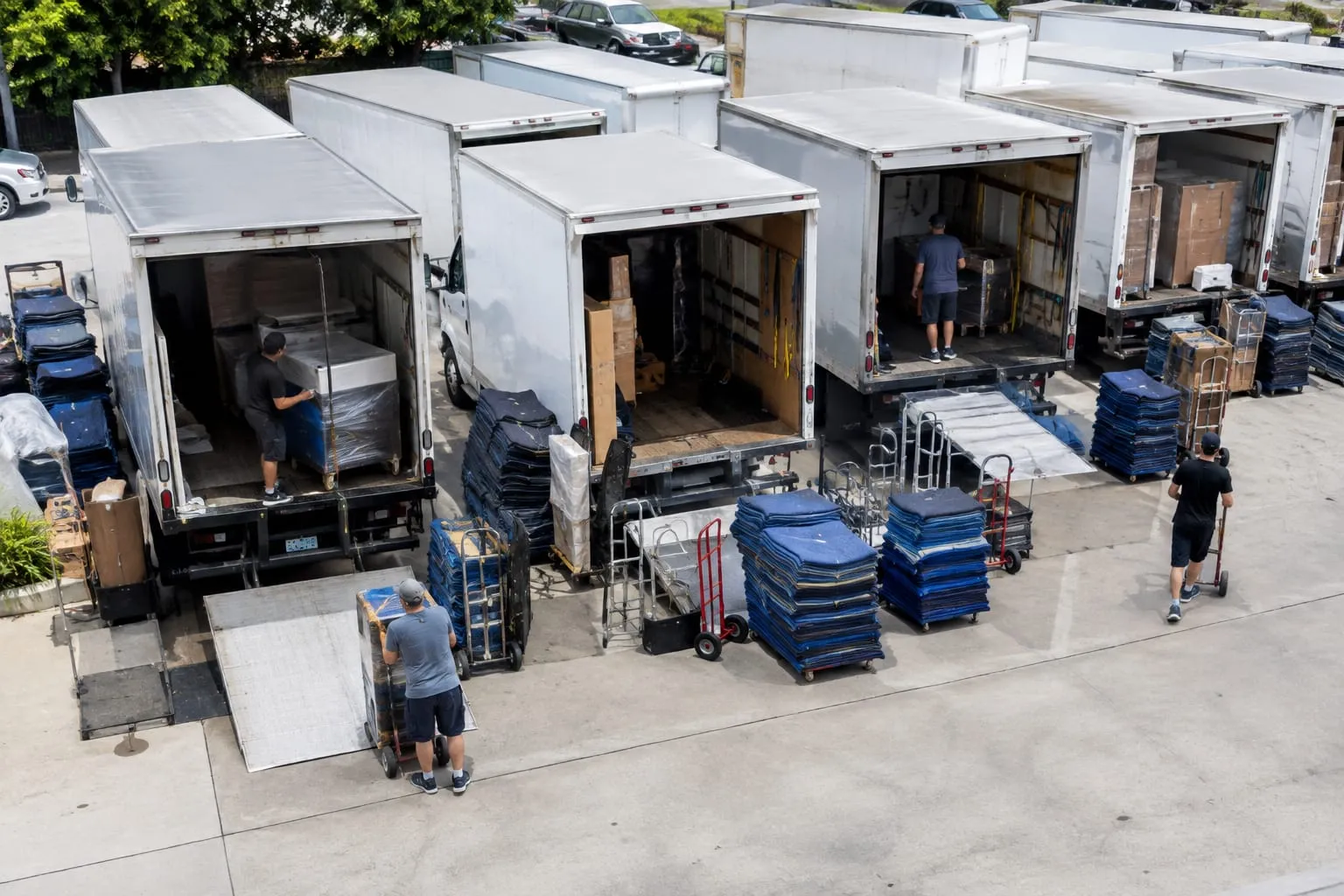
A whiteboard works at three trucks. At ten, it stops working. A dispatch board with conflict protection stops the same truck or mover from landing on two jobs at once. It also syncs with Google, Apple and Outlook calendars and suggests crew size automatically.
More about the service: About Virtual Estimate AI
Measure Quality: The Numbers to Watch as You Add Trucks
Short answer: owners usually spot slipping quality through reviews and claims, weeks after the cause. Track a short list of moving company KPIs each week, broken down by estimator, crew and branch.
| KPI | What it measures | Why it matters as you grow |
|---|---|---|
| Estimated vs. actual hours | Gap between quoted and worked time per job | The earliest signal of estimate drift or crew inefficiency |
| Lead response time | Time from inquiry to first meaningful reply | The first number to slip when the office gets busy |
| Booking rate | Booked jobs divided by qualified leads | Shows whether faster quoting turns into revenue |
| Claims per 100 jobs | Damage and loss claims, adjusted for job volume | Separates crew quality from overall job count |
| On-time arrival | Jobs started within the promised window | Reflects dispatch and capacity planning |
| Crew turnover | Movers who leave per season | Predicts training load and future quality |
Do not borrow someone else's targets. Set a baseline from your own last 90 days, then watch the trend as each truck joins the fleet.
Q: Which KPIs should a moving company track first as it grows?
A: Start with two: estimated vs. actual hours and lead response time. Both shift before customer reviews do, and you can pull both from job records and the inbox without new tools.
Manual tracking breaks down once you run dozens of jobs a week. Estimated vs. actual reporting by branch ties every job to payroll. The same reports cover a real P&L with expenses, return on each lead source and crew performance, company-wide or per location.
When to Add Systems vs. When to Add People (Including a Second Location)
Short answer: hiring someone to cover a broken process just puts the gap on the payroll. Systematize repeatable work first, then add people for work that needs judgment.
Repeatable work includes quote math, follow-up messages, calendar updates, paperwork and payroll calculations. Judgment work includes calming a difficult customer, rebuilding the day after a truck breaks down and coaching a struggling crew. Software fits the first list. People belong on the second.
These signals mean it is time for a dedicated dispatcher or a moving company operations manager:
- The owner or office manager spends most mornings reshuffling the schedule.
- The same dispatch errors repeat week after week.
- Nobody reviews KPIs weekly because no one has the time.
A second location multiplies each of these issues. Before you run a multi-branch moving company, check three things. The standards from the earlier sections should exist in writing. Reporting should separate one branch from another. Each market should have its own rates and surcharges. Intrastate moving rules vary by state, so confirm licensing and tariff requirements with the new state's regulator before booking local jobs there.
Software choice matters at this stage too. Look for moving business software that scales with you, meaning added staff and locations do not force a migration to a new system. Virtual Estimate prices its plans per company, per month, and every plan includes the full moving CRM with unlimited requests and jobs. Upgrades take effect immediately, and downgrades take effect at the next billing cycle. The AI video survey is included in Standard (40 video requests per month) and Pro (80 per month) but not in Basic. You can compare the Basic, Standard and Pro plans against your monthly quote volume.
Start With the Breaking Point You Feel Most
Balancing growth and quality is not a one-time project. Pick the breaking point costing you the most right now, usually estimates or lead response, and standardize it before the next truck arrives. Measure it weekly, then move to the next one.
Written by Virtual Estimate Team
Related Articles
- Faster Quote Turnaround: How Moving Companies Book More Jobs — How shortening the time from inquiry to quote affects which jobs you win.
- Customer Experience Excellence in Moving Services — Where moving customers form their opinion of your service, from booking to delivery.
- CRM for Moving Companies: Streamline Operations — How a moving-specific CRM connects leads, jobs and the office.
- Automated Moving Surveys: Collect Client Information — How to gather inventory and access details before quoting, without a site visit.
- Pricing Strategies for Moving Companies — How to structure rates and surcharges so growth stays profitable.
Useful Links
- How to Choose Moving Business Software That Scales With You
- Moving Company CRM Analytics
- AI vs. Manual: Improved Estimation Accuracy for Movers
- Implementing Moving Software: A Team Rollout Plan
- Moving Company Software & Solutions — CRM, AI Estimates, Dispatch
Need help with this? About Virtual Estimate AI · Get started · Call (888) 611-7483
Ready to see it in action?
Book a free 20-minute demo and explore how Virtual Estimate can help your business.