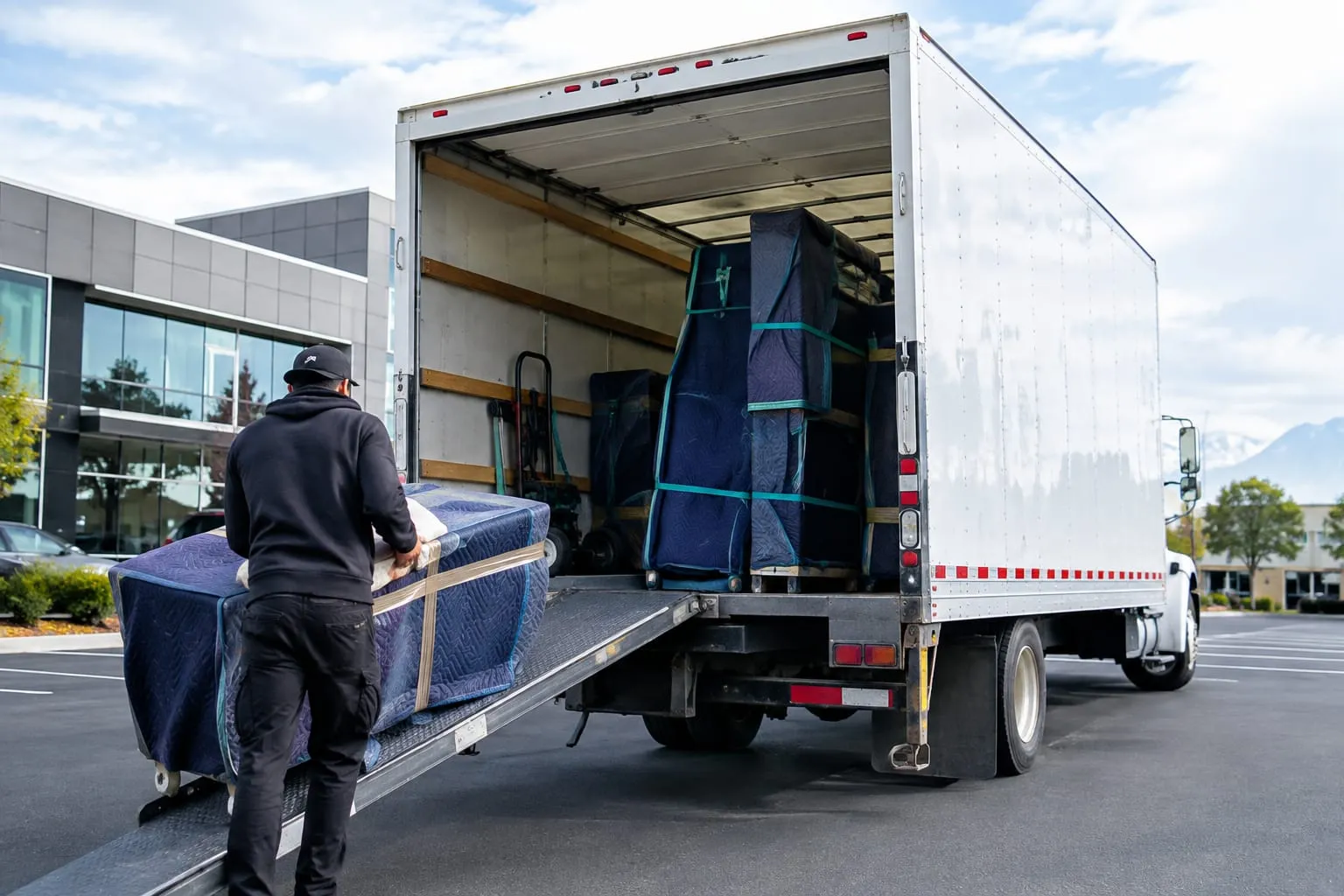

Cargo insurance for moving companies is the policy that pays when customers' household goods are lost or damaged while your crews have them. This guide is for owners and general managers of US household goods moving companies who are buying or renewing that coverage.
It separates cargo insurance from the valuation options you offer customers, points to the primary regulations, and closes with a renewal checklist for your agent. Virtual Estimate, which publishes this guide, makes moving company software. It does not sell, broker or recommend insurance carriers or agencies.
Key Takeaways
- Cargo insurance protects the mover. It reimburses your company's liability for lost or damaged household goods; it is not the customer's insurance.
- BMC-34 is filed by your insurer.
- Minimums live in 49 CFR 387.303. Verify current per-vehicle and per-occurrence minimums in eCFR at each renewal and treat them as a floor.
- Valuation is not insurance. Your cargo limits should cover your highest full value exposure.
- Documentation drives claim outcomes. Complete inventories, photos and signed documents matter.
What Cargo Insurance Covers for a Household Goods Mover
Motor truck cargo insurance for movers covers your company's legal liability for loss of or damage to the customer's goods while they are in your care. It protects your balance sheet, not the customer directly. When you owe a customer for a broken dresser or a missing box, the cargo policy is what reimburses you.
Household goods cargo insurance differs from general freight cargo coverage. Household shipments mix low-value items with antiques, electronics and heirlooms in one truck. Underwriters price and word these policies with that mix in mind.
Policy forms vary, so read yours line by line. Common points to check:
- Named perils vs broad form. A named-perils policy pays only for listed causes such as collision, fire or theft. A broad (all-risk) form pays for any cause not specifically excluded.
- Exclusions. Many forms exclude or limit unattended-vehicle theft, mysterious disappearance, cash, jewelry, documents and damage from customer-packed boxes.
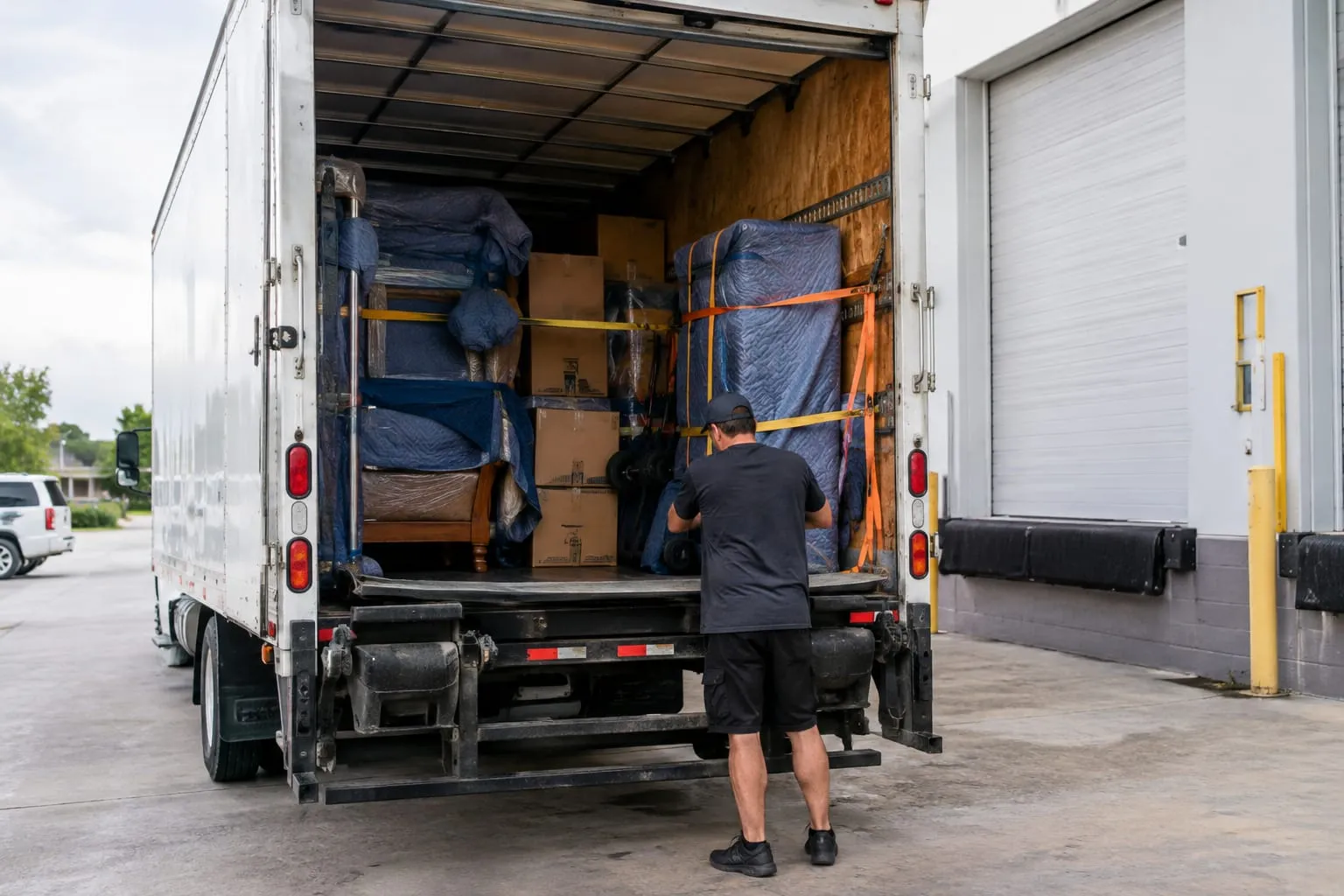
- Storage. Transit coverage often stops once goods sit in your warehouse. Storage usually needs a separate warehouse legal liability endorsement or policy.
- Hired and subcontracted trucks. Confirm whether goods on a leased truck or with a partner carrier are covered.
Cargo insurance does not cover injuries to third parties, damage to a customer's walls or floors, or injured employees. Those fall under auto liability, general liability and workers' compensation, which our full business insurance guide for moving companies covers in detail.
FMCSA Cargo Insurance Requirements for Interstate Household Goods Carriers
Treat the federal minimum as a floor. It sets what FMCSA will accept for your authority. It says nothing about what a fully loaded truck of household goods is actually worth.
The proof of coverage reaches FMCSA through filings. Your insurer submits these electronically.
Q: What is a BMC-34 filing and who submits it?
A: Confirm the current requirements for Form BMC-34 directly with FMCSA. The mover does not file it; the insurer does.
The filing stays tied to the policy. Switching carriers at renewal means the new insurer must file before the old filing drops off, with no gap in between.
Cargo Insurance vs Released Value and Full Value Protection
Valuation is the level of liability your company accepts for a shipment, chosen by the customer on the bill of lading; cargo insurance is the policy that funds your company's own liability. The two are related but not interchangeable. Confusing them is a common source of disputes after a damage claim.
Confirm the current valuation requirements for interstate movers with FMCSA or in the current text of 49 CFR Part 375. Confirm the current requirements directly with FMCSA:
- Released value protection. Confirm its current terms directly with FMCSA.
Customers can also buy separate third-party moving insurance. That policy belongs to them, not to you.
| Attribute | Cargo insurance | Valuation (released value or full value protection) |
|---|---|---|
| What it is | An insurance policy bought by the mover | A liability level the mover accepts for each shipment |
| Who chooses it | The mover, with its agent | The customer, on the bill of lading |
| Who it protects | The mover's finances | The customer's recovery for loss or damage |
| Federal rule | 49 CFR Part 387 | 49 CFR Part 375 |
| Proof | BMC-34 filing with FMCSA | Signed valuation selection on the bill of lading |
Here's the practical link. When a customer selects full value protection, your exposure on that load can be far higher than under released value. Size your cargo limits against your highest-value full value protection shipments, not your average move. For plain-language definitions of these terms, keep a moving glossary handy for new sales staff.
Clear valuation explanations at booking also prevent arguments later. Building customer transparency into the sales process means customers understand what each option pays before anything goes on the truck. See Customer Experience Excellence in Moving Services.
State Requirements for Intrastate Movers
** Depending on the state, that regulator is the state DOT, public utility commission (PUC) or department of public utilities (DPU). Some states set their own cargo minimums, tariffs and valuation rules.
A federal exemption from Part 387 does not mean no requirement exists.
Use this short process to confirm your obligations:
- Identify which agency licenses household goods movers in each state where you run local jobs.
- Read the state's mover rules or household goods tariff for cargo insurance minimums.
- Confirm whether proof of insurance must be filed with the state, and in what form.
- Check whether the state prescribes its own valuation options for intrastate moves.
- Recheck at every renewal, since state rules change independently of federal ones.
Q: Do intrastate-only movers need cargo insurance?
A: Confirm the current requirement that applies to your operation with FMCSA or your state regulator. Intrastate-only movers must check their state regulator's rules, and many carry cargo coverage anyway because customers, building managers and commercial accounts ask for a certificate.
What Drives Your Cargo Insurance Premium
Underwriters price cargo insurance mainly on your loss history, the value and type of goods you haul, and the limits and deductible you choose. We did not find a public, current dataset that publishes typical household goods cargo premiums, so treat any single figure you see online with caution. Your agent's quotes are the only reliable number.
The factors that most often move the price:
- Loss runs. These are your insurer's records of past claims, usually reviewed over several years. Frequent small claims can hurt as much as one large one.
- Operating radius. Long-haul interstate work carries more handling, transfers and time in transit than local moves.
- Commodity profile. Regular piano, fine art or antique moves raise exposure.
- Limits and deductible. Higher per-vehicle limits cost more; a higher deductible lowers premium but shifts small claims onto you.
- Storage exposure. Storage-in-transit and warehouse volume add separate risk.
- Fleet and drivers. Vehicle count, driver experience and use of subcontractors all factor in.
- Documentation and claims handling. Clean files and fast resolution reduce the cost of each claim.
Pro Tip: Request your loss runs from your current carrier well before renewal. Reviewing them first lets you correct closed claims still showing as open and explain one-off losses before an underwriter prices them.
More about the service: About Virtual Estimate AI
How Accurate Inventories and Documentation Strengthen Claims
Moving damage claims turn on what you recorded before and after the move: the inventory, condition notes, signed bill of lading and photos. Without that record, a claim becomes your crew's word against the customer's. With it, the adjuster has a file to work from.
Interstate claim handling also runs on a federal clock. Assembling documents from paper folders and text messages eats into that window.
Inventory detail matters for liability limits too. A complete inventory protects both parties.
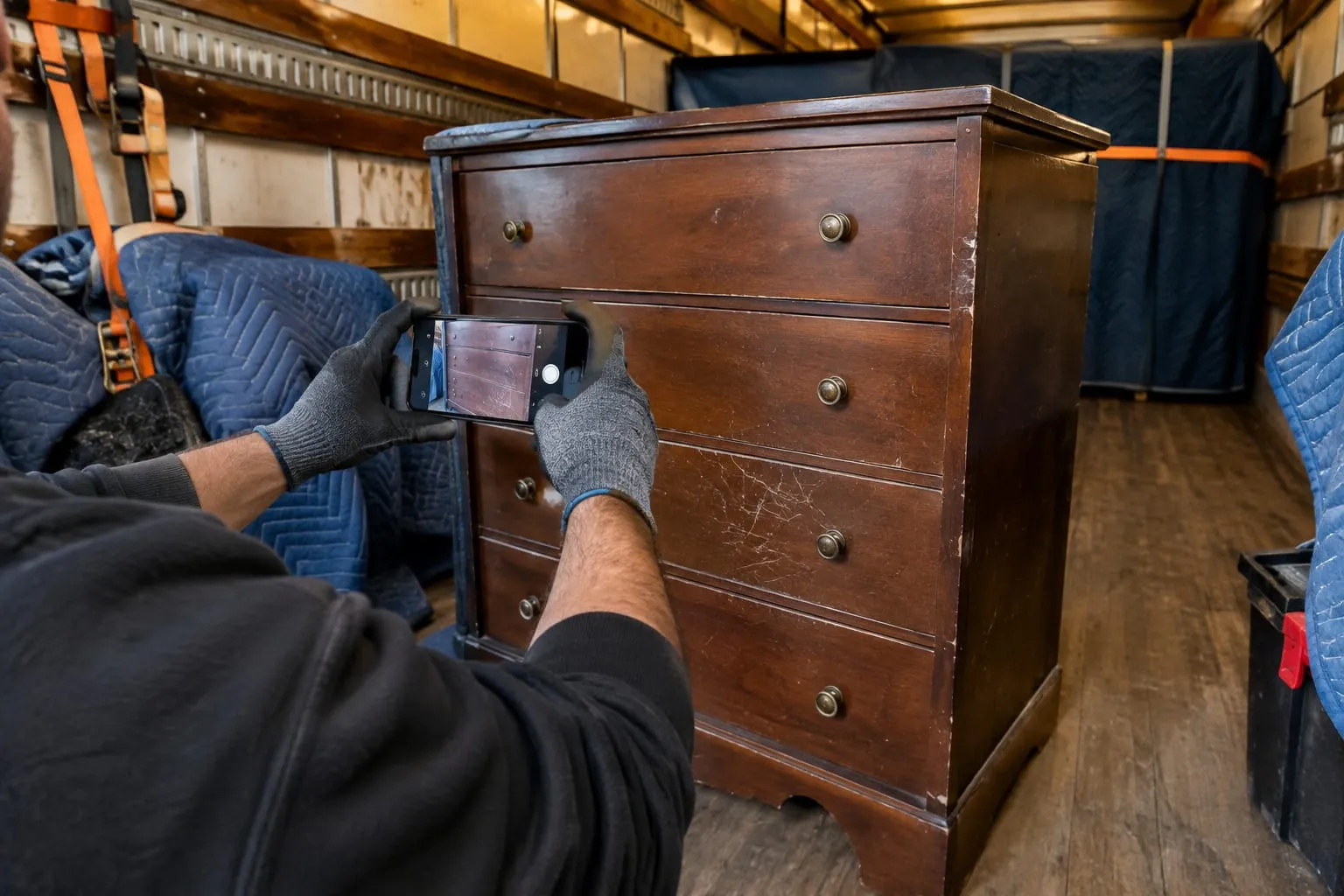
Inventory documentation for movers works best when it follows a few habits:
- Record pre-existing condition (scratches, dents, loose joints) on the inventory before wrapping.
- Photograph high-value and fragile items at origin and again at delivery.
- Have the customer sign the inventory at pickup and note any exceptions at delivery.
- Carry the same inventory from estimate to bill of lading so no item is re-typed or dropped.
The last point is where many claims break down. A room-by-room video inventory captured during the estimate gives you an item list before the crew arrives. Moving company inventory automation then removes the manual re-entry that creates gaps.
An electronic Bill of Lading with timestamped signatures adds a clear record of what the customer agreed to, including their valuation choice. For instance, Virtual Estimate's moving claims software with before-and-after photos ties those photos to each job alongside the signed bill of lading and inventory, with a tamper-evident trail.

Questions to Ask Your Insurance Agent Before You Renew
A strong renewal starts with a written list of questions sent to your agent at least a few weeks before the policy expires. Look for an agent who regularly places household goods cargo coverage, since general trucking agents may not know valuation rules.

- Is my BMC-34 filing active, and will a new carrier file before the current one cancels?
- What are my per-vehicle and per-occurrence cargo limits, and do they cover my highest-value full value protection load?
- Is this a named-perils or broad-form policy?
- Which exclusions apply to unattended vehicles, theft, high-value items and customer-packed boxes?
- Are goods in my warehouse or in storage-in-transit covered, or do I need warehouse legal liability coverage?
- Does coverage follow goods on leased, rented or subcontracted trucks?
- How does the deductible apply per claim, and does it make sense to pay small claims myself?
- What documentation does the insurer expect when I report a claim, and how fast must I report it?
- Does the coverage territory match every state I operate in?
- How quickly can you issue certificates of insurance for building managers and commercial clients?
Bring your loss runs, your valuation mix, and a sample claim file to the meeting. Agents can only price what they can see.
Making the Coverage Decision
Cargo insurance, valuation and documentation form one system. The policy funds your liability, the valuation option defines it, and your inventory and paperwork prove it. Verify filings and minimums against FMCSA and eCFR, confirm state rules for local work, and size limits to your real exposure rather than the federal floor.
Written by Virtual Estimate Team
Related Articles
- Automated Survey Removals: A Guide to Pre-Move Intake — how automated surveys capture inventory details before a crew is dispatched.
- Customer Experience Excellence in Moving Services — how clear communication at booking reduces disputes after the move.
- CRM for Moving Companies: Streamline Operations — how a moving CRM keeps estimates, jobs and documents in one record.
- Pricing Strategies for Moving Companies — how to build insurance and valuation costs into profitable rates.
Useful Links
- Moving Claims Software | Virtual Estimate
- Electronic Bill of Lading Software for Movers | Virtual Estimate
- Business Insurance for Moving Companies: Complete Guide
- Moving Company Bill of Lading Requirements
- Moving Glossary — Moving Terms Explained | Virtual Estimate
Need help with this? About Virtual Estimate AI · Get started · Call (888) 611-7483
Ready to see it in action?
Book a free 20-minute demo and explore how Virtual Estimate can help your business.