

To calculate cubic feet for a moving estimate, measure each item's length, width, and height in feet, multiply those three numbers together, then add every item's volume into one room-by-room total. That single figure — total cubic feet — sets the truck size, crew count, and final price of the move.
Weight-based guesswork feels faster, but it buries errors that resurface on moving day as surprise charges and delayed trucks. Volume is visible, measurable, and repeatable. This guide explains how to measure furniture, why cubic feet beats a weight estimate, and how modern tools now handle the math automatically.
Key Takeaways
| Point | Details |
|---|---|
| Volume drives price | Total cubic feet determines truck size, crew, and quote — not a vague weight guess. |
| Simple formula | Length × width × height (in feet) per item, summed room by room. |
| Weight rules interstate | Federal carriers bill most long-distance moves by weight, per the FMCSA guidance on ways to estimate moving costs. |
| Manual math fails | Forgotten rooms and rounded-down items are the top causes of undersized trucks. |
| AI scanning standardizes it | Video-based tools measure furniture and output cubic feet without an in-home visit. |
Why cubic feet decides your moving quote
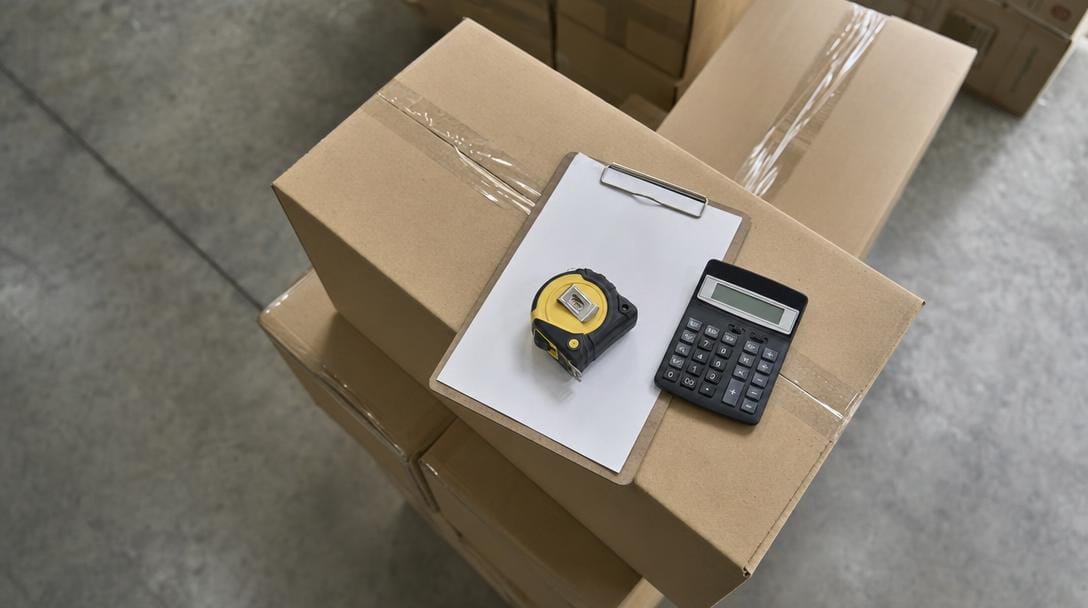
Cubic feet is the volume your belongings occupy inside a truck. It is the most honest way to size a move because volume — not raw weight — is what actually fills a trailer. A crew can lift a compact safe easily, yet a bulky sectional eats floor space and drives cost.
Every year, tens of millions of Americans relocate, and most receive a quote built on either volume or weight. Volume wins on transparency. You can see it, measure it, and verify it against the truck.
Here's the thing: a long-distance move often runs several thousand dollars, so a small measurement error scales into real money. Cubic feet keeps that math grounded in physical reality. Companies that want to keep moving costs predictable start with accurate volume, not a hunch.
Cubic feet vs. weight vs. hourly: how movers size a job
Moving companies size a job three ways: by volume (cubic feet), by weight (pounds), or by time (hourly). Volume suits long-distance and full-service moves, weight is standard for interstate carriers, and hourly fits short local jobs.
| Factor | Cubic feet (volume) | Weight (pounds) | Hourly (time) |
|---|---|---|---|
| How it's measured | Item dimensions summed | Truck weighed full and empty | Crew hours on site |
| Best for | Long-distance, full-service | Interstate carriers | Local, small moves |
| Customer transparency | High | Medium | Low |
| Common risk | Under-measured items | Scale and fuel surprises | Slow crews inflate the bill |
| Typical oversight | FMCSA survey rules | FMCSA-regulated | State and local rules |
Interstate carriers weigh the truck loaded and empty, a method regulated by the FMCSA weight and inventory rules. Choosing between these approaches is the core of the different types of moving estimates a customer will encounter.
Understanding how movers estimate move size also clears up a common naming confusion. The phrase "American Moving and Storage" is not one company — it is a name shared by many independent regional firms. Slattery Moving and Storage, Summit Moving and Storage, Krupp Moving and Storage, and Moving Team Six Moving and Storage all operate under similar "Moving and Storage" branding, yet each may quote the same shipment differently depending on its method. Trade bodies such as the American Trucking Associations' Moving & Storage Conference publish standards that help make those methods comparable.
Q: What is the difference between a cubic feet and weight moving estimate?
A: A cubic-feet estimate prices your move by the volume your belongings occupy, while a weight estimate prices by total poundage — and interstate carriers typically bill by weight, per FMCSA rules.
Measuring furniture and calculating cubic feet room by room
The formula is simple: length × width × height, in feet, for every item. Do it space by space so nothing slips through the cracks. Follow these steps for a reliable total.
- Measure each item with a tape measure, noting inches, then divide each dimension by 12 to convert to feet.
- Multiply the three dimensions to get that item's cubic feet.
- Add every item in a room for a room subtotal.
- Repeat across all spaces — bedrooms, kitchen, garage, closets, and the attic.
- Sum all room subtotals for total cubic feet.
- Add a modest buffer for loose boxes and small items you did not measure individually.

A moving estimate cubic feet chart speeds this up by listing standard volumes for common items. Use it as a shortcut, then verify oddly sized pieces by hand. The table below shows a typical furniture cubic feet estimate for household staples — treat these as approximate rules of thumb, not exact figures.
| Item | Approx. cubic feet |
|---|---|
| Three-seat sofa | 50 |
| Queen mattress + box spring | 65 |
| Dining table (seats six) | 30 |
| Standard refrigerator | 45 |
| Six-drawer dresser | 40 |
| Washer or dryer | 25 |
A cubic feet moving calculator automates these multiplications — enter dimensions and it returns the total — but the inputs still depend on accurate measurement. Garbage in, garbage out. A digital virtual pre-move survey helps capture those inputs consistently.
Pro Tip: Measure irregular items at their widest points and round up to the nearest half-foot. Under-measuring is the single most common cause of an undersized truck on moving day.
Q: How many cubic feet is a typical three-bedroom house?
A: A fully furnished three-bedroom home commonly totals roughly 1,800 to 2,200 cubic feet, though heavy furniture and clutter push that number higher.
Where manual cubic-feet math goes wrong — and what it costs you
Manual estimates fail for predictable reasons. Each error is small on its own, but they compound into a quote that misses the mark and erodes trust.
- Forgotten spaces: attics, garages, sheds, and deep closets rarely make it onto a memory-based list.
- Rounding down: shaving inches off each item quietly shrinks the total.
- Inconsistent estimators: two staff members measuring the same home produce two different numbers.
- No verification: without a photo or video record, there is no way to defend the figure later.
These gaps are why accurate moving quotes are hard to produce by hand. The crews performing these moves are a large, in-demand workforce tracked by the U.S. Bureau of Labor Statistics, and their time is exactly what a bad estimate wastes when the truck arrives too small.
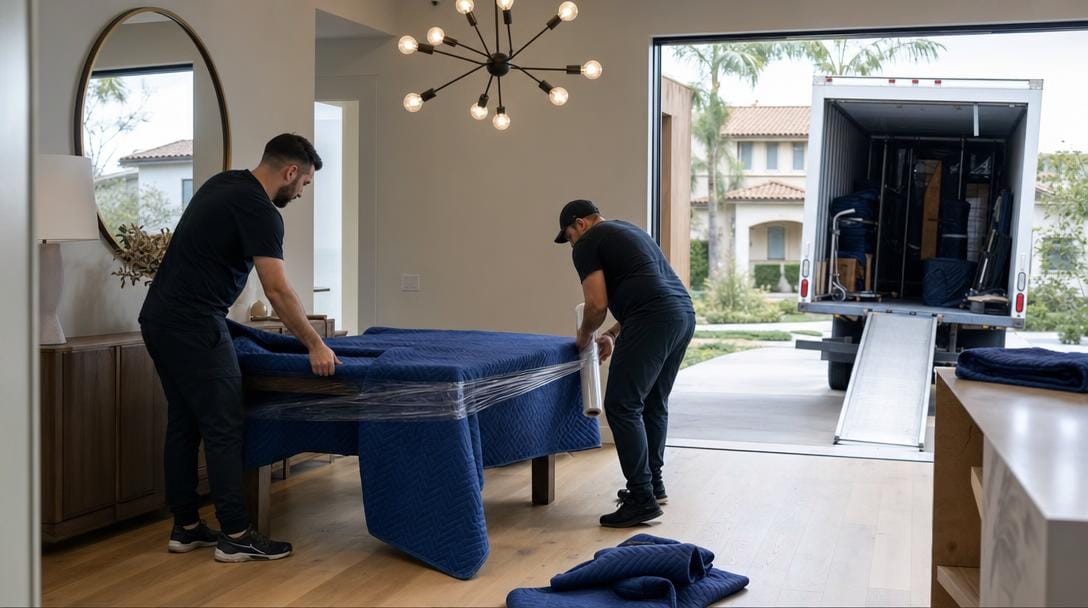
Purpose-built estimating software for movers closes these gaps by enforcing a consistent process and keeping a record of every measurement.
Pro Tip: Never estimate a full home from memory. Walk every room, open every closet, and check the garage and attic — forgotten spaces cause most cubic-feet shortfalls.
AI video scanning: measuring furniture and volume automatically
AI video scanning lets a customer film a walkthrough on a phone, then uses computer vision to detect items and calculate their cubic feet automatically. It removes the tape measure and the guesswork in one step.
Here's how it typically works:
- The customer records a short video of each room, or joins a guided virtual session.
- The model identifies furniture and boxes frame by frame.
- It assigns a furniture cubic feet estimate to each detected item.
- It totals volume into a single, room-by-room inventory.
The advantage is consistency. The same sofa gets the same volume every time, regardless of who runs the scan. That reliability is the foundation of AI-powered moving estimates and a major reason estimators are moving away from in-home visits.
For a broader look at the tools involved, this moving company software guide compares the categories that connect scanning to scheduling and billing.
Pro Tip: When using video scanning, film in landscape mode, move slowly, and keep each item fully in frame. The model can only size what it can clearly see.
From consistent cubic feet to a defensible, ready-to-send quote
A reliable cubic-feet total is the input; a defensible quote is the output. Once volume is fixed, pricing becomes arithmetic rather than argument.
Total cubic feet maps directly to truck size, crew hours, and materials. That transparency is why customers trust volume-based numbers and why understanding how much movers cost starts with accurate measurement, not a flat guess.

Modern estimating runs on SaaS platforms that store every measurement, sync it to dispatch, and feed it into a Moving CRM so the quote, the inventory, and the job order all agree. Tying those systems together is the goal of a well-planned moving company technology stack. The result is a quote a customer can read, a crew can trust, and a company can defend.
Related Articles
- How Video-Based Moving Estimates Work: Quoting Jobs Without an In-Home Visit — See how remote estimates replace the traditional in-home walkthrough.
- Video Survey Moving Estimates: How AI Scanning Replaces In-Home Walkthroughs — Understand the mechanics of AI-driven furniture measurement.
- Best Moving Companies in Columbus, OH: Top Picks & Costs — Compare regional providers and their estimating methods.
- Moving Services in Columbus: Compare Options & Get Quotes — Learn how to weigh local moving options side by side.
Recommended Reading
Ready to see it in action?
Book a free 20-minute demo and explore how Virtual Estimate can help your business.