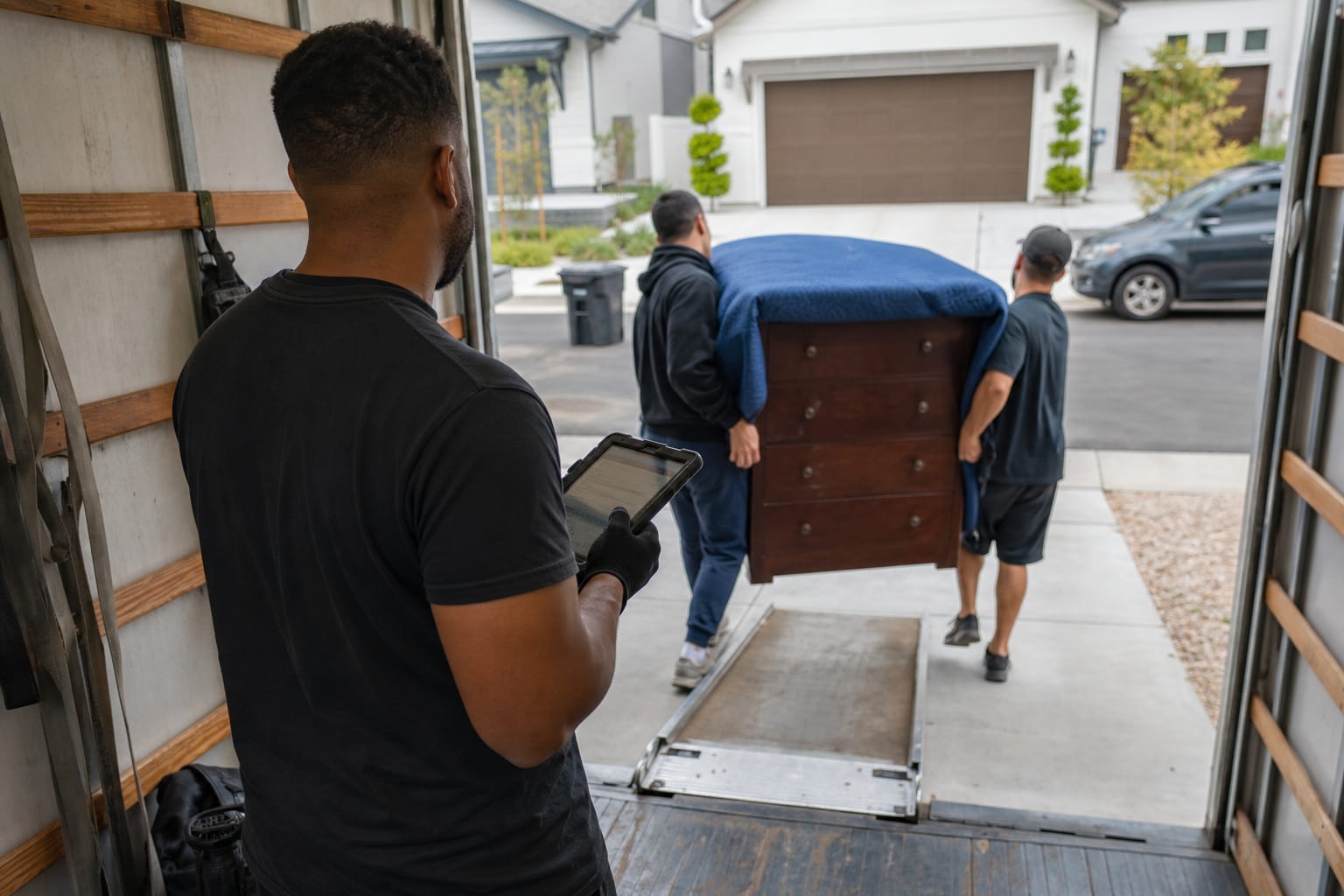

A moving inventory is the backbone of every accurate quote, yet most movers still build it by hand. Creating a room-by-room moving inventory traditionally means a surveyor walking the home with a clipboard, counting boxes and measuring sofas. That process is slow, inconsistent, and costly. AI video scanning changes the math. This guide explains how the technology identifies items, how a phone video becomes a structured inventory, and why automation is reshaping the way moving companies quote jobs.
Quick answer: how AI video scanning builds a moving inventory in 6 steps
- The customer records a short video walkthrough of each room on a smartphone.
- Computer vision analyzes the footage frame by frame.
- The system detects, classifies, and counts every visible item.
- Each item maps to a cubic-foot and weight estimate.
- Items group automatically by room into a structured list.
- The mover receives a priced, editable inventory ready to send.

Key Takeaways
| Point | Details |
|---|---|
| Speed gain | Manual surveys take 2+ hours; AI video scanning delivers an inventory in roughly 10 minutes. |
| No surveyor visit | A video walkthrough moving inventory removes drive time and scheduling friction. |
| Accuracy backbone | Federal rules require written binding or non-binding estimates, and inventory precision drives both. |
| Consistency | Computer vision applies the same counting logic to every room, every time. |
| Scalability | One platform can process unlimited inventories without adding survey staff. |
Why manual moving inventories slow movers down

What to do: Recognize that the manual survey is the slowest, most expensive step in quoting a move. Tens of millions of Americans relocate every year, and each one needs an inventory before pricing.
The traditional in-home survey requires a trained estimator to drive to the property, walk every room, and hand-record items. That eats hours of payroll and fuel before a single box is loaded.
Manual counting is also inconsistent. Two surveyors can walk the same home and produce different cubic-foot totals, which directly skews the price. With material moving employing hundreds of thousands of U.S. workers, labor spent on surveys is labor not spent on revenue.
Q: How long does a traditional in-home moving survey take?
A: A manual in-home survey typically takes 2+ hours including travel, while AI video scanning produces a comparable inventory in about 10 minutes.
There is also the human cost of missed items. A forgotten armoire becomes a day-of surprise, a heavier truck, and a frustrated customer. Reviewing common moving estimate errors and how virtual surveys cut them shows how often manual methods undercount.
How AI video scanning identifies, counts, and catalogs every item
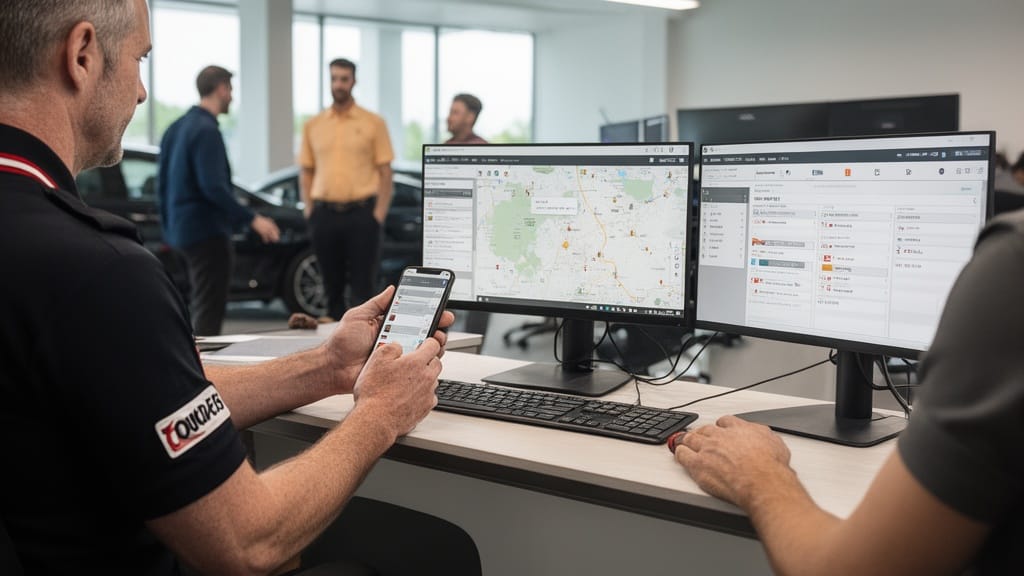
What to do: Understand the engine. AI room scanning for movers uses computer vision to recognize objects in video, the same class of technology that powers automated image labeling at research scale.
The model processes each frame, isolates objects, and assigns a category: sofa, dresser, dining table, lamp, box. Progress in computer vision has been rapid, and AI capability benchmarks have climbed sharply year over year, making consumer-grade object detection genuinely reliable.
Once an item is identified, the system links it to a volume and weight profile. That converts a visual catalog into the cubic-foot math that drives pricing. The result is a structured dataset, not a handwritten guess.
| Detection capability | What it does | Why it matters |
|---|---|---|
| Object recognition | Names each visible item | Builds the line-item list |
| Counting | Tallies duplicates (e.g. 6 chairs) | Prevents undercounting |
| Volume mapping | Assigns cubic feet per item | Drives truck and crew sizing |
| Room grouping | Sorts items by location | Speeds packing and loading |
| Edit flagging | Marks low-confidence items | Keeps a human in the loop |
Movers comparing tools can review options in this guide to estimating software for movers to see how detection quality varies between platforms.
From a quick phone video to a precise room-by-room inventory
What to do: Send the customer a link, have them record, and let the system do the cataloging. The entire video walkthrough moving inventory process runs on a standard smartphone.
The customer walks slowly through each room, holding the phone steady and panning across walls, closets, and corners. No measuring tape, no app expertise, no surveyor on site. Most people finish a full home in a few minutes.
- Capture: Record one continuous clip per room.
- Upload: The footage transfers to the processing engine.
- Scan: Computer vision extracts and counts items.
- Assemble: Items populate a room-by-room moving inventory automatically.
- Review: The mover edits or confirms flagged items.
Pro Tip: Ask customers to open closets, cabinets, and the garage on camera. The single biggest source of inventory gaps is hidden storage, not the visible living-room furniture.
For a deeper procedural breakdown, this walkthrough on how to conduct a virtual pre-move survey step by step covers the customer-facing flow in detail.
What an automated inventory means for accuracy and professionalism

What to do: Treat the automated moving inventory list as your single source of truth for pricing, crew planning, and customer communication.
A structured list reduces disputes. Because every item is captured on video and logged, both the mover and the customer can see exactly what was quoted. That transparency supports the binding and non-binding estimate rules the FMCSA enforces.
Accuracy also protects margin. When the inventory matches reality, the truck is the right size and the crew is the right count. This guide to AI-powered moving estimates shows how precise item data flows directly into a defensible price.
Q: How accurate is an AI-generated moving inventory?
A: AI video scanning applies identical counting logic to every job, removing the surveyor-to-surveyor variance that distorts manual counts, with low-confidence items flagged for human review.
Pro Tip: Keep the original walkthrough video attached to the job file. If a day-of dispute arises over what was quoted, the timestamped footage settles it instantly and protects you from claims.
Professionalism is the quiet win. A polished, itemized list sent within minutes signals competence to a customer comparing several movers at once.
Comparing manual surveys, virtual surveys, and AI video scanning

What to do: Match the inventory method to your volume and margin goals. The three dominant approaches differ sharply on speed and scalability.
| Criteria | Manual in-home survey | Live virtual survey | AI video scanning |
|---|---|---|---|
| Time required | 2+ hours | 30–45 minutes | ~10 minutes |
| Surveyor needed | Yes, on site | Yes, on a call | No, asynchronous |
| Scheduling | Fixed appointment | Booked call | Anytime, self-serve |
| Consistency | Varies by person | Varies by person | Uniform logic |
| Audit trail | Paper notes | Call only | Saved video + list |
| Scalability | Limited by staff | Limited by staff | Effectively unlimited |
Live virtual surveys were a major step forward, and many operators still rely on them; see the types of moving estimates and how to choose for context. AI scanning extends the same logic by removing the live human bottleneck entirely.
Teams evaluating broader platforms can compare full suites in this overview of the best moving company software.
The future of inventory: AI scanning, predictive pricing, and beyond

What to do: Plan for inventory data to feed everything downstream. Moving inventory automation is becoming the front door to dynamic pricing, crew forecasting, and claims prevention.
Adoption tailwinds are strong. A majority of organizations now use AI in at least one business function, and field-service operators are following that curve quickly.
The next phase links the inventory to predictive models: estimated packing time, optimal truck loading order, and risk scoring for fragile items. When item data is clean, those predictions get sharper. Operators tracking the broader trend can review how to reduce moving costs with AI technology.
Pro Tip: Store every completed inventory in a structured system, not scattered PDFs. Clean historical item data is the fuel for predictive pricing, and a connected moving company CRM keeps operations and inventory in one place.
Q: Will AI video scanning replace in-home surveys completely?
A: For standard residential moves it largely already can, but complex commercial or high-value jobs still benefit from a human review layer on top of the automated list.
The direction is clear. The inventory stops being a chore and becomes a live data asset that improves every quote you send.
Related Articles
- Virtual Pre-Move Survey: A Complete Guide — How remote surveys replace in-home visits end to end.
- AI-Powered Moving Estimates: A Complete Guide — How item data turns into a defensible, accurate price.
- Cutting Moving Estimate Errors With Virtual Surveys — Why manual counts undercount and how to fix it.
- Estimating Software for Movers — Compare the tools that automate inventory and pricing.
- Reduce Moving Costs With AI Technology — Where automation trims the most expense.
You May Also Like
- Types of Moving Estimates: Choosing the Best Option — Binding vs. non-binding explained.
- Best Moving Company Software — Full-suite platforms ranked and reviewed.
- Moving Company CRM: Complete Operations Guide — Connect inventory data to the rest of the job.
- How to Conduct a Virtual Pre-Move Survey — The step-by-step customer-facing flow.
Ready to see it in action?
Book a free 20-minute demo and explore how Virtual Estimate can help your business.