

Moving company storage is a service in which a licensed mover packs, hauls, and warehouses your belongings between pickup and final delivery. It comes in two forms — short-term storage-in-transit and longer-term storage — with monthly costs shaped by volume, climate control, and valuation coverage.
Most people discover they need storage mid-move: a closing date slips, a lease gaps, or the new home simply isn't ready. This guide breaks down the real options, the true cost drivers, the insurance rules regulators require, and how professional movers keep track of exactly what sits in the warehouse.

Key Takeaways
| Point | Details |
|---|---|
| Two core options | Storage-in-transit is short-term and part of the move; long-term storage is billed monthly and open-ended. |
| Cost is volume-driven | Bills track cubic feet occupied, with climate control and valuation coverage adding to the base rate. |
| Coverage is regulated | Under FMCSA rules, basic released value pays just $0.60 per pound unless you buy Full Value Protection. |
| Time limits apply | Storage-in-transit is capped at 180 days before it converts to permanent storage. |
| Inventory is tracked digitally | Modern movers log each vault by barcode and location code so nothing is lost between intake and delivery. |
What Is Moving Company Storage?
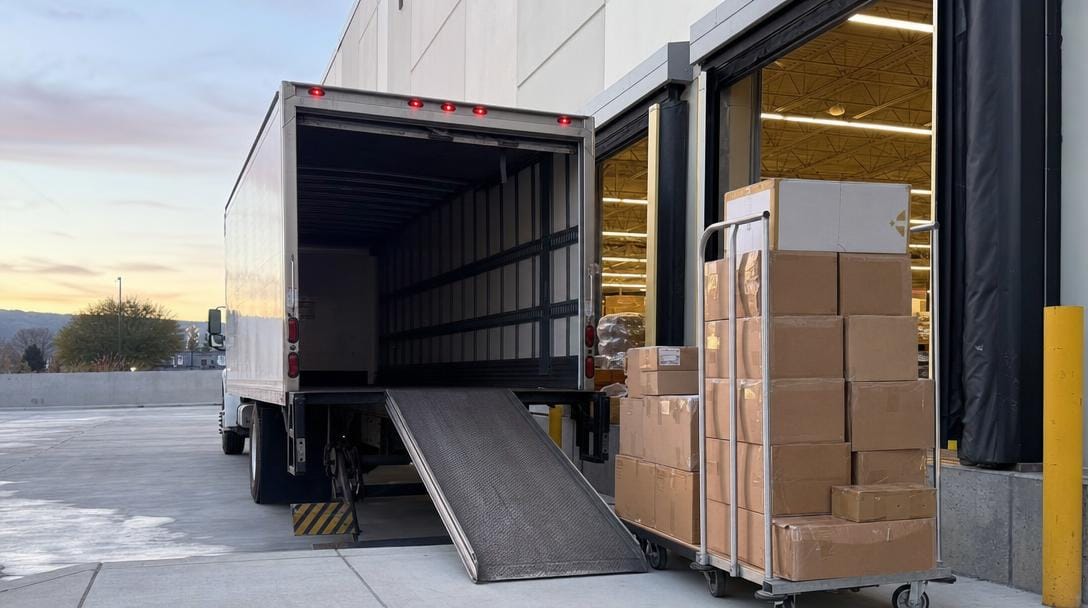
Moving company storage is secured warehouse space operated by a licensed carrier to hold household goods before, during, or after a move. Unlike a rented unit you access yourself, the mover handles loading, transport, wrapping, and inventory.
Most full-service carriers use vaulted storage — wooden crates called vaults, roughly 5 by 7 by 7 feet, that hold the contents of an average furnished room. Your items are pad-wrapped once, sealed inside a vault, and stacked. Nothing is reopened until delivery.

Because warehouse storage movers stack sealed vaults rather than use open shelving, handling is minimized. Fewer touches means fewer scratches, and the sealed crate keeps out dust and pests. This is the main structural difference between a moving company's warehouse and a drive-up self-storage row.
Storage-in-Transit vs. Long-Term Storage
The two categories differ mostly in duration and billing. Storage in transit (SIT) is a temporary hold that is part of your shipment; long term moving storage is an open-ended arrangement billed month to month.
Q: What does storage-in-transit mean on a moving contract?
A: Storage-in-transit is temporary warehousing of your shipment when it can't be delivered on the agreed date. Federal rules cap it at 180 days, after which it converts to permanent storage under a separate agreement.
After that window, the goods are no longer part of the original move and fall under a new storage contract, often with different liability terms. The table below summarizes the practical differences.
| Criteria | Storage-in-Transit | Long-Term Storage |
|---|---|---|
| Duration | Up to 180 days | Open-ended, monthly |
| Billing | Part of the moving contract | Separate monthly invoice |
| Regulatory status | Governed by move's bill of lading | New storage agreement |
| Typical use | Closing delays, lease gaps | Downsizing, deployment, renovation |
| Access | Limited, by appointment | By appointment, sometimes fees apply |
| Coverage | Tied to move's valuation | Separate storage valuation coverage |
How Much Does Moving Company Storage Cost?
Moving storage cost is driven by one number above all: the cubic feet your goods occupy. Movers price by volume, then layer on charges for climate control, valuation, and any warehouse handling fees for access.
The estimates below reflect typical industry ranges and vary by market and season. Treat them as planning figures, not quotes — the same way you would compare types of moving estimates before booking a move.
| Household size | Approx. volume | Typical monthly cost |
|---|---|---|
| Studio / 1-bedroom | 200–400 cu ft | Lower end — a few hundred dollars |
| 2–3 bedroom | 600–1,000 cu ft | Mid-range |
| 4+ bedroom | 1,200+ cu ft | Higher — often four figures |
Watch for one-time fees that stack onto the monthly base: initial warehouse handling (loading vaults), redelivery charges, and access fees each time you need something pulled. These extras often surprise first-time customers more than the monthly rate itself.
Pro Tip: Ask for the warehouse handling and redelivery charges in writing before the truck loads. These one-time fees can equal two or three months of storage, and they are far easier to negotiate before your goods are already in the vault.
Climate-Controlled and Specialty Storage Options
Climate controlled storage holds temperature and humidity within a stable band to protect sensitive items. It matters most for wood furniture, pianos, electronics, artwork, leather, and documents — anything that warps, cracks, or grows mold in swings of heat and moisture.

The National Archives recommends stable conditions with relative humidity between 30% and 50% for long-term preservation, and the same logic applies to household goods. Uncontrolled warehouses in humid or desert climates can drift far outside that range.
Specialty options extend beyond climate control. Vaulted storage protects fragile pieces, while portable storage moving containers let a company drop a weatherproof pod at your curb, then haul it to a warehouse once you pack it. Each format trades convenience against handling control.
Pro Tip: For pianos, solid-wood antiques, and anything with veneer, insist on climate control even for a two-week hold. A single humid week can lift veneer or seize piano action — damage that costs more to repair than a year of controlled storage.
Insurance and Valuation Coverage for Stored Items
Here's the part most people miss: your homeowner's policy usually does not cover goods in a mover's warehouse. Storage valuation coverage is separate, and the default level is far lower than most customers assume.
Under FMCSA rules, basic released value protection pays only $0.60 per pound per article — meaning a damaged 10-pound lamp is worth six dollars, regardless of its real value. Full Value Protection is the upgrade: the mover must repair, replace, or pay the current value of a lost or damaged item.
Read how your coverage carries into long-term storage, because the move's valuation may not automatically transfer once the goods convert to permanent storage. Confirm in writing whether you need a standalone storage warehouse policy.
Pro Tip: Photograph every high-value item and its serial number before it enters the warehouse, and keep a dated copy of the signed inventory. Claims are won or lost on documentation — a condition photo taken at intake settles disputes that memory never could.
Moving Company Storage vs. Self-Storage: Which Is Right for You?
The self storage vs moving storage decision comes down to access versus handling. Self-storage is cheaper and lets you visit anytime; moving company storage costs more but includes professional loading, wrapping, and inventory control.
Q: Is moving company storage cheaper than a self-storage unit?
A: Usually no — self-storage units are typically less expensive per month because you supply the labor, while the multibillion-dollar self-storage industry competes heavily on drive-up convenience and price.
| Factor | Moving Company Storage | Self-Storage |
|---|---|---|
| Who loads it | The mover | You |
| Access | By appointment | Anytime, drive-up |
| Climate options | Common, vault-based | Varies by facility |
| Inventory tracking | Itemized by the carrier | Self-managed |
| Best for | Full-house moves, delays | DIY, frequent access |
Choose moving company storage when the same crew moving you can warehouse everything and redeliver it — one accountable party, one inventory. Choose self-storage when you want daily access and are comfortable renting a truck yourself.
Regional Storage: Phoenix vs. Columbus Movers
Local climate reshapes storage priorities. A moving company phoenix az operates in extreme dry heat, where uncontrolled warehouse temperatures can crack wood and degrade adhesives, making climate control close to mandatory for furniture and electronics.
A moving company columbus ohio faces the opposite challenge: humid summers and freezing winters that cause condensation and mold risk in unconditioned space. Both markets prove the same point — regional weather, not just duration, determines whether you pay for climate control.
Rates also track local real-estate and labor costs, so a vault in a dense metro warehouse often costs more than the same vault in a lower-cost market. When comparing quotes, weigh the facility's climate capability alongside price, as you would when vetting Phoenix moving companies for a summer relocation.
Tracking Stored Inventory With CRM Software
Storage inventory tracking is how a mover knows which vault holds your goods, when they arrived, and what's inside — down to the item. Manual paper logs fail at scale; a single misfiled vault can strand a customer's belongings for weeks.

Modern operators run this on a Moving CRM. Each vault gets a barcode and a location code tied to the customer's digital inventory, so intake, transfer, and redelivery scan in seconds. Purpose-built storage management software links that inventory to billing, valuation, and the customer's account in one record.
This is the operator side buyers rarely see, but it directly affects service. See how a moving CRM tracks inventory and how movers automate inventory tracking, plus the broader cloud-based software for inventory and storage that ties it together.
Pro Tip: Ask any storage provider whether they scan vaults in and out by barcode. Warehouses that still track on paper are where items go missing — barcode verification at intake and release is the single strongest signal of a disciplined operation and better moving company operational efficiency.
Related Articles
- Local Moving Companies: How to Compare and Choose Movers — how to vet carriers on licensing, valuation, and service before you book.
- Marketing for Moving Companies: Strategies That Fill Your Pipeline — the demand-generation tactics that keep a mover's schedule full.
- CRM for Moving Companies: Streamline Operations — how a central system connects leads, jobs, and stored inventory.
- Customer Experience Excellence in Moving Services — the service standards that turn one move into referrals.
Ready to see it in action?
Book a free 20-minute demo and explore how Virtual Estimate can help your business.