

AI video moving estimates use computer vision to identify and measure household goods from a smartphone video, building a room-by-room inventory in minutes instead of the hours a traditional in-home visit demands. The technology now handles a fast-growing share of relocation surveys across North America.
In-home estimates have been the industry standard for decades. They are slow, expensive to staff, and prone to human error. This article explains how AI video scanning works, what it changes for crews and customers, and how to judge whether the shift makes sense for a moving operation.
Why Traditional In-Home Estimates Slow Operations Down
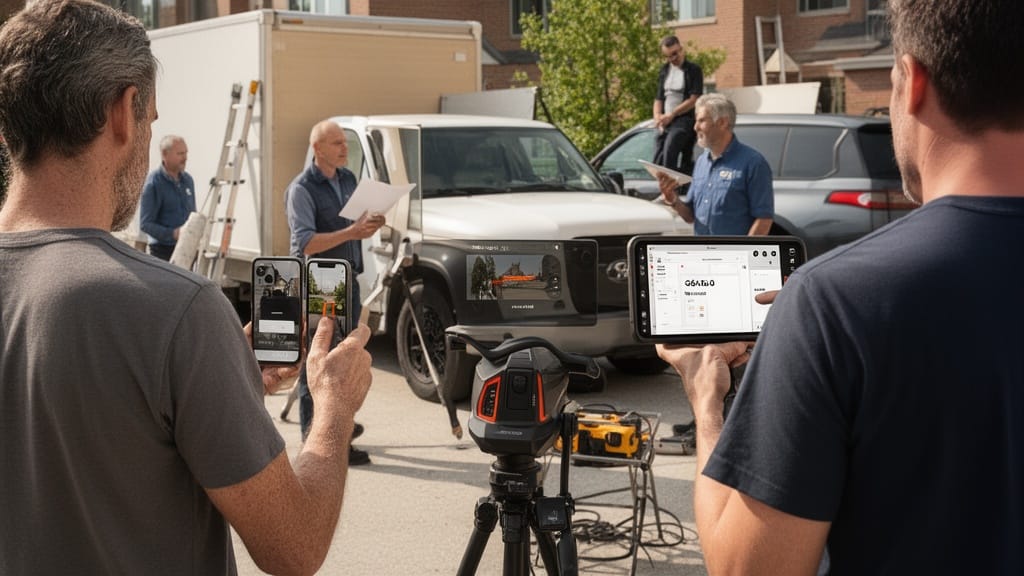
A conventional in-home survey sends an estimator to the customer's house to walk every room, count items, and hand-write an inventory. The visit alone typically runs one to two hours, before counting drive time between appointments. That model caps how many quotes a single estimator can produce in a day.
The accuracy problem is just as costly. Estimators eyeball cubic footage and item counts under time pressure, which produces under-counts and disputed final bills. The Federal Motor Carrier Safety Administration warns consumers that low-balled estimates are a leading source of moving complaints, and inaccurate surveys sit at the root of many.
Demand makes the bottleneck worse. Around 8% of Americans change residence each year, concentrated heavily in spring and summer. During peak season, a slow survey process directly limits how many jobs a company can book.
Q: How long does a traditional in-home moving estimate take?
A: A typical on-site survey runs one to two hours per home plus travel, which limits most estimators to a handful of appointments per day.
Labor scarcity compounds the issue. Material-moving occupations employ millions of workers but face persistent turnover, so every hour an estimator spends driving is an hour not spent closing business. Companies tracking these constraints often start with a broader review of the different types of moving estimates and when each fits.
How AI Video Scanning Captures a Room-by-Room Inventory
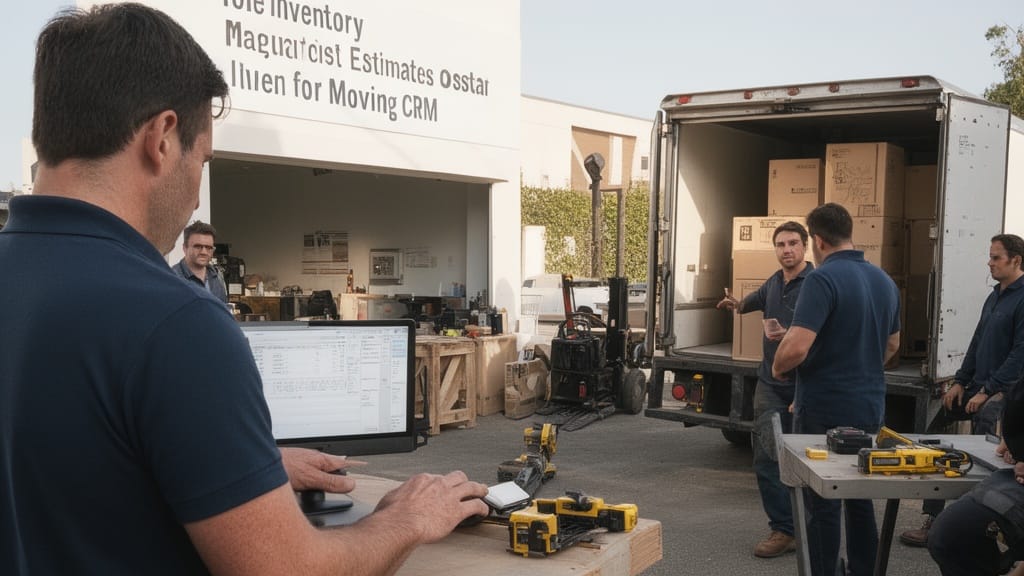
AI video scanning replaces the clipboard with a camera. The customer records a video walkthrough of their home, and a computer-vision model analyzes each frame to detect furniture, boxes, and appliances. The system then assembles an AI moving inventory automatically.
The model does three jobs in sequence. First it recognizes objects (sofa, dresser, refrigerator). Then it estimates dimensions and volume from the footage. Finally it maps every detected item to a room, producing a structured room-by-room moving estimate the office can review.
What the technology typically detects breaks down like this:
| Detection task | What the AI identifies | Output |
|---|---|---|
| Object recognition | Furniture, appliances, boxes | Itemized list per room |
| Volume estimation | Size and cubic footage | Total truck space needed |
| Room mapping | Which room each item sits in | Organized inventory tabs |
| Special items | Pianos, safes, artwork | Flagged for manual review |
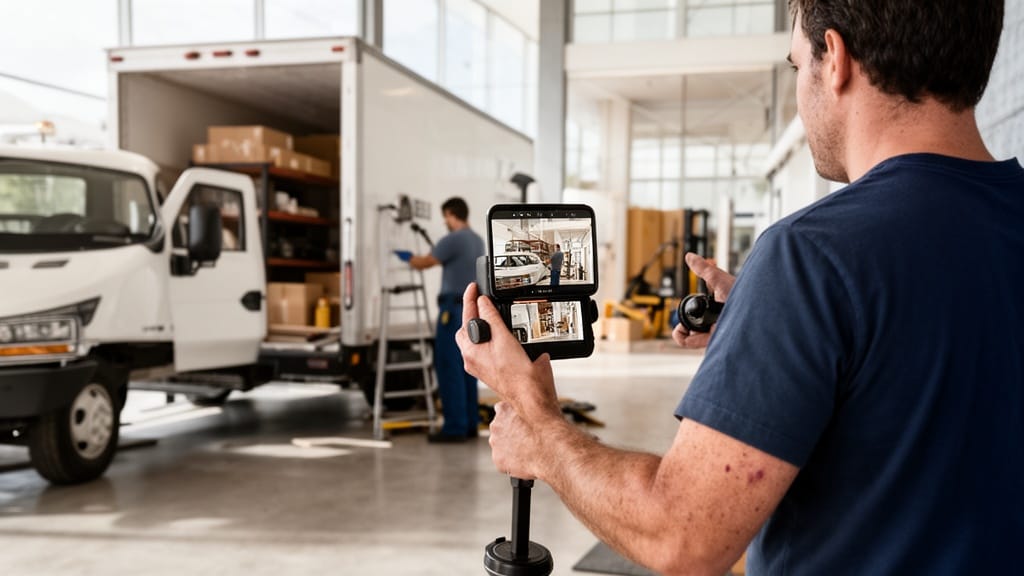
The result feeds a clean digital record rather than a handwritten sheet. Because the inventory lives in software, it syncs straight into lead and job records without re-keying. This is the core promise of modern moving estimate software: capture once, use everywhere.
Pro Tip: Treat the AI inventory as a first draft, not a final number. Build a five-minute human review step where an estimator confirms flagged high-value items and adds anything the camera missed, like attic or garage contents.
From Hours to Minutes: What Changes for Your Crews
The operational shift is dramatic. A virtual moving survey collapses a one-to-two-hour visit into a short video the customer records on their own time. Estimators stop driving and start reviewing finished inventories from a desk.
That changes the math on capacity. An estimator who once completed a handful of in-home visits per day can review many more video-based estimates in the same window. The savings show up in fuel, vehicle wear, and the labor cost buried in windshield time.
Here is how the two approaches compare directly:
| Criteria | Traditional in-home estimate | AI video scanning |
|---|---|---|
| Customer time required | 1-2 hours, scheduled visit | Few minutes, recorded anytime |
| Estimator travel | Required for every quote | None |
| Inventory format | Handwritten or manual entry | Structured digital list |
| Daily quote capacity | Limited by drive time | Substantially higher |
| After-hours quoting | Not practical | Available 24/7 |
The time-of-day advantage matters more than it looks. Customers can record a video at 10 p.m. after the kids are asleep, and the estimate is ready for review the next morning. Companies that map these gains usually fold them into a wider operational efficiency playbook.
Q: Are AI video moving estimates more accurate than in-home visits?
A: When paired with a brief human review, video scanning often matches or beats eyeball surveys because every item is captured on record and can be re-checked frame by frame.
How Customers Record a Video Walkthrough From Their Phone
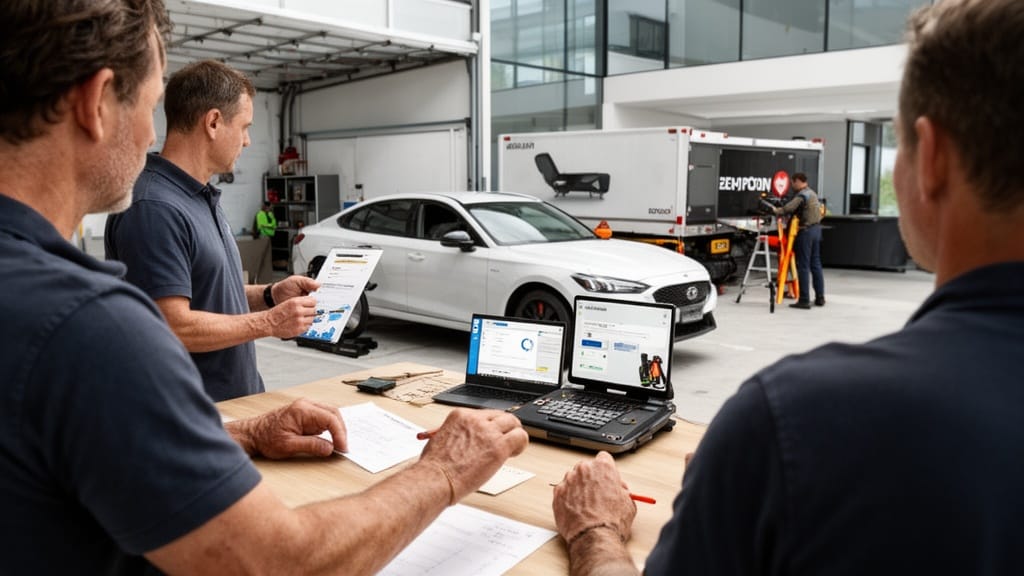
The customer-facing process is deliberately simple. Most platforms send a link by text or email; no app download is required. The customer opens it, grants camera access, and follows on-screen prompts room by room.
A reliable video walkthrough moving estimate follows a basic sequence:
- Open the secure link on a smartphone.
- Start in one room and pan slowly across every wall.
- Hold the camera steady on large furniture for a beat.
- Open closets, the garage, and storage areas.
- Submit; the AI processes the footage automatically.
Lighting and pace drive quality. Footage that is too dark or swept too fast gives the model less to work with, which is why good systems coach the customer in real time.
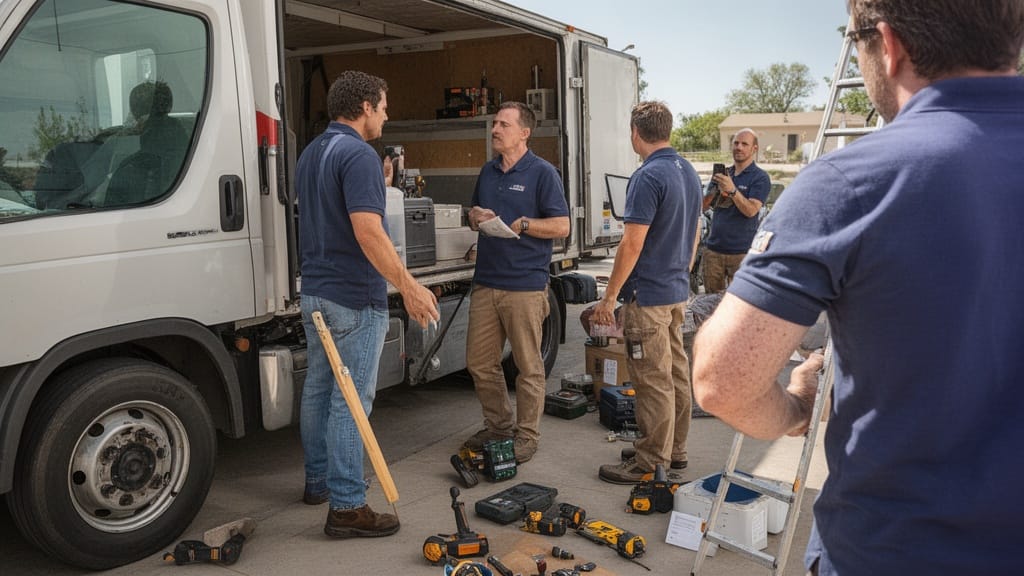
Pro Tip: Send the walkthrough link the moment a lead comes in, while intent is highest. Completion rates drop sharply the longer the gap between inquiry and the first prompt to record.
For a deeper procedural breakdown, the step-by-step guide to conducting a virtual pre-move survey walks through prompts, edge cases, and follow-up. Clear instructions are the single biggest factor in usable footage.
Turning AI Inventory Into Accurate Cost Estimates
An inventory is only useful once it becomes a price. The detected items and total volume feed directly into pricing logic: cubic footage or weight, labor hours, truck size, and distance. The software converts the room-by-room list into a structured quote.
This is where accuracy pays off twice. A precise inventory produces a defensible estimate, and a defensible estimate produces fewer disputes on moving day. The FMCSA distinguishes between binding and non-binding quotes, and a binding estimate locks the price based on the listed inventory, which only works when the list is complete.
Volume-to-cost conversion typically considers:
- Total cubic footage — drives truck size and load time.
- Item count and fragility — affects packing labor and materials.
- Special items — pianos, safes, and art flagged for manual pricing.
- Access factors — stairs, elevators, and long carries added by the estimator.
Pro Tip: Use the recorded video as evidence in your terms. If a customer later disputes an item, the timestamped footage settles it instantly, which removes the most common cause of moving-day arguments.
The consumer-protection upside is real. The FTC advises customers to insist on written estimates tied to a documented inventory, and AI video scanning produces exactly that paper trail by default. Operators looking to fine-tune margins often combine this with structured pricing strategies that protect profitability.
Deciding Whether AI Video Estimating Fits Your Company

AI video estimating is not a universal fit, but it suits most residential movers. The strongest candidates run high lead volume, serve a wide service area, or lose hours to estimator drive time. The weakest candidates handle mostly complex commercial moves that genuinely require a physical site assessment.
A short readiness check helps:
- Lead volume: Enough monthly quotes to justify automation.
- Geography: Service area wide enough that travel is a real cost.
- Customer base: Comfortable using smartphones for video.
- Process maturity: Willingness to add a human review step.
Adoption rarely means abandoning in-home visits entirely. Most operators run a hybrid: video for standard residential jobs, on-site visits reserved for large or complex moves. That blend captures the speed gains without forcing a hard cutover.
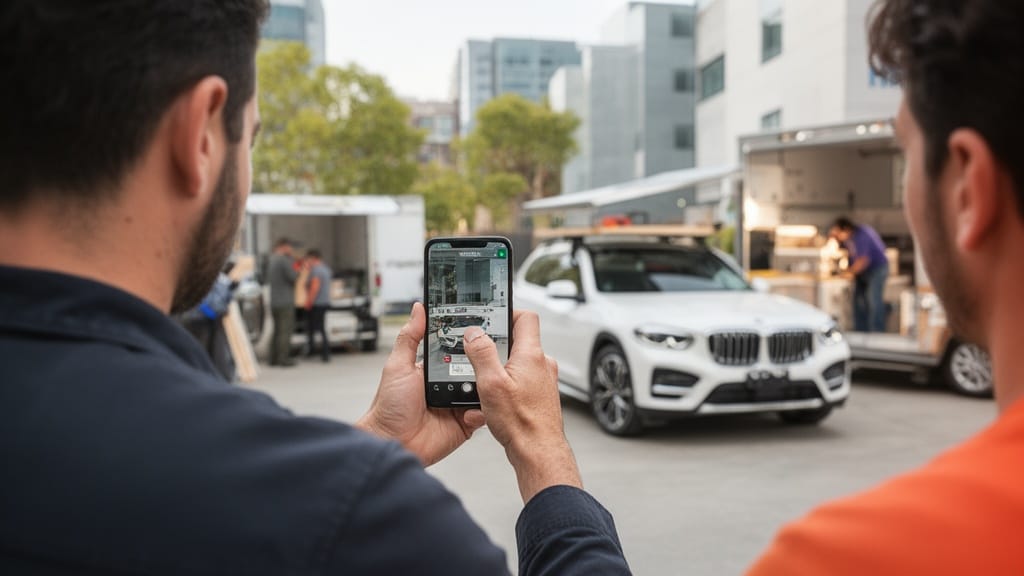
The broader trend is clear. As computer vision improves and customers grow used to recording everything by phone, the manual survey is moving from default to exception. A practical next step is reviewing how AI is reducing moving costs across the industry before committing to a workflow change.
Related Articles
- Virtual Pre-Move Survey: Complete Guide — A full breakdown of how virtual surveys work and where they outperform on-site visits.
- Types of Moving Estimates: Choosing the Best Option — Compares binding, non-binding, and not-to-exceed estimates so you pick the right model.
- How AI Is Reducing Moving Costs — Shows where automation cuts overhead across surveying, routing, and admin work.
- AI-Powered Moving Estimates: Complete Guide — A wider look at how AI is reshaping the quoting process end to end.
- Estimating Software for Movers — Explains what to look for when evaluating estimate tools and pricing engines.
Ready to see it in action?
Book a free 20-minute demo and explore how Virtual Estimate can help your business.