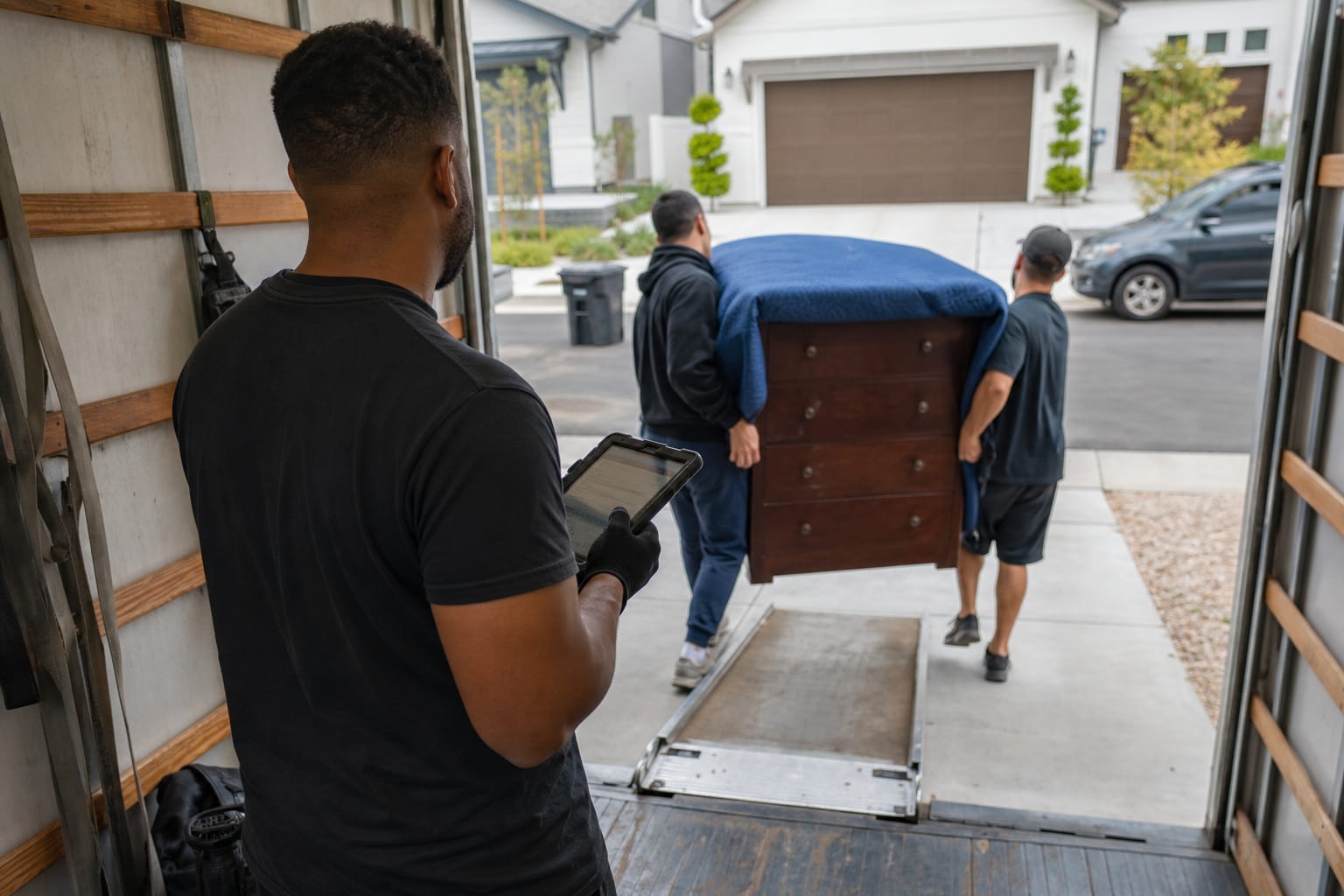

A moving CRM for small business is no longer a luxury reserved for national van lines. Independent operators running one or two trucks lose bookings every week to slow follow-up, misplaced phone numbers, and quotes that never get sent. The fix is not enterprise software with a steep learning curve. It is a simple system that captures every lead and tells you exactly who to call next. This guide breaks down what a small mover actually needs, what to ignore, and how to be fully operational in under a week.
Key Takeaways
| Point | Details |
|---|---|
| Speed wins jobs | Leads contacted within an hour are nearly 7x likelier to convert, per Harvard Business Review. |
| Missed follow-ups cost real money | Skipping just three follow-ups a week can cost a small mover six figures in lost annual revenue. |
| Start with four features | A contact database, pipeline, quote tracking, and reminders cover the vast majority of a small mover's needs. See the moving CRM features checklist. |
| Setup is fast | A focused CRM onboarding takes about five working days, not months. |
| Skip enterprise bloat | Multi-warehouse inventory and call-center dialers are unnecessary for a 1-5 truck operation. |
Why Even Small Moving Companies Lose Revenue Without a CRM
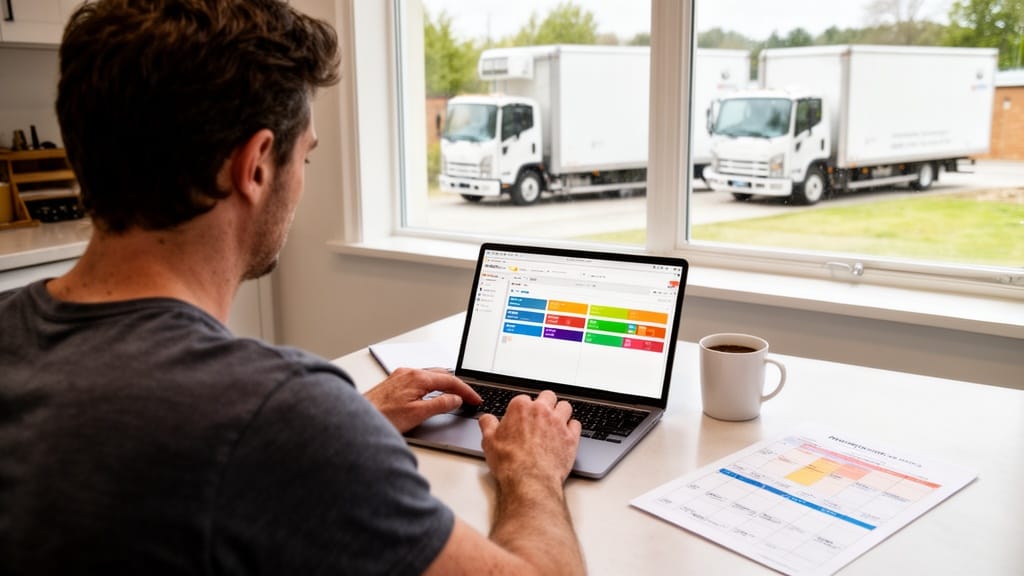
A CRM — customer relationship management software — exists to make sure no lead is forgotten. Even a two-truck company fields dozens of inquiries a month, and every unanswered quote is revenue walking to a competitor.
Speed decides who books the job. Leads contacted within an hour are nearly seven times likelier to qualify, according to Harvard Business Review. A paper list cannot tell you which caller has been waiting since breakfast; a CRM surfaces it instantly.
The math is unforgiving for movers who run on memory and sticky notes. Miss three follow-ups a week at a conservative a noticeable amount average job value — in line with typical local move pricing — and the loss is 3 × a noticeable amount × 52 = roughly a noticeable amount a year. That figure dwarfs the price of any small business CRM.
Demand stays steady, which makes leakage expensive. With about 8% of Americans relocating in a given year, inquiries keep arriving — the only question is whether your business catches them. Disciplined moving company contact management is what turns those inquiries into booked trucks.
Q: When exactly does a small moving company need a CRM?
A: Once you juggle more than 10-15 active leads at a time, or the moment a single follow-up slips through email and voicemail. For most independent movers, that point arrives with the first truck.
What a Small Moving Business Actually Needs in a CRM (and What It Doesn't)
A small moving company crm needs exactly four things: a contact database, a visible lead pipeline, quote tracking, and automated follow-up reminders. Master those and you have covered the vast majority of daily operations.
Most CRM marketing targets large enterprises, drowning movers in tools they will never open. A simple crm moving company setup wins by doing less, but doing it reliably. The matrix below is tuned for a crm for 1-5 truck moving company.
| Tier | Features | Why It Matters |
|---|---|---|
| Must Have | Contact database, lead pipeline (New → Quoted → Booked), quote tracking, follow-up reminders, mobile access | These directly capture and convert leads |
| Nice to Have | SMS/email templates, job scheduling calendar, basic reporting, online booking form | Saves time once lead volume climbs |
| Skip for Now | Multi-warehouse inventory, advanced workflow automation, custom API integrations, call-center dialer | Enterprise features that add cost and complexity without payback under five trucks |
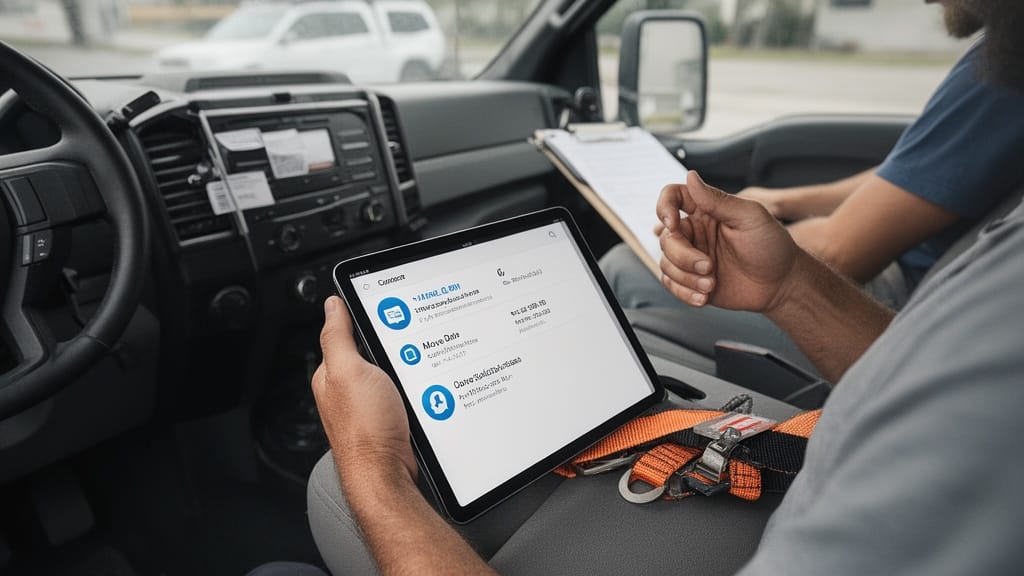
Pro Tip: Choose a CRM that stores origin address, destination address, move date, and estimated cubic feet as native fields. If you have to cram move details into a generic notes box, both follow-up and quoting slow down. For a deeper breakdown, work through a moving CRM features checklist before committing.
CRM Options Compared for Small Moving Companies
Three paths exist for crm for independent movers: a spreadsheet, a generic CRM such as HubSpot or Zoho CRM, or a purpose-built moving CRM. Each fits a different stage of growth.
Spreadsheets are free but blind — they cannot remind you to call anyone. Generic platforms are powerful yet require heavy customization to handle move dates and inventory. Moving-specific tools arrive pre-configured for the trade, which is why many owners searching for the best crm small moving business land there.
| Criteria | Spreadsheet | Generic CRM (HubSpot / Zoho) | Moving-Specific CRM |
|---|---|---|---|
| Upfront cost | Free | Low–Moderate | Low–Moderate |
| Learning curve | Low | High (needs setup) | Low (pre-built) |
| Move-specific fields | None | Manual build | Built in |
| Quote tracking | Manual | Add-on / custom | Native |
| Follow-up automation | None | Yes | Yes |
| Scales with fleet | Poor | Good | Good |
For a side-by-side look at named products, see the best moving CRM software compared in depth. The right answer depends on how many quotes you send weekly and whether you would rather configure a tool or start working immediately.
Setting Up Your Moving CRM in Under a Week: A Starter Checklist

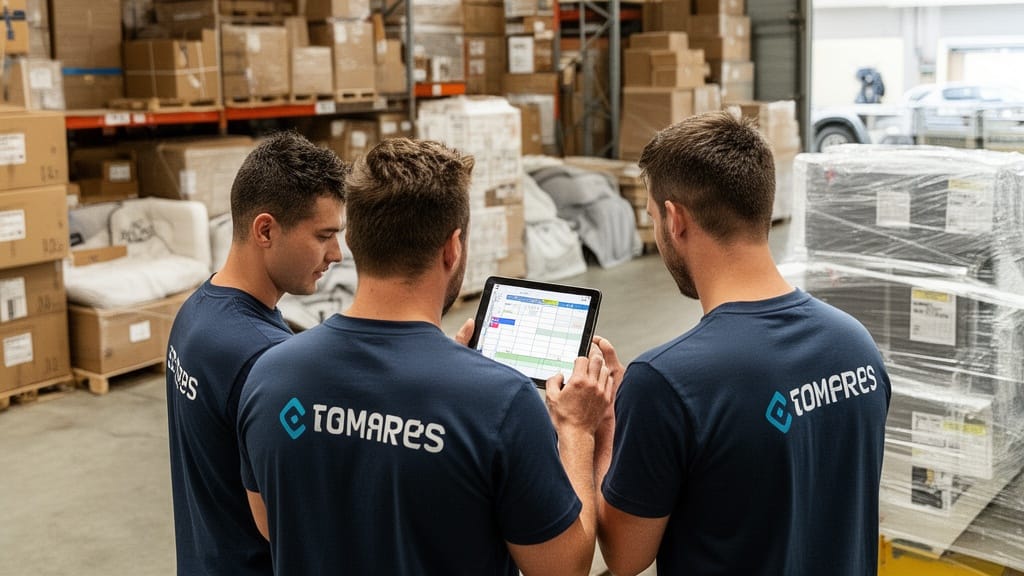
CRM onboarding intimidates owners who picture months of consultants and data migration. For an entry level moving CRM, the real timeline is about five working days. The plan below assumes a moving crm for startups run by a single owner-operator doing the setup.
| Day | Focus | Concrete Tasks |
|---|---|---|
| Day 1 | Account + fields | Create account; set up move-specific fields (origin, destination, date, size) |
| Day 2 | Import contacts | Upload active leads from the last 90 days; tag each by status |
| Day 3 | Pipeline stages | Build stages: New Lead → Quote Sent → Booked → Completed |
| Day 4 | Templates + reminders | Add two or three email/SMS templates and automatic follow-up reminders |
| Day 5 | Test + train | Run one real lead end to end; train any crew who touch the system |
Pro Tip: Import only active and recent leads on day one — the last 90 days, not five years of dead contacts. A clean, lean database is faster to search and keeps your pipeline honest from the start.
Common CRM Mistakes Small Movers Make and How to Avoid Them
The biggest risk is not picking the wrong tool — it is poor habits that make any tool useless. Operational discipline matters: roughly one in five new U.S. businesses closes within its first year, and lost leads accelerate that fate.
Avoid these five mistakes:
- Overbuilding. Buying enterprise features for a two-truck shop wastes money and slows adoption.
- Inconsistent entry. A CRM only works if every lead goes in — every time, by everyone.
- Ignoring reminders. The reminders are the point; dismissing them recreates the sticky-note problem.
- Choosing on price alone. The cheapest tool no one uses costs more than an affordable moving crm small business option the team actually adopts.
- No mobile access. Crews and owners live in the truck, not at a desk.
Budget realistically rather than chasing the lowest sticker price. Reviewing affordable CRM pricing for small moving businesses against your weekly lead volume keeps the decision grounded in revenue, not guesswork.
How a CRM Pays for Itself: Small Moving Company ROI Scenarios
A moving CRM for small business earns back its cost the moment it recovers a booking you would otherwise have lost. CRM adoption is associated with up to a 29% increase in sales, and for movers the lever is faster, more consistent follow-up.
Recall the six-figure leakage from missed follow-ups described earlier. Closing even a fraction of that gap turns lead management from a cost center into a profit driver. Strong pipeline visibility means you always know which quote is one phone call away from becoming a booked job.

Q: What is a CRM, and what does one look like for a moving company?
A: A CRM is software that stores every customer and lead in one database and tracks their status. For a mover, that means a card per lead showing the move date, addresses, estimated size, and a status badge like "Quote Sent 2 hours ago."
For a worked example with numbers, the revenue-growth case study and the guide to what movers CRM software does and why your business needs it both show how tracking booking rate exposes where revenue leaks. Measure your booking rate before and after — that single metric usually justifies the spend.
Pro Tip: Track booking rate (jobs booked ÷ quotes sent) weekly inside the CRM from day one. Owners who watch this number tend to catch a slow-follow-up problem within the first month — long before it shows up in the bank balance.
Scaling Up: How Your CRM Evolves as Your Fleet and Team Grow

A CRM chosen well at one truck should still fit at ten. As the fleet grows, the same contact database expands into light fleet management, dispatch scheduling, and role-based access for new staff.
Growth also raises the compliance stakes. Interstate movers must register with the FMCSA and pass federal safety oversight, and a CRM that stores documentation and customer records keeps audits painless. The global CRM market continues its steady double-digit growth, so expect features to deepen over time.

The goal is continuity: avoid migrating data twice. Pick a platform whose higher tiers add scheduling, reporting, and automation as you need them. A CRM platform built for moving companies tends to scale more gracefully than a repurposed generic tool, because the move-specific data model is already in place.
Related Articles
- Best Moving CRM Software: An In-Depth Comparison Guide — Compare named moving CRM platforms feature by feature before you buy.
- Moving CRM Features: The Essential Checklist for Buyers — A practical checklist of the capabilities that matter most for movers.
- Moving CRM Pricing Guide: What to Budget and What to Expect — Understand realistic pricing tiers and how to match them to lead volume.
- CRM for Moving Companies: Streamline Operations — See how a moving CRM ties leads, quotes, and scheduling together.
Ready to see it in action?
Book a free 20-minute demo and explore how Virtual Estimate can help your business.