

Businesses that consistently grow revenue share one trait: they treat client relationships as a managed asset, not a byproduct of good service. Client relationship management — the deliberate process of tracking, nurturing, and optimizing every client interaction — drives measurable gains in retention, referrals, and lifetime value. According to Nucleus Research, every dollar invested in CRM technology returns an average of $8.71. For service businesses like moving companies, where repeat customers and word-of-mouth referrals fuel growth, a structured approach to managing client relationships is no longer optional. This article defines client relationship management, breaks down its core principles and system types, and provides a practical framework for implementation in 2026.

| Point | Details |
|---|---|
| CRM ROI | Every $1 invested in CRM returns $8.71 on average (Nucleus Research) |
| Market Size | The global CRM market is projected to exceed $157 billion by 2030 |
| Retention Effect | A 5% increase in client retention boosts profits by 25–95% |
| SMB Advantage | CRM benefits for small business include faster lead conversion, reduced admin overhead, and higher repeat booking rates |
| Field Service Resource | CRM for moving companies shows how field service businesses apply these principles operationally |
What Is Client Relationship Management?
Client relationship management is the strategy, process, and technology a business uses to manage every interaction with current and prospective clients — from initial inquiry through post-job follow-up and long-term retention. It encompasses data collection, communication tracking, pipeline management, and service coordination within a unified system.
The CRM definition extends beyond software. It is a business philosophy — one that places client data at the center of every operational decision. A customer relationship management system makes this philosophy executable at scale: centralizing contact records, job history, communication logs, and follow-up tasks so no opportunity falls through the cracks. For a broader view of how CRM fits into overall business operations, management software for business covers the full technology selection framework.
Understanding what is a CRM tool also means recognizing its scope. Modern platforms do far more than store contacts — they automate follow-up sequences, score lead quality, track pipeline stages, and generate revenue forecasts. For a moving company managing 50 active leads per week, a customer relationship management system is the operational backbone that separates scalable growth from constant firefighting.
Roles and Responsibilities of a Client Relationship Manager
A client relationship manager is responsible for maintaining the quality and continuity of client interactions across every lifecycle stage. In a moving or field service business, this role blends sales, operations, and customer success — ensuring booked jobs translate into satisfied clients who rebook and refer.

Core responsibilities include:
- Qualifying inbound leads and routing them through a defined sales CRM pipeline
- Managing pre-job communication: confirmations, logistics updates, and expectation-setting
- Documenting client preferences and special requirements for field crews
- Following up post-job to capture reviews, address concerns, and identify rebook opportunities
- Tracking client lifetime value and flagging high-value accounts for priority service treatment
Pro Tip: Build a post-job follow-up sequence directly into your CRM pipeline with a 3-day, 7-day, and 30-day touchpoint. The 30-day message — a simple check-in asking whether everything settled in well — generates disproportionately high referral and rebook rates relative to the minimal effort required.
In smaller service businesses, a single operations manager often handles these tasks. In larger firms, dedicated relationship managers focus exclusively on client communication management, freeing field staff to concentrate entirely on delivery quality.
The 4 Core Principles of Client Relationship Management
The most effective CRM strategies are built on four foundational principles. These apply equally whether the business operates a $500K local moving operation or a multi-market relocation enterprise.
1. Centralized Data
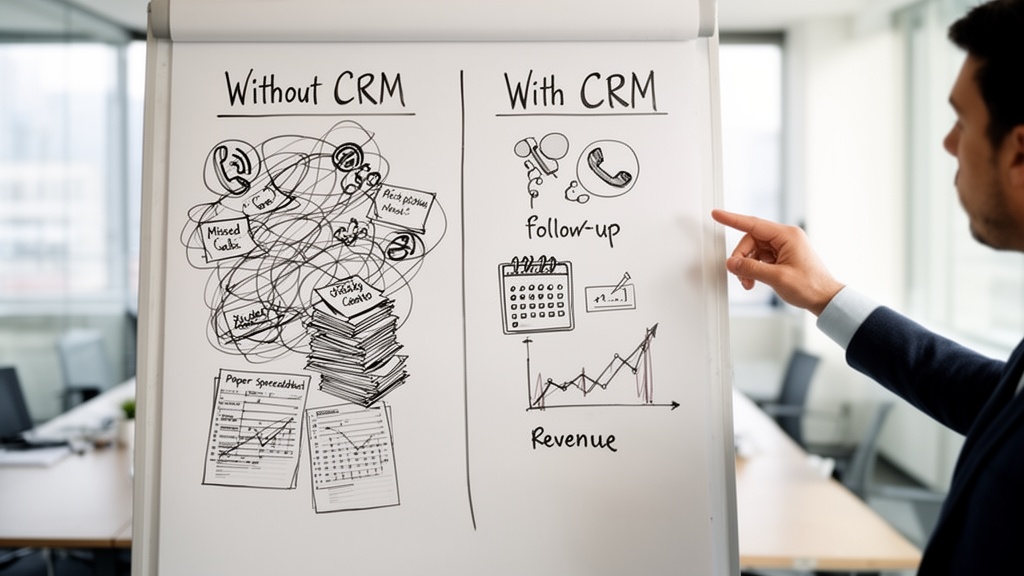
Every client interaction — calls, emails, estimates, job notes — is recorded in one accessible system. Scattered data across spreadsheets, texts, and email threads is the leading source of missed follow-ups and service errors in field service operations.
2. Proactive Communication
Effective client management best practices prioritize outreach before problems arise. Confirming job details 48 hours in advance measurably reduces day-of cancellations and client anxiety, two of the highest-cost service failures in the moving industry.
3. Consistent Follow-Up
The majority of leads are lost not to competitors but to inaction. A structured follow-up cadence — built into the CRM pipeline management workflow — prevents qualified prospects from going cold between initial contact and booking confirmation.
4. Continuous Feedback Loops
Client lifecycle management requires ongoing input. Post-job surveys, review requests, and net promoter score (NPS) tracking create the data needed to improve service delivery and identify at-risk client relationships before they churn.
Virtual Estimate can help: Virtual Estimate's CRM platform centralizes client data, automates follow-up sequences, and tracks every job from inquiry to invoice — purpose-built for moving and field service companies. Learn more →
Four Types of Customer Relationship Management Systems
Understanding what are CRM tools at a category level helps businesses choose the right system for their scale and workflow. The four primary types each serve a different operational need:
| CRM Type | Primary Function | Best For |
|---|---|---|
| Operational CRM | Automates sales, marketing, and service workflows | High-volume service businesses with repetitive pipelines |
| Analytical CRM | Analyzes client data to identify patterns and forecast revenue | Data-mature businesses focused on predictive insights |
| Collaborative CRM | Shares client information across departments and locations | Multi-location or multi-department operations |
| Strategic CRM | Focuses on long-term relationship health and high-value client retention | Enterprise accounts with complex, multi-year client relationships |
For most moving companies and field service businesses, operational CRM is the highest-priority starting point — automating the repetitive tasks (estimate follow-ups, appointment reminders, invoice delivery) that consume hours of manual effort each week. As the business scales, analytical and collaborative capabilities deliver increasing returns.
Pro Tip: When evaluating CRM software examples for a field service context, prioritize mobile access above all other features. Crew leads and dispatchers who can view and update client records from a mobile device eliminate a significant source of communication breakdown between the office and the field — often the single largest driver of service complaints.
CRM with Examples: Real-World Applications Across Industries
The abstract principles of client relationship management become concrete when applied to specific industry contexts. Here is how different service businesses deploy CRM tools in daily operations.

Moving Companies
A residential moving company uses a sales CRM to capture web form inquiries, auto-send estimate templates, and track follow-up status across 50+ active leads per week. When a job is booked, the system triggers a pre-move communication sequence — confirmation email, crew assignment notification, and a 48-hour logistics reminder. Post-move, the CRM sends a review request and flags the client for a 60-day rebook outreach. For operational specifics, see how delivering excellent customer experience in field service operations translates client data into measurable service quality improvements.
HVAC and Home Services
Field service CRM software routes inbound service requests, tracks technician availability, and maintains equipment service history per client property. Technicians access full client records on mobile devices before each appointment — arriving with complete context rather than starting from zero.
Professional Services
Law firms and accounting practices use collaborative CRM to share matter history across partners, track billable engagement milestones, and automate renewal communications at contract end dates — converting one-time engagements into multi-year client relationships.
Across all three contexts, the common denominator is structured data replacing manual memory — reducing service errors and creating consistent client experiences that scale without adding headcount. A CRM platform built for moving companies applies these same principles with workflows designed specifically for job-based service delivery.
How to Build a Client Relationship Management Strategy
A CRM strategy is not a software purchase — it is a set of defined processes that software then supports. Building one effectively follows a six-step sequence:
- Map the client lifecycle: Define every stage from first inquiry to repeat booking. Identify where clients are currently lost or delayed in your existing workflow.
- Assign ownership: Every pipeline stage needs a responsible team member or an automated trigger — ambiguity is where follow-ups die.
- Define communication standards: Set response time targets (e.g., all inbound leads contacted within 4 hours), follow-up cadences, and preferred outreach channels.
- Select software: Match the tool to current workflow complexity. Overbuilding at the start is as harmful as underinvesting.
- Migrate and clean data: Import existing client records, eliminate duplicates, and establish data entry standards before go-live.
- Measure and iterate: Track pipeline conversion rates, average response times, and customer retention CRM metrics quarterly. Adjust workflows based on data, not intuition.
Pro Tip: Run a 30-day CRM audit after implementation. Pull every lead that entered the pipeline in the previous month and trace its outcome. Leads that stalled consistently at the same pipeline stage reveal a process gap — not a software limitation — and point to the exact workflow that needs redesign.
For moving companies specifically, CRM for moving companies provides a field-service implementation guide covering crew communication, job scheduling, and post-move follow-up workflows in detail.
Top CRM Tools for Managing Client Relationships in 2026
The CRM software market includes solutions for every business size and vertical. The most widely deployed crm software examples include:
| Platform | Best For | Starting Price (2026) |
|---|---|---|
| Salesforce | Enterprise sales and service teams | From $25/user/month |
| HubSpot CRM | SMBs needing a free entry-level CRM | Free tier; paid from $20/user/month |
| Zoho CRM | Budget-conscious small businesses | From $14/user/month |
| ServiceTitan | Field service and trades businesses | Custom pricing |
| Virtual Estimate | Moving and relocation companies | Contact for pricing |
For moving companies and field service operators, generic CRM platforms often require significant customization to handle job scheduling, crew dispatch, and estimate management workflows. The VirtualEstimate CRM platform integrates client communication management, crm pipeline management, and job operations in a single interface built specifically for the moving industry — eliminating the overhead of stitching together multiple disconnected tools.
General-purpose platforms deliver strong baseline functionality, but purpose-built field service crm software delivers faster time-to-value for service businesses with job-specific workflows and crew-facing operational requirements. To explore which solution fits your operation, contact our team for a tailored consultation.
Related Articles
- Management Software for Business: How to Choose in 2026 — A complete framework for evaluating and selecting the right management platform for your service business.
- CRM for Moving Companies: Streamline Operations 2026 — How moving companies specifically implement CRM to reduce manual work and increase client retention.
- Customer Experience Excellence in Moving Services — Practical strategies for converting client data into consistently excellent service delivery outcomes.
- Buy Moving Leads in 2026: Best Providers & Pricing — How to source qualified leads that feed directly into your CRM pipeline.
- Digital Marketing Strategies for Moving Companies — Generate the inbound volume that makes client relationship management worth the investment.
Ready to see it in action?
Book a free 20-minute demo and explore how Virtual Estimate can help your business.