

The US moving industry processes over 31 million household relocations annually, yet most operators lack a structured marketing system to capture consistent revenue year-round. Moving service marketing is fundamentally different from generic service promotion — it intersects FMCSA compliance constraints, extreme seasonal volatility, and a customer psychology rooted in distrust, since people are handing over everything they own to strangers. The digital marketing strategies for moving companies that produce results in 2026 combine local search dominance, paid acquisition, and automated follow-up into one cohesive system. This guide delivers all eight steps in sequence, with specific benchmarks and tactics at every stage.

Key Takeaways
| Point | Details |
|---|---|
| Marketing Budget Benchmark | Allocate 5–12% of gross revenue to marketing; companies growing 20%+ YoY invest at the high end |
| Top Free Channel | 78% of moving customers search locally — Google Business Profile is the highest-ROI free marketing asset available |
| SMS vs. Email | SMS achieves 98% open rates vs. 20% for email; compliant SMS follow-up converts moving leads 3x faster than email sequences |
| Seasonal Timing | May through August accounts for roughly 70% of annual moving volume — launch campaigns 60+ days before peak season |
| Compliance Risk | FMCSA advertising violations carry fines up to $10,000 per incident — every ad must accurately reflect estimate type. Review FMCSA guidelines → |
Step 1 – Audit Your Current Marketing Baseline
Before spending a dollar on new campaigns, establish where leads currently come from and what each costs. A marketing audit takes 2–3 hours and prevents thousands in wasted ad spend by confirming what is already working.
Pull 12 months of data across these six dimensions:
- Lead source breakdown: Direct calls, Google organic, paid ads, referrals, lead aggregators
- Cost per lead by channel: Total spend ÷ attributed leads for each source
- Lead-to-book conversion rate: Percentage of inquiries that become confirmed moves
- Average job value: Revenue per completed move, segmented by service type
- Seasonal distribution: Which months generate volume vs. drought periods
- Online reputation score: Average star rating, review velocity (new reviews per month), and response rate
Most moving companies discover that 60–70% of booked jobs trace back to just 1–2 channels. The audit confirms which to double down on and which to cut before the next planning cycle.
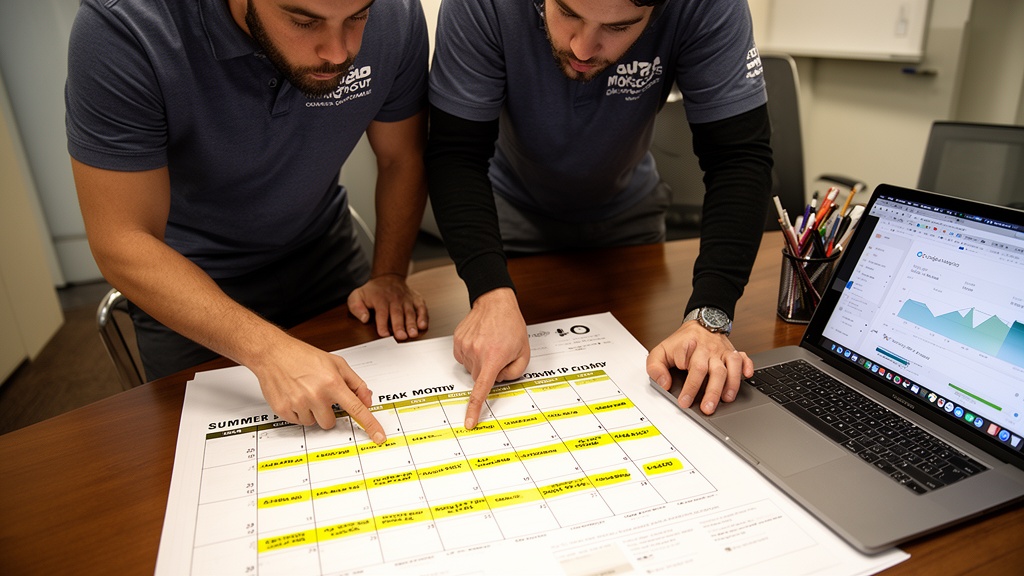
Pro Tip: Export your Google Business Profile Insights for the past 90 days. If "driving directions" requests spike in January–February, customers are researching early for spring moves — that window is your cheapest paid traffic opportunity before summer competition drives CPCs up by 40–60%.
Step 2 – Define Your Target Customer Segments
Generic marketing for moving companies targets "anyone who needs to move." Profitable marketing targets specific segments with different willingness-to-pay and decision criteria. Residential movers, corporate relocation clients, and specialty movers (pianos, art, seniors) require entirely different messages and channels.
The three highest-value segments for most regional movers:
- Long-distance homeowners (50+ miles) — higher ticket values ($2,000–$8,000+), book 3–6 weeks in advance, prioritize reliability and insurance coverage
- Corporate/HR relocation coordinators — repeat volume, negotiated rates, relationship-driven sales cycle with 30–90 day decision timelines
- Urban apartment dwellers — high frequency, price-sensitive, heavily influenced by online reviews and response speed
Build a one-page profile for each segment: demographics, decision timeline, primary objections, and preferred search terms. This profile drives every downstream marketing decision from ad copy to website headline hierarchy.
Moving company branding becomes significantly more effective once segments are defined. A brand speaking to corporate HR departments uses different visuals, language, and proof points than one targeting first-time homebuyers in suburban markets.
Step 3 – Build a High-Converting Moving Company Website
A moving company website has one job: convert visitors into quote requests within 90 seconds. The average visitor decides to stay or leave in under 8 seconds, which means homepage structure, load speed, and trust signals must be engineered precisely.
Essential Website Conversion Elements
| Element | Standard | Why It Matters |
|---|---|---|
| Page load speed | Under 2.5 seconds | Google Core Web Vitals; 1-second delay reduces conversions by 7% |
| Mobile responsiveness | Full mobile UX | 68% of moving searches happen on mobile devices |
| Quote CTA above fold | Visible without scrolling | Reduces bounce rate by up to 30% |
| Trust badges | FMCSA number, AMSA membership, BBB | Addresses top trust objection upfront |
| Google review widget | Live-synced, minimum 4.5 stars | Social proof at the decision moment |
| Service area pages | City + state landing pages | Critical for local SEO and geo-targeted ads |
Review your moving company pricing strategies presentation carefully — transparent pricing pages convert better than "call for a quote" dead-ends, which lose 35% of visitors immediately.
Pro Tip: Add a live chat widget with an instant quote trigger. Moving companies using real-time chat on their quote pages report 25–40% higher form completion rates — visitors want answers now, not an email response arriving tomorrow.
The Virtual Estimate AI-powered moving estimate platform embeds directly into moving company websites, enabling customers to complete a full virtual survey and receive a binding estimate without a sales call — eliminating the single biggest friction point in the moving company quote process.
Virtual Estimate can help: Moving companies using Virtual Estimate AI's embedded estimate tool reduce lead-to-quote time from 48 hours to under 15 minutes, directly increasing conversion rates from website traffic. Learn more →
Step 4 – Master Local SEO to Dominate Your Market
Movers SEO is the highest-leverage long-term channel in moving service marketing. A first-page Google ranking generates leads for years without ongoing ad spend — and the local moving market is winnable because most competitors under-invest in technical and content optimization.
The complete SEO guide for moving companies covers technical implementation in depth, but these five priorities drive 80% of ranking results:
- Google Business Profile optimization — Complete every field, post weekly updates, respond to every review within 24 hours, upload geotagged photos of trucks and crew
- Location-specific landing pages — Create a unique page for each city or neighborhood served, targeting "[city] moving company" keyword variations
- Review velocity — Maintain 4+ new reviews per month minimum; Google's local ranking algorithm weights recency heavily in the ranking signal
- Local citations — Consistent NAP (Name, Address, Phone) listings across Yelp, Angi, HomeAdvisor, and the top 40 local directories
- Moving company content marketing — Packing guides, moving checklists, and cost calculators rank for long-tail keywords and build topical authority in your service area
Moving company online presence in Google's local pack (the map results) drives 46% of all clicks for local service searches. Owning that real estate requires consistent GBP signals maintained over 6–12 months — the companies that start now hold the advantage entering 2027.
Step 5 – Launch Paid Ads That Generate Moving Leads
Moving company Google Ads deliver immediate lead flow but require precise setup to avoid burning budget on unqualified traffic. The average cost per click for moving-related terms ranges from $8 to $35 depending on market and season — making campaign structure and negative keyword management critical to profitability.
Google Ads Campaign Structure for Movers
| Campaign Type | Best Use Case | Avg. Cost | Conversion Rate |
|---|---|---|---|
| Local Services Ads (LSAs) | Trust-building + warm leads | $30–90 per lead | 12–18% |
| Search – Exact Match | High-intent "movers near me" | $15–35 CPC | 8–14% |
| Search – Phrase Match | Broader intent capture | $10–25 CPC | 4–8% |
| Display Remarketing | Re-engaging site visitors | $0.50–2.00 CPC | 1–3% |
| Performance Max | Automated multi-channel | Variable | 5–10% |
Start with Local Services Ads and Exact Match search before expanding to other formats. LSAs display a "Google Guaranteed" badge that directly addresses the trust barrier inherent in moving — LSA click-through rates run 2–3x higher than standard text ads for local service businesses.
Moving leads generation strategy built on paid ads requires a $3,000–5,000/month minimum ad budget in competitive markets to generate statistically meaningful optimization data. Below that threshold, split-test results are inconclusive and budget decisions become guesswork.
A moving affiliate program supplements paid acquisition effectively — partnering with real estate agents, apartment complexes, and property managers who refer clients in exchange for a per-move commission (typically 3–8% of job value). This channel carries zero upfront cost and benefits from the partner's existing customer trust relationship.
Step 6 – Use Social Media and Content to Build Trust
The moving industry carries a fundamental trust deficit. Customers read an average of 10.2 reviews before booking a service provider, and 85% say they trust online reviews as much as personal recommendations. Social media and content marketing are the tools that build this trust at scale before the first call.
Content formats that produce results for moving companies:
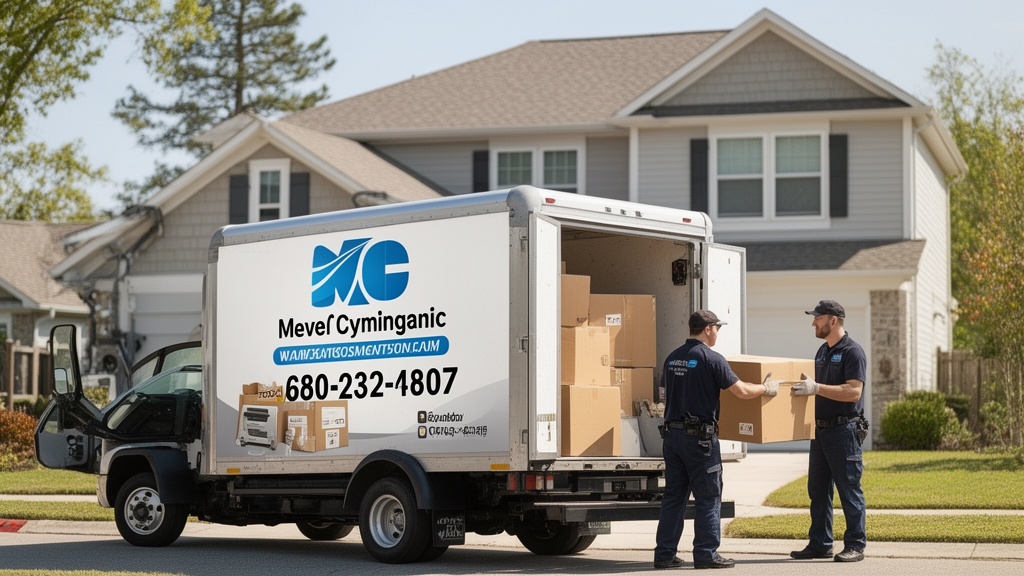
- Before/after move documentation — Organized loads, careful furniture wrapping, and clean truck interiors photographed on-site answer "will they handle my belongings carefully?" with visual proof
- Crew introduction videos — 15–30 second clips introducing crew members by name; anonymity breeds distrust, familiarity builds it
- Local neighborhood guides — "Best Neighborhoods in [City] for Families 2026" content ranks in search and positions the company as a genuine local authority
- Transparent cost walkthrough videos — Explaining exactly how moves are priced; transparency converts better than opacity every time
For customer experience in moving services, social proof and content consistency signal professionalism before the first call is made. Companies with active social profiles documenting real moves close 15–20% more leads than those with dormant or absent profiles.
Moving company reputation management requires a formal operational process: request a review from every completed job via automated SMS or email within 2 hours of job completion, respond to every negative review within 4 hours with a solution-focused reply, and flag fraudulent reviews through Google's review management portal immediately upon detection.
Step 7 – Automate Follow-Up With SMS and Email
Speed-to-lead is the single strongest predictor of moving lead conversion. Companies that respond to leads within 5 minutes are 100x more likely to connect than those waiting 30 minutes. Manual follow-up at this speed is operationally impossible at scale — automation is not optional, it is structural.
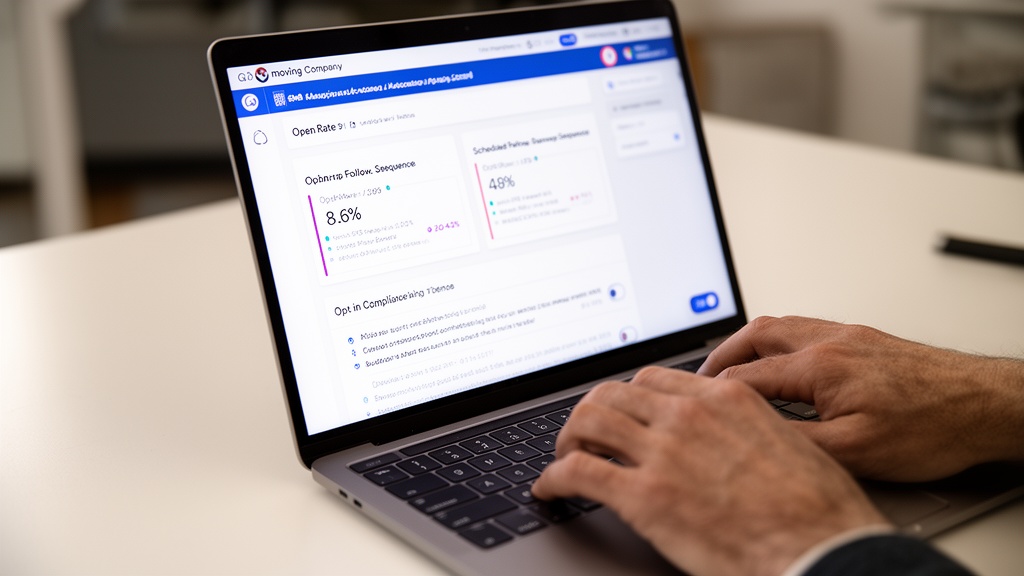
Compliant SMS Follow-Up Sequence for Moving Leads
SMS compliance for movers is governed by the Telephone Consumer Protection Act (TCPA). Every SMS program must include explicit opt-in consent, a clear opt-out mechanism (reply STOP), and documented consent records retained for a minimum of 4 years. Recent sms compliance news today signals that the FCC has tightened requirements around lead generator consent chains — purchasing leads and texting them without direct, first-party consent carries significant class-action liability exposure in 2026.
A compliant 5-step follow-up sequence:
- Immediate (0–5 min): Confirmation text with specialist callback promise and opt-out instructions
- Day 1 (no contact): Value-add message linking to moving checklist or cost guide
- Day 3: Social proof message with link to recent verified reviews
- Day 7: Move-date availability message creating urgency without false scarcity
- Day 14: Final follow-up with a service upgrade offer or referral incentive
The moving company CRM for automating lead follow-up from Virtual Estimate AI manages this entire sequence, including opt-in tracking and TCPA compliance documentation — eliminating the administrative overhead of manual follow-up across dozens of active leads.
AI agents that automate moving company marketing and follow-up workflows can further compress response time and personalize communication at scale, handling initial qualification before human handoff at the booking stage.
Pro Tip: Build a "win-back" SMS sequence for leads that went cold after 30 days. Moving timelines shift constantly — a customer who didn't book in March may be ready in June. A single re-engagement message costs pennies and reactivates 5–8% of dormant leads with no additional acquisition spend.
Step 8 – Track KPIs and Optimize Your Funnel
Moving business growth tactics become predictable only when the funnel is instrumented end-to-end — from first click to completed move and post-job review. Marketing without measurement is structured guessing.
Moving Company Marketing KPI Dashboard
| KPI | Formula | Target Benchmark |
|---|---|---|
| Cost Per Lead (CPL) | Total ad spend ÷ total leads | $40–80 (varies by market) |
| Lead-to-Quote Rate | Quotes sent ÷ leads received | 60–75% |
| Quote-to-Book Rate | Jobs booked ÷ quotes sent | 25–40% |
| Cost Per Acquisition (CPA) | Total marketing spend ÷ jobs booked | $150–300 |
| Return on Ad Spend (ROAS) | Revenue from ads ÷ ad spend | 4:1 minimum |
| Review Velocity | New reviews per month | 4+ per month |
| SMS Opt-in Rate | Opted-in leads ÷ total leads | 65–80% |
Track these in a weekly dashboard reviewed by decision-makers, not monthly. The moving company marketing and operations solutions platform from Virtual Estimate AI includes built-in marketing attribution reporting that connects ad spend directly to completed jobs — eliminating the manual spreadsheet reconciliation that most operators rely on.
Optimize sequentially: fix the lowest-converting funnel stage first. If lead-to-quote rate falls below 50%, the problem is follow-up speed or process. If quote-to-book rate falls below 20%, the problem is pricing presentation or trust signals.
Common Moving Service Marketing Mistakes to Avoid
Even well-resourced moving companies repeat these costly errors year after year. Recognizing them prevents thousands in wasted spend and recoverable lost revenue.
Mistake 1: Running ads without dedicated landing pages. Sending Google Ads traffic to a homepage wastes 40–60% of ad spend. Each campaign needs a dedicated page matching the ad's specific promise and audience.
Mistake 2: Ignoring negative reviews. A 3-star review with no response signals apathy to every future visitor who reads it. A professionally written solution-oriented response partially reclaims that trust. Respond to 100% of reviews, positive and negative.
Mistake 3: Pausing marketing during slow season. Competitors who maintain advertising in October–January capture early-planner leads at 30–50% lower CPCs. Slow season is the most cost-efficient time to invest in brand building.
Mistake 4: Buying leads without consent documentation. Third-party lead aggregators frequently sell contacts without proper TCPA-compliant consent chains. Texting these contacts exposes the company to class-action liability — enforce written direct consent before initiating any SMS outreach.
Mistake 5: No structured referral program. Word-of-mouth is the highest-converting channel for movers, yet 90% of satisfied customers never refer unless prompted. A formal moving company referral marketing program offering $50–100 per referral converts passive advocates into active, ongoing sales channels at near-zero cost.
Mistake 6: Identical creative across all markets. A campaign performing efficiently in a suburban market fails predictably in a dense urban market. Segment budgets, ad creative, and landing pages by market type and average job value.
Related Articles
- Digital Marketing Strategies for Moving Companies: A Complete Guide — Deep-dive tactics for building a full-stack digital marketing system specific to the moving industry.
- Buy Moving Leads in 2026: Best Providers & Pricing — Compare the top moving lead providers, pricing models, and what to expect in lead quality.
- CRM for Moving Companies: Streamline Operations 2026 — How a purpose-built CRM eliminates manual follow-up and connects marketing spend to booked revenue.
- Customer Experience Excellence in Moving Services — How post-move experience drives referrals, reviews, and repeat bookings that reduce acquisition costs.
Recommended Resources
Ready to see it in action?
Book a free 20-minute demo and explore how Virtual Estimate can help your business.