

A bill of lading for movers is the legal contract between a moving company and its customer that lists the goods being transported, the agreed charges, and the terms of the move. Federal law requires one on every interstate shipment — a crew cannot legally load a truck without it. This guide breaks down what the document must contain, why hand-copying estimate data causes disputes, and how AI-measured inventories now prefill the paperwork automatically.

| Point | Details |
|---|---|
| Legally required | FMCSA rules require a written bill of lading on every interstate household-goods move; loading without one violates federal regulation. |
| Contract + receipt | The BOL is both the binding service contract and the receipt for goods — it governs liability, pricing, and delivery terms. |
| Errors start upstream | Most paperwork mistakes come from re-keying estimate data by hand instead of carrying it forward from the quote. |
| One dataset | Linking the estimate to the bill of lading keeps the same inventory and pricing on every document, cutting closeout time. |
| Prefill is standard | Modern moving paperwork software generates DOT-compliant BOLs directly from a measured AI inventory. |
Why the Bill of Lading Is the Most Important Document Your Crew Carries
The bill of lading is the single document that turns a quote into an enforceable contract. It records what the crew picked up, what the customer agreed to pay, and who is liable if something breaks. Everything else — the estimate, the inventory sheet, the invoice — supports it.
The Federal Motor Carrier Safety Administration treats the BOL as mandatory. FMCSA rules require the mover to prepare a written bill of lading and hand the customer a copy before the truck leaves. Skipping it is not a paperwork shortcut; it is a violation.
For customers comparing carriers, a clean, complete BOL is a trust signal. A company that hands over a vague one-page form behaves very differently from one detailed in most reputable NYC mover guides. The document reveals how organized the whole operation is.
What a Moving Bill of Lading Must Include (and the DOT/FMCSA Rules Behind It)
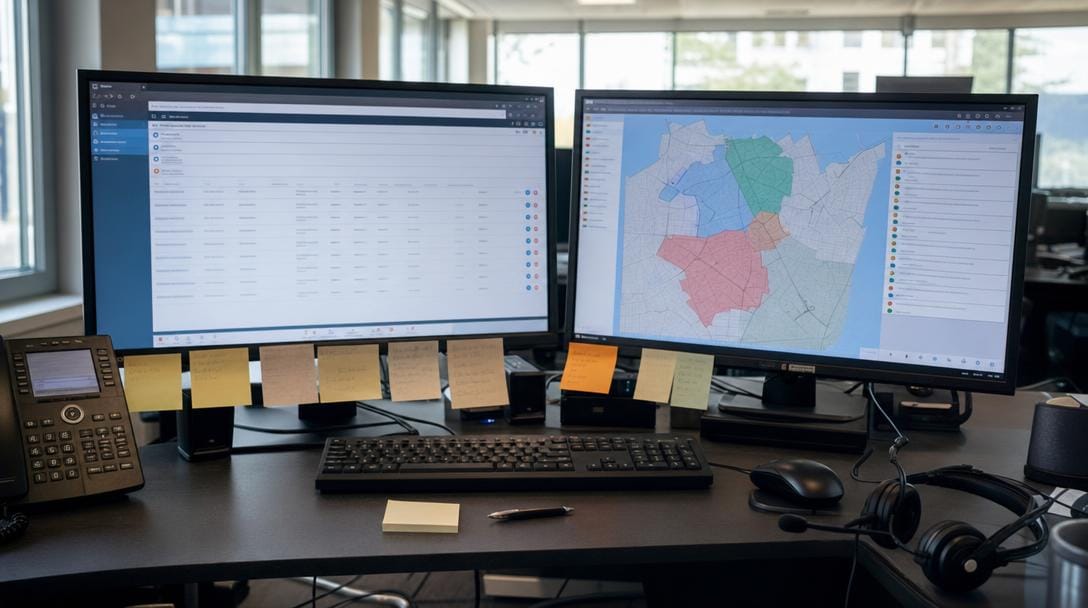
A compliant moving company bill of lading must name both parties, describe the shipment, state the charges, and spell out liability terms. Federal regulation 49 CFR 375.505 lists the specific items every household-goods BOL must carry, and skipping any of them exposes the carrier to penalties.
At minimum, the document includes:
- The mover's legal name, address, and USDOT number.
- The customer's name and both origin and destination addresses.
- Agreed pickup and delivery dates or windows.
- The form of payment and total or estimated charges.
- The valuation and liability level the customer selected.
- An itemized inventory of the goods tendered.
- Terms for filing loss or damage claims.
Q: What are the DOT bill of lading requirements for movers?
A: Under 49 CFR 375.505, the bill of lading must show the mover's USDOT number, both addresses, agreed dates, charges, the customer's valuation choice, and claim terms.

These DOT bill of lading requirements exist to protect consumers from surprise charges and undocumented damage. Before booking, a customer can confirm a carrier's authority through the FMCSA SAFER company snapshot lookup, which shows the same USDOT number that belongs on the BOL.
Where BOL Errors Come From: Re-Keying Estimate Data by Hand
Most BOL errors are not fraud — they are typos. When a salesperson quotes a job, then a dispatcher rebuilds the inventory in a second system, then a driver copies it onto a paper form, the same data gets entered three times. Each hop invites mistakes.
Re-keying breaks the chain between the estimate and the contract. An item counted at the sales stage disappears at dispatch. A price agreed on the phone doesn't match the printed total. By delivery, the paperwork and the load no longer agree, which is exactly when disputes start.
The tools a company chooses shape this risk. Purpose-built estimating software for movers carries one inventory forward, while disconnected spreadsheets force staff to retype everything.
| Workflow step | Manual re-keying | Prefilled from estimate |
|---|---|---|
| Inventory entry | Retyped 2-3 times | Entered once |
| Pricing accuracy | Drifts between docs | Identical everywhere |
| Time per closeout | 20-40 minutes | Minutes |
| Dispute risk | High | Low |
| Audit trail | Fragmented | Single record |
Pro Tip: Audit three recent jobs by laying the estimate, the BOL, and the final invoice side by side. If the item counts or totals don't match across all three, your data is being retyped somewhere — find that hop and close it.

One Source of Truth: How a Measured AI Inventory Prefills the DOT Bill of Lading
An AI-measured inventory captures the household goods once — from a video or photo survey — and reuses that same dataset on every downstream document. The estimate, the bill of lading, and the job sheet all read from one record instead of three re-typed copies.
Here's the mechanics. The survey identifies each item and its cubic footage, builds a priced estimate, and stores the itemized list. When the job is booked, that list becomes the BOL inventory automatically — no retyping. You can see how the AI estimation workflow measures and prices a job from a single walkthrough.
Q: How does an estimate turn into a bill of lading automatically?
A: The measured inventory and agreed pricing captured during the estimate are stored once, then written directly into the BOL fields at booking, so the estimate to bill of lading handoff needs no re-entry.
This estimate to bill of lading handoff is the whole point of modern BOL for moving companies. The inventory that justified the price is the same inventory printed on the legal contract.
Pro Tip: Lock the priced inventory the moment the customer accepts the quote. Any post-acceptance change should create a documented addendum, not a silent edit — that timestamped trail is your best defense in a claim.
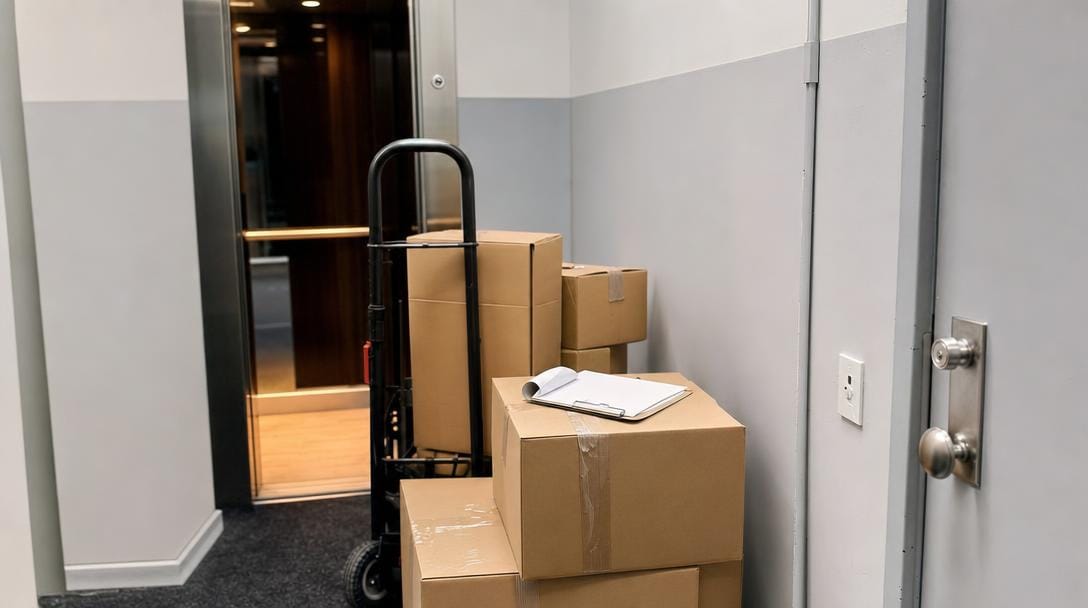
When the Estimate and the Paperwork Are the Same Data: Fewer Disputes, Faster Closeouts
When the estimate and the BOL share one dataset, the numbers can't disagree — and most billing disputes vanish before they start. Customers dispute what they don't recognize; when the contract mirrors the quote they approved, there is nothing to argue.
Faster closeouts follow. A crew that isn't hand-writing an inventory at the curb finishes paperwork in minutes. The office isn't chasing missing forms, because the BOL was generated from data that already existed.
There's a compliance benefit too. A digital, prefilled record gives you a clean audit trail if a customer files a claim — and the moving trade employs hundreds of thousands of laborers and freight movers tracked by the Bureau of Labor Statistics, an industry where documentation gaps carry real operational cost.
Pro Tip: Email the customer a copy of the bill of lading the moment it's generated, not at delivery. An early, timestamped copy sets expectations and dramatically shrinks the window for "that's not what I agreed to" conversations.
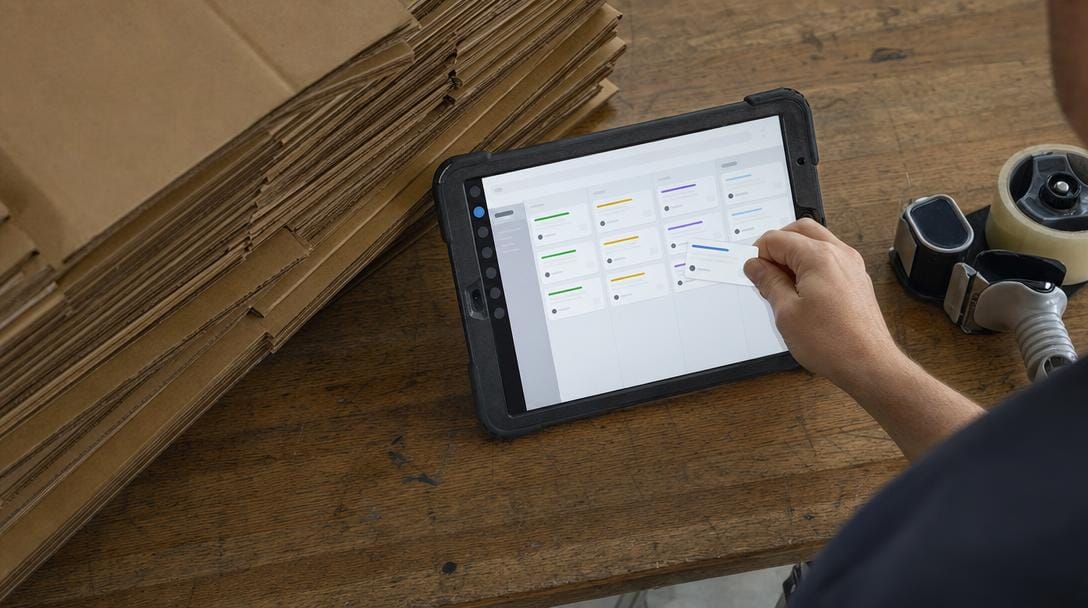
Turning the Quote Into a Contract and Job Sheet Without Retyping Anything
The endgame is a single data flow: quote, contract, and job sheet built from one measured inventory. The same rules apply whether the job is booked by moving companies in New York, NY, moving companies in Phoenix, or movers in Columbus, Ohio — federal BOL requirements don't change by market.
When the pipeline is connected, the estimate becomes the bill of lading, the bill of lading feeds the job sheet, and the job sheet feeds the invoice. A connected moving company CRM keeps client info, inventory, and documents in one record so nothing is retyped between stages.
Good moving paperwork software isn't about digitizing a form. It's about making sure the number a salesperson quoted is the number on the contract, on the truck, and on the final bill — every time, without a keyboard in between.
Related Articles
- Best Moving Companies in NYC: Top Picks & Costs — how to compare NYC movers on price, licensing, and service.
- Best Moving Companies in Columbus, OH: Top Picks & Costs — a decision framework for the Columbus market.
- How Video-Based Moving Estimates Work — quoting jobs accurately without an in-home visit.
- From AI Estimate to Auto-Calculated Payroll — how one connected data flow runs an entire job.
- CRM for Moving Companies: Streamline Operations — organizing leads, inventory, and paperwork in one system.
Ready to see it in action?
Book a free 20-minute demo and explore how Virtual Estimate can help your business.