

Local search is where moving companies win or lose market share. According to BrightLocal's Local Consumer Review Survey, 98% of consumers used the internet to find a local business in the past year — and moving is an inherently local transaction. The challenge is that seo for movers operates by fundamentally different rules than general SEO: Google Business Profile signals, review velocity, and citation consistency drive local rankings far more than backlinks or domain authority. This step-by-step guide delivers every hyperlocal tactic needed to move your company into Google's Local Pack and generate a consistent pipeline of qualified inbound leads.
| Point | Details |
|---|---|
| GBP Completeness Drives Calls | Fully optimized Google Business Profiles receive up to 70% more calls than incomplete ones — profile completeness is a direct local ranking signal per Google's guidelines |
| Review Velocity Beats Total Volume | Moving companies earning 5+ new Google reviews per month rank 40% higher in local results than those with stagnant profiles |
| NAP Consistency Across 50+ Directories | Inconsistent Name, Address, Phone across directories suppresses local rankings — audit your moving company local citations quarterly |
| Neighborhood Pages Triple Organic Traffic | Movers with 10+ individual city or neighborhood landing pages capture 3x more local organic traffic than single-page sites within 12 months |
| Mobile Speed Converts Searchers | 78% of local mobile searches lead to an offline purchase within 24 hours — instant quote tools reduce location page bounce rates by 35–45% |
Step 1: Claim and Fully Optimize Your Google Business Profile
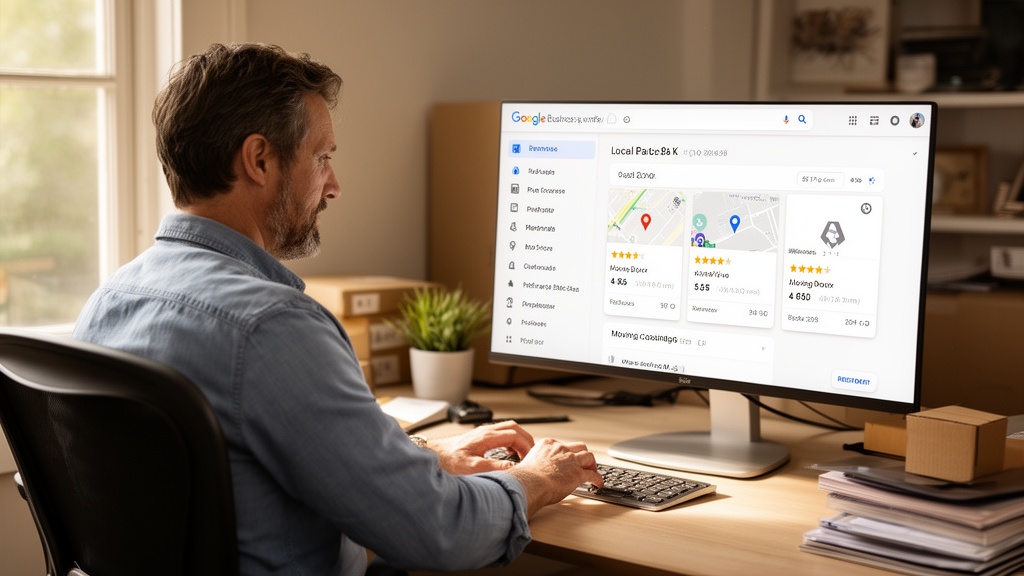
The Google Business Profile (GBP) is the foundation of moving company google maps ranking. It determines whether your business appears in the Google Local Pack — the three-result map block that captures 44% of all clicks for local moving queries. No other single asset delivers more ranking impact per hour of optimization effort.
Start by claiming and verifying your listing at business.google.com. Unverified profiles cannot appear in the Local Pack. Once verified, these profile elements carry the highest ranking weight:
- Primary business category: Select "Moving Company" as primary; add "Piano Moving Service," "Storage Facility," or "Packing Service" as secondary where applicable
- Storefront vs. service area: If operating from a commercial office, enable storefront mode. If crews dispatch from a residential address, use service-area-only mode — displaying a personal address risks listing suspension under GBP policy
- Business description: Use all 750 characters. Include your primary city, top 2–3 services, and a concrete differentiator (licensed, insured, 15+ years serving the region)
- Services panel: Add every service with individual descriptions and price ranges where possible
- Photo cadence: Upload 10+ photos at launch, then add 4–6 new photos weekly — job-site crews, equipment, completed moves, the office
Moving company google business profile optimization also extends to the Q&A section, which most movers leave empty. Pre-populate it with 8–10 frequently asked questions ("Are you licensed and insured?", "Do you provide packing materials?") and answer them yourself. These Q&As index in Google search results and reduce pre-booking friction at zero cost.
Pro Tip: Schedule a standing Monday calendar reminder to upload 2–3 new job-site photos to GBP every week. Consistent weekly uploads signal an active, legitimate business to Google's local ranking algorithm — fewer than 10% of competitors maintain this cadence, giving you a persistent edge.
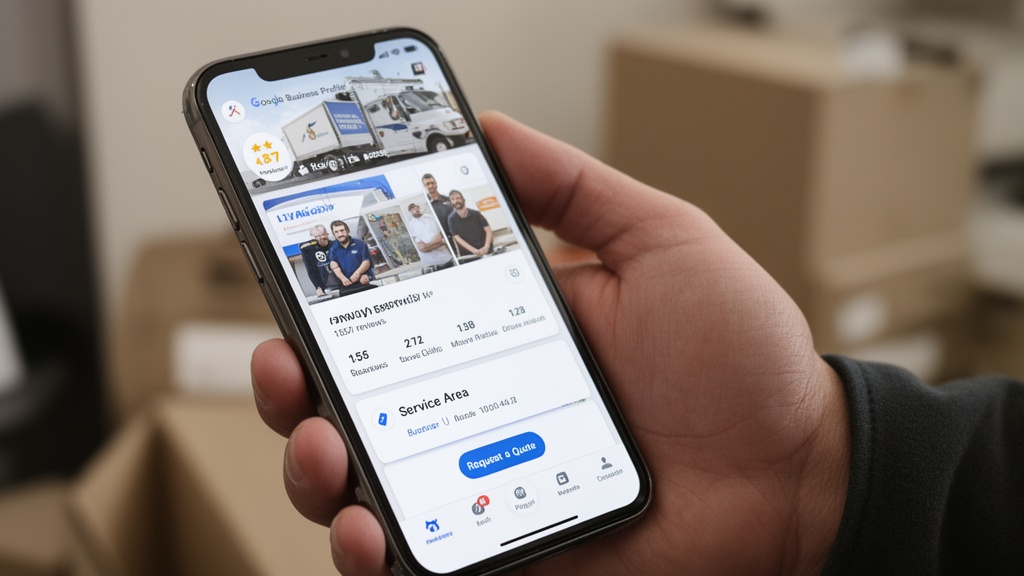
GBP posts (use the "What's New" post type) are another underused signal. Publish at least two posts per month covering seasonal promotions, new service areas, or recognitions. Posts expire after 7 days, so a bi-weekly schedule maintains continuous content freshness — a relevance signal most competitors ignore entirely.
Step 2: Target Local Moving Keywords in Your Area
Effective seo for moving companies starts with abandoning broad national terms. Keywords like "moving company" and "best movers" are dominated by aggregators and review platforms. Hyper-local keyword combinations — "[neighborhood] to [neighborhood] movers," "[city] senior movers," "piano movers [zip code]" — have lower competition, higher transactional intent, and are genuinely rankable for a local operator.
The digital marketing strategies for moving companies that deliver the fastest ROI begin with structured keyword research tied to your service geography:
- Google Search Console: Filter queries with 100+ impressions but under 5% CTR — these are active ranking opportunities with a content gap to close
- Google Autocomplete: Type "[your city] movers" and record every suggestion — each is a real, frequently-searched query
- Competitor gap analysis: Run your top local competitor's domain through Ahrefs or Semrush to identify terms they rank for that you don't target
- People Also Ask: Moving-related PAA boxes surface long-tail questions ideal for FAQ content and featured snippet targeting
Keyword Priority Matrix for Movers
| Keyword Type | Example | Est. Monthly Volume | Competition |
|---|---|---|---|
| City + Service | "Austin apartment movers" | 500–2,000 | Medium |
| Neighborhood Pair | "Upper West Side to Brooklyn movers" | 100–400 | Low |
| Near Me | "movers near me cheap" | 10,000+ | High (Local Pack only) |
| Cost-Intent Long-Tail | "how much to move 2BR apartment Chicago" | 200–800 | Low |
| Specialty Service | "piano movers Denver" | 100–300 | Low |
Keywords for moving company strategy must align with content format. Moving company near me seo queries are won in the Local Pack via GBP signals. City + service queries are won through location landing pages. Cost-intent queries convert best on pricing pages and blog content. Matching content type to keyword intent is what separates movers that rank from those that spend without results.
Step 3: Build Consistent NAP Citations Across Directories
NAP consistency — identical Name, Address, and Phone across every online directory — is one of the three core pillars of moving business local search ranking. Google cross-references your business information across hundreds of external sources. Even minor inconsistencies like "St." versus "Street" erode the trust signal that citations provide.
Build moving company directory listings in two priority tiers. Tier 1 covers universal directories every mover must claim: Google Business Profile, Apple Maps (via Apple Business Connect), Bing Places for Business, Yelp, Facebook Business Page, Better Business Bureau, and YellowPages.com.
Tier 2 covers industry-specific sources that carry extra weight for movers: Angi, HomeAdvisor, Thumbtack, Nextdoor Business, Houzz, local Chamber of Commerce directory, and state moving association member directories.
BrightLocal's research consistently shows that businesses with accurate citations across 50+ sources rank measurably higher in local results. For mover online visibility at scale, citation management tools like Yext, BrightLocal, or Whitespark automate distribution to hundreds of directories — typically $300–$500 per year versus 20–30 hours of manual staff entry. Conduct a citation audit every quarter: data aggregators like Foursquare and Neustar push business information to hundreds of secondary directories, and an address change can propagate outdated data for months without active correction.
Virtual Estimate can help: Virtual Estimate streamlines the customer journey from first online quote to job completion — freeing your team to focus on the local marketing activities that build long-term lead flow. Learn more →
Step 4: Generate and Respond to Google Reviews Strategically
Reviews function simultaneously as a local ranking signal and a conversion tool. Google explicitly confirms that high-quality, positive reviews improve business visibility in local search. For movers, moving company review velocity strategy — the rate at which new reviews accumulate — carries more algorithmic weight than the aggregate total.
Benchmark review profiles for Local Pack visibility: 15–25 reviews in small markets, 40–80 reviews in mid-sized cities, and 200+ reviews in major metros. The target velocity is 5–8 new reviews per month, sustained consistently — not achieved in periodic bursts.
A systematic post-move review workflow:
- Send an automated SMS request 24–48 hours after job completion — this window has the highest open and response rates
- Include a direct Google review link, shortened for SMS readability
- Follow up with a single email at day 5 if no review was submitted
- Brief crew leaders to mention reviews at job completion: "If we did a great job today, a Google review helps our small business more than anything"
- Respond to every review — positive and negative — within 24 hours
Improving customer experience on your moving website and throughout the physical service journey directly improves average star ratings. A 4.2-star average with 300 reviews frequently loses the Local Pack to a 4.7-star average with 80 reviews — quality outweighs volume below a certain threshold. Never offer incentives in exchange for reviews; Google's policies prohibit it and violations risk permanent listing suspension.
Step 5: Create Neighborhood and City Landing Pages
Neighborhood landing pages for movers are the most consistently underutilized tactic in local SEO. A single "Service Areas" page listing 20 cities provides almost no individual ranking value for any specific location. Google requires a dedicated, content-rich URL for each target area to rank your business there independently.
Each high-performing mover location page includes:
- H1: "[City/Neighborhood] Moving Company | [Brand Name]"
- Location-specific intro: 100–150 words mentioning local landmarks, typical housing stock, and common parking challenges
- Services section: Exact services offered in that area with pricing ranges
- Embedded Google Map: Centered on the target service area
- Local testimonials: 2–3 Google review excerpts from customers in that specific area
- FAQ section: 3–5 questions specific to moving in that location
- Quote CTA with instant estimator: Online quote tools that improve location page engagement reduce bounce rates by 35–45%, signaling strong user engagement to Google's local algorithm
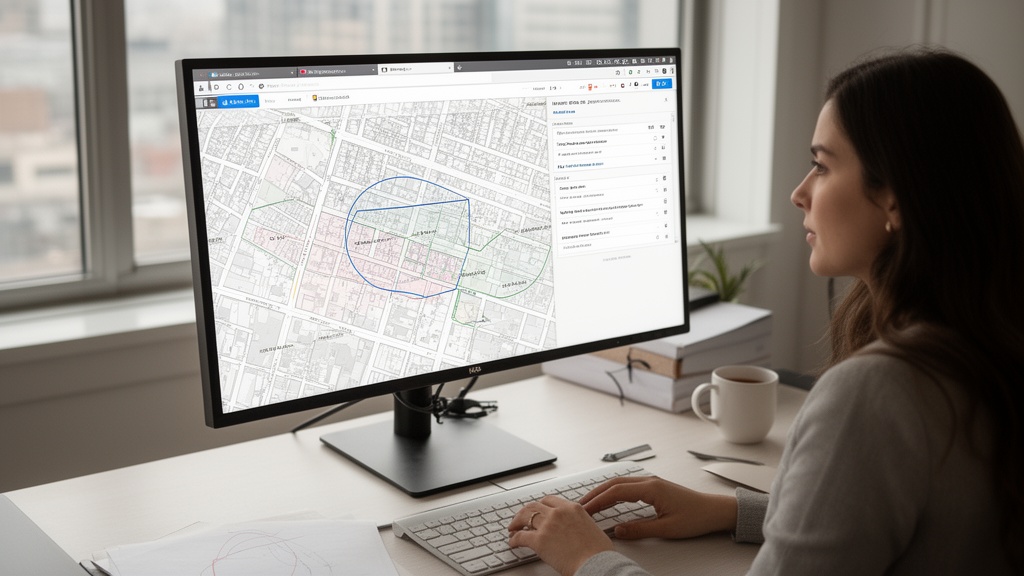
Moving companies with 20+ location pages typically generate 3x more organic local traffic within 12 months compared to single-page competitors. The moving estimate solutions embedded on these pages also reduce the gap between search intent and booking — a visitor who receives an instant quote converts significantly more often than one waiting for a callback.
Avoid the duplicate content trap: build a template, but customize at least 60% of the content per location. Pages with only the city name swapped are flagged as thin content and excluded from rankings entirely.
Pro Tip: In Google Search Console, filter impressions by city or neighborhood name terms and identify locations with 100+ monthly impressions but under 3% CTR. These are your highest-priority pages to build first — Google is already showing your site there, meaning a proper landing page unlocks immediate traffic gains without waiting months for new rankings.
Step 6: Optimize for Mobile and Voice Search
Mobile and voice search are not emerging trends for moving companies — they are the dominant channels. Google's research confirms that 78% of location-based mobile searches result in an offline purchase within 24 hours. For movers, that translates directly to phone calls and submitted quote requests.
Mover website local optimization for mobile covers three technical priorities:
- Page speed: Use Google's free PageSpeed Insights. Target a mobile score above 90. The highest-impact fixes are compressing images above 100KB, eliminating render-blocking JavaScript, and upgrading hosting. Each additional second of mobile load time reduces conversions by approximately 12%
- Click-to-call: Every page needs a tap-to-call phone number visible above the fold. This single element increases mobile phone conversions by 25–30% in industry testing
- Tap targets: CTA buttons, navigation links, and quote form fields must be at least 48x48 CSS pixels to be usable without zooming
Voice search optimization for moving company near me seo targets conversational queries: "Hey Google, find movers near me," "Who are the best local movers in [city]," "How much does it cost to hire movers in [neighborhood]." These queries favor businesses ranking in the Local Pack and sites with structured FAQ content. Add concise FAQ sections to your homepage and primary service pages, and apply FAQ schema markup to increase the probability of appearing in Featured Snippets and voice search results.
Pro Tip: Run your top 3 location pages through Google's PageSpeed Insights on the mobile tab and fix every issue listed under "Opportunities" before building new pages. A slow location page actively suppresses its own ranking potential — mobile page speed is a direct Google ranking factor, and the penalty compounds across every visitor who bounces.
How to Monitor Your Local SEO Progress as a Mover
Tracking mover online visibility requires a focused set of metrics, not a sprawling dashboard. Five KPIs cover everything a moving company needs to measure and act on monthly:
| KPI | Tool | Benchmark |
|---|---|---|
| GBP Search Impressions | Google Business Profile Insights | Month-over-month growth of 5%+ |
| Local Pack Position | BrightLocal Rank Tracker | Top 3 for primary city keywords |
| Organic Click-Through Rate | Google Search Console | Above 4% for local queries |
| Review Velocity | GBP Reviews Dashboard | 5–8 new reviews per month |
| GBP Phone Calls | GBP Business Calls Feature | Sustained upward monthly trend |
Establish a monthly review routine: on the first Monday of each month, check all five KPIs, upload new GBP photos, audit the top 5 citation directories for accuracy, and respond to any outstanding reviews. This 90-minute discipline prevents the gradual ranking decay that affects most movers between 6 and 18 months after their initial optimization push.

Competitor monitoring is equally important for best seo practices for movers. Track the top 3 GBP profiles in your primary market — note their review count, post frequency, and photo volume. When a competitor gains 25+ reviews in a single month or launches new location pages, respond within 30 days with equivalent effort. Local SEO in the moving industry is a continuous competitive game, not a one-time setup.
For a complete technical foundation to complement these local tactics, the complete SEO guide for moving companies covers on-page optimization, technical SEO, and link building in depth. When local rankings are still building — typically the first 3–6 months — consider supplementing with paid moving lead providers to maintain lead volume while your organic presence compounds.
Virtual Estimate helps moving companies manage the full customer lifecycle — from the moment a lead submits an online quote to job completion and post-move follow-up — so every interaction supports the local SEO signals (reviews, engagement, reputation) that drive long-term rankings.

Explore Virtual Estimate's solutions →
Related Articles
- Digital Marketing Strategies for Moving Companies: A Complete Guide — Covers the full marketing mix for movers, including paid, social, email, and SEO channels in one comprehensive resource.
- Customer Experience Excellence in Moving Services — Learn how improving the customer journey translates into better reviews, higher star ratings, and repeat bookings.
- Pricing Strategies for Moving Companies: Maximizing Profitability — Data-driven pricing frameworks that increase booking rates and average revenue per job.
- CRM for Moving Companies: Streamline Operations — How a purpose-built CRM automates review requests, follow-ups, and customer communication to support your local SEO efforts.
Recommended Resources
Ready to see it in action?
Book a free 20-minute demo and explore how Virtual Estimate can help your business.