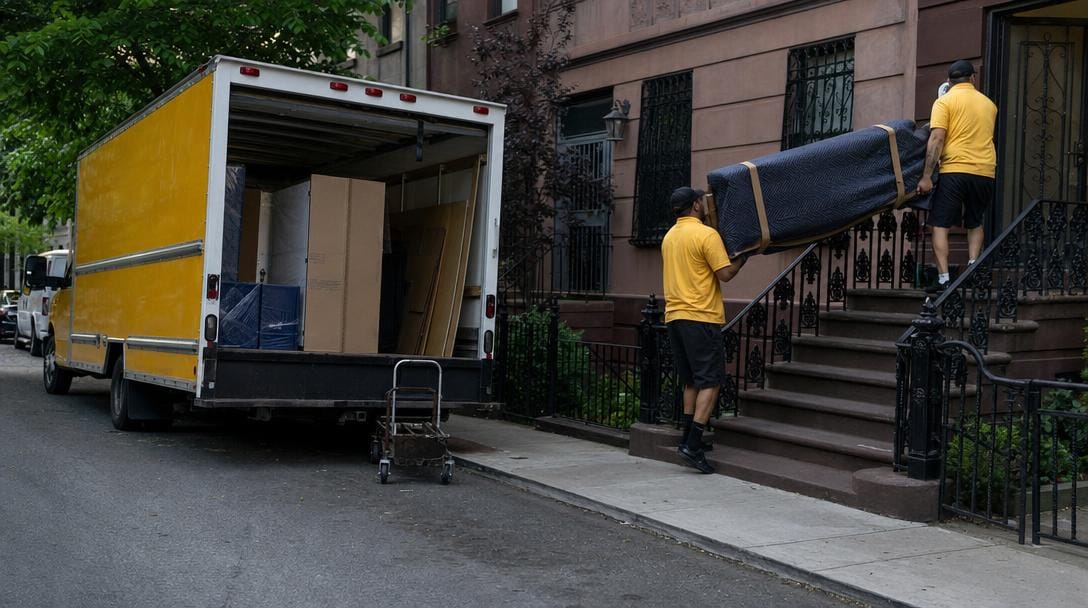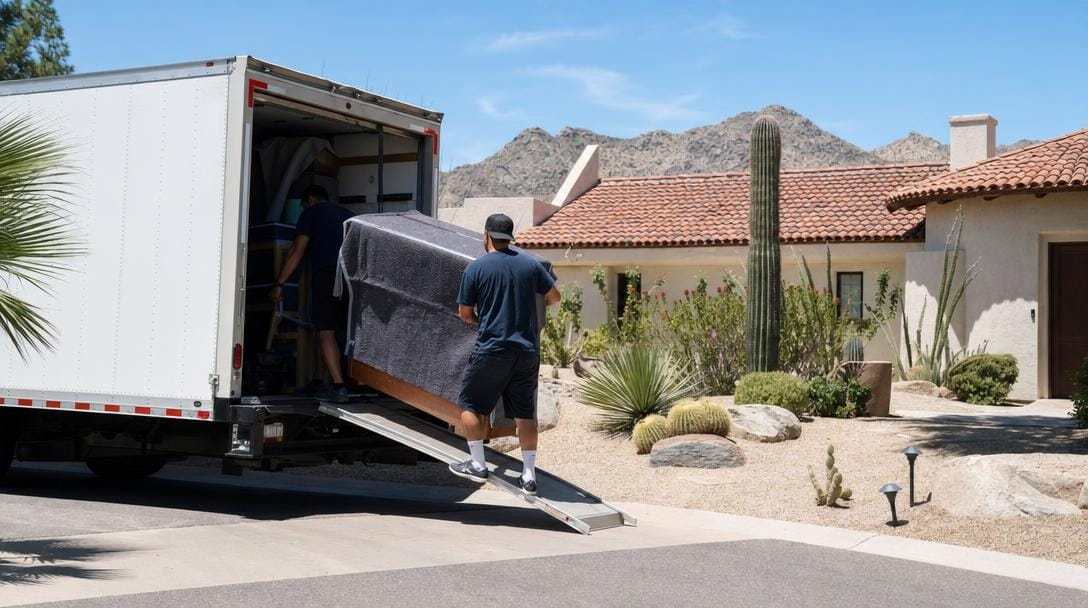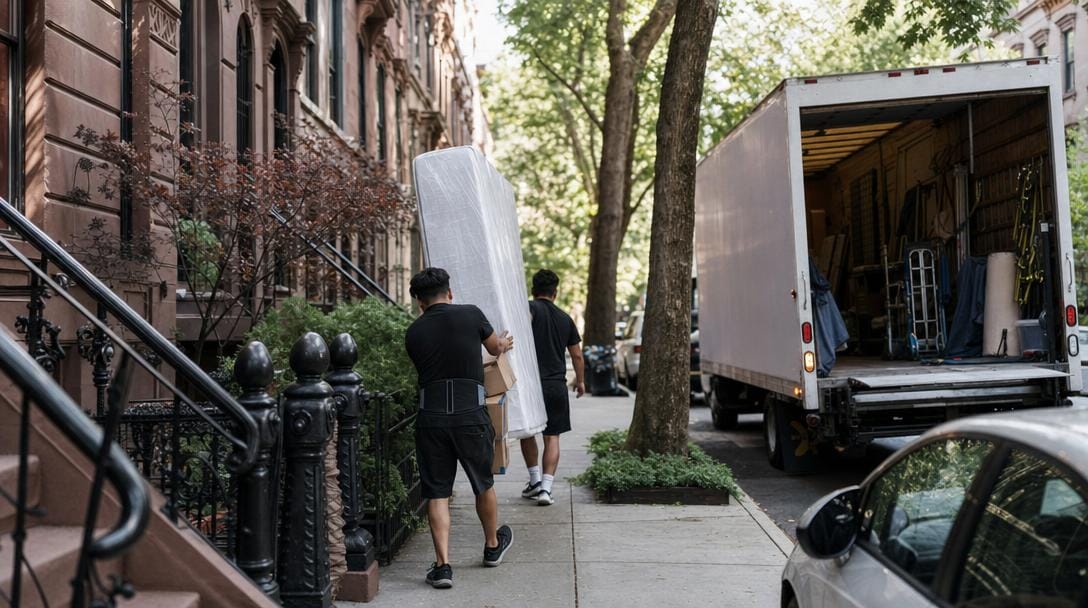

Moving costs catch most people off-guard. The national average for hiring professional movers in 2026 ranges from $880 for a small local move to over $10,000 for a cross-country relocation — and the spread is determined by factors most customers never think to ask about. Understanding how much for movers in your specific situation depends on move size, distance, service level, and timing. This guide delivers structured pricing tables by home size and service type, exposes the hidden fees that inflate final bills by 20–35%, and shows exactly how to obtain an estimate that reflects your actual move.

Key Takeaways
| Point | Details |
|---|---|
| National average cost | Local moves average $880–$2,500; long-distance averages $2,500–$8,000 depending on weight and mileage |
| Hourly labor rate | Local movers charge $100–$150/hour for a 2-person crew in 2026 |
| Hidden fees impact | Surprise charges inflate final bills by 20–35% vs. the original estimate |
| Full-service premium | Full-service packing adds $1,200–$3,000 to a typical 2-bedroom move |
| Estimate types matter | Types of moving estimates — understanding binding vs. non-binding protects against post-move invoice inflation |
Average Cost of Movers in 2026: National Overview
The American Moving and Storage Association reports that U.S. households spend an average of $1,400 on local moves and $4,300 on long-distance relocations. In 2026, inflationary pressure on fuel, labor, and insurance has pushed those baselines upward by 8–12% compared to 2024 figures. Moving company pricing in 2026 reflects tighter labor markets and increased regulatory compliance costs, particularly for interstate carriers.
Regional variation adds another layer of complexity. Moves originating in New York, California, and Massachusetts consistently run 25–40% above the national median. The Southeast and Midwest remain the most competitive markets for customers seeking bottom-of-range pricing. The table below provides 2026 national averages structured by home size and move type.
| Home Size | Local Move (under 50 miles) | Long-Distance (500+ miles) | Full-Service (packing included) |
|---|---|---|---|
| Studio | $350–$750 | $1,200–$2,500 | $1,800–$3,500 |
| 1 Bedroom | $500–$1,200 | $1,800–$3,500 | $2,500–$4,800 |
| 2 Bedrooms | $900–$2,500 | $3,000–$6,000 | $4,500–$8,500 |
| 3 Bedrooms | $1,500–$4,000 | $5,000–$10,000 | $7,000–$14,000 |
| 4+ Bedrooms | $2,500–$6,000 | $7,500–$14,000 | $10,000–$20,000 |
For operators and customers alike, understanding moving company pricing strategies clarifies how regional labor costs, fleet expenses, and overhead shape the quotes customers receive — and where negotiating room typically exists.

How Much Does It Cost for Movers to Move a 1-Bedroom?
A 1-bedroom apartment move represents the most common residential relocation in the U.S., accounting for roughly 34% of all professional moves booked annually. Moving labor cost per hour for a standard 2-person crew averages $100–$150, with most 1-bedroom local moves completing in 3–5 hours — putting the typical all-in local cost at $600–$1,000 before any add-ons.
For a full itemized breakdown by crew size and region, the guide on how much does it cost for movers to move provides granular cost data that a top-line range cannot capture.
How much do movers cost for a 1-bedroom apartment versus a 2-bedroom follows a predictable multiplier. Add approximately 50–60% to both time and base cost for the step up: a 2-bedroom local move runs $900–$2,000, and a long-distance 2-bedroom move averages $3,000–$6,500 depending on mileage and service level.
Pro Tip: Always request a 3-person crew quote alongside the standard 2-person option. The additional mover adds only $35–$50/hour but reduces total move time by 25–35%, making the all-in cost equivalent or lower on most moves exceeding 4 hours.
Key cost variables for 1-bedroom moves:
- Typical shipment weight: 1,000–1,500 lbs
- Truck requirement: 16-foot truck handles most 1BR volumes
- Estimated hours: 3–6 hours including drive time and travel
- Packing service cost if added: $200–$450 for professional packing
How Much Do Full-Service Movers Cost vs. DIY?
Full service moving company cost covers the complete package: packing, loading, transport, unloading, and unpacking. For a 2-bedroom home, this service averages $4,500–$8,500 locally and $7,000–$14,000 for interstate relocation. That represents a 60–120% premium over labor-only service — but the financial comparison requires accounting for liability and risk, not just line-item costs.

DIY alternatives include truck rental ($100–$400/day), packing materials ($150–$400), and either self-loading or day-labor hiring at $25–$45/hour per person. The critical gap is liability: consumer-rented trucks carry no cargo insurance. Most renters' or homeowners' policies exclude goods in transit unless a specific endorsement is purchased — a detail most DIY movers discover only after a claim is denied.
| Service Level | Average Cost (2BR Local) | What's Included | Liability Coverage |
|---|---|---|---|
| Labor-only movers | $900–$1,800 | Load/unload only | Basic released value (60¢/lb) |
| Full-service moving | $3,500–$6,000 | Pack, load, transport, unload | Released or full replacement value |
| DIY truck rental | $300–$900 | Truck only | None (must purchase separately) |
| Hybrid (self-pack, pro move) | $1,200–$2,800 | Load, transport, unload | Basic released value |
Packing service cost averages $35–$55 per professionally packed box. A typical 2-bedroom home requires 60–100 boxes — meaning professional packing alone can run $2,100–$5,500. The hybrid approach — customers pack, movers transport — remains the most popular middle ground for cost-conscious customers who want professional execution without the full-service premium.
Local vs. Long-Distance Moving Costs Explained
Local movers hourly rate structures differ fundamentally from long-distance pricing mechanics. Local moves — generally defined as under 50–100 miles depending on state tariff rules — are billed by the hour. Long distance moving cost estimates, by contrast, are calculated using a formula tied to shipment weight and total mileage, a pricing framework established by federal tariff regulations governing interstate carriers.
A 500-mile interstate move carrying 7,500 lbs — a typical 3-bedroom home — averages $4,800–$7,200 in 2026. That same corridor with 3,000 lbs (a standard 1-bedroom) drops to $1,800–$3,200. Interstate moving cost estimates must specify whether the quote is binding or non-binding; that distinction determines whether the final invoice can legally exceed the original figure.
Flat rate moving companies charge a fixed price regardless of actual time or weight. This model eliminates post-move billing surprises but typically carries a 15–25% premium over comparable hourly or weight-based quotes. For moves involving high-value items, fragile goods, or complex access logistics, that predictability premium is frequently the right investment.
Virtual Estimate can help: Virtual Estimate's AI-powered platform generates instant, itemized moving estimates that account for distance, home size, and service level — eliminating the guesswork that leads to hidden-fee surprises on moving day. Learn more →
Hidden Fees: What Most Moving Quotes Don't Tell You
The Federal Motor Carrier Safety Administration (FMCSA) documents that consumer complaints about moving companies most frequently cite unexpected charges as the primary grievance. In practice, final bills exceed initial estimates by 20–35% when customers fail to identify and negotiate specific surcharge line items before the move date.
Pro Tip: Before signing any moving contract, require the company to itemize all potential surcharges in writing. Legitimate movers disclose stair fees, long-carry fees, and fuel surcharges upfront. Companies that resist providing this itemization are a significant red flag — and a binding estimate remains the only contractual protection against post-move invoice inflation.
Common hidden fees and 2026 market ranges:
- Stair carry fee: $50–$150 per flight beyond the first
- Long carry fee: $75–$200 if the truck cannot park within 75 feet of the entrance
- Elevator fee: $50–$100 for buildings requiring coordinated elevator scheduling
- Fuel surcharge: 5–15% of the base rate (frequently undisclosed in initial quotes)
- Storage-in-transit: $100–$300/month if delivery falls outside the agreed window
- Shuttle fee: $200–$600 when a full-size semi cannot access the delivery address directly
- Bulky item surcharge: $50–$300 per oversized item (pianos, safes, pool tables, large gun safes)
Understanding how AI technology is helping customers avoid surprise moving fees is increasingly relevant — modern estimate platforms surface these line items before any contract is signed, not after the truck has been unloaded and the crew is expecting payment.

Factors That Affect Your Final Moving Bill
Six variables account for the majority of cost variation between moves of comparable size. Moving cost calculator tools that omit any of these six will consistently produce estimates that diverge from final invoices — sometimes substantially.
- Distance: The dominant cost driver. Doubling distance does not double cost — fuel, tolls, and driver compensation scale non-linearly with mileage.
- Shipment volume and weight: More goods increase cost directly on long-distance moves. Decluttering before the estimate appointment is the single fastest way to reduce the quoted price.
- Season: Peak season (May–September) commands 20–30% premiums. Off-peak moves in January through March run at the lower end of every pricing range.
- Day of the week: Weekend moves carry a 10–15% surcharge over midweek equivalents driven by crew demand patterns.
- Access conditions: Stairs, narrow corridors, and parking restrictions add labor time and trigger multiple surcharge categories.
- Service level: The gap between labor-only and full-service packing creates 60–120% cost variance for an identical physical move.
The average cost of hiring movers also varies significantly by metro market. The Bureau of Labor Statistics reports that moving industry wages have increased 11% over the past two years in metropolitan areas — a direct driver of hourly rate escalation in cities like New York, San Francisco, and Miami.
How to Get an Accurate Moving Estimate
The three standard estimate types — binding, non-binding, and not-to-exceed — carry distinct financial implications. A binding estimate locks the price regardless of actual weight. A non-binding estimate can increase if the shipment exceeds projected weight. A not-to-exceed estimate caps cost at the stated maximum while allowing reductions if the shipment comes in lighter. For a complete comparison of when each type is appropriate, the article on types of moving estimates covers each scenario with practical guidance.
Moving estimate online accuracy has improved substantially. AI-powered virtual surveys now produce estimates within 5–8% of final invoices for standard residential moves — a margin comparable to traditional in-home surveys, without scheduling friction or requiring a company representative to visit the property.
Steps to get a reliable moving estimate in 2026:
- Complete a room-by-room video or virtual survey — document every item being moved, including attic, garage, and storage areas.
- Request itemized quotes from at least 3 providers — price variance between comparable companies regularly exceeds 40%.
- Declare all access conditions upfront — stairs, elevator requirements, and parking restrictions directly affect the final rate.
- Confirm estimate type in writing — binding, non-binding, or not-to-exceed must be explicitly documented.
- Compare quotes on equivalent service levels — a labor-only quote cannot be directly compared to a full-service quote.
Pro Tip: A virtual moving estimate platform eliminates the scheduling friction of in-home surveys while maintaining comparable accuracy. For customers comparing multiple providers, virtual estimates reduce the time to quote from days to minutes — compressing the decision window and reducing pressure tactics from providers managing limited availability.

To get an instant AI-powered moving estimate without scheduling a home visit, virtual survey tools require only a smartphone walkthrough — typically completed in 15–20 minutes for a standard 2-bedroom home. VirtualEstimate solutions for movers standardize the estimate format across providers, enabling direct side-by-side comparisons on identical service terms.
Get Your Free Moving Estimate →
Ways to Save Money on Your Move in 2026
The cheapest way to hire movers is not simply selecting the lowest-quoted company. It is structuring the move to minimize total cost — including hidden fees, damage risk, and time lost to delivery delays. Tactical decisions made before the first quote is requested consistently deliver the largest savings.
Proven cost-reduction strategies for 2026:
- Shift to off-peak timing: January through March is consistently 15–25% cheaper than peak-season rates. Tuesday through Thursday moves save an additional 10–15% over weekend pricing.
- Reduce shipment volume before the survey: Every item removed reduces quoted weight on long-distance moves. Eliminating 15–20% of household goods saves $300–$800 on a typical 500-mile interstate move.
- Pack yourself: Self-packing on a 2-bedroom move saves $1,200–$2,500 compared to full-service rates.
- Request binding estimates: Non-binding quotes carry upside risk. A binding estimate is the contractual guarantee that eliminates post-move invoice surprises.
- Use a moving cost calculator early: Online tools benchmark quotes before you engage providers — identifying outliers in either direction.
- Negotiate fuel surcharges: In competitive markets, fuel surcharges of 5–10% are negotiable on off-peak and midweek moves. Ask directly — most customers never do.
The overlap between cost savings and estimate accuracy is significant. Customers who obtain multiple standardized virtual estimates before committing to a provider consistently pay 15–22% less than those who accept the first quote received.
Related Articles
- How Much Does It Cost for Movers to Move? 2026 Guide — A detailed itemized breakdown of moving costs by crew size, service tier, and region.
- Pricing Strategies for Moving Companies: Maximizing Profitability — How movers structure their rates and what that means for the quotes customers receive.
- Buy Moving Leads in 2026: Best Providers & Pricing — How moving companies acquire customers and what customer acquisition costs mean for market pricing.
- CRM for Moving Companies: Streamline Operations 2026 — How technology platforms reduce operational overhead and help movers deliver more competitive pricing.
Recommended Resources
Ready to see it in action?
Book a free 20-minute demo and explore how Virtual Estimate can help your business.