

Contractor quoting errors—flawed takeoffs, forgotten line items, and rushed numbers—are the quietest threat to construction profit. One miscalculated bid can flip a job from a healthy margin into a loss. The fastest way to cut these errors is to pair a disciplined takeoff review process with faster, technology-assisted estimating that removes manual math.
Most contractors lose money not on the jobs they price too high, but on the ones they price too low. This article compares the two dominant estimating methods—traditional on-site and virtual—and shows where each one leaks profit. You'll get a side-by-side breakdown, real cost data, and a framework for choosing the right approach per job.

Where Contractor Quoting Errors Come From
Most contractor bid mistakes trace back to four sources: incomplete scope, inaccurate measurements, outdated material pricing, and rushed turnaround. Each one compounds the next. A missed line item in the takeoff becomes a labor shortfall on site, which becomes a change-order fight at billing.
Q: What is the most common contractor quoting error?
A: Underestimating labor hours and material quantities during takeoff is the single largest cause of blown budgets, because manual measurement leaves the most room for human mistakes.
Underbidding construction jobs rarely happens on purpose. It happens when an estimator works from memory, copies an old bid, or measures under time pressure. A high takeoff error rate—the frequency of measurement and quantity mistakes—translates directly into thin or negative margins.
This is the mechanism behind profit margin erosion contracting firms feel but struggle to name. Net margins in construction routinely sit in the low single digits, so even a small quantity mistake wipes out the profit on an otherwise well-run job. Material prices only make it harder, swinging sharply from quarter to quarter, as tracked by the BLS Producer Price Index.
Pro Tip: Track your win/loss reasons for 90 days. If you lose bids you should have won and win bids you later regret, your estimating process—not your pricing strategy—is the problem.
Traditional On-Site Estimating: Strengths and Blind Spots

A traditional on-site estimate means a person visits the job, measures physically, notes conditions, and prices the work by hand or in a spreadsheet. Its strength is real: eyes on the actual site catch access issues, hidden damage, and site-specific complications a photo might hide.
The blind spots are just as real. On-site estimating is slow, hard to schedule, and heavily dependent on one estimator's judgment on one day.
The main weaknesses:
- Speed. A single site visit plus write-up can consume a full afternoon, and turnaround often stretches to 24 hours or more.
- Consistency. Two estimators measuring the same space produce two different numbers.
- Scale. Every job requires travel, so more leads mean more windshield time, not more revenue.
- Fatigue error. The fifth estimate of the day is measurably worse than the first.
The U.S. put over $2 trillion of construction in place last year, according to Census Bureau construction spending data—a volume of work that makes slow, one-at-a-time estimating a genuine growth ceiling.
Virtual Estimating: Speed Without the Guesswork

A virtual estimate replaces the site visit with a remote walkthrough. The customer records a short video of the space, and software analyzes it to generate an inventory and cost estimate automatically. The estimator reviews and adjusts rather than measuring from scratch.
The efficiency gain is dramatic. What takes 2+ hours with a manual survey now takes roughly 10 minutes with AI-powered scanning, because the measurement and inventory steps are automated instead of hand-recorded.
Q: Does virtual estimating reduce quoting errors?
A: Yes—by automating measurement and applying the same pricing logic to every job, virtual estimating removes the two biggest sources of manual takeoff error: inconsistent measurement and forgotten line items.
Reliability matters when a tool becomes your quoting engine. Platforms built for this purpose, like Virtual Estimate, run on a 99.9% uptime commitment so estimates never stall waiting on the software. To see how remote quoting fits an existing workflow, review the estimating software built for field-service teams.
Pro Tip: Send the walkthrough link the moment a lead comes in. Faster quote delivery correlates strongly with booking rate, and virtual estimating lets you respond in hours instead of days.
Virtual Estimate can help: Turn a customer video into a precise, itemized quote in about 10 minutes—removing the manual takeoff step where most costly errors begin. Learn more →
Side-by-Side: Virtual vs. Traditional Estimates
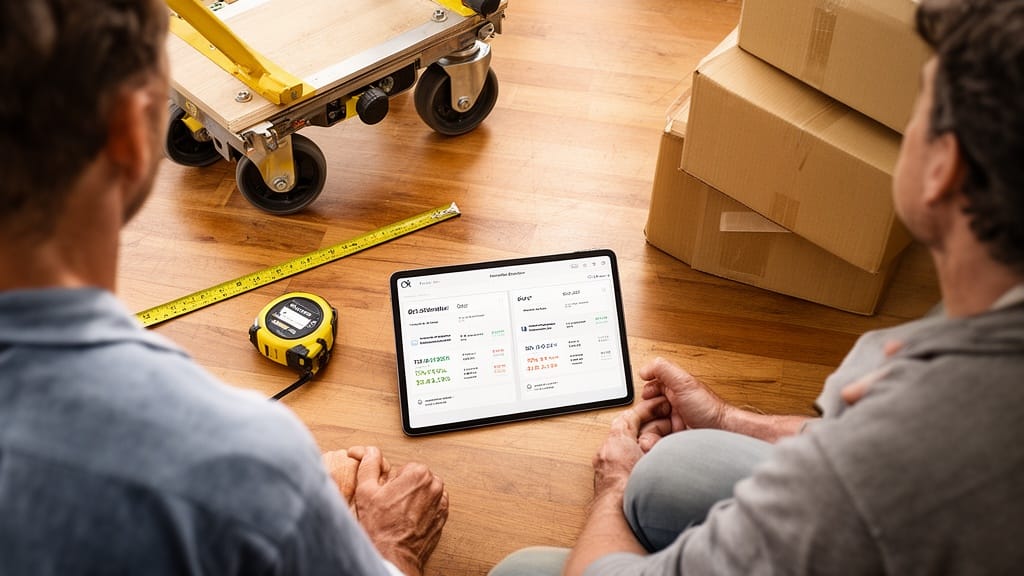
The two methods are not equal on the dimensions that drive profit. The comparison below maps each against the criteria that matter for accuracy and margin protection.
| Criteria | Traditional On-Site | Virtual Estimate |
|---|---|---|
| Turnaround time | 18–24 hours typical | 1–2 hours |
| Measurement source | Manual, by hand | Automated from video |
| Consistency across estimators | Low (judgment-based) | High (same logic every job) |
| Travel cost per quote | High (fuel + hours) | None |
| Scalability with lead volume | Limited by staff time | Scales without added visits |
The pattern is clear. On-site estimating wins on physical inspection of complex or hidden conditions. Virtual estimating wins on speed, consistency, and cost per quote—the three levers that most directly reduce contractor bid mistakes across a high volume of jobs.
Accuracy, Speed, and Cost Compared

Errors are expensive in ways that never show up on a single invoice. They show up as reprints, no-shows, admin rework, and margin left on the table. One composite case study of a field-service operation illustrates the scale of the leak.
In that documented ROI case study, software adoption produced an estimated ~$1,181 in monthly savings across reduced admin labor, fewer no-shows, fewer estimate errors, and lower paper costs. That figure is a composite example, not a universal guarantee—but it exceeded a typical $200–$400/month subscription on cost reduction alone.
Accuracy improvements also protect your bid to profit ratio—the share of quoted revenue that survives to the bottom line. When quantities and line items are consistent, fewer jobs come in over budget, and fewer profitable jobs get priced away.
| Cost of error | Manual estimating | Automated estimating |
|---|---|---|
| Estimate turnaround | 18–24 hours | 1–2 hours |
| Estimate errors/month | 3–4 | Less than 1 |
| No-show events/month | 5–6 | 2–3 |
| Estimate build time | 2+ hours | ~10 minutes |
The figures above come from the same composite case study and describe one operation's results, not a fixed outcome for every business.
Choosing the Right Method for Each Job

The smartest contractors don't pick one method forever—they match the method to the job. Virtual estimating is the default for standard, high-volume, or geographically distant jobs. On-site inspection stays reserved for the exceptions.
Choose virtual when:
- The scope is standard and repeatable.
- Travel would eat hours of billable time.
- Speed of response decides who books the job.
- Lead volume is outpacing your estimating capacity.
Choose on-site when the job involves hidden structural conditions, hazardous access, or a scope too custom for a customer to capture on video. Feeding either method into a job costing software system closes the loop, so quoted numbers can be measured against actual costs after the work is done.
Pro Tip: Build a two-tier intake. Route every lead to a virtual estimate first, then flag only the genuine edge cases for an on-site visit. This preserves accuracy where it matters while eliminating unnecessary drive time.
Making the Switch Without Disrupting Operations

Adopting virtual estimating does not require a risky overnight cutover. A phased rollout lets crews and office staff adapt while the old process stays live as a backup.
One composite implementation followed a three-phase, 90-day path: month one ran old and new workflows in parallel with slower-than-expected adoption; by day 45 dispatch was fully digital; by day 90 quotes left the office within 2 hours of inquiry instead of 24, with automated follow-up running on its own. First measurable results appeared in month three.
The takeaway for margin-focused contractors is simple. Cutting quoting errors is less about pricing harder and more about measuring consistently, responding faster, and reviewing every estimate against actual job costs. For a deeper operational view, see the operational efficiency playbook. If you want to pressure-test your own numbers, Virtual Estimate offers a free walkthrough of how remote quoting would fit your workflow.
Related Articles
- How AI Video Scanning Is Replacing In-Home Estimates — See how video walkthroughs are replacing slow, in-person site visits.
- Pricing Strategies for Maximizing Profitability — Learn how to price jobs for margin protection, not just volume.
- Estimating Software Buyer's Guide — Compare the tools that automate takeoffs and reduce quoting errors.
- Operational Efficiency Playbook — A step-by-step framework for tightening your quote-to-cash process.
Ready to see it in action?
Book a free 20-minute demo and explore how Virtual Estimate can help your business.