

The moving industry is more competitive than it has ever been, and the gap between operators who use data-driven systems and those who run on manual workflows is widening. A smart moving company no longer competes only on reputation and crew quality — it competes on speed, automation, and operational precision. Technology has become the primary differentiator between moving businesses that scale and those that plateau. This guide defines what a technology-forward moving operation looks like, covers the major software platforms including an objective SmartMoving software review, and outlines a practical transition roadmap for any mover ready to upgrade their systems.

Key Takeaways
| Point | Details |
|---|---|
| Speed is the #1 conversion driver | Smart movers automate lead response within minutes; manual follow-up loses bookings when inquiries go unanswered past the first hour |
| Admin time recovery is immediate | Automated dispatch recovers 13 hours of office staff time per week, equivalent to over half a full-time employee's productive output |
| Software ROI arrives quickly | Mid-size operations processing 40+ jobs/month reach full software ROI within 60–120 days of adoption |
| Two distinct use cases share the keyword | "Smart moving company" covers both the SmartMoving software platform (smartmoving.com) and the broader strategy of building a tech-forward operation |
| Multiple platforms serve different needs | SmartMoving, MoveItPro, chariot moving software, and purpose-built CRM platforms each prioritize different operational strengths |
What Is a Smart Moving Company? Defining the Modern Mover

A smart moving company is one that systematically replaces manual, paper-based processes with software-driven workflows across every operational function — from lead intake to final invoice. The term covers both a specific category of technology-forward operators and, separately, the SmartMoving software brand (smartmoving.com), a cloud-based platform for moving company management.
The operational model shared by smart movers rests on three core capabilities: automated customer communication, digital dispatch and scheduling, and centralized performance data. Companies that master these three areas consistently outperform traditional peers on booking conversion rates, administrative efficiency, and customer retention.
According to the U.S. Census Bureau's Current Population Survey, tens of millions of Americans change residences each year, creating an intensely competitive service market where operational speed and follow-up consistency directly determine which company wins the job. Being a technology-driven moving company is no longer a differentiator — it is a structural requirement for sustainable growth.

The Technology Pillars That Define a Smart Moving Operation
A complete smart moving operation is built on six technology categories. Each solves a specific operational problem that, unaddressed, creates friction in the customer journey or revenue loss in the back office.
- CRM and lead management: Captures inquiries from all channels, tracks follow-up status, and automates outreach sequences.
- Digital estimating: Delivers room-by-room virtual surveys and instant quote generation without requiring a physical walkthrough.
- Dispatch and scheduling: Assigns crews and trucks based on real-time availability, job duration, and geography.
- Customer communication tools: Sends automated confirmations, reminders, and post-job surveys via SMS and email.
- Crew mobile apps: Provides crews with digital job details, eliminates paper manifests, and captures real-time job status updates.
- Reporting and analytics: Surfaces conversion rates, revenue per job, crew utilization, and no-show rates in a single dashboard.
Pro Tip: Start with CRM and dispatch automation before any other module. These two generate the fastest ROI because they eliminate the highest-volume manual tasks — follow-up calls and scheduling coordination — and their benefits compound as inquiry volume grows.
Operators researching a moving company software platform often find that not all tools cover all six pillars. Some focus only on dispatch; others only on estimates. A genuine smart operation typically requires either a single end-to-end platform or a tightly integrated technology stack. For a detailed look at how these tools fit together, explore the moving company technology stack guide.
CRM and Dispatch Software: The Operational Backbone of Smart Movers
The moving company management system is the operational core of any smart moving company. Without a CRM managing lead flow, even the most efficiently scheduled crew deployment will suffer from inconsistent demand. The two systems must work in tandem.
The evidence for this integration is concrete. Automated dispatch recovers 13 hours of office staff time per week, with post-job paperwork falling from 25 minutes to under 8 minutes per job. That reclaimed time enables the sales follow-up and customer service activities that directly drive revenue growth.
For moving company operations software, the dispatch-CRM combination also creates a data feedback loop. Every completed job generates metrics: actual duration versus estimate, crew performance, route efficiency, and customer satisfaction scores. Smart movers use that data to price more accurately and staff more efficiently over time.
Explore Virtual Estimate AI's CRM built for smart movers to understand how a purpose-built moving CRM handles this operational loop differently from generic business tools adapted for moving.

SmartMoving Software: Features, Pricing, and Who It Is For
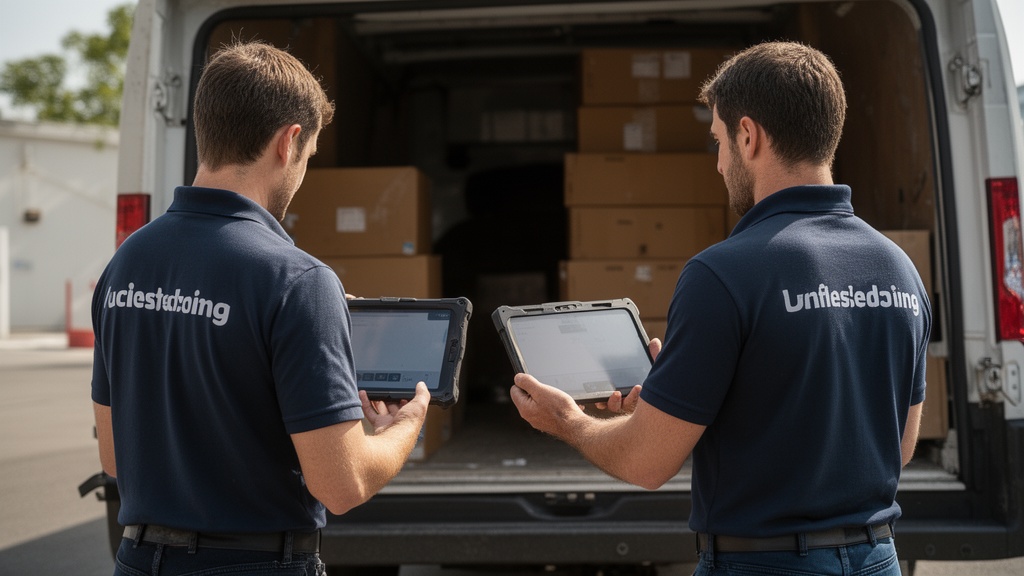
SmartMoving (smartmoving.com) is a cloud-based moving company management platform. A thorough SmartMoving software review shows a product built around four core modules: lead management, customer communication, job scheduling, and performance reporting. The platform serves residential and commercial movers, with particular strengths in automated follow-up and online booking integration.
Core feature set includes:
- Lead capture from web forms, phone inquiries, and third-party lead providers
- Automated SMS and email follow-up sequences with configurable timing
- Online booking with real-time calendar availability
- Job costing and invoice generation
- Crew and driver mobile apps for real-time job updates
- Conversion rate and revenue reporting dashboard
For operators evaluating SmartMoving as a moveitpro alternative or comparing it against chariot moving software and similar platforms, the key differentiators are automation depth in customer communication and the quality of the mobile crew experience.
| Feature | SmartMoving | MoveItPro | Generic Adapted CRM |
|---|---|---|---|
| Moving-specific workflows | Yes | Yes | No |
| Automated follow-up sequences | Yes | Limited | Varies |
| Native mobile crew app | Yes | Yes | Rarely |
| Virtual survey integration | Limited | Limited | No |
| Purpose-built for movers | Yes | Yes | No |
| Multi-location management | Limited | Yes | Varies |
SmartMoving targets small to mid-size residential movers. Operators with higher job volumes or complex multi-branch structures sometimes find its multi-location management and advanced reporting features limiting. Evaluating any smart moving software requires matching features to actual operational complexity — not just checking boxes on a feature list.
Pro Tip: When evaluating any moving company software platform, request a trial using your own actual inquiry volume and job types. Generic demos present best-case scenarios. Running real company data through the system reveals workflow gaps before you commit to a subscription.
How Smart Moving Companies Win More Customers and Keep Them
The customer acquisition advantage of smart movers comes down to response speed and follow-up consistency. According to Harvard Business Review research on lead response time, the probability of successfully contacting a lead drops dramatically after the first hour — a window that manual operations routinely miss during peak season.
Smart moving CRM systems close this gap through automated, multi-touch follow-up sequences that trigger immediately when a lead submits an inquiry. The impact is measurable: automated follow-up sequences improved booking rates from approximately 28% to 38% of qualified leads, generating significant additional monthly revenue for companies with typical inquiry volumes.
Retention works the same way — systematically. Smart movers send automated post-move satisfaction surveys, flag detractor responses for immediate manager review, and route positive reviews into reputation management workflows. This closes the loop from job completion back into customer acquisition with minimal manual effort.
For companies exploring smart moving company technology solutions, the customer journey automation module typically delivers the fastest path to measurable revenue impact.
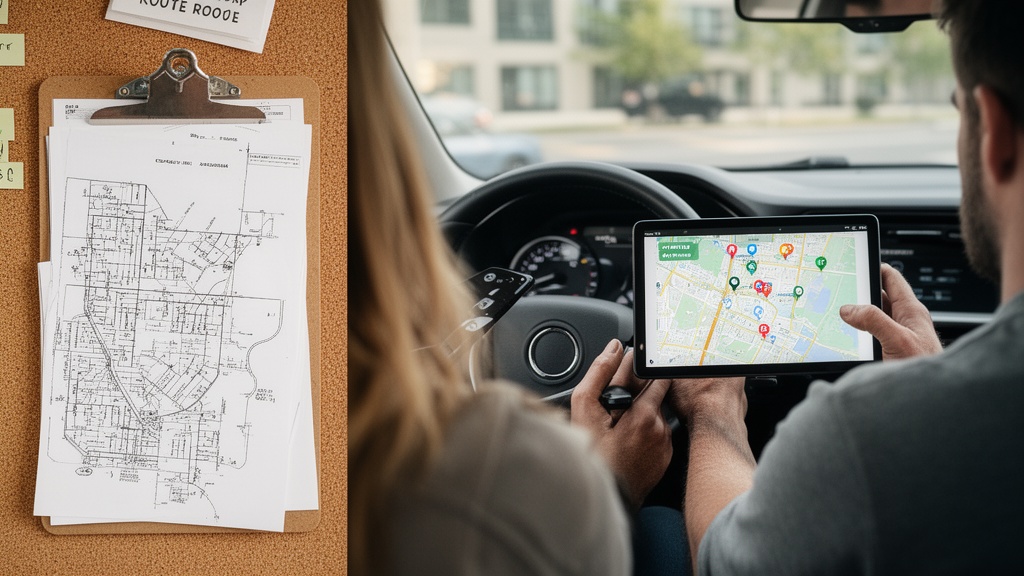
Smart Moving vs. Traditional Operations: A Side-by-Side Comparison
The operational gap between smart and traditional movers is widening as technology adoption accelerates across the industry. The American Moving and Storage Association (AMSA) identifies operational inefficiency as a primary driver of revenue plateaus among mid-size movers — the exact problem that a smart moving company management system addresses at the workflow level.
Here is how the two models compare across key operational dimensions:
| Operational Area | Traditional Moving Company | Smart Moving Company |
|---|---|---|
| Lead response | Manual calls, variable timing | Automated sequences, under 1 hour |
| Estimate delivery | 18–24 hour turnaround | Under 2 hours with digital estimating |
| Dispatch method | Whiteboard or spreadsheet | Digital assignment with mobile crew app |
| Job documentation | Paper manifests | Real-time digital updates by crew |
| Performance visibility | Monthly manual reports | Live dashboard: revenue and conversion data |
| Admin overhead | 22+ hours/week | Under 9 hours/week |
| Compliance documentation | Manual paper trail | Automated digital records |
The FTC's consumer protection guidelines for moving companies require written estimates, binding agreements, and transparent pricing — requirements that purpose-built moving company operations software enforces through systematic digital workflows. Traditional operations handle these manually, increasing both error risk and liability exposure.
The admin reduction alone — from 22 to under 9 hours per week, per composite case study benchmarks — represents significant labor cost reallocation without adding payroll headcount.
How to Transition Your Moving Company to a Smarter Operating Model
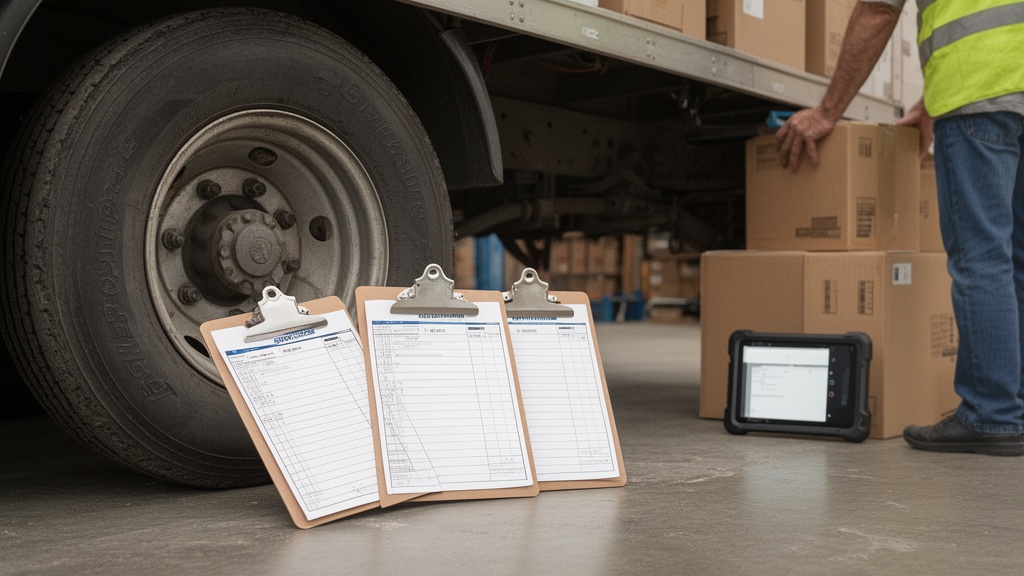
Transitioning to a smart model does not require replacing every system simultaneously. The most successful implementations follow a phased approach that mirrors how operational complexity layers in a growing company.
Phase 1 — Foundation (Days 1–45): Deploy dispatch automation and CRM lead capture first. By day 45, most operations achieve fully digital dispatch, with crews receiving structured job details via mobile app instead of verbal briefings or paper run-sheets.
Phase 2 — Conversion Optimization (Months 2–3): Activate automated follow-up sequences and digital estimating. Estimate turnaround typically drops from 18–24 hours to under 2 hours. Case study data on moving company software ROI shows this is when booking conversion improvements first become measurable.
Phase 3 — Compounding Efficiency (Month 3+): Reporting and analytics become actionable. Crew utilization data flags underbooked scheduling windows for proactive sales outreach. Error rates fall. The operation shifts from reactive management to predictive planning.
Per AMSA industry research, mid-size moving companies consistently reach full software ROI within 60–120 days of complete adoption for operations processing 40 or more jobs per month. The payback reflects combined cost savings and revenue uplift — not just one dimension.
For those exploring smart moving careers within tech-forward operations, this shift also changes the required skill profile of office staff. CRM management, data interpretation, and digital customer communication become core competencies alongside traditional dispatching knowledge.
Pro Tip: Run your old and new workflows in parallel for the first 30 days of any software transition. This protects against adoption gaps and gives staff time to build confidence in the new system. Switching cold — abandoning legacy processes immediately — is the most common cause of failed moving company software implementations.
Related Articles
- Chariot Moving Software: An Operator's Honest Review — Deep-dive analysis of chariot moving software features, pricing, and real-world operator experience.
- CRM for Moving Companies: Streamline Operations — How to select and implement a CRM built for the specific workflow requirements of a moving company.
- Digital Marketing Strategies for Moving Companies — Proven tactics that smart movers use to generate and convert more inbound leads.
- Customer Experience Excellence in Moving Services — How automated communication tools create better customer outcomes and stronger online reviews.
- Pricing Strategies for Moving Companies: Maximizing Profitability — Data-driven pricing approaches that leverage the performance metrics available in smart moving systems.
Recommended Reading
- SmartMoving Software: Review, Features & Pricing — Full analysis of SmartMoving's features, pricing model, and competitive positioning in the moving software market.
- Moving Company Technology Stack: Complete Guide — How to build an integrated tech stack across CRM, dispatch, estimating, and analytics for a complete smart operation.
- Best Moving Company Software: Complete Buyer's Guide — Ranked comparison of the leading moving company software platforms across key evaluation criteria.
- Virtual Estimate AI CRM Platform — Purpose-built CRM for moving companies covering the complete operational workflow from lead to invoice.
- How to Choose Moving Business Software That Scales — Framework for selecting a platform that grows with your operation without requiring a full system replacement.
Ready to see it in action?
Book a free 20-minute demo and explore how Virtual Estimate can help your business.